
The complete guide
How To Choose And Use A Barbed Drain Snake Without Making A Mess
The problem starts long before the water stops
Nobody wakes up to a blocked drain. What actually happens is that the shower takes a few seconds longer to clear, then a few seconds more, and one morning you are standing in water. By that point the clog has been forming for months.
The culprit is almost always the same. Hair goes down the drain opening, catches on the crossbars or the lip just inside the opening, and stays there. Soap, shampoo, shaving foam and skin oil stick to it. The mat grows sideways until it fills the pipe. In a kitchen sink the same thing happens with grease and food scraps instead of hair.
Here is the part that matters when you are choosing a tool. That blockage is usually sitting within the first two feet of the drain. It is not deep in the wall. It is right there, just out of finger reach, which is exactly why a long barbed strip works so well and why pouring something down the hole often does not.
Why barbs beat a smooth wire
Take a straightened coat hanger down a drain and you will feel the clog. You might even shift it. The trouble is where it goes. A smooth wire pushes a hair mat further along the pipe, past the bend, into a section where it will sit and keep collecting. You have not removed anything, you have relocated the problem.
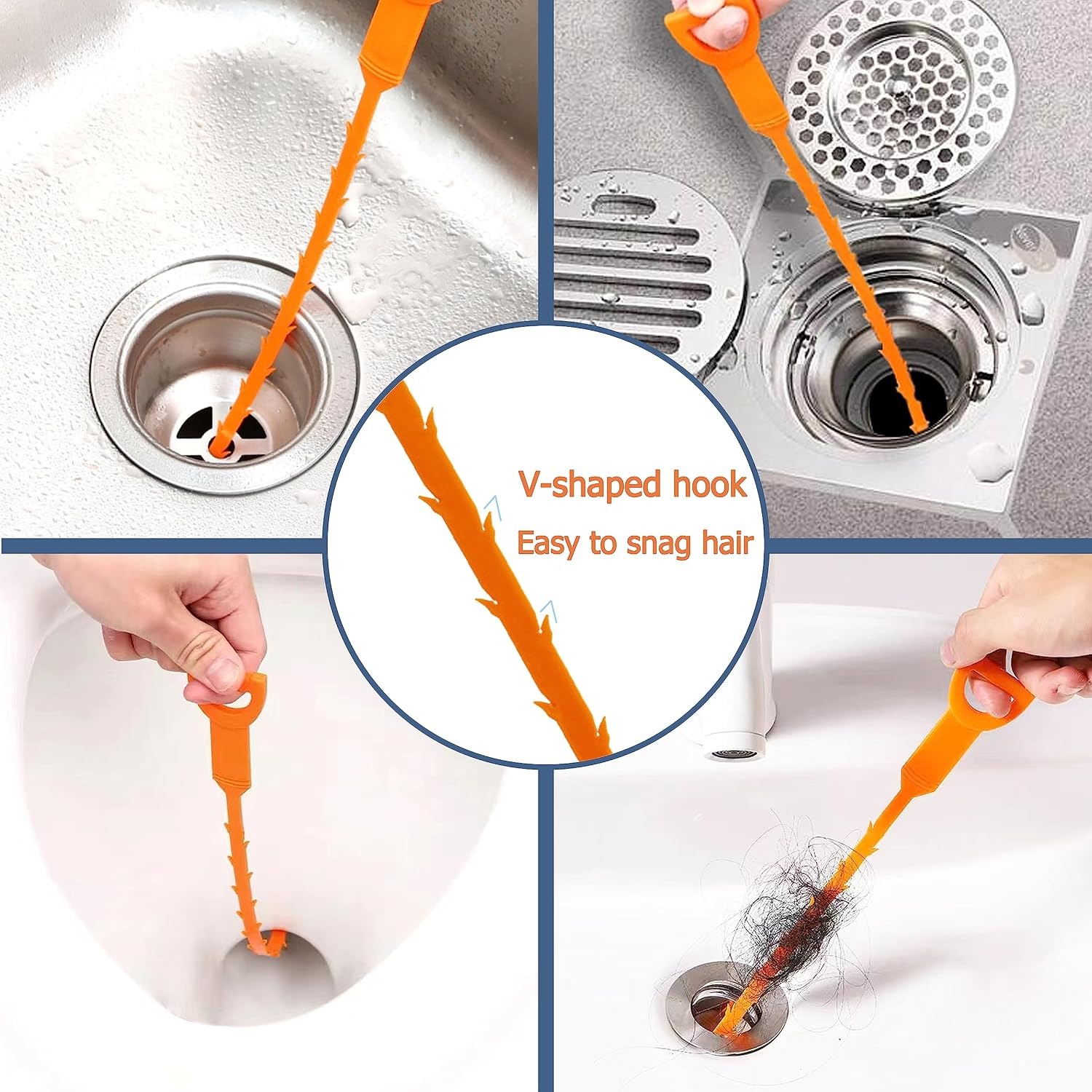
A barbed drain snake works the opposite way. The small teeth along the strip angle back toward your hand. On the way in, they fold and slide past whatever they touch. On the way out, they open and grab. Hair wraps around them, soap scum catches between them, and the whole lot comes up with the strip.
That one-way action is the entire design. It is also why you should never try to pull a barbed snake out hard and fast. Slow and steady keeps the clog attached to the teeth. Yanking it tends to strip the hair off and drop it back down.
What the 25 inch length actually buys you
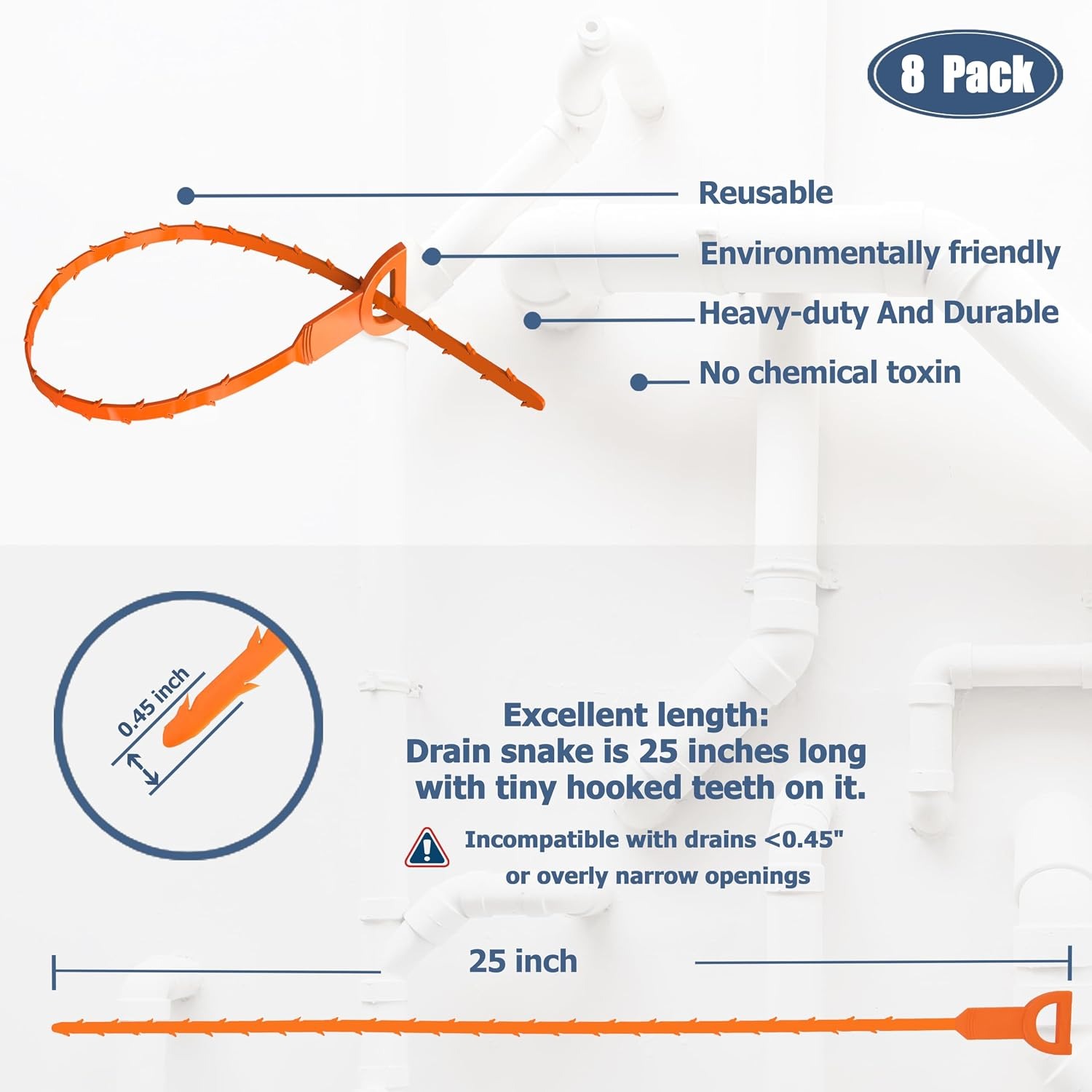
Plenty of drain tools are around 18 to 20 inches. They are fine for the hair sitting right under the grate. What they cannot do is get around the bend.
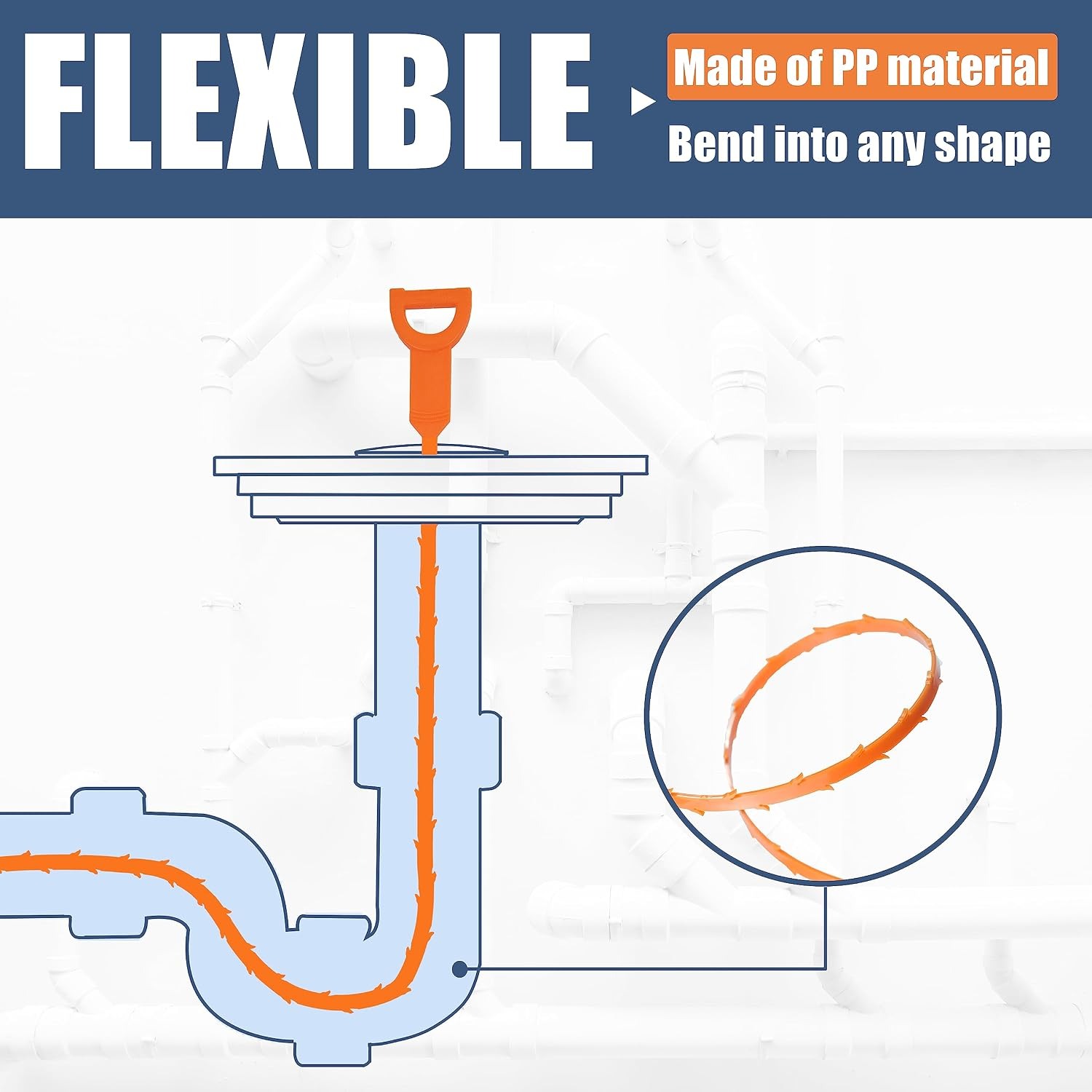
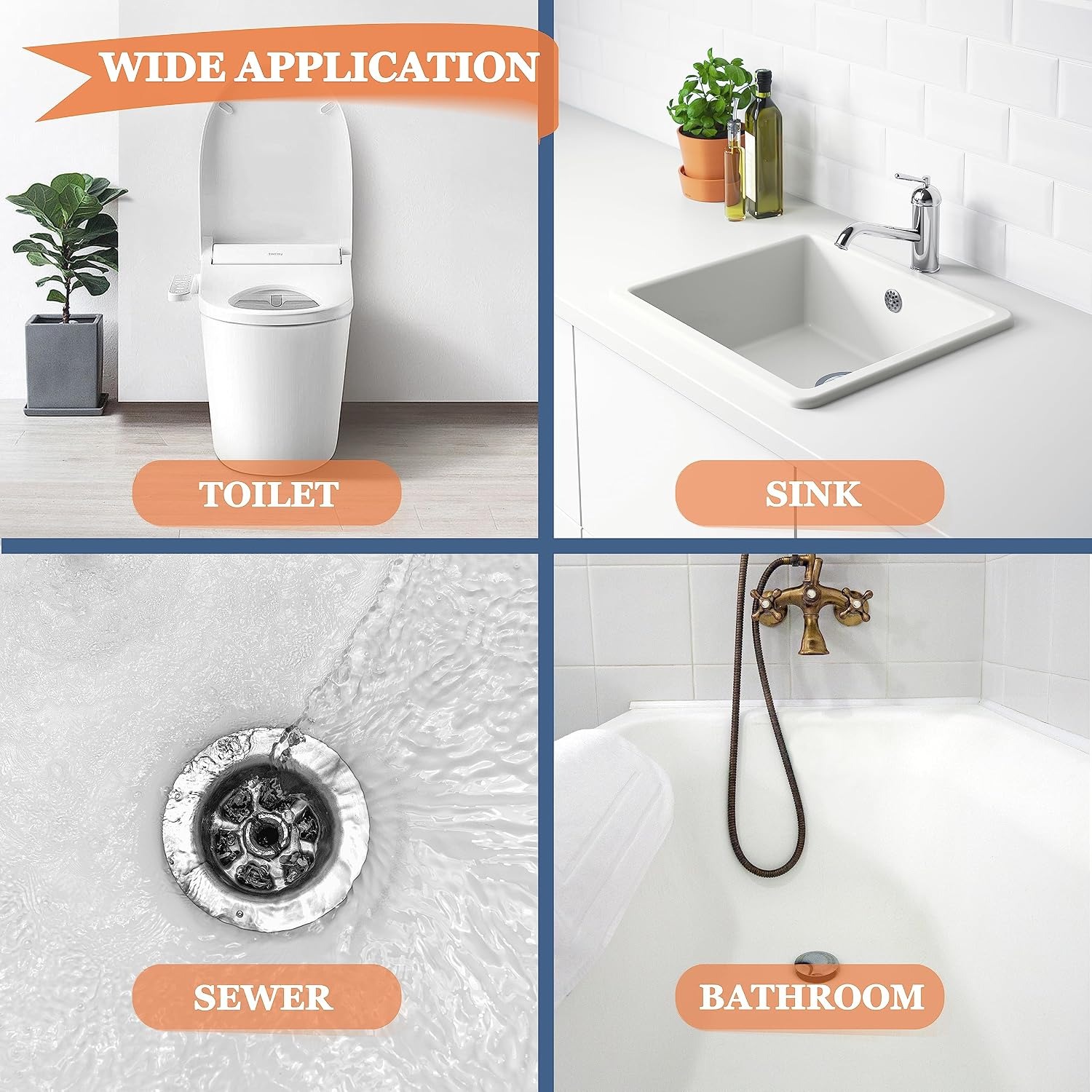
Under almost every sink, shower and tub there is a trap, the U or P shaped curve that holds a plug of water to stop sewer smells coming up. Hair collects on the inside of that curve because the water slows down there. A 25 inch strip has enough length to go in, follow the curve, and come back out with what was sitting in it.
You will feel the difference on the first pull. A short tool gives you a small wad. A longer one, worked properly, often comes back with a lot more. People shopping for the best hair catcher tool for shower drain usually end up back at length as the deciding factor.
There is a limit to be honest about. This is a flexible plastic strip. It is not a motorised auger and it will not cut through a solid, compacted blockage or tree roots in an outside line. For those jobs you need different equipment or a plumber. For hair and soap in a household fixture, it is the right tool.
Who this suits
Households with long hair in them get the most out of it. If two or three people in the house have hair past their shoulders, your shower drain is on a schedule whether you like it or not.
Renters do well with it too. Nothing gets dismantled, nothing permanent happens, and no caustic liquid goes into pipework you do not own. Students and share houses are in the same boat.
Anyone who has been quoted a call-out fee for a slow drain will see the math straight away. One visit costs many times the price of a pack like this, and the visit often ends with the plumber doing exactly what you could have done yourself in two minutes.
It also suits people who simply do not want to pour chemicals down the sink. Hair is slow to break down and many drain products struggle with it, which is why a physical reusable drain cleaning tool often outperforms the bottle.
How to use one properly
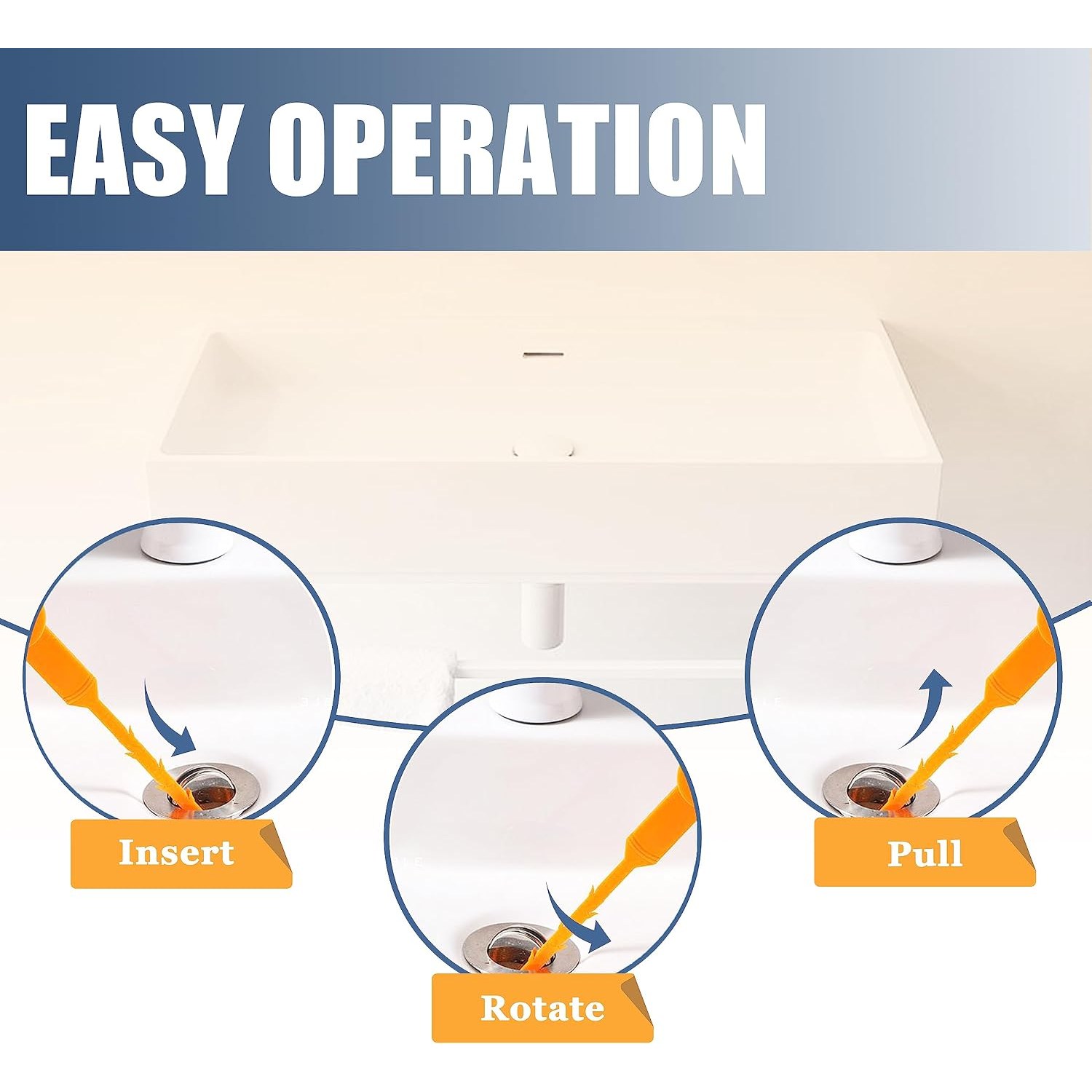
Start by lifting the grate or stopper if yours comes out. Most shower grates lift or unscrew. Tub stoppers usually twist or pop. Sinks with a pop-up plug often need the plug lifted out, and some unscrew with a quarter turn.
Feed the strip in slowly. When you hit resistance, do not shove. Rotate it half a turn and try a slightly different angle. The tip needs to follow the shape of the pipe, and forcing it straight on will only bend the strip back on itself.
Once it is in as far as it will comfortably go, turn it a full rotation to wrap hair around the barbs, then draw it out steadily. Have a trash bag or wad of paper towel ready, because what comes up is not pleasant.
Wipe the strip clean, then go again. Keep repeating until it comes back with nothing on it. Two or three passes is normal. A neglected bathroom might take six.
Finish by running hot water for a minute, and in a kitchen add a squirt of dish soap to shift any grease film the snake loosened but did not remove.
Getting eight, and why that matters
A single drain tool has a habit of disappearing. It ends up in the shed or under the sink behind the cleaning sprays, and you only remember it exists once the water is already pooling.
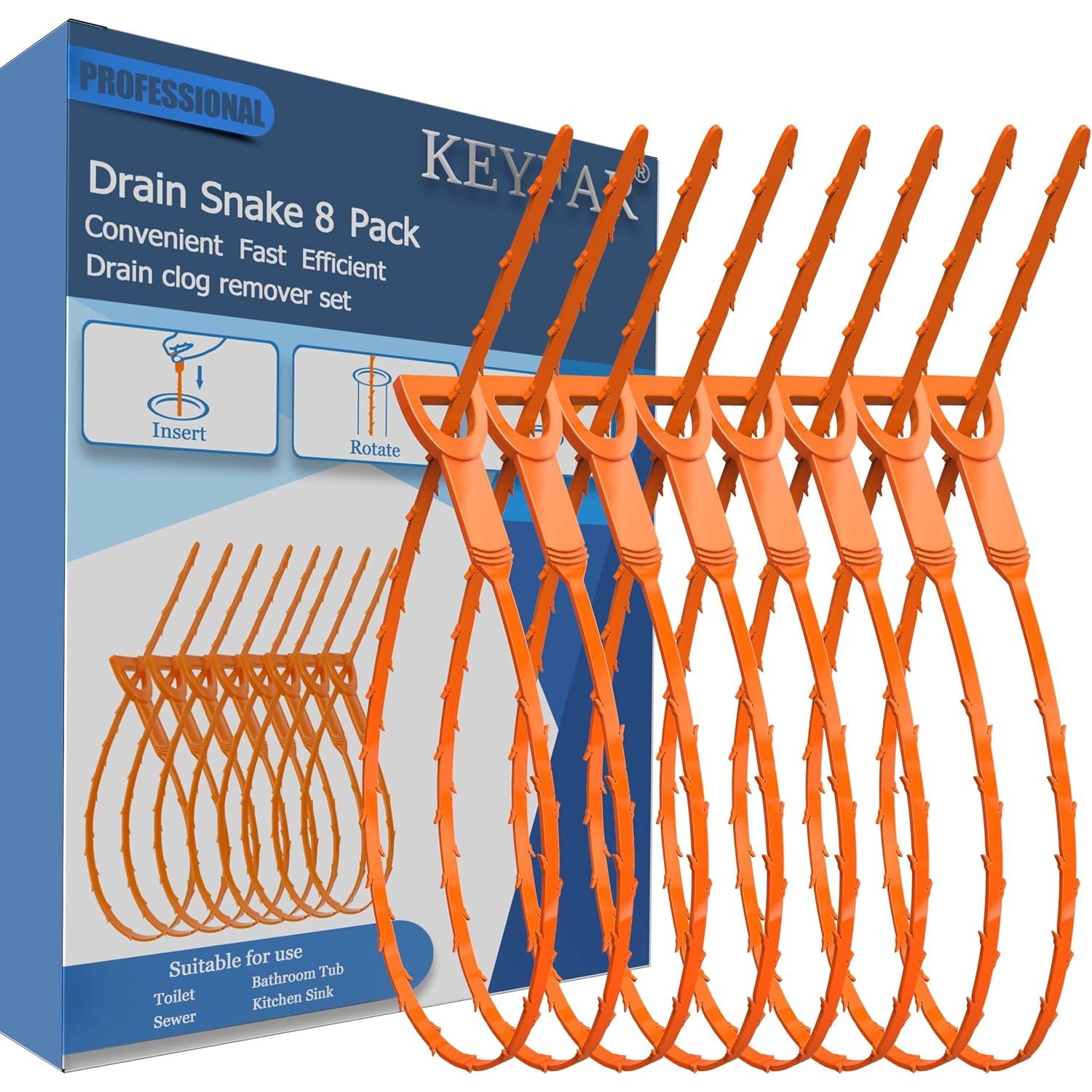
Eight changes the behavior. You put one under the main bathroom sink, one in the ensuite, one in the laundry, one in the kitchen, and you still have spares. The tool is where the problem is, so clearing a drain stops being a project and becomes a two minute thing you do while you are already standing there.
It also means you are not reusing a bent, chewed up strip because it is the only one you own. When one gives up, you open the drawer and take the next.
Looking after them
These are reusable, but only if you clean them. Rinse under the hottest water your faucet gives you, then work an old toothbrush along the teeth with a drop of dish soap. The gaps between barbs hold residue and that is what makes the tool unpleasant to handle later.
Let it dry completely before you put it away. Store it flat or loosely coiled. Plastic takes a set if you leave it folded hard, and a permanently kinked strip is harder to steer around a trap.
Retire a strip when the barbs start snapping off or the plastic goes brittle and pale. You have plenty of replacements in the pack.
A note on prevention
The best outcome is never needing the snake urgently. A simple mesh hair catcher sitting over the shower drain stops most of the problem before it starts, and emptying it takes seconds.
Pair that with a monthly run of the snake through each drain and you will likely never see standing water again. Flushing with hot water and a little dish soap once a week helps in the kitchen, where the issue is grease rather than hair.
The short version
A slow drain is nearly always hair and soap caught within arm's reach of the drain opening. A barbed strip hooks that material and pulls it out, while a smooth wire or a bottle of chemicals tends to just move it along or leave it there.
The 25 inch length gets you around the trap, which is where the short tools give up. The pack of eight means one lives near every drain in the house instead of being lost in the shed. Rinse them, dry them, store them flat, and they will keep working.
It will not solve a deep or solid blockage, and we are not going to pretend otherwise. For the everyday hair clog that makes your shower drain like a puddle, it is about as simple a fix as exists.