

The complete guide
How To Choose A Tub Drain Hair Catcher That Actually Works
The slow drain nobody plans for
Nobody buys a drain cover until something goes wrong. The usual story goes like this. The shower drains a little slower than it used to. You ignore it. A month later you are standing ankle deep by the end of a wash, and a month after that the water barely moves at all. Then comes the chemical cleaner, the plunger, the wire hook, and eventually someone with a drain machine and an invoice.
Almost all of that starts with hair. We shed strands constantly, and in the shower they go straight down with the water. In the pipe they snag on the trap bend and start collecting soap residue, conditioner and skin cells. The mass grows quietly, out of sight, until the flow gives up.
A drain hair catcher moves the whole problem back to where you can see it. Hair collects on a surface you can lift, empty and rinse. Nothing builds in the pipe because nothing gets into the pipe. It is one of the cheapest preventative things you can put in a bathroom.
Why a dome beats a flat disc
Walk through any hardware aisle and you will see two shapes. Flat discs and raised domes.
Flat covers are tidy. They sit almost level with the tub floor and look like part of the fitting. The problem is math. A flat disc only has the holes in that one small circle, and those holes sit directly in the path of the water. Hair lands on them and mats across the middle. Once that happens the water has nowhere to go and the cover starts backing up, which is why people end up prying them off halfway through a shower.
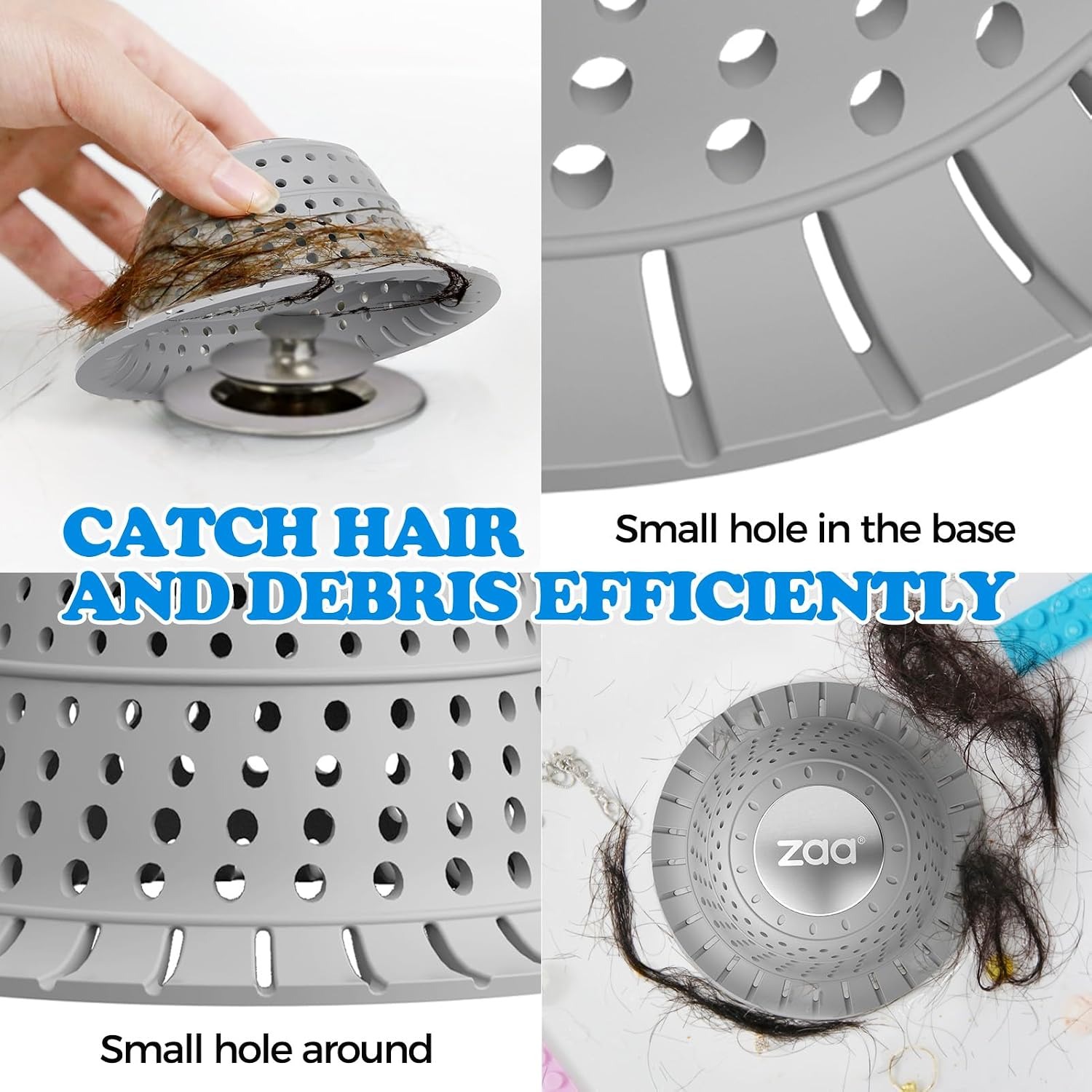
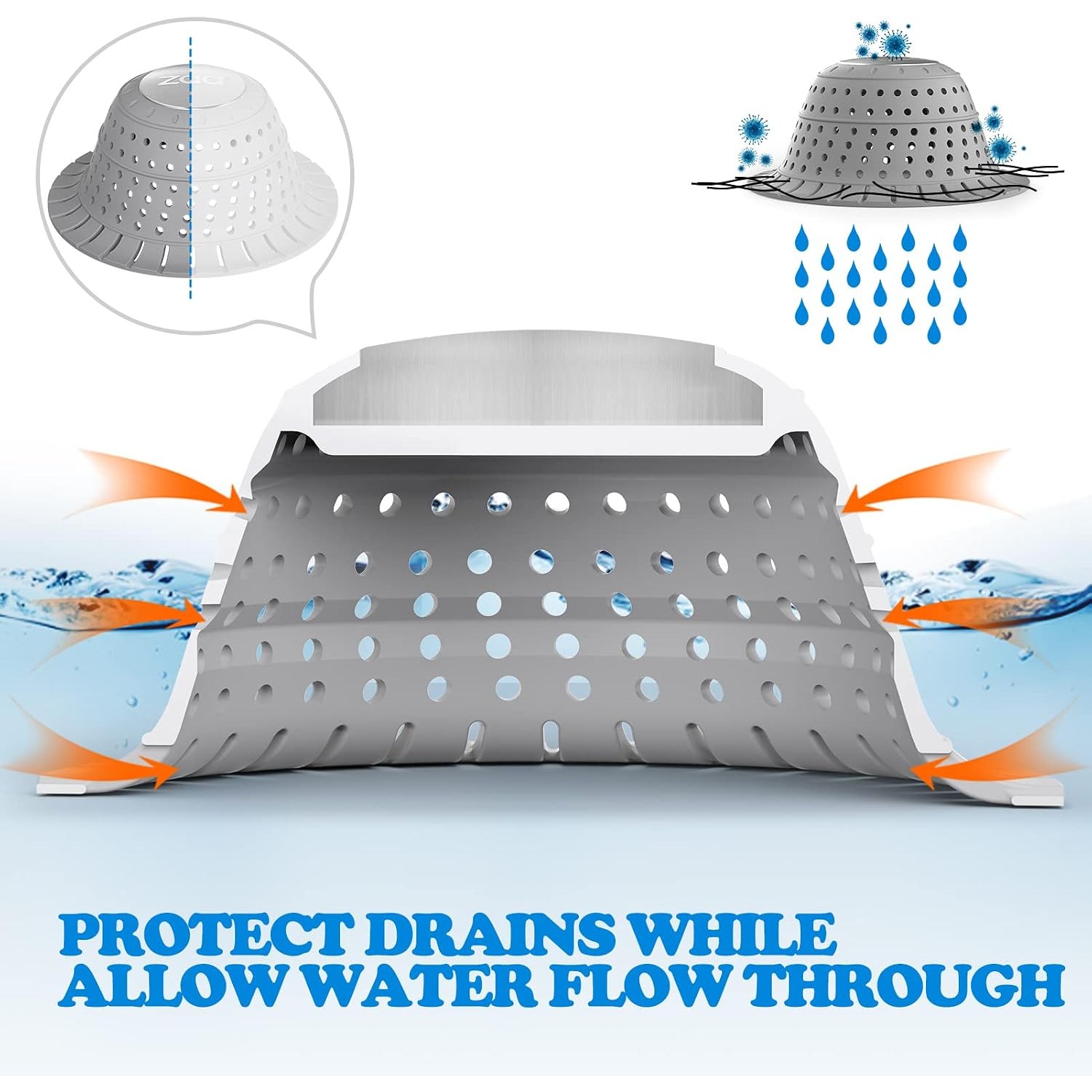
A dome changes the geometry. By lifting the filtering surface and curving it, you get several times the open area in the same drain footprint. Hair tends to collect on the upper slope while the lower sides and the base stay clear. Even with a visible clump on it, water keeps running. That is the practical difference between a cover you tolerate and one you forget about.
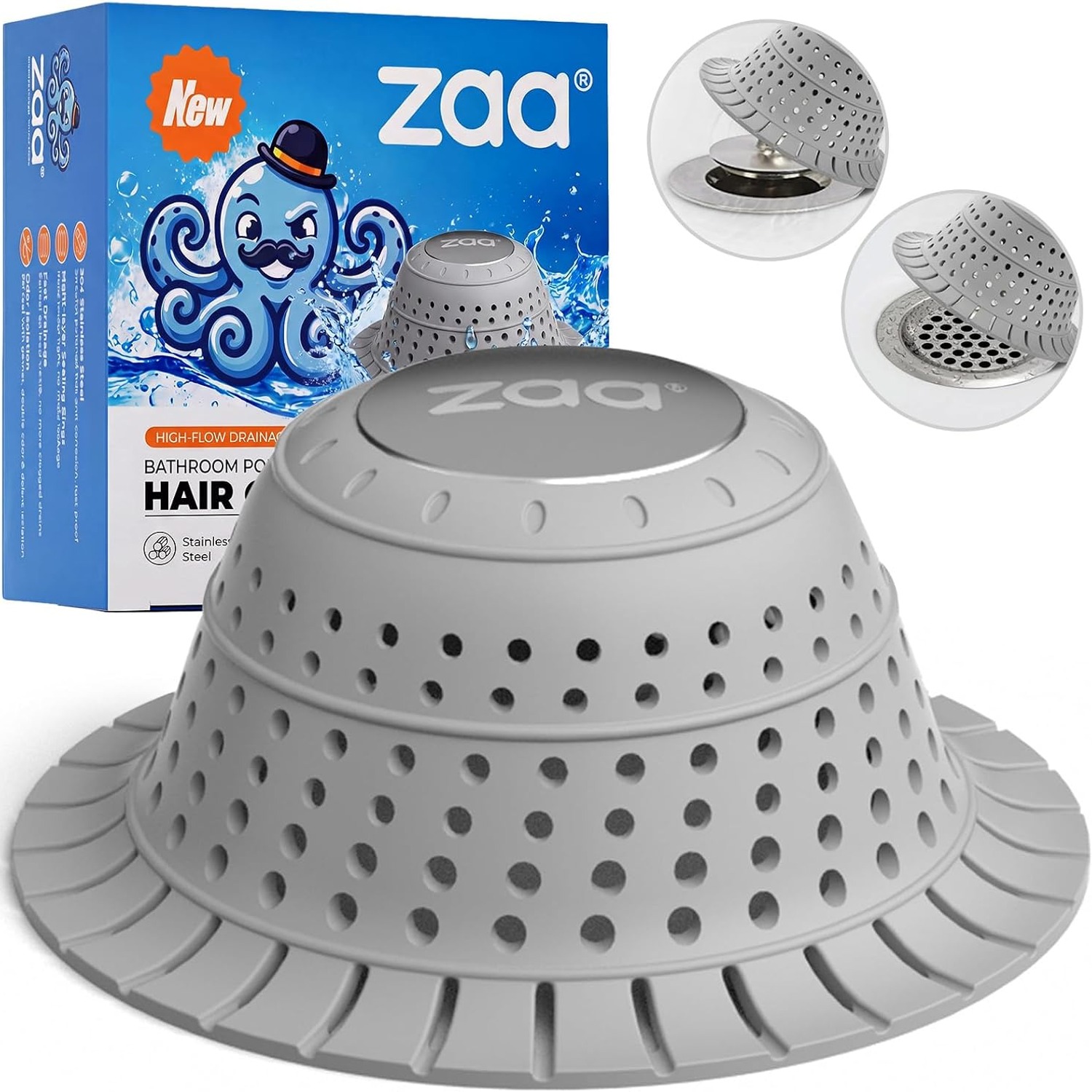
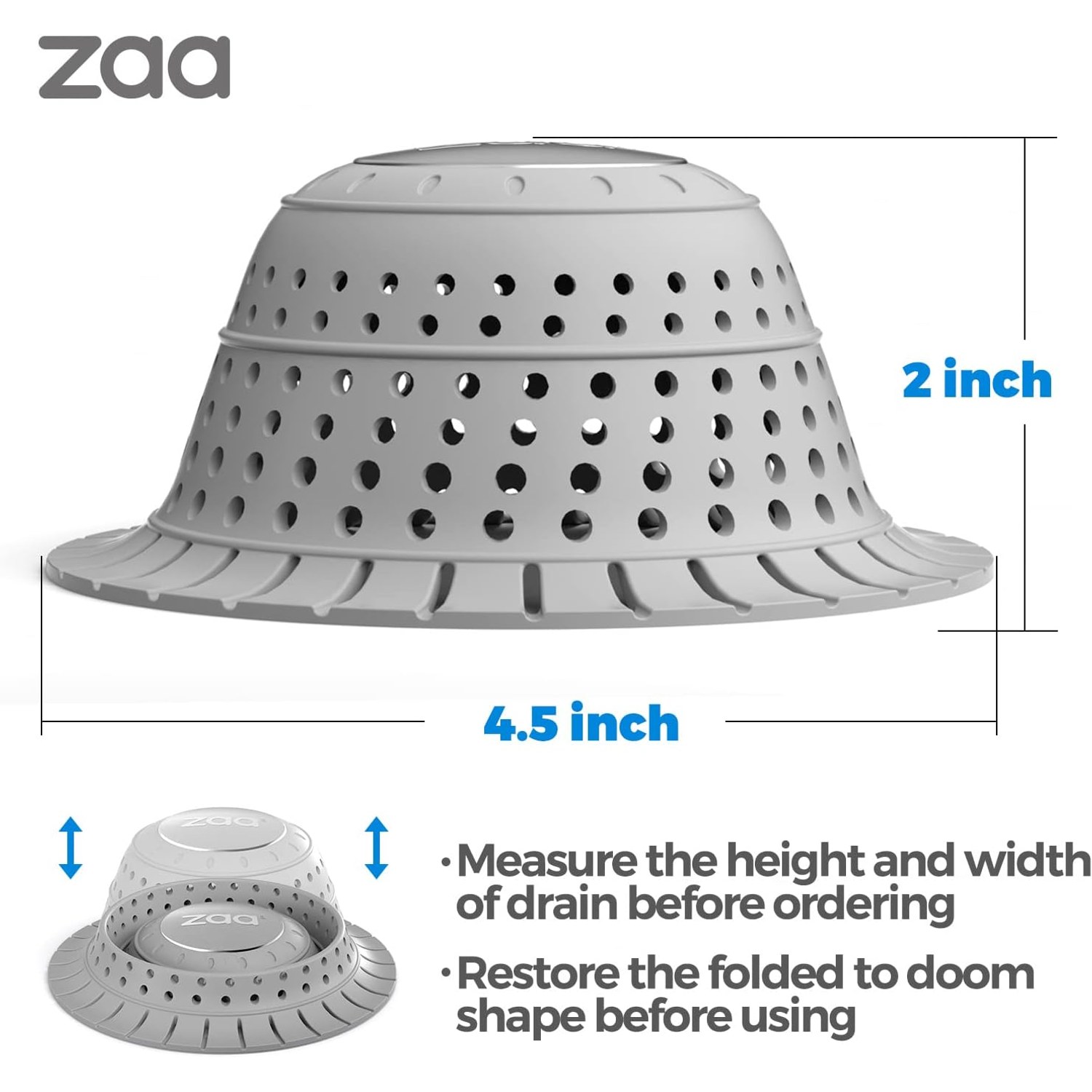
This catcher uses a 4.5 inch wide dome standing 2 inches tall, with holes around the sides and in the base. It is a simple design and the shape is doing most of the work.
Fit is the make or break
More drain covers get returned for fit than for any other reason. Here is what matters.
The groove size. This one is made for a 4.5 inch groove and a 4.5 inch hole. Grab a tape measure and measure across the recessed ring your drain sits in, not the metal grate itself. If you land near 4.5 inches, you are in the right territory.
The surface around the drain. The rim needs a reasonably flat ring to sit on. Shower pans with an aggressive slope toward the center, or tiled floors with a strong fall, do not give the rim an even seat. The catcher will rock or shift instead of sitting still.
Where the drain sits. Some tubs and sinks have the drain opening right against a wall or the edge of the sink. If part of the catcher would overhang the edge, there is nothing supporting that side and it will not sit properly. This is worth checking before you order rather than after.
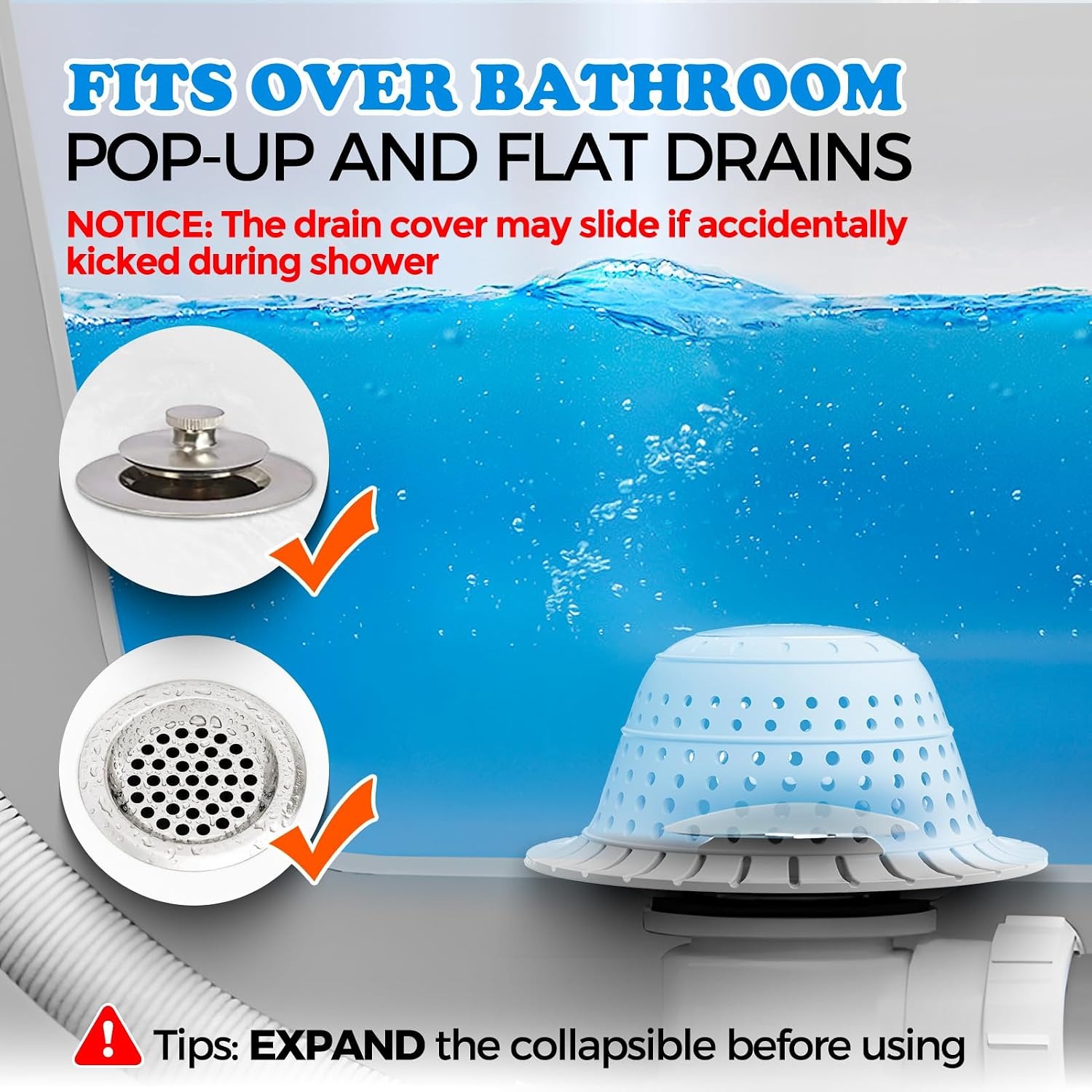
Your stopper type. The dome is designed to work over both flat drains and pop-up drains. The 2 inch height gives the stopper room underneath. If you have an unusually tall pop-up or a lift-and-turn mechanism that stands proud, hold a ruler against it and compare.
Get those four right and installation is nothing. You put it down. That is the whole job.
The weight question
Silicone is light. A silicone cover on its own tends to wander across a wet tub floor, especially when the water is swirling toward the drain. It is a small annoyance that turns into a daily one.
The fix here is a stainless steel block set into the top of the dome. It adds enough mass that the catcher holds its spot through a normal shower. It is not glued or clamped, so it can still be moved, and a hard kick will shift it like anything else sitting loose. On a level drain area though, it stays where you put it.
The steel also means no rust. Plain steel mesh strainers corrode in a wet bathroom within a year or two, leaving orange marks on the tub. Stainless and silicone both shrug off that environment.
Cleaning it without touching the hair
This is the part people quietly dread, and it is where the collapsible design earns itself.
Lift the catcher off the drain. Push the dome down so it folds flat. That inversion pushes the collected hair outward and off the surface, so you can tip it straight into the trash without picking at anything. Rinse under the faucet, let the dome spring back, and set it down again.
Once a week or so, give it a proper wash. A little dish soap on a cloth or a soft brush clears soap scum from the holes. Rinse well. If you have hard water and see white mineral spots, a soak in diluted white vinegar followed by a thorough rinse brings the finish back.
Two things to avoid. Bleach and strong solvents, which can degrade silicone over time. And abrasive scouring pads, which leave a dull, scratched surface that then holds soap film more readily. Soap, warm water and a soft brush are all it needs.
Let it dry out when you can. Hair sitting on a permanently wet surface is what causes smell, not the silicone itself.
Who gets the most out of one
Households with long hair, obviously. If more than one person in the house has hair past the shoulders, the volume going down the drain each week is more than most people realize.
Renters are the other big group. You cannot modify a landlord's plumbing, and you do not want to be the tenant who caused the blockage. A loose catcher leaves no trace and comes with you when you move.
It also makes sense for anyone who has already had a blocked drain. Once you have paid for a plumber, the math on a reusable strainer stops being a decision. The same goes for pet owners who bathe dogs indoors, where the fur load in one wash can do more than a month of human showers.
Beyond the bathtub, it suits bathroom sinks, laundry tubs and utility sinks with the right drain size. Kitchen sinks are the exception, where food waste packs into the holes and a basket strainer does a better job.
Small habits that help
A catcher does the heavy lifting, but a couple of habits make it better. Brush your hair before you get in rather than after, so the loose strands come out over the floor instead of the drain. Run hot water down the drain for thirty seconds after a shower occasionally to move soap residue through. And empty the catcher before the hair dries onto it, which takes seconds while it is wet and more effort once it is not.
None of this is complicated. It just stops the slow creep that ends in a blockage.
The short version
Hair is what blocks bathroom drains, and the easiest place to stop it is before it goes in. A raised dome traps more and clogs less than a flat disc because the filtering surface is bigger and spread out. Silicone with a stainless steel weight stays put, resists rust and folds flat so you can tip the hair straight into the trash.
Measure your drain groove first. If it is close to 4.5 inches and the surface around it is level, this one drops in with no tools and no fuss. After that it is ten seconds of maintenance and a drain that keeps running the way it should.