
The complete guide
How to Choose and Fit a Dishwasher Drain Hose
When a drain hose starts causing trouble
Most dishwasher problems that end in a wet floor are not the machine's fault. They are the hose. Over years of hot water and detergent, the plastic hardens, the ribs lose their spring, and the clamped ends go brittle. A hose that seemed fine for a decade starts weeping a few drops per cycle, and because it is hidden behind a kickboard, nobody notices until the cabinet floor goes soft.
The other common failure is slower and sneakier. The hose has a low spot, so a pocket of gray water sits in it between cycles. That water goes stale. You open the dishwasher, smell something sour, and assume the machine needs a clean. Often what it actually needs is a hose routed with a proper rise instead of a sag.
A new drain hose is a cheap fix for both. The tricky part is picking one that actually fits.
Why length matters more than people expect
Factory hoses are usually sized for the simplest install, where the machine sits right next to the sink. Real kitchens are rarely that tidy. The dishwasher might be two cabinets away from the drain. There might be a bulkhead to go around, an island to cross, or a disposal taking up space under the sink.
That is where a 12 ft hose earns its place. At 144 inches you have room to run the line the way the space demands rather than dragging it tight. A hose pulled taut is a hose under strain at both clamps, and strain at a clamp is where leaks start. Spare length also lets you form a high loop up against the underside of the counter, which is what stops dirty sink water siphoning back into the machine.
Extra length is easy to deal with. You trim it. Short hoses are harder, because joining two pieces adds a connection that can leak and a step that can catch food debris.
How the trim-to-fit ends work
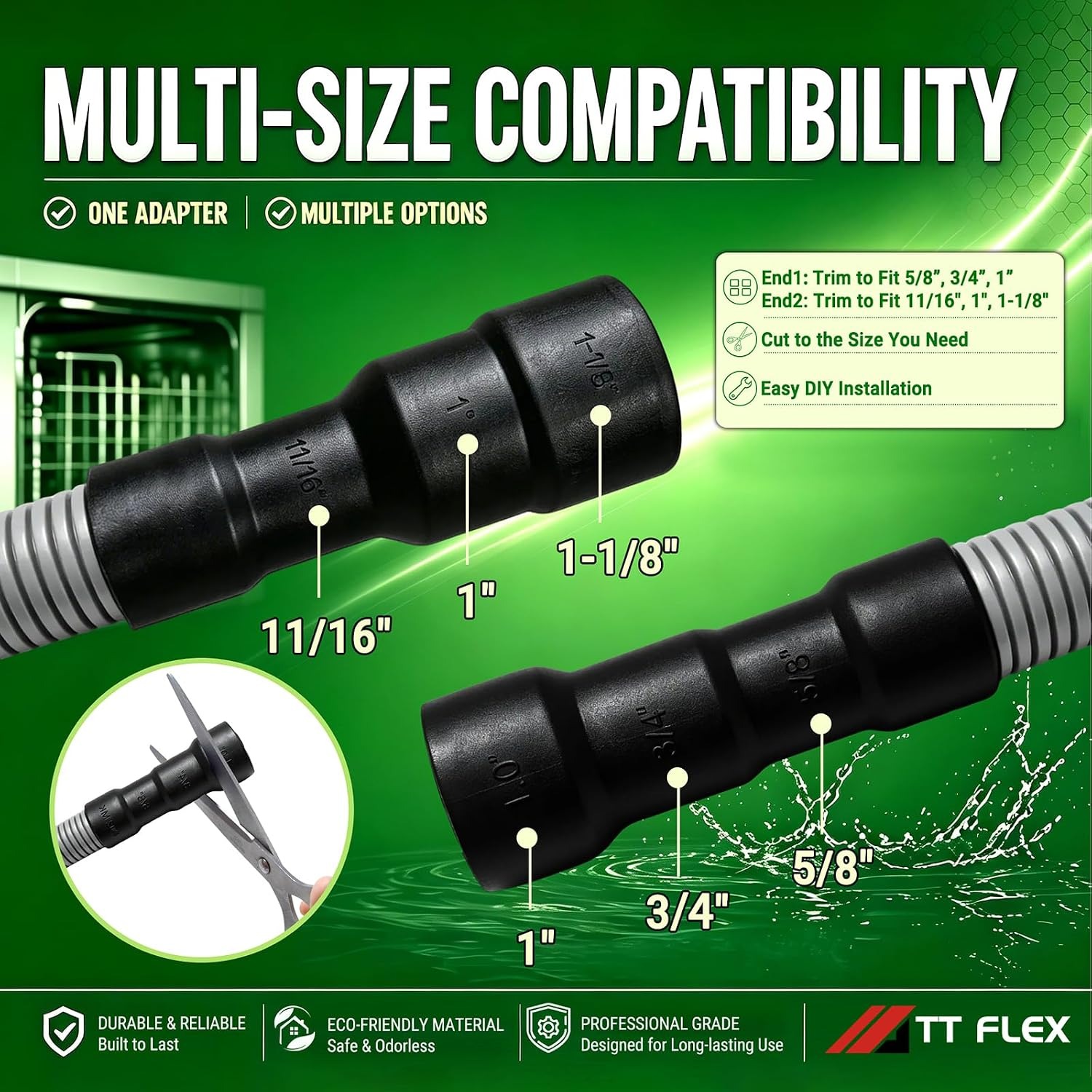
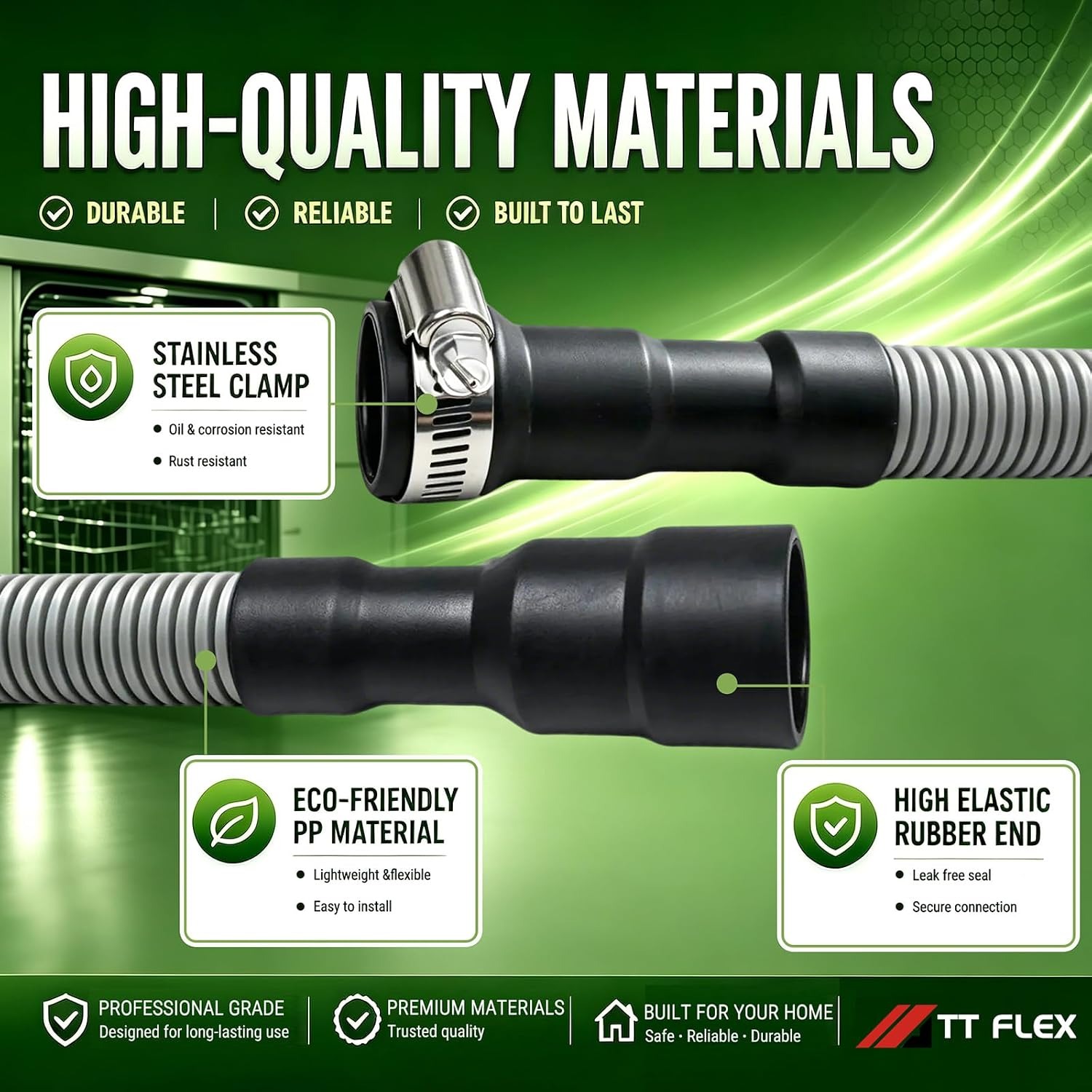
The ends of this hose are molded in steps, like a set of stacked rings that get wider as they go. Each step matches a common port size. On the dishwasher side the steps cover 11/16 inch, 1 inch and 1-1/8 inch. On the sink side they cover 5/8 inch, 3/4 inch and 1 inch.
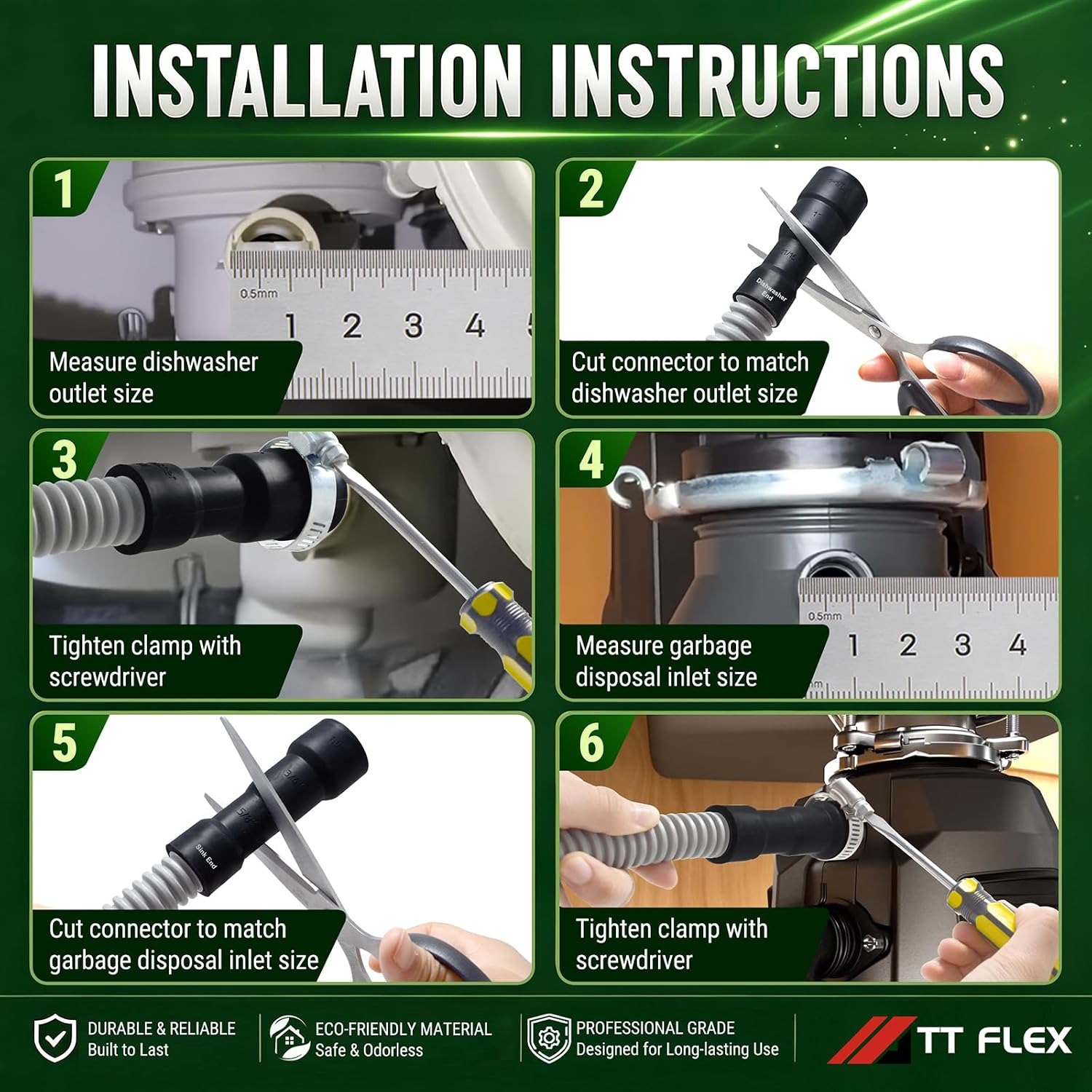
You measure the spigot you are connecting to, then cut the molded end at the matching ring with a sharp knife. Cut square, not at an angle, because a slanted cut makes the clamp bite unevenly and that is where a drip starts.
This stepped approach is why one part can replace so many different hoses. Instead of matching a model number, you match a diameter. If you want the best universal drain hose for a mixed bag of appliances, that is the feature doing the work.
Who this suits
Anyone replacing a failed or leaking hose on a built-in dishwasher is the obvious case. Beyond that, it fits a few other situations well.
People installing a dishwasher in a new spot often find the supplied hose comes up short. People with a portable or countertop unit want extra length so the machine can live away from the sink and still reach it. Landlords and handypeople like keeping a long hose in the van, since one part covers most of the jobs they will see that week. And renovators replacing a sink or disposal often decide to swap the hose at the same time, which is sensible, because that is the easiest moment to do it.
If your appliance uses a quick-connect fitting or a proprietary molded elbow rather than a plain barbed spigot, this is not the right part. Check the connection shape before you order.
Choosing well: what to check before buying
Start with the two port sizes. Look at the outlet stub on the back or underside of the dishwasher, and at the spigot on the disposal, tailpiece or air gap. A cheap set of callipers is ideal, but a tape measure across the outside of the spigot will usually get you close enough to pick a step.
Then measure the run. Follow the actual route, not the straight line. Go down from the appliance, along the back of the cabinets, around any obstacles, up to the high loop, and across to the drain point. Add a foot of slack. People almost always underestimate this.
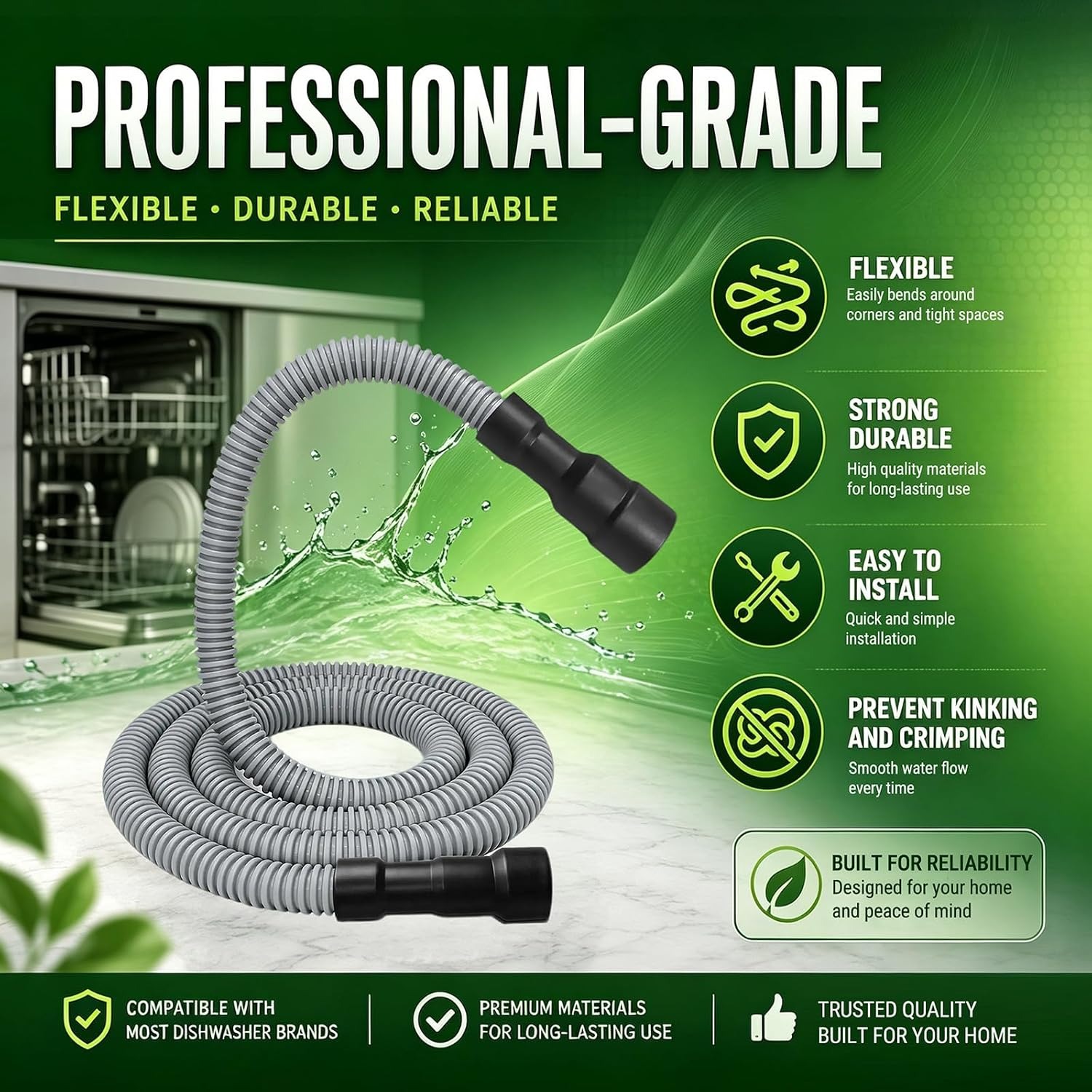
Think about flexibility. A corrugated wall bends through tight turns without collapsing, which is what you want in a cramped cabinet. The best corrugated drain hose for a tight install is one that holds its bore through a ninety degree turn, and the ribs are what do that.
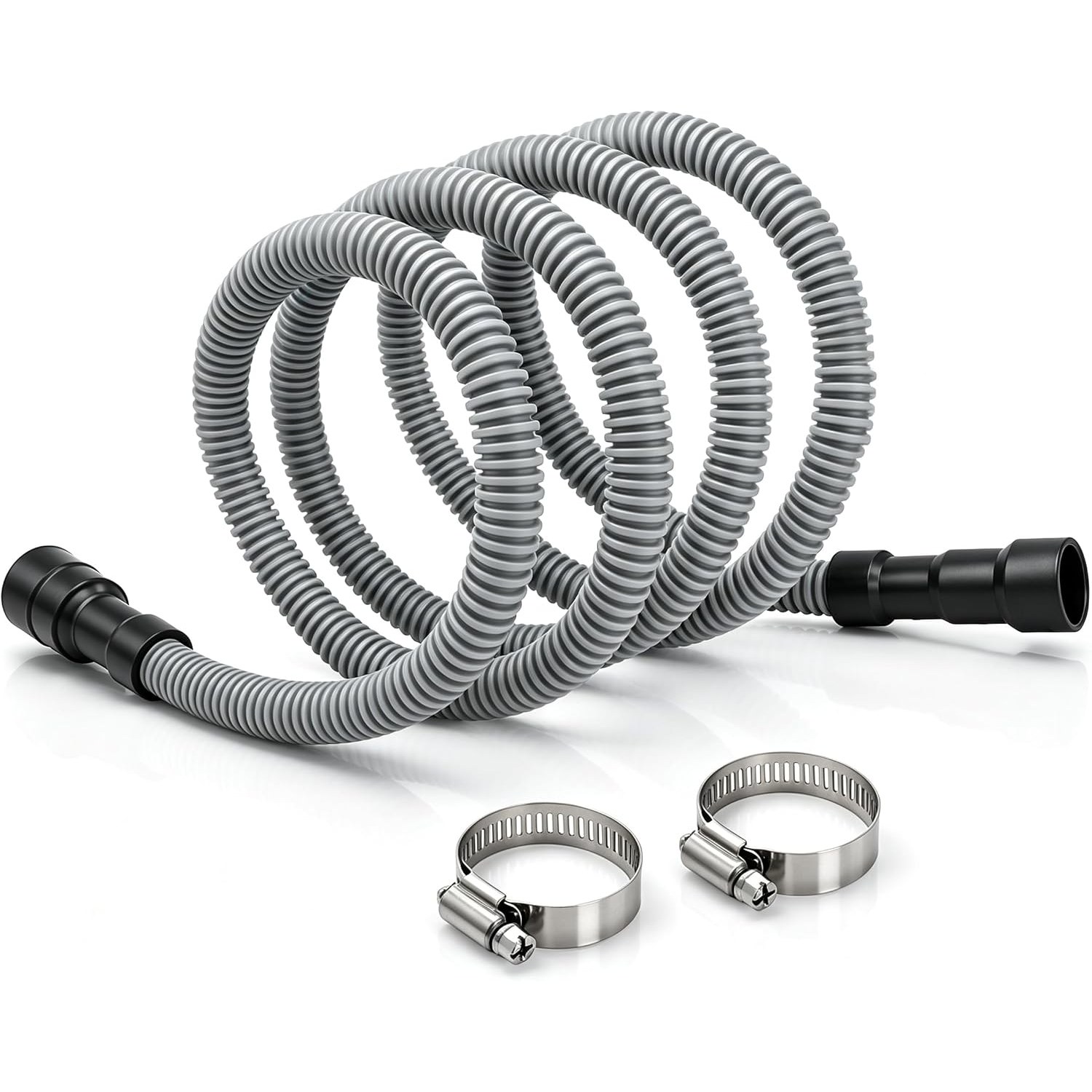
Finally, check what comes in the box. Clamps are small parts, but discovering you do not have them when the old hose is already off is a frustrating moment. This pack includes stainless steel clamps, so the only other thing you need is a screwdriver.
Fitting it without drama
Turn off the power to the dishwasher at the breaker and shut the water supply. Pull the kickboard and put a towel under the work area, because the old hose will hold some water.
Loosen the clamps on the old hose and work it off. If it is stuck on hard, a careful slice down the side of the hose at the spigot usually frees it without damaging the fitting underneath.
Run the new hose along the route before cutting anything. Mark where it needs to end. Trim the dishwasher end at the correct ring, push it fully onto the outlet past the barb, and tighten the clamp over the spigot area. Do the same at the sink end.
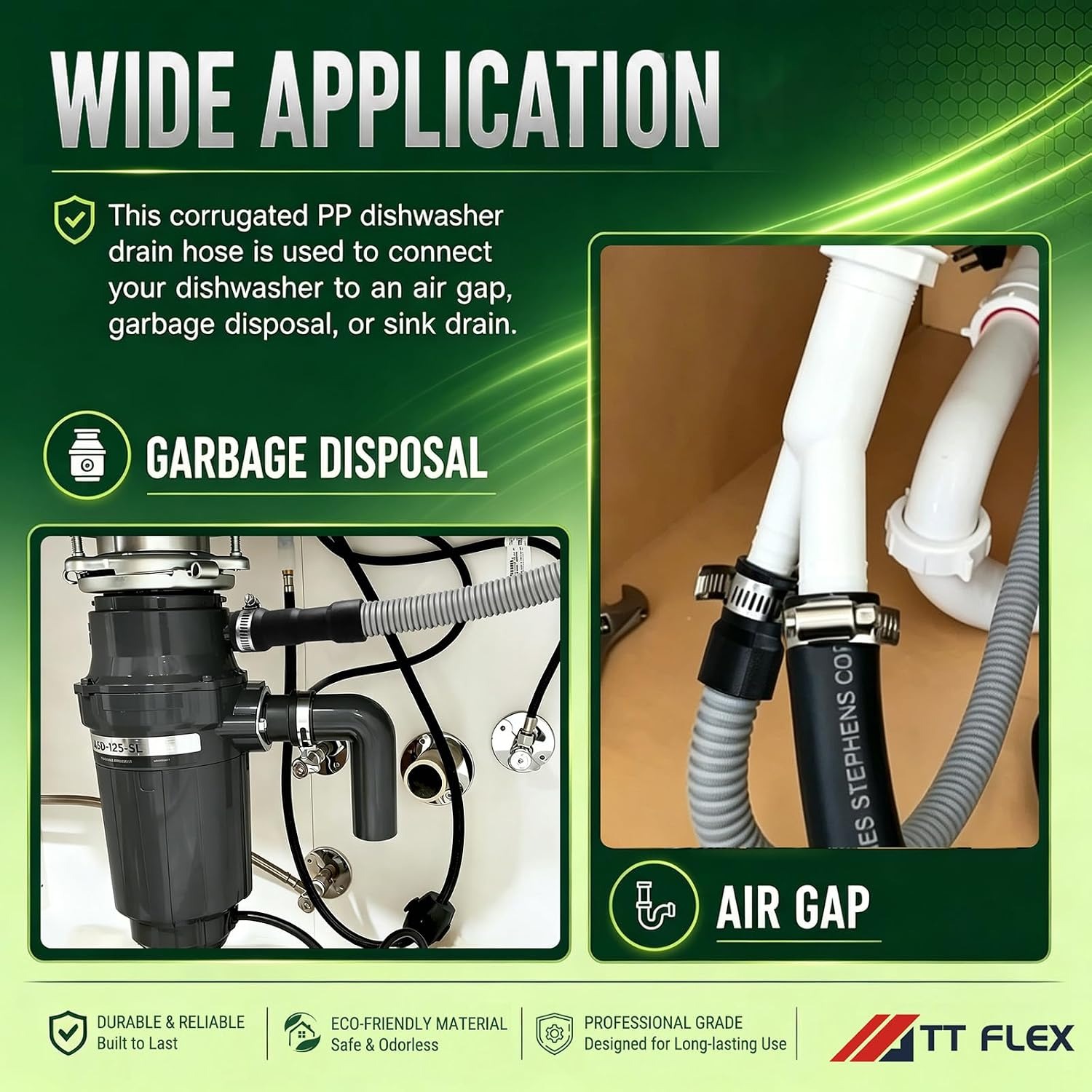
Form your high loop. Secure the top of the loop to the underside of the counter or the cabinet wall so it stays up. If you are using an air gap instead, follow the inlet and outlet legs as marked on the fitting.
Turn everything back on and run a short cycle. Watch both connections through the drain phase, when there is actual pressure in the line. Check again after the cycle finishes, then one more time the next day. Clamps settle slightly as the hose relaxes, so a small extra turn is sometimes needed.
Keeping it working
Drain hoses need very little care, but a few habits help. Keep the run free of tight bends and never let a cabinet foot or a pulled-out appliance crush it. If you remove the dishwasher for any reason, feed the hose rather than yanking it.
If drainage slows, check the hose for a sag before blaming the pump. Lift the line, feel for a heavy section that is holding water, and resupport it higher. If you ever smell something stale, flushing the hose with warm water while it is disconnected is quick and often enough.
When you do take it off, drain it fully and coil it loosely. Folding a hose creases the ribs, and a crease becomes a kink the next time you fit it.
The short version
This is a 144 inch, black, corrugated dishwasher drain hose with stepped ends that trim to fit. The dishwasher side suits 11/16 inch, 1 inch and 1-1/8 inch outlets. The sink side suits 5/8 inch, 3/4 inch and 1 inch connections on a disposal, tailpiece or air gap. The outside diameter is 1.06 inches with a 0.0625 inch nominal wall, and stainless steel clamps are supplied.
Measure both ports, measure the route and add slack, cut square at the right ring, clamp firmly, and keep a high loop. Do that and the hose will quietly do its job for years.