



The complete guide
How to Choose and Use a Long Flexible Drain Brush
The blockage is never where you can see it
Open a kitchen cabinet and you will probably find a cotton bud, a skewer and a bent coat hanger that have all been drafted into drain duty at some point. They share the same flaw. They clear the first inch and leave the rest.
Narrow tubes clog in the middle. A fridge defrost line runs down the back of the cabinet and curves before it reaches the drip tray. An aquarium airline snakes behind the stand. A sunroof drain disappears into a car pillar. The grime collects along the inner wall over months, a little at a time, until water slows down or stops entirely. By the time you notice a puddle in the salad drawer or a fish tank filter that sounds wrong, the buildup has been there a while.
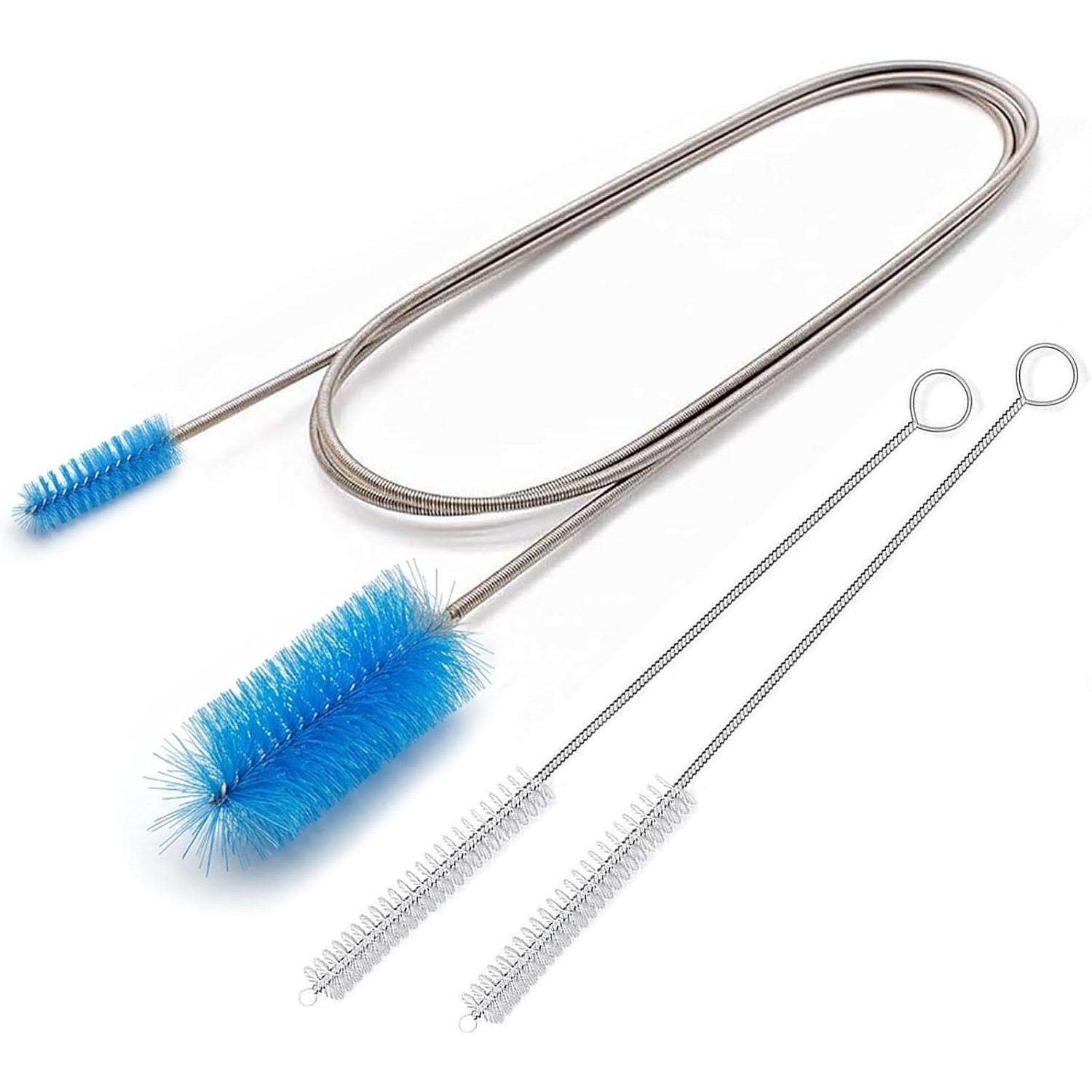
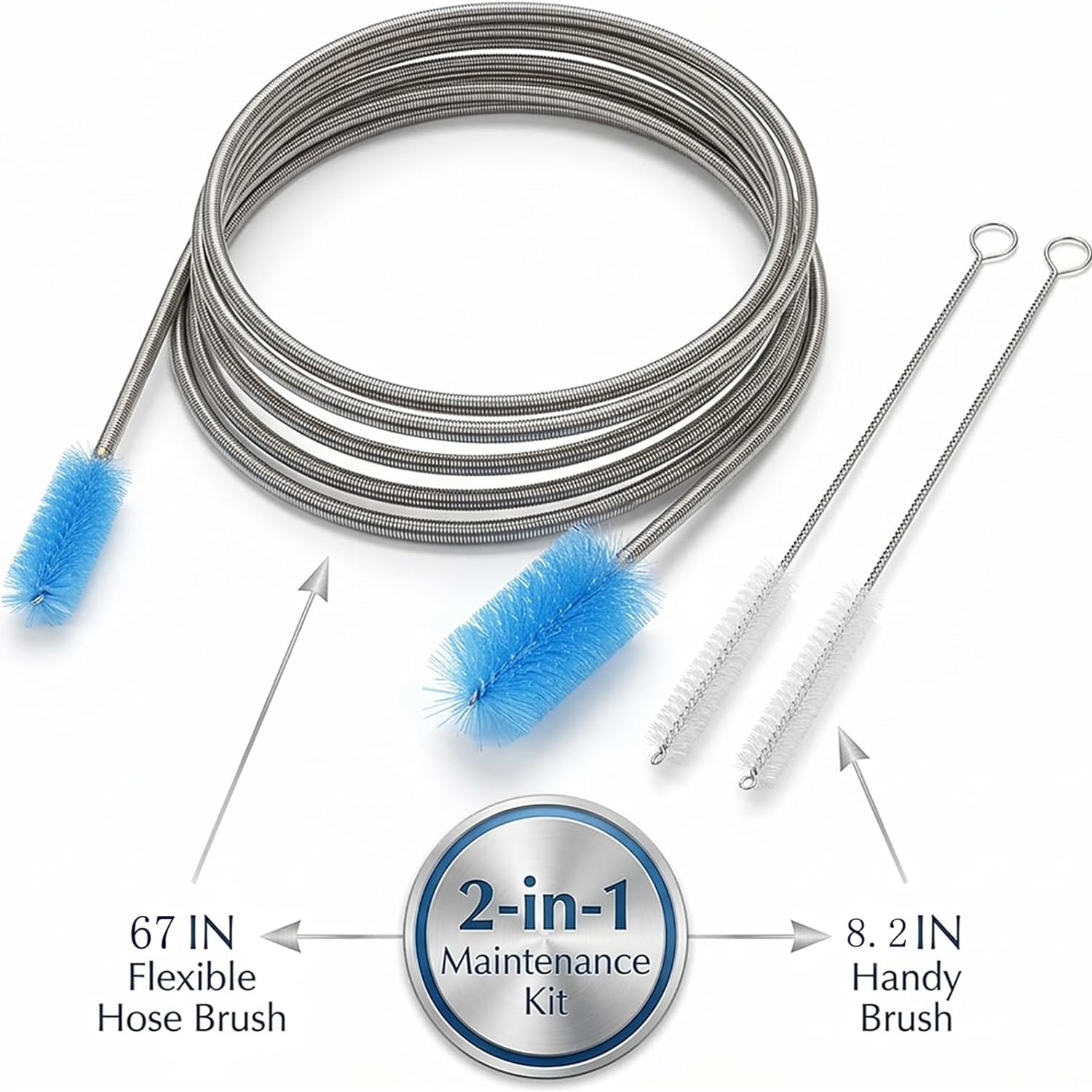
A 67 inch flexible brush solves this in the most direct way possible. It is long enough to enter one end and exit the other, which means the gunk gets pushed out rather than compacted further in.
How the brush actually works
There are three parts to it and each one earns its place.
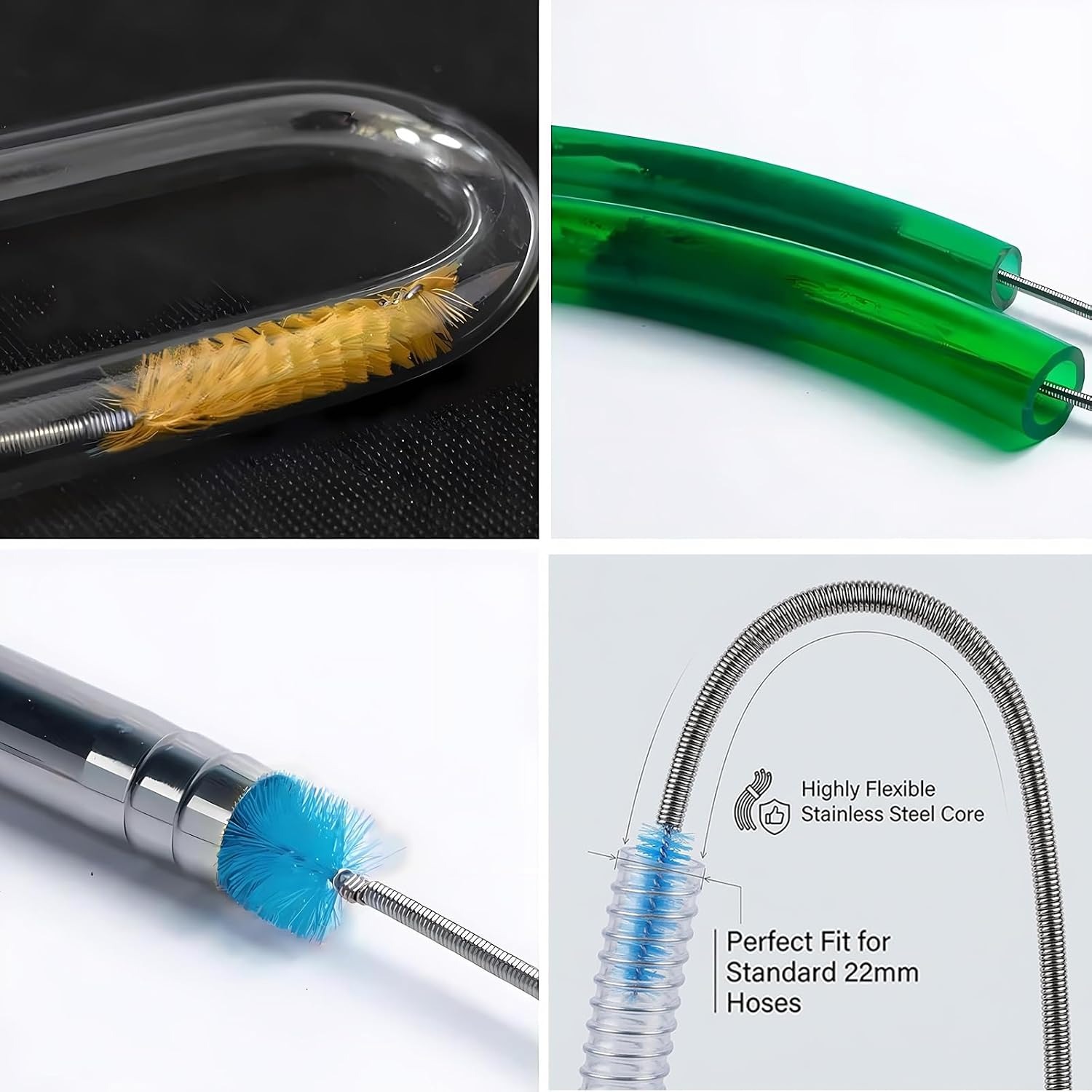
The core is a stainless steel wire spring. This is the part that decides whether the tool is useful or frustrating. A stiff rod will not go around a bend. A soft cord will go around the bend but then bunch up the moment it meets resistance, because you have nothing to push against. A spring core sits between the two. It flexes enough to follow a U-shaped section and still transmits force from your hand to the brush head.
The bristles are nylon, rated soft. They work by making contact with the inner wall and dragging residue loose. This is why slow, repeated passes beat one hard shove. You are not drilling through anything. You are sweeping.
The third part is the double-ended design. Two different head sizes on one tool means you are not guessing whether to buy the 6 mm brush or the 12 mm one. Flip it around and use whichever end fills the tube better.
Who this suits
Aquarium keepers probably get the most out of it. Lily pipes, airlines, filter intake tubes and canister hoses all build algae and biofilm, and all of them are awkward shapes. A long brush with soft bristles is one of the few tools that cleans them without marking the surface.
Anyone with a fridge that sometimes pools water underneath the crisper drawer is the second group. That is almost always a blocked defrost drain, and it is almost always fixable in ten minutes with a brush like this instead of a service call.
Then there is the long tail of small jobs. Coffee machine lines. Homebrew siphon tubing. Dehumidifier outlets. Camper van sink drains. Car sunroof channels. Narrow medical hoses that need regular cleaning according to the device maker's instructions. The pattern is the same every time, a tube too long and too curved for anything rigid.
The two 8.2 inch straw brushes in the set cover a different need. They are for the frequent small stuff, drink bottle straws, sippy cup valves, spouts and test tubes. You will reach for those far more often than the long brush, and having them already in the kit means the straw does not get skipped on bottle washing day.
Choosing the right brush for your tube
Size is the main decision. Aim for a brush head slightly wider than the inside diameter of the tube. The bristles should compress a little when they enter, because that compression is what creates the scrubbing pressure. Too narrow and the brush slides down the center without touching the walls. Too wide and you will jam it.
Length matters more than people expect. A brush that reaches halfway through a tube just moves the blockage along. Measure the longest run you need to clean and buy with room to spare. The best long hose cleaning brush for your situation is usually the one that is a bit longer than you think you need.
Bristle hardness is the third factor. Soft nylon is right for clear plastic, acrylic, silicone and anything food or aquarium related. Stiff or wire bristles belong in rougher jobs like metal pipework, and they will leave marks on softer surfaces.
Finally, look at the core. Stainless steel spring is the standard for this type of tool because it bends and resists rust. Plain steel wire will eventually show corrosion if it gets stored damp.
Using it without making a mess
Start with the dry push. Feed the brush in slowly from one end and let the spring find its own way around the curve. If you hit firm resistance, back off and try a gentle twist rather than force. Forcing is how you kink a spring or pop a tube off a fitting.
Once the brush is through, work it back and forth a few times along the whole run. This is where the cleaning happens. Then flush the tube with warm water, ideally from the direction you want the debris to travel.
For greasy buildup, a little warm soapy water on the bristles helps a lot. For aquarium work, skip the soap entirely and rely on mechanical cleaning, then rinse the brush in tank water before it goes anywhere near livestock.
A tip for fridge drains specifically. Clear the tube first, then pour a small amount of warm water down the opening to confirm it reaches the drip tray. If it does, you are done. If it does not, the blockage is further along and worth a second pass.
Looking after the brush
This part takes thirty seconds and doubles the life of the tool.
Rinse it under running water straight after use so the debris does not dry onto the bristles. If it feels greasy, run a drop of dish soap through it and rinse again. Shake off the water and hang it or lay it flat until it is properly dry. Damp storage is the enemy of any wire-core brush.
When you store it, coil it loosely. Folding it hard in one spot puts all the stress on a single section of the spring, and that is where it will eventually fail. A hook in the laundry or the garage is the easiest answer.
The straw brushes need the same treatment, just faster. Rinse, squeeze, air dry.
The short version
A long flexible drain brush is a cheap tool that fixes an annoying class of problem, the tube you cannot reach into. At 67 inches with a stainless steel spring core and soft nylon bristles, this one covers appliance drain lines, aquarium tubing, shower and sink runs, and hobby equipment, with two head sizes so you are not buying a second brush.
Match the head to your tube size, push slowly, work it back and forth, then rinse and dry the brush before it goes away. Do that and it will keep working for years. The two straw brushes handle the daily bottle and spout jobs in the meantime, which means the kit earns its space in the drawer well before the next big clean comes around.