
The complete guide
How To Choose A Kitchen Sink Strainer That Actually Fits
The slow drain nobody plans for
Blocked kitchen drains almost never happen in one dramatic moment. They happen over months. A spoonful of rice here, a scrape of sauce there, a cup of cold tea tipped down the sink with the leaves still in it. Each rinse sends a little more solid matter into the trap under your sink, where it mixes with cooking fat and starts to set. By the time the water is standing in the bowl, you are either taking the pipe apart or pouring chemicals into it.
A sink strainer is the boring fix that stops all of that. It sits in the drain hole, water goes through, food does not. Empty it into the trash when you finish dishwashing and the stuff that would have built up in your pipes ends up where it belongs. For the price of a couple of coffees, it is the highest-value thing you can add to a kitchen sink.
This guide covers what to look at before you buy one, why the edge finish matters more than people expect, and how to keep a stainless steel drain basket working well for years.
How a sink strainer works
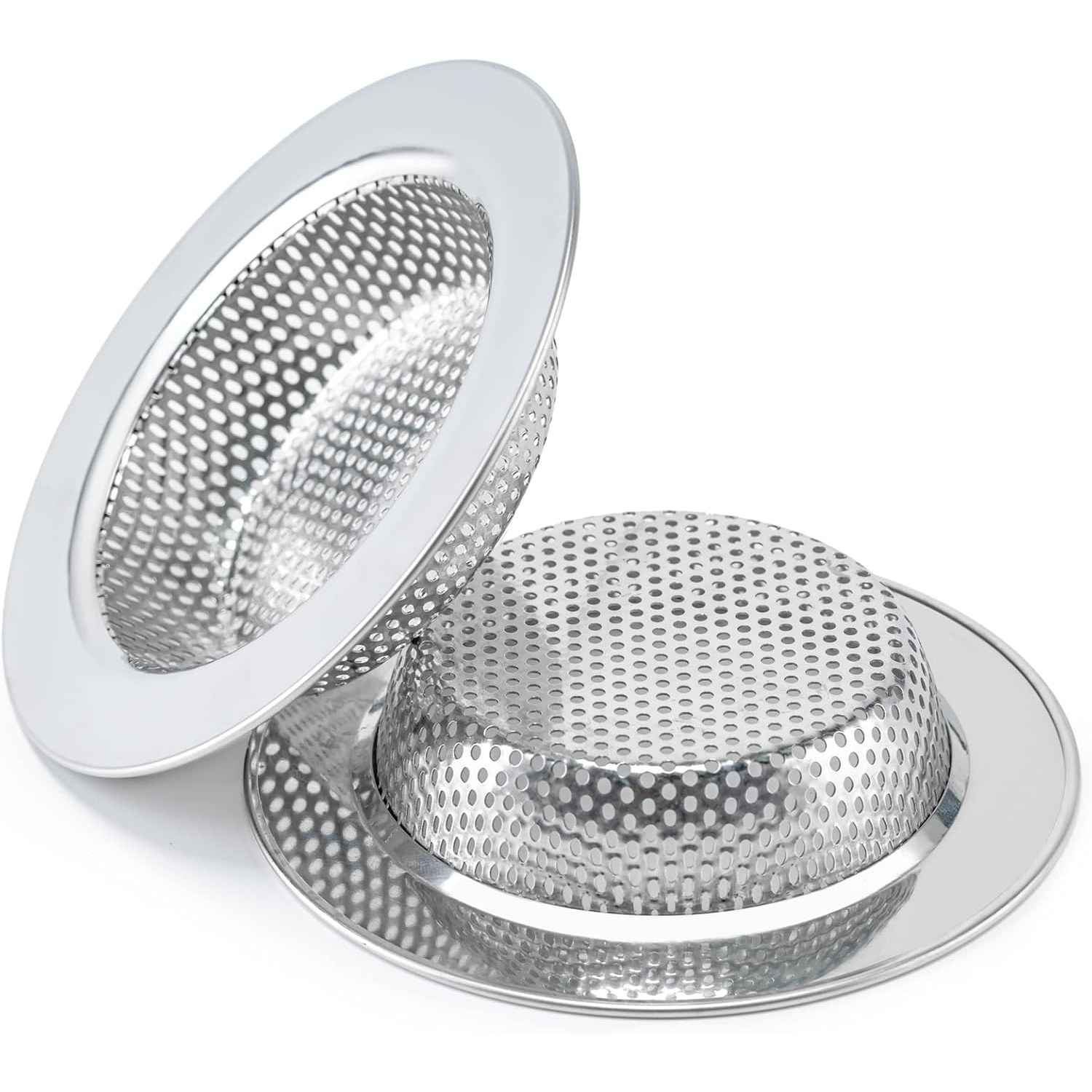
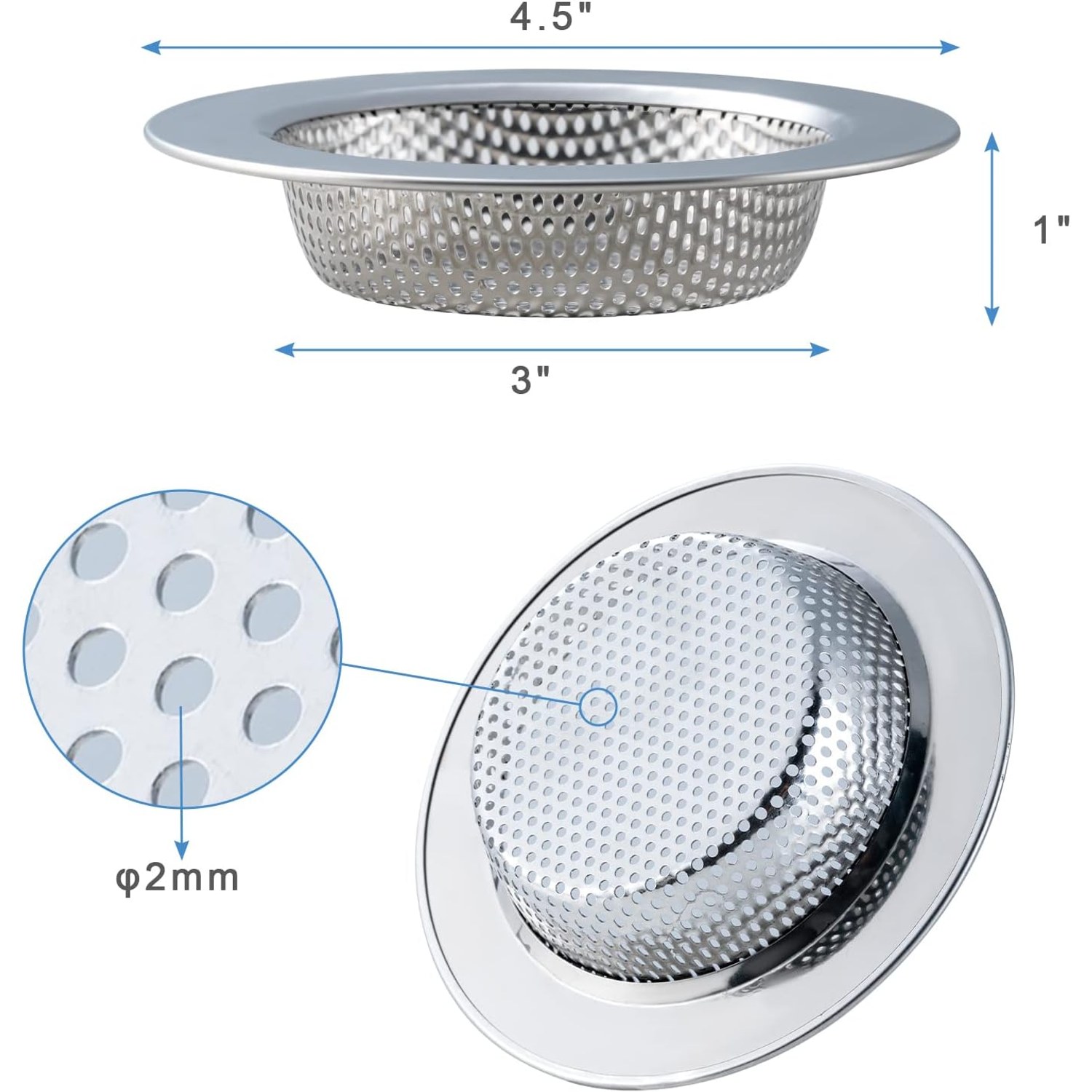
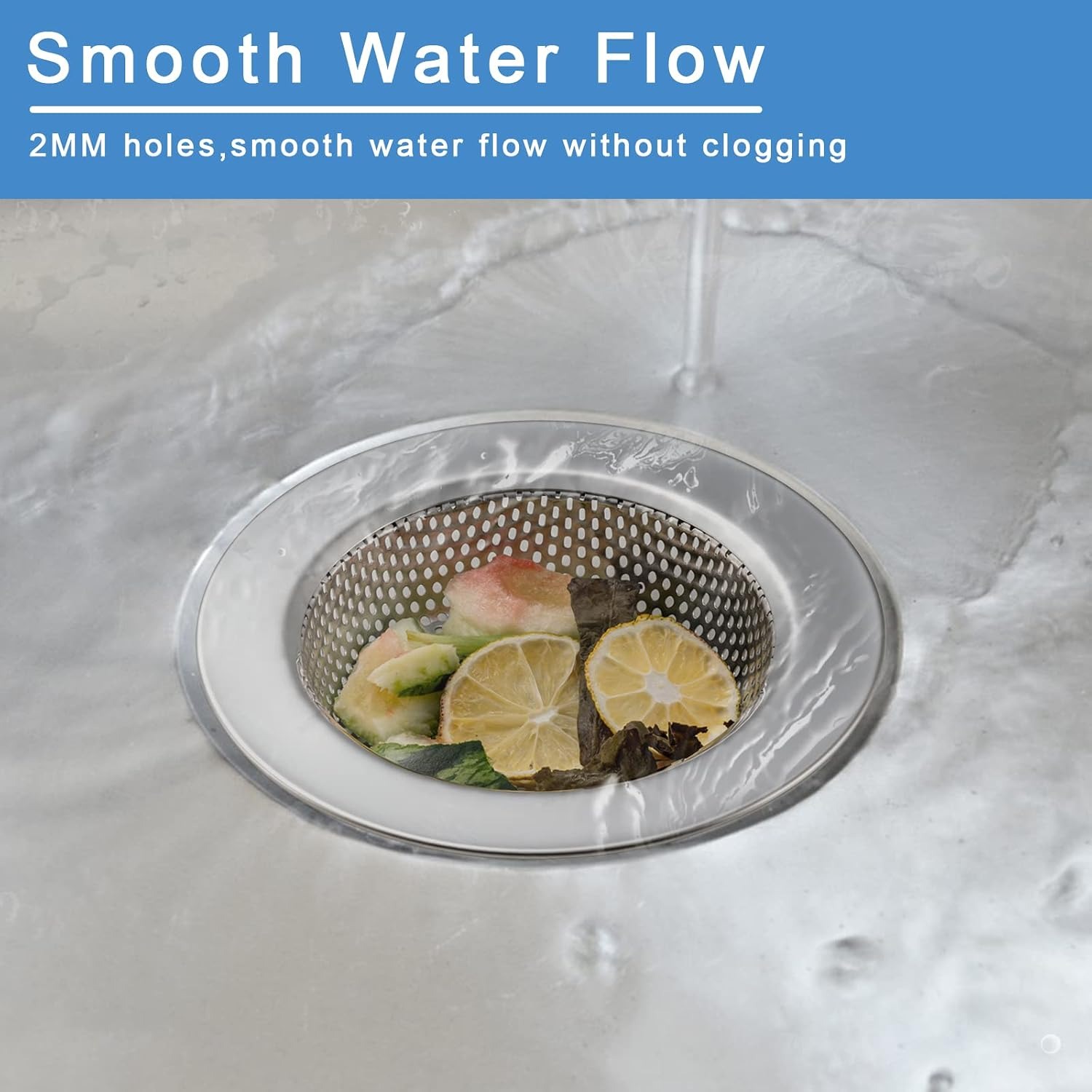
The idea is simple. The basket drops into the drain opening so its rim rests on the sink surface around the hole. The sides and base are perforated with small holes, around two millimeters across on this model. Water passes through easily because water molecules do not care about a two millimeter gap. Rice, pasta, peelings, crumbs, tea leaves and bits of salad do care, and they stay in the basket.
That hole size is a balance. Make the holes bigger and the sink drains faster but lets more through. Make them smaller and you catch finer particles but the basket clogs with grease sooner and you end up with water pooling. The size used here sits in the normal range for kitchen use, catching the solids that cause trouble while keeping a reasonable flow.
There is no mechanism, no seal and nothing to wear out. The only moving part is you, lifting it out and tipping it into the trash.
Why the rim is the part to check
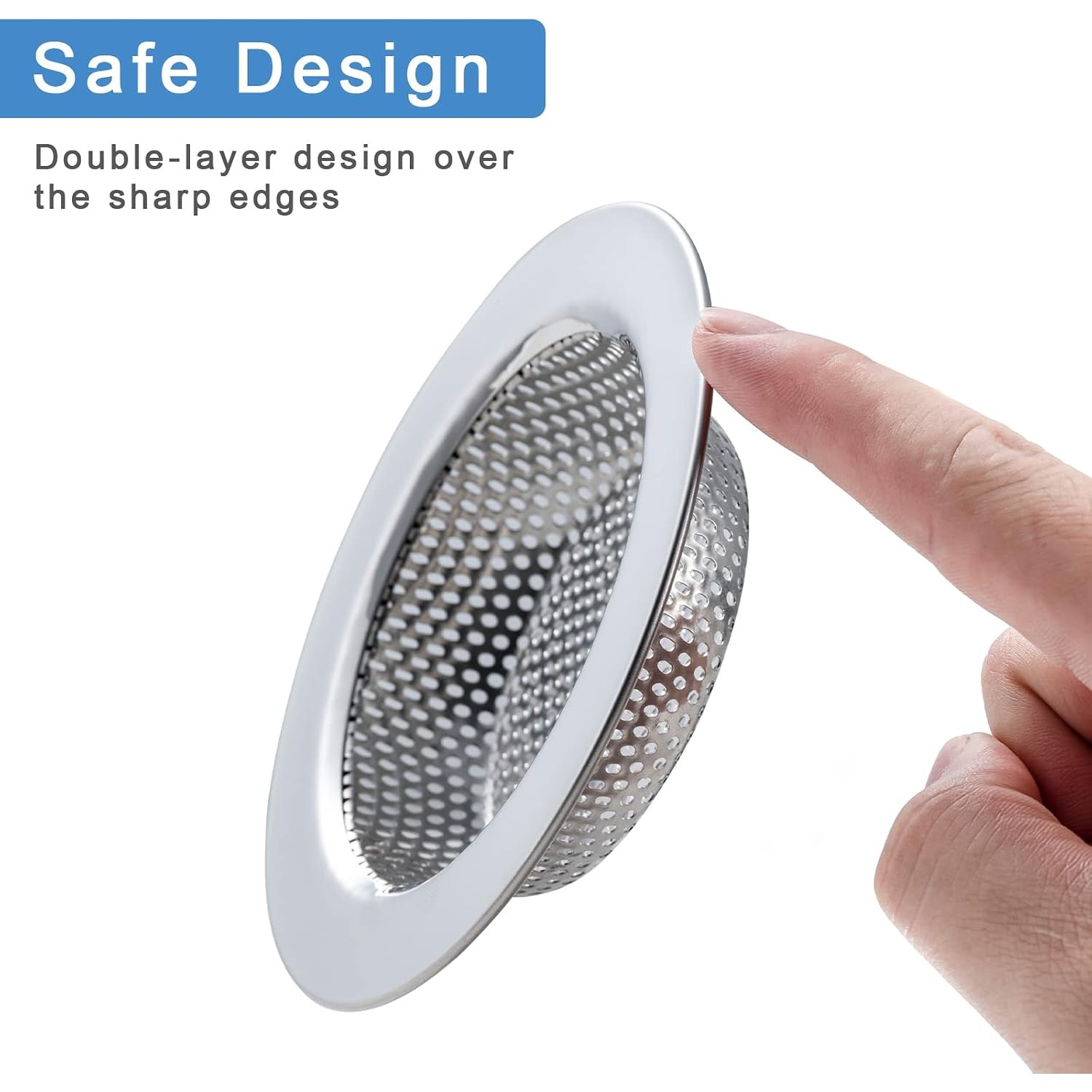
Most cheap strainers are pressed out of thin sheet steel. The press cuts the circle, and the cut edge around the top rim is left as it comes off the tool. It looks fine. It feels fine when it is dry. Then you reach into a sink full of gray water to pull out a basket loaded with wet scraps, your fingers slip, and you find out exactly how sharp a stamped steel edge can be.
The double layer rim on this strainer solves that by folding the metal back over itself. Instead of one thin cut edge, you get a rounded lip made of two thicknesses of steel. It is a small manufacturing step and it makes a real difference to how the thing feels in daily use, particularly if children or older relatives are doing the dishes.
There is a secondary benefit. A folded rim is a lot stiffer than a single-thickness one. Cheap baskets go out of round after they get knocked about, and once the rim bends the basket stops sitting flat in the drain. The doubled edge holds its shape.
Getting the size right
This is where most sink strainer purchases go wrong, so it is worth spending two minutes with a tape measure.
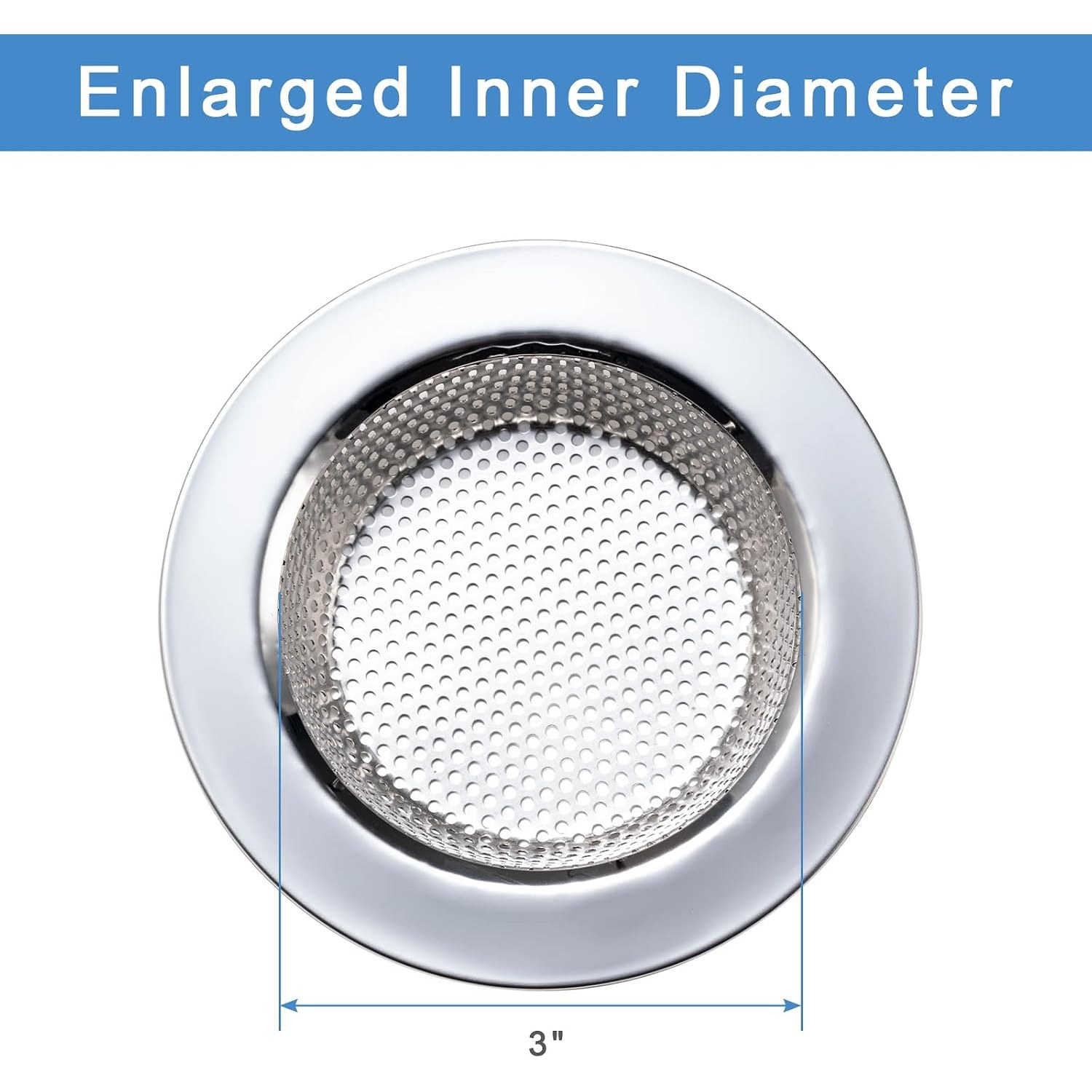
There are two numbers that matter. The first is the width of your drain opening. Take out whatever is in there now and measure straight across the widest point of the circle. This strainer is built for openings around 3 inches, which is a very common kitchen size but not a universal one. The second number is depth, meaning how far down it is from the sink surface to the step or lip inside the opening. The basket here is 1 inch deep, so you want roughly that much room.
The 4.5 inch figure in the title is the outer rim. That part does not go into the hole, it sits on top of it. As long as your sink has a flat area of a few centimeters around the drain, the rim has somewhere to rest.
Two situations deserve extra care. If you have a waste disposal unit installed, the opening shape is usually different and a standard basket may not seat properly. And if your sink is old, imported or custom-made, do not assume it follows a standard at all. Measure first.
Who this suits
Anyone who cooks with rice, pasta, grains or fresh vegetables will see the benefit within a week. Those are the foods that produce the most small solids during rinsing, and they are the ones that cause the most trouble downstream.
Renters do well with a drop-in basket because nothing is fixed, drilled or glued. It goes in on day one and comes out with you when you move. Shared houses and student kitchens are another good fit, partly because a best kitchen sink strainer in that context is one that anyone can empty without being shown how, and partly because the stakes of a blocked drain in a shared kitchen are high.
A two pack also makes sense for anyone with a double-bowl sink. One in each side means you are never tempted to skip it on the bowl without a strainer, which is exactly how scraps still end up in the pipe.
Where it suits less well is a bathroom sink, because sink openings are much narrower, and any sink with a non-round or recessed opening that will not take a flat-rimmed basket.
Living with it day to day
The routine takes seconds. Wash up as normal, lift the basket out by the rim, tap or scrape the contents into the trash or compost bin, give it a rinse and drop it back in. The sooner you do it the easier it is, because food that has dried onto perforated metal takes real effort to shift.
Once a week or so, give it a proper clean. Hot water, dish soap and a brush. The enemy is grease, not food, because grease is what glues particles into the holes and chokes the flow. Hot water does most of the work on grease, so let it soak for a few minutes rather than scrubbing cold.
Skip steel wool and powdered scouring cleaners. They will dull the bright finish for no real gain. A sponge or a soft brush is enough on stainless steel.
Drying it before you put it back cuts down on water marks, particularly in hard water areas where limescale leaves white rings. If scale does build up, a soak in diluted white vinegar will lift it.
Having two in the pack helps here. One can soak or dry while the other one is doing the job, which means there is never an excuse to leave the drain uncovered.
What stainless steel gives you
Plastic strainers exist and they are cheaper again, but they stain, they warp near hot water, and the thin plastic webbing snaps. Silicone versions are soft and pleasant to handle but can sag into the drain opening and hold water.
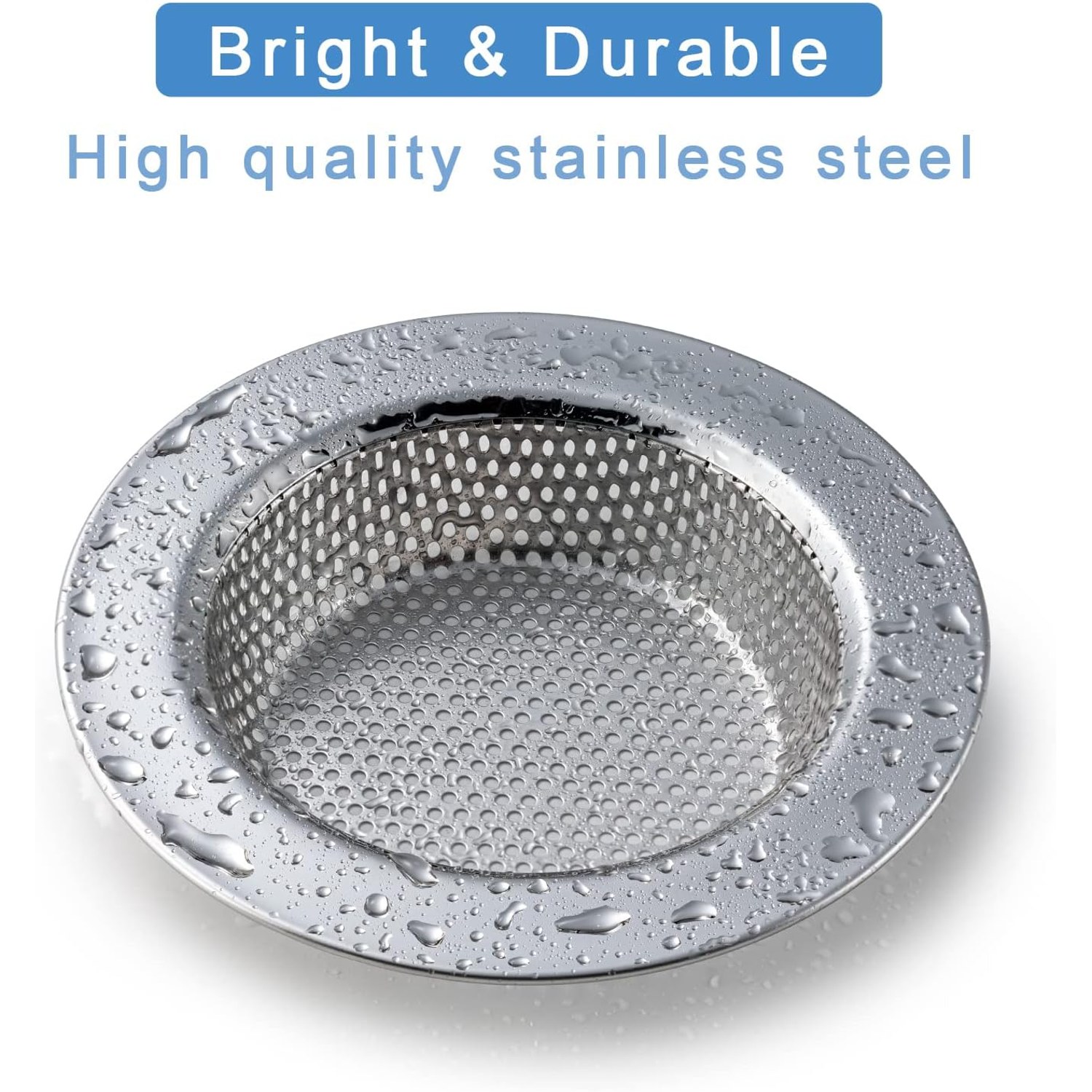
Stainless steel sits in a different place. It handles boiling water straight from a pasta pan without any change, it does not absorb color from turmeric, tomato or beetroot, and it does not take on smells. This model is listed as rustproof with a stainless finish, which is what you want for something that spends its life wet.
The trade-off is weight and noise. Metal clinks against a metal sink. That is about the extent of it.
The short version
A sink strainer is one of the least exciting things in a kitchen and one of the most useful. It stops food reaching your pipes, which is the single biggest cause of slow kitchen drains and bad drain smells.
If you buy one, check two measurements first: the width of your drain hole, which wants to be around 3 inches for this basket, and the depth of the recess, which wants to be about 1 inch. Then look at the rim. A folded double layer edge costs almost nothing extra and spares your fingers every time you empty it.
Beyond that, keep it clean, tip it out after every wash-up, and let hot water do the work on grease. Two in a pack means one for each bowl, or a clean spare ready to go. That is really all there is to it.