


The complete guide
How To Choose And Fit Downspout Guards Without Making More Work For Yourself
The problem starts at the hole, not the gutter
Walk around a house after a storm and you can usually tell which downspout is blocked. There is a stain down the render, or a trench of washed-out soil in the bed below, or a line of green mold where water has been running down brickwork for months.
Nine times out of ten, the blockage is not spread along the gutter. It is packed into the first few inches of the drainpipe. That opening is where the gutter goes from a wide open channel to a narrow tube, and wet leaves bridge across it very easily. Once two or three leaves catch on the rim, everything else piles on top.
Clearing that is miserable. You either feed a hose down from the roof and hope, push a drain rod up from the bottom, or take the pipe apart. A downspout guard avoids the whole situation by keeping the debris above the opening where you can reach it.
What these guards do
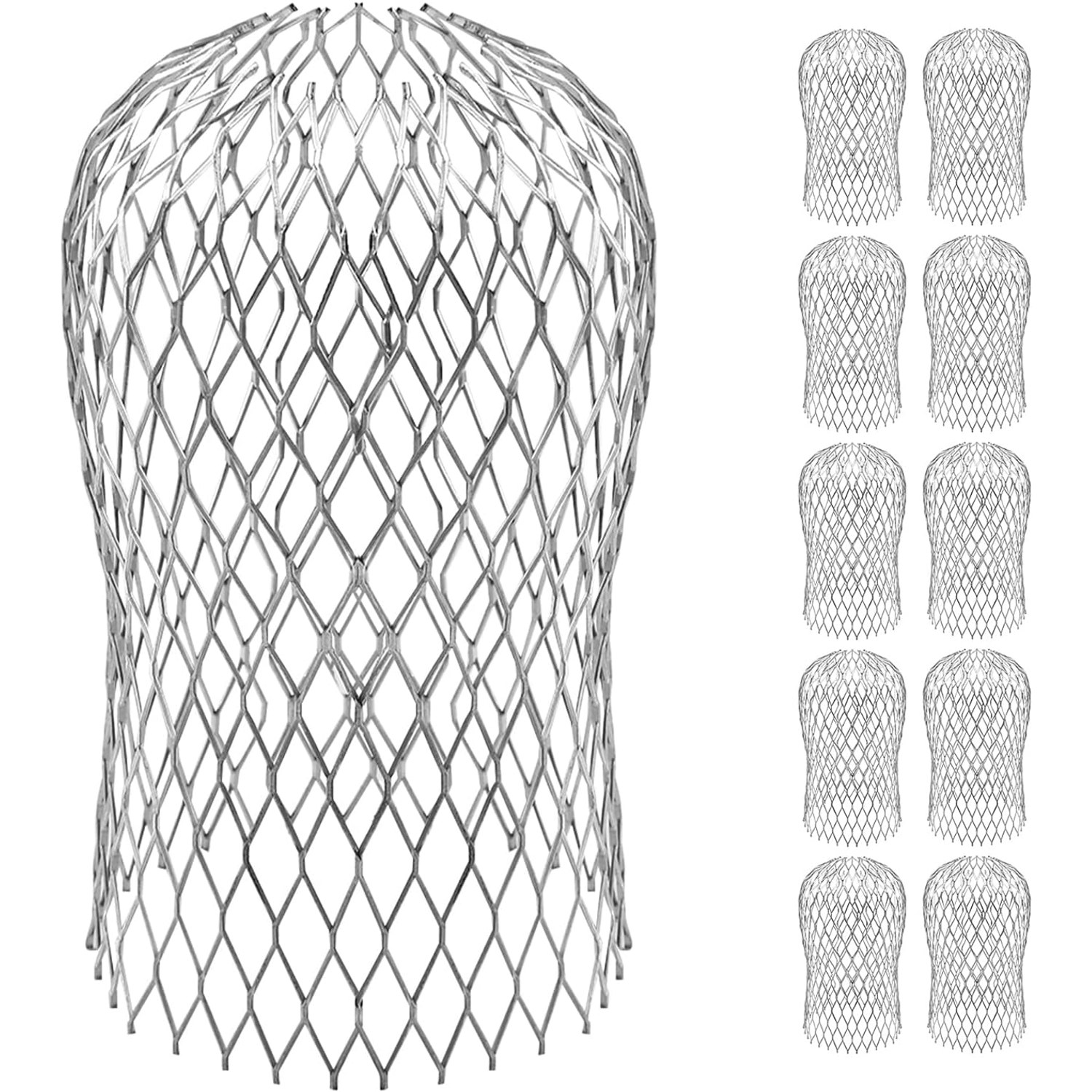
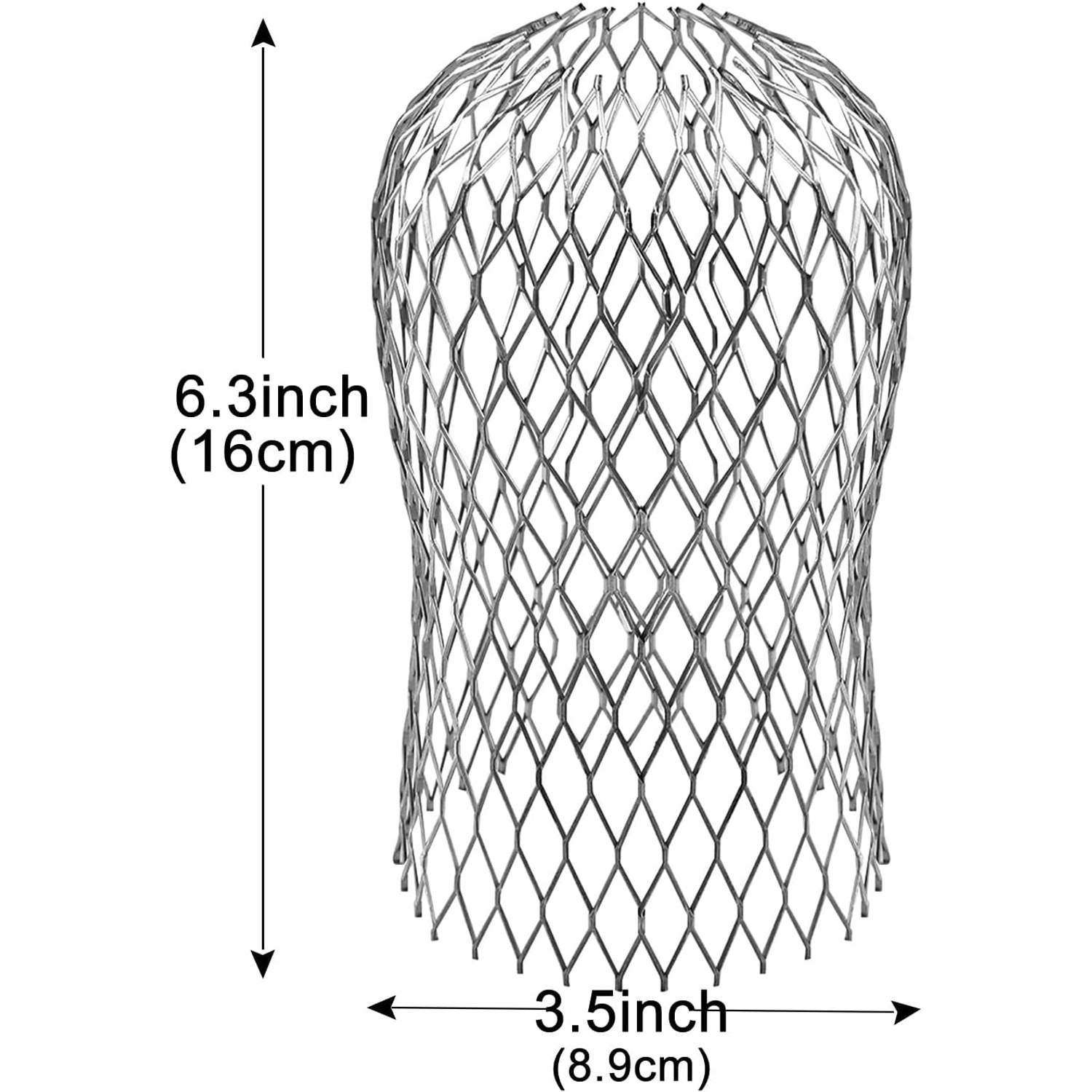
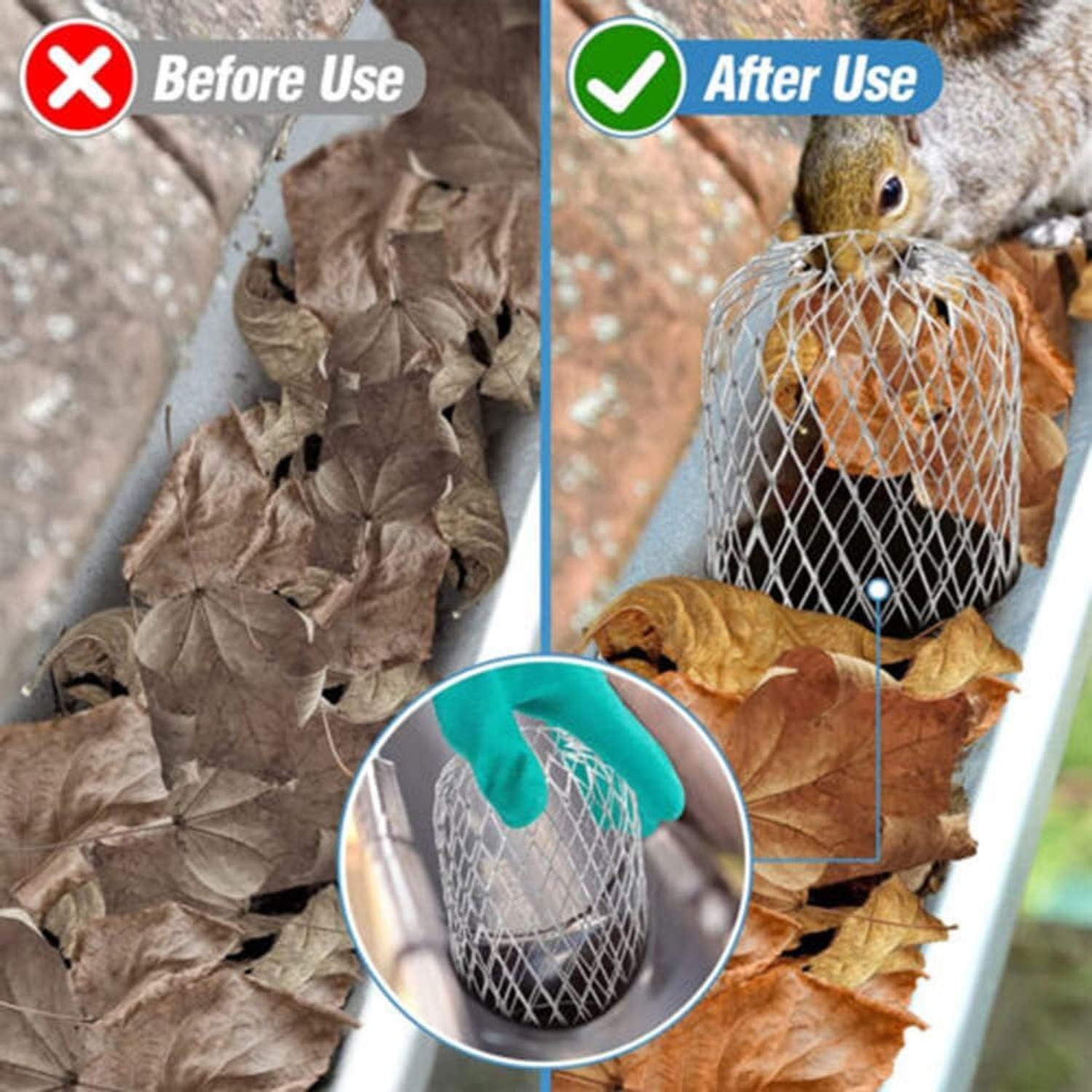
Each one is a piece of aluminum mesh, 3.5 inches wide and 6.3 inches tall, shaped into a basket that sits in the mouth of the downspout. Rainwater drains through the mesh and carries on down the pipe. Leaves, seeds, twigs, roof moss and the gritty sand that washes off asphalt shingles all stay on top.
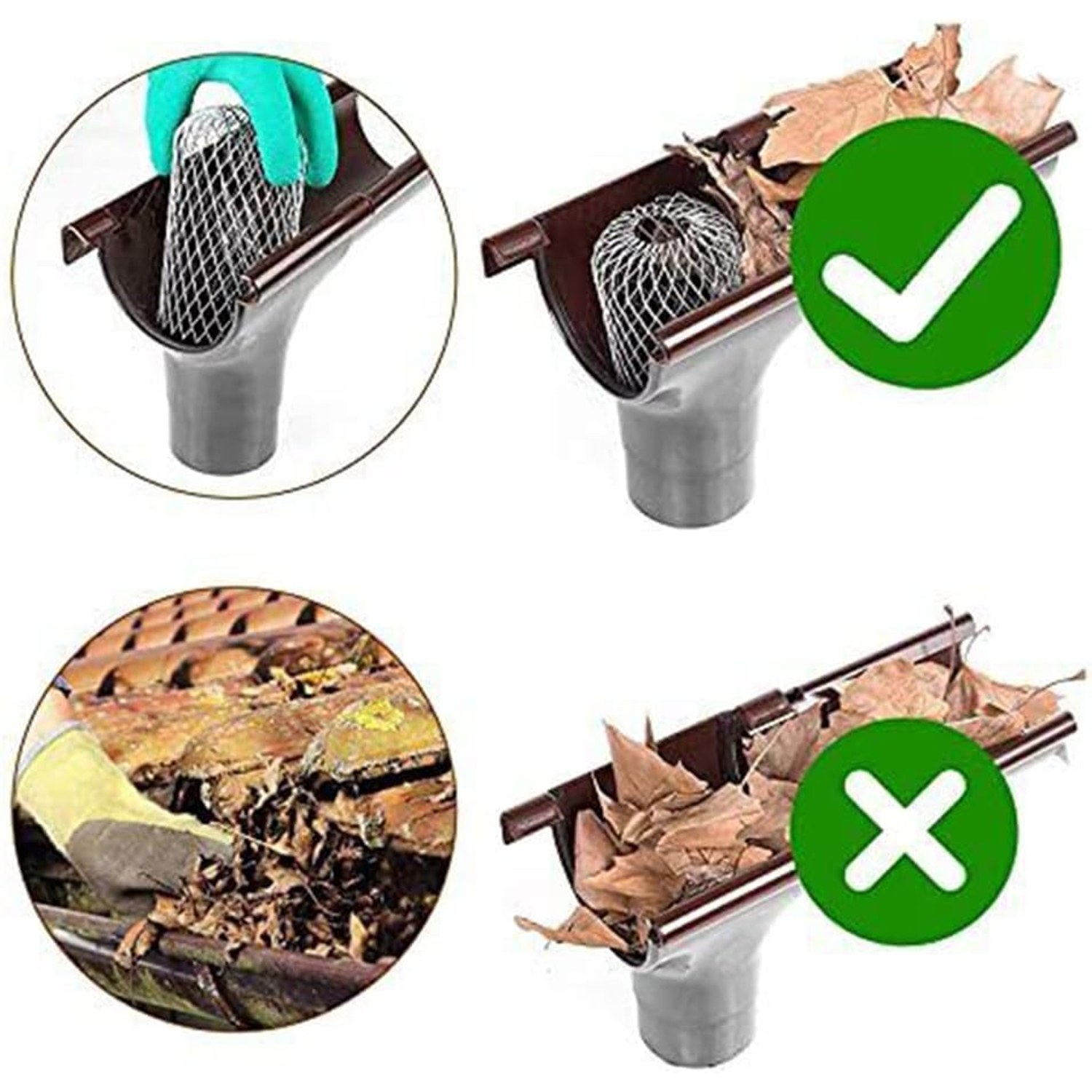
That changes the job completely. Instead of unblocking a pipe you cannot see into, you lift a small basket out, tip it over the edge, and put it back. Two minutes per downspout, done from the same ladder position you would use to check the gutter anyway.
The pack contains ten, which covers a typical house with spares. Garages, sheds, roof terraces and balcony drains all have the same problem on a smaller scale, so the extras rarely go to waste.
Why aluminum matters here
The spot these guards live in is about the harshest small environment on a house. It is wet for days, bakes dry in summer, freezes in winter, and sits under a steady drip of whatever washes off the roof.
Plastic guards go chalky and crack. Painted steel chips, then rusts from the chip outward, and eventually a rusted guard is worse than no guard because the flaking metal adds to the clog. Aluminum does not rust. It develops a dull gray oxide layer on the surface and then stops, which is exactly what you want from something you are going to forget about for six months at a time.
Aluminum is also soft enough to shape by hand and springy enough to hold that shape. That combination is what makes the fitting method work.
Fitting them
There are no screws, clips or brackets, and you do not need a drill. The process is simple.
Set your ladder safely and put on a pair of gloves, because cut mesh edges can scratch. Clear any loose debris from around the downspout opening so the guard has a clean rim to sit against. Take one guard and bend it with your hands to roughly match the shape of the hole, rolling it round for a circular pipe or squaring the corners for a rectangular one. Press it down into the opening until it grips against the inside wall of the pipe, then give it a gentle tug. If it stays put, you are done. If it lifts out too easily, open the shape slightly and press it in again so it pushes outward harder.
The guard should sit low enough that water flowing along the gutter floor runs straight into it, not over it. A guard perched too high will send water past the opening and along the gutter instead.
Who these suit
Anyone with trees near the roofline gets the most from them. Oak, maple, birch and anything that drops seed pods in spring will fill a downspout opening faster than you expect.
They also suit people who find ladder work difficult or who have gutters on a second story. The value is not that the guards remove the need to go up, it is that each trip up becomes short. Lifting out a mesh basket is a different task to spending twenty minutes with a hose trying to shift a compacted plug of leaf mulch.
Rental property owners and anyone managing multiple buildings will like the ten pack size for obvious reasons. Fitting every downspout on a small block in one visit is a reasonable afternoon.
Choosing the right guard for your downspouts
Measure before you buy anything. Hold a tape across the downspout opening at its widest point. These guards suit openings roughly 2 to 4 inches across, which covers the large majority of residential drainpipes.
Shape matters less than size, since the aluminum adapts. Round, oval, square and rectangular all work. What does matter is the condition of the pipe. If the top of your downspout is split, heavily rusted or has lost its shape, fix or replace that section first. A guard needs a firm rim to push against.
If you are comparing options, think about what happens at cleaning time. Some systems clip or screw into place, which holds well but turns every clean into a minor repair job. A press-fit guard trades a little holding power for the ability to lift it out one-handed, which is the right trade for something you clean several times a year.
Keeping them working
Set a rhythm rather than waiting for a problem. Late fall, after most leaves have dropped, is the important one. Late spring, after seeds and blossom, is the second. Add a check after any big storm, because a single gust can dump a branch's worth of material in one go.
Cleaning is a lift, shake and rinse. For compacted moss, a stiff brush under a running hose breaks it up. Avoid wire brushes, which scratch the surface, and skip harsh chemicals, since plain water does the job.
While you have the guard out, glance down the pipe. If you can see daylight or hear water running freely when you pour a bucket in, the downspout is clear. If not, now is the time to deal with it, with the opening already accessible.
Store any spares somewhere dry and flat. Aluminum mesh stacks well but creases if something heavy sits on it.
A few realistic expectations
These guards protect the downspout opening. They do not cover the full length of the gutter, so leaves will still land in the channel and still need sweeping out. What changes is that the leaves stay where you can reach them.
Very fine material, like roof grit and pollen, will pass through the mesh. That is fine, because fine material flows away with the water. It is the big stuff that causes clogs.
Pine needles are the hardest case. They are thin enough to thread through mesh at the right angle and sticky enough to mat together. The guards still help, but if you live under pines, plan on checking more often.
The short version
Downspout blockages happen at one specific spot, and these guards cover that spot. Ten aluminum strainers, 3.5 inches wide, flexed by hand to fit openings from 2 to 4 inches, pressed in without tools. They do not rust, they lift out for cleaning, and they turn the worst part of gutter maintenance into a two minute job.
Measure your downspout opening, fit them on a dry day with gloves on, and put a note in the calendar for late fall. That is most of what there is to it.