

The complete guide
Downspout Guards, A Practical Buyer's Guide
The problem nobody sees until it rains hard
Gutters fail in a very specific place. Not along the middle of the run, where there is plenty of room, but at the small round or square hole where the gutter empties into the downspout. That hole is the narrowest part of the entire system, and gravity pushes everything on your roof toward it.
A few dry leaves will wash through. Wet leaves will not. They flatten, stick together and form a mat over the opening. Add a twig, some roof grit and a bit of moss, and you have a plug. The next time it rains properly, water fills the gutter, hits the plug, and goes over the lip instead of down the pipe. That is when you get the waterfall down the window, the wet patch against the wall, and in bad cases water finding its way into the eaves.
The frustrating part is that the fix is tiny. You need something that sits in that hole and keeps the big stuff out. That is all a downspout guard is.
How these strainers actually work
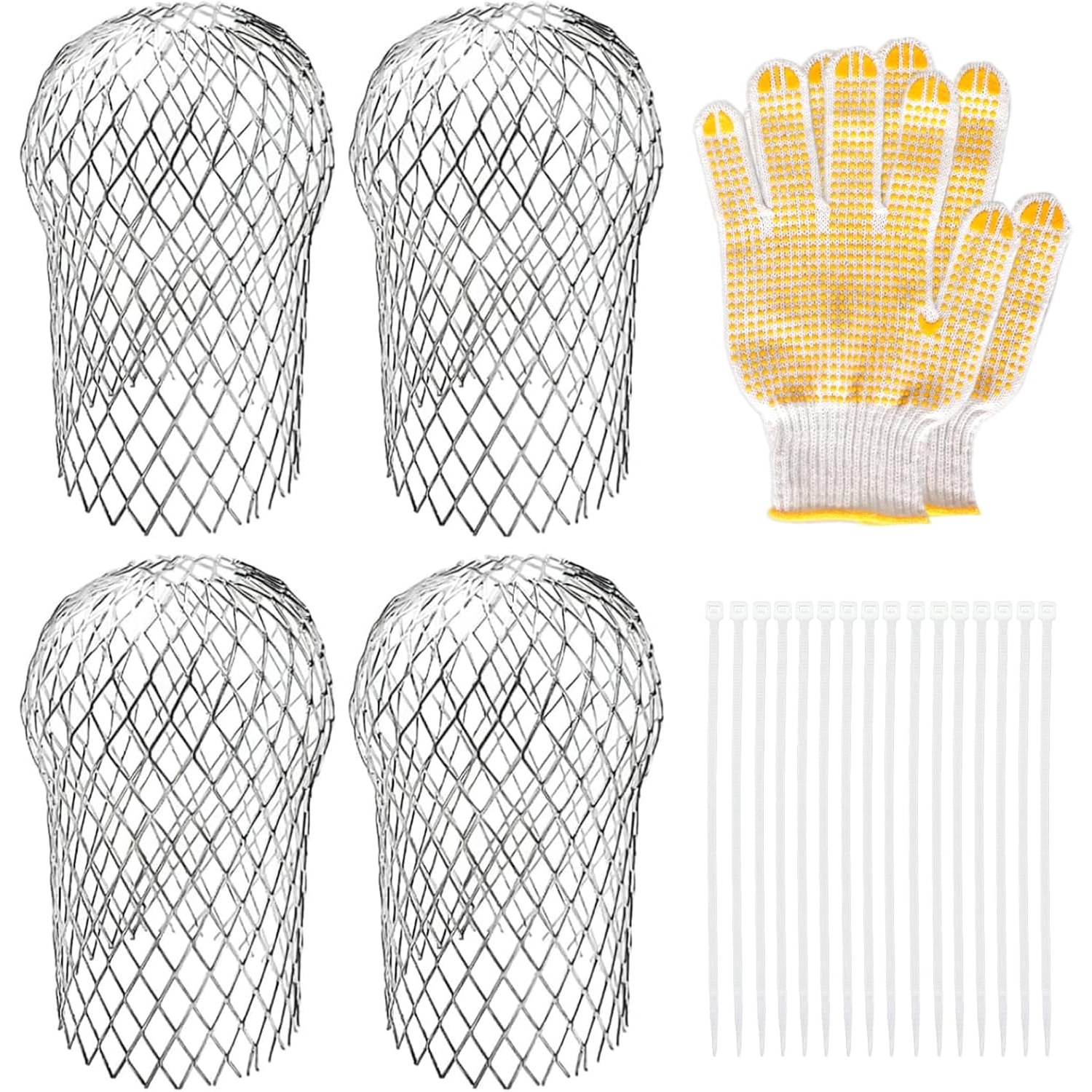
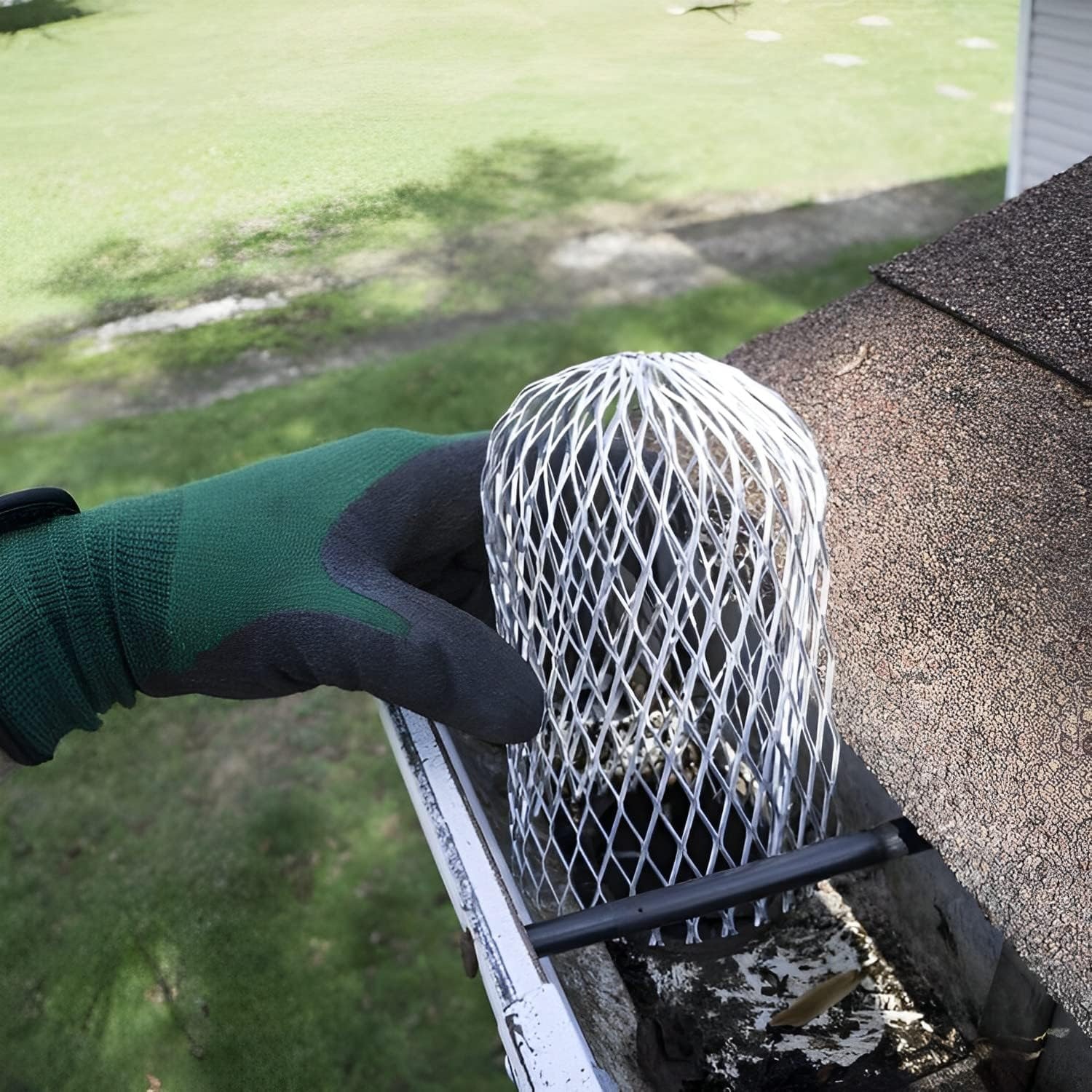
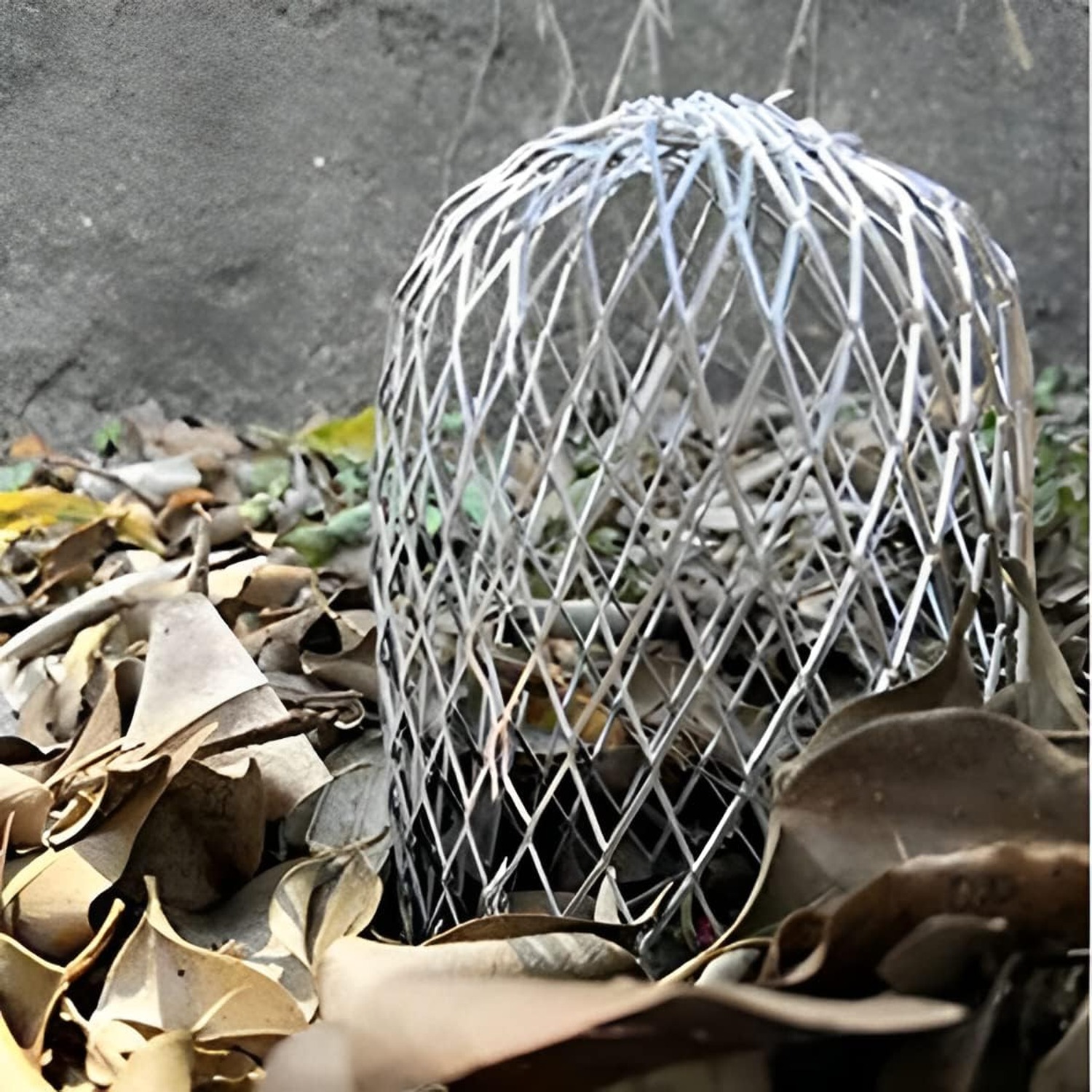
Each guard in this four pack is a sheet of aluminum mesh. It is flexible enough to roll by hand but stiff enough to hold shape once you let go. You roll it into a tighter cylinder, push it down into the downspout opening, then release. The metal springs back out and presses against the inside walls of the pipe. Friction holds it there.
There is no drilling, no sealant and nothing to screw in. That matters more than it sounds. Most downspout openings are at the far end of a gutter run, often above a corner, which is an awkward spot to work with both hands and a power tool. Being able to fit the thing one-handed off a ladder is a real advantage.
Water drains through the mesh normally. Leaves sit on top and dry out. Wind often blows some of them away on its own. What is left stays in plain sight at the top of the pipe, where you can reach it, instead of traveling down into the elbow or the underground drain where you cannot.
Why aluminum and not plastic
You can buy plastic downspout strainers for very little money, and plenty of people do. They work for a season or two. The issue is ultraviolet light. Plastic sitting in direct sun for a year or more goes brittle, and brittle plastic in a gutter eventually cracks and falls apart. You then get fragments washing into the pipe, which is worse than having no guard at all.
Steel mesh is strong but it rusts if the coating is scratched, and rust stains run down the front of the downspout and onto the wall.
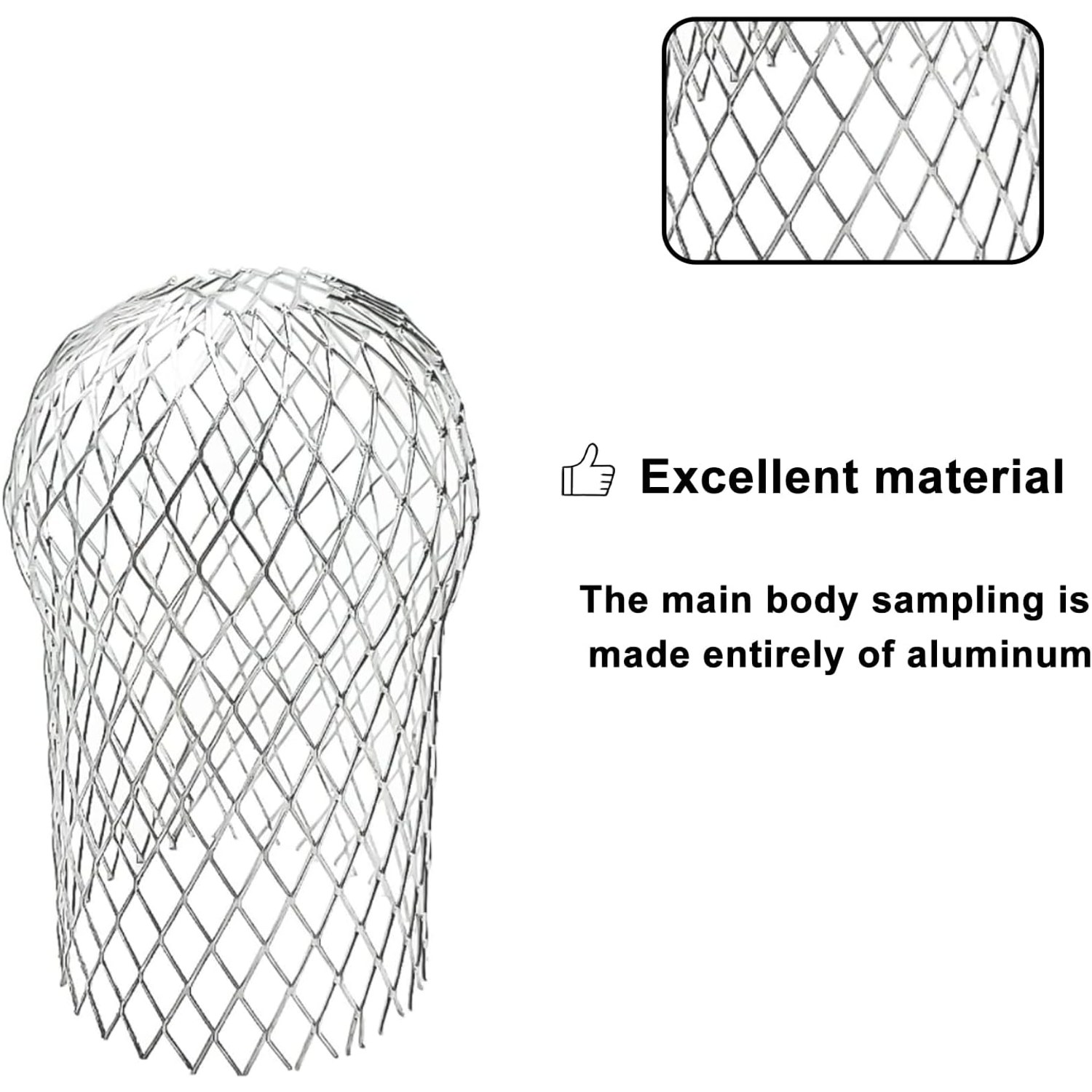
Aluminum sits in a good middle ground. It is light, it bends without snapping, and it does not corrode in normal outdoor conditions. For a part that spends its working life in standing water, that combination is hard to beat. If you have been comparing the best aluminum downspout filter options, this is the main reason the material keeps coming up.
Who these suit
If you have trees anywhere near your roof, you want something at the downspout. That includes neighbors' trees, because leaves travel a long way in wind.
They also make sense on homes with underground storm water drains. A blockage above ground is annoying. A blockage below ground, in a pipe you cannot see or reach, is a plumber's visit. Stopping debris at the top of the downspout is cheap insurance against that.
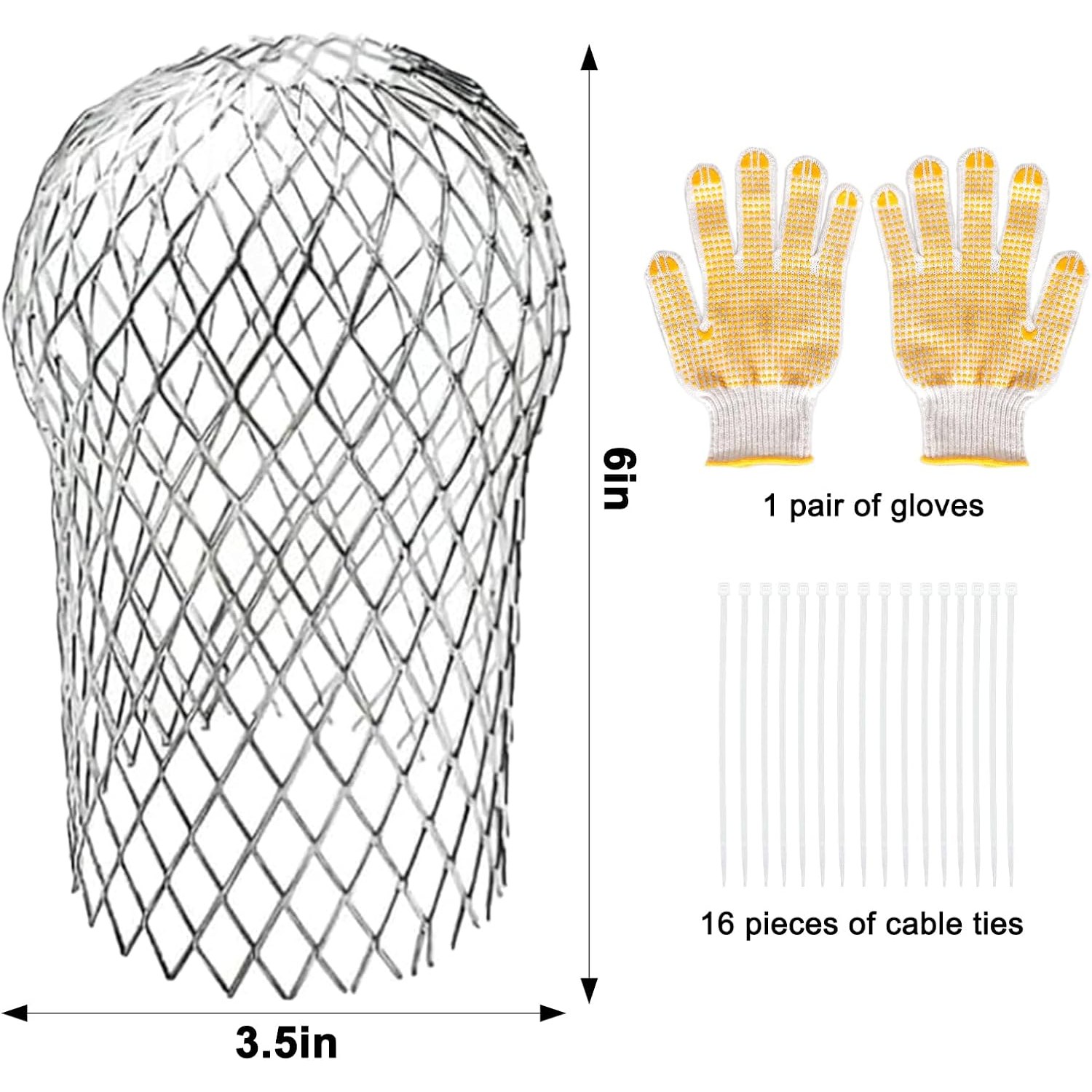
Single-story homes, two-story homes, sheds, garages, carports and guest houses all work, as long as the downspout opening falls in the 2 to 4 inch range the maker lists.
They are less useful on commercial box gutters with large sumps, or on systems that use rainheads with their own built-in screens. If you already have a leaf diverter installed, you probably do not need these as well.
Checking the fit before you order
Take a tape measure to one of your downspout openings. Measure across the hole, not the outside of the pipe. Most residential downspouts in common sizes fall comfortably in range, but a quick check saves disappointment.
Then count your outlets. Walk the perimeter of the house and note every point where a gutter drains into a vertical pipe. Four is typical for a simple rectangular home. Houses with wings, verandahs or multiple roof levels often have six or more. A second pack covers those and leaves you a spare.
Fitting them, step by step
Pick a dry day. Wet aluminum mesh is slippery and wet leaves are heavier to clear.
Put gloves on first. Cut mesh edges can be sharp, and you will be squeezing the material hard while rolling it. Garden gloves or light work gloves are plenty.
Clear the gutter around the outlet before you fit anything. There is no point sealing fresh debris in.
Roll the guard into a cylinder narrower than the hole. Push it in until the top edge sits roughly flush with the gutter floor. Let go and let it expand. Give it a light tug. If it lifts out easily, pull it, roll it a little looser and refit so it presses harder against the walls.
Repeat at each downspout. Four outlets usually takes less than fifteen minutes in total, most of which is moving the ladder.
Keeping them working
A guard that is never cleaned becomes a blockage of its own. The mesh does its job by holding debris, so eventually the debris has to go somewhere.
Two visits a year covers most homes. The first is after fall leaf fall, when the bulk of the material has come down. The second is in spring, which clears winter grit, seed pods and any moss that has washed off the roof.
The routine is short. Lift the strainer out, tip the debris into a bucket or straight onto the yard, hose or brush the mesh clean, let it drain and roll it back in. If you live under heavy trees, add a check after any big storm. Those are the events that deliver a season's worth of leaves in an afternoon.
Over time the aluminum may dull or pick up a film of grime. That is cosmetic. As long as water passes through freely when the mesh is clean, the guard is still doing its job.
A sensible expectation
It is worth being clear about what these do and do not do. They are not a whole-gutter system. They will not stop leaves landing in your gutters, and they will not remove the need to clean the gutter run itself. What they do is protect the one point where a small amount of debris causes the biggest problem.
For the price of a takeaway meal, you get four of them, installed by hand in minutes, that stop the kind of blockage that otherwise ends with water running down your wall.
The short version
Downspout openings clog first and cause the most damage when they do. These four aluminum mesh guards roll up, drop into the hole and expand to hold themselves in place, with no tools and no fixings. Aluminum handles weather better than plastic and will not stain like bare steel. They suit openings between 2 and 4 inches, and four is usually enough for a standard home. Clean them twice a year, wear gloves when you handle them, and they will quietly keep the water going where it should.