
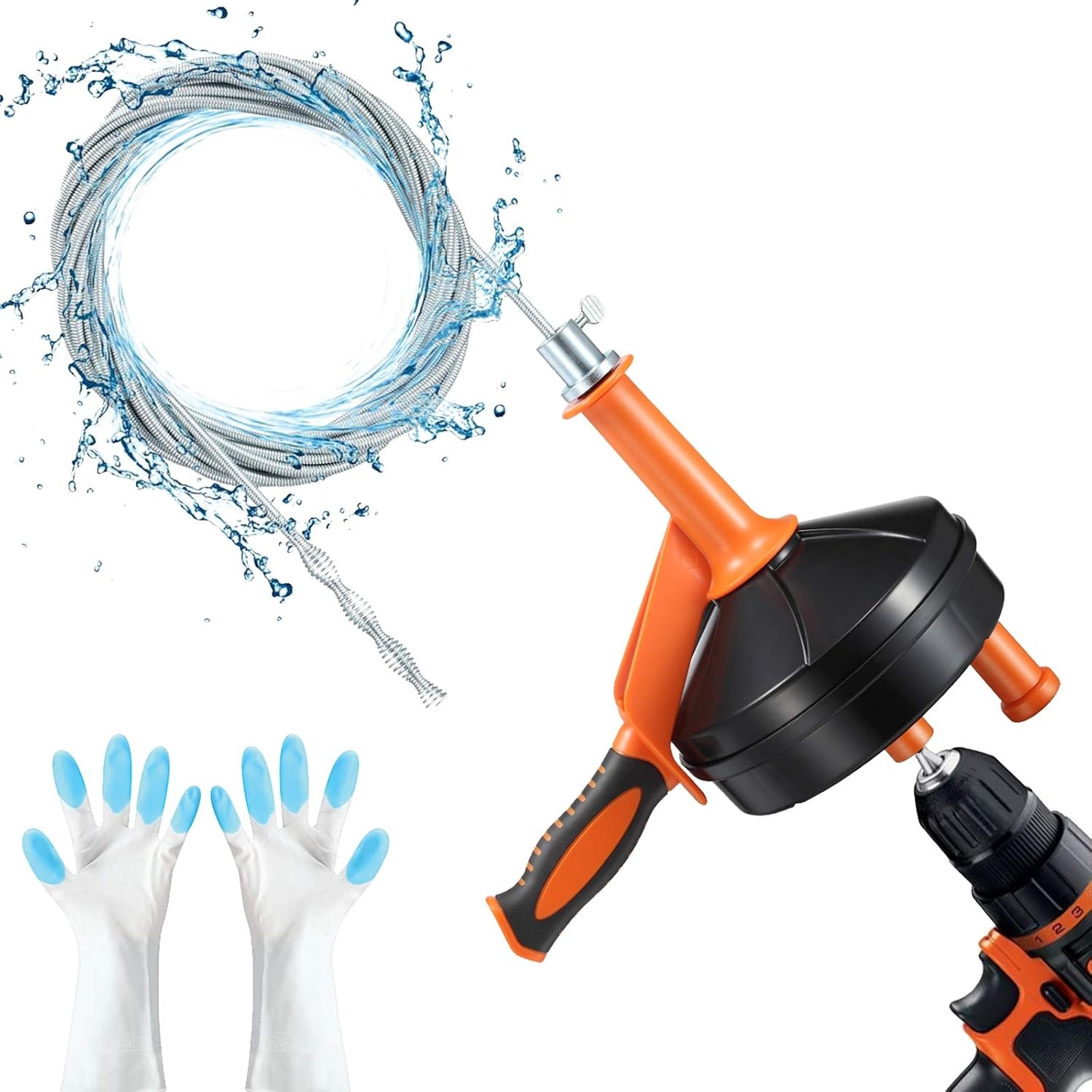
The complete guide
How to Choose and Use a 25 Ft Drain Auger
The real reason your sink drains slowly
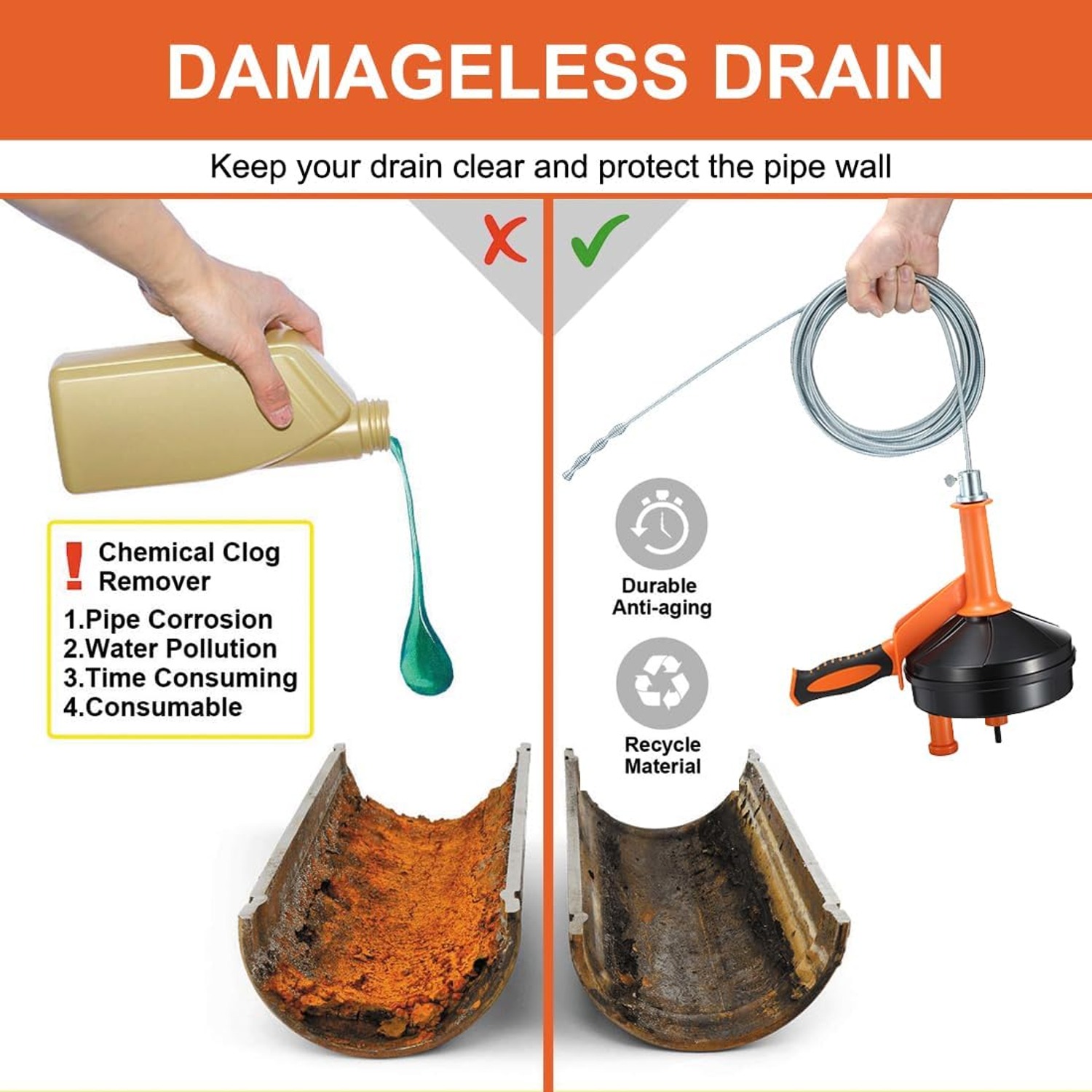
Water stops moving because something is sitting in the pipe. That sounds obvious, but it changes how you should treat the problem. A plunger pushes a pressure wave at the blockage and hopes it gives way. A bottle of gel sits on top of it and tries to dissolve the outside layer. Neither one goes down the pipe and gets hold of the actual clog.
In a bathroom, that clog is almost always hair bound together with soap scum. It forms a mat that catches more hair every week. In a kitchen, it is cooled fat coating the inside of the pipe, slowly narrowing it until a bit of rice or coffee grounds finishes the job. In a laundry or garage floor drain it is lint, grit and whatever got washed off the car.
All of those sit past the trap, out of reach of anything you can poke down from the drain opening. That is the gap a drain auger fills.
How a drum auger actually works
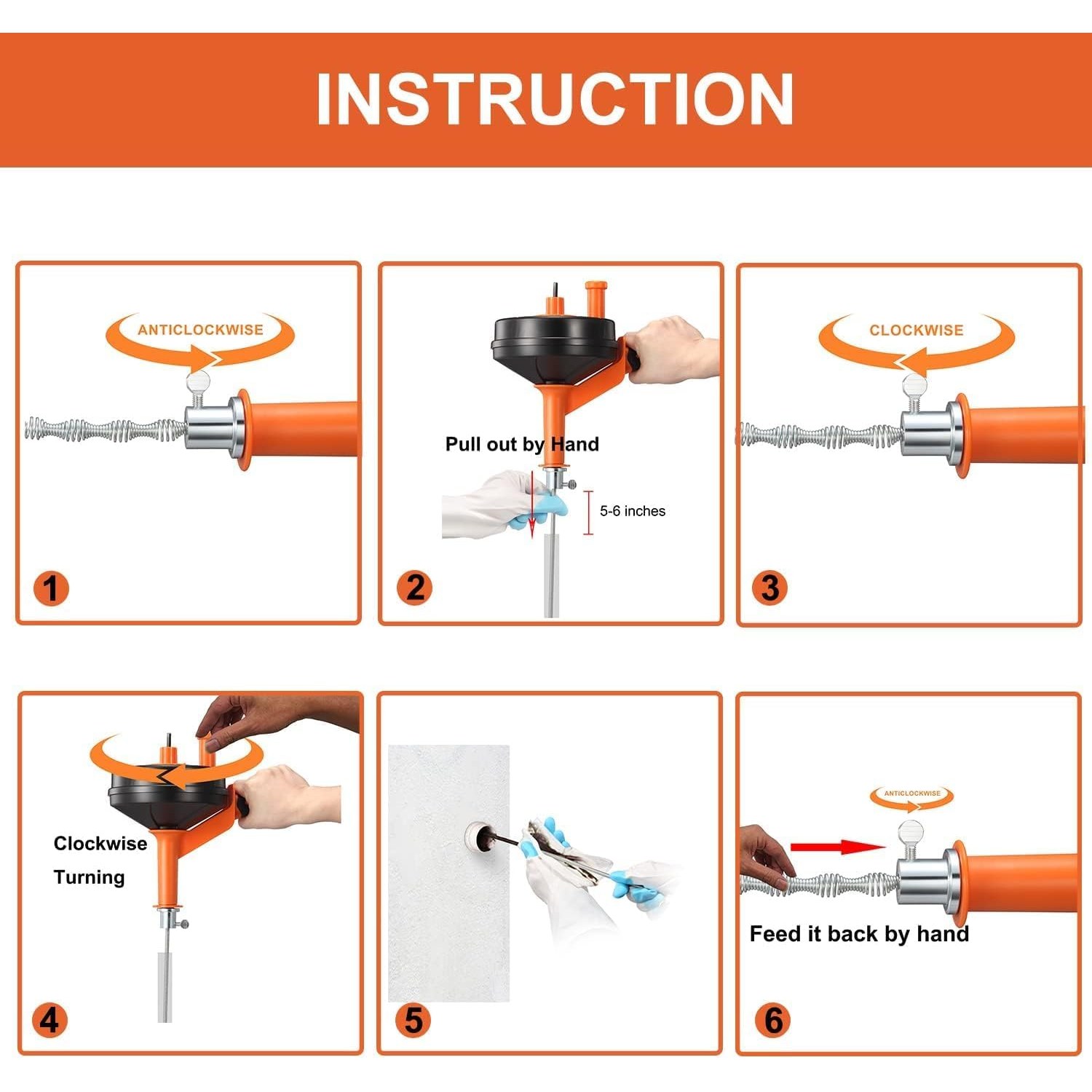
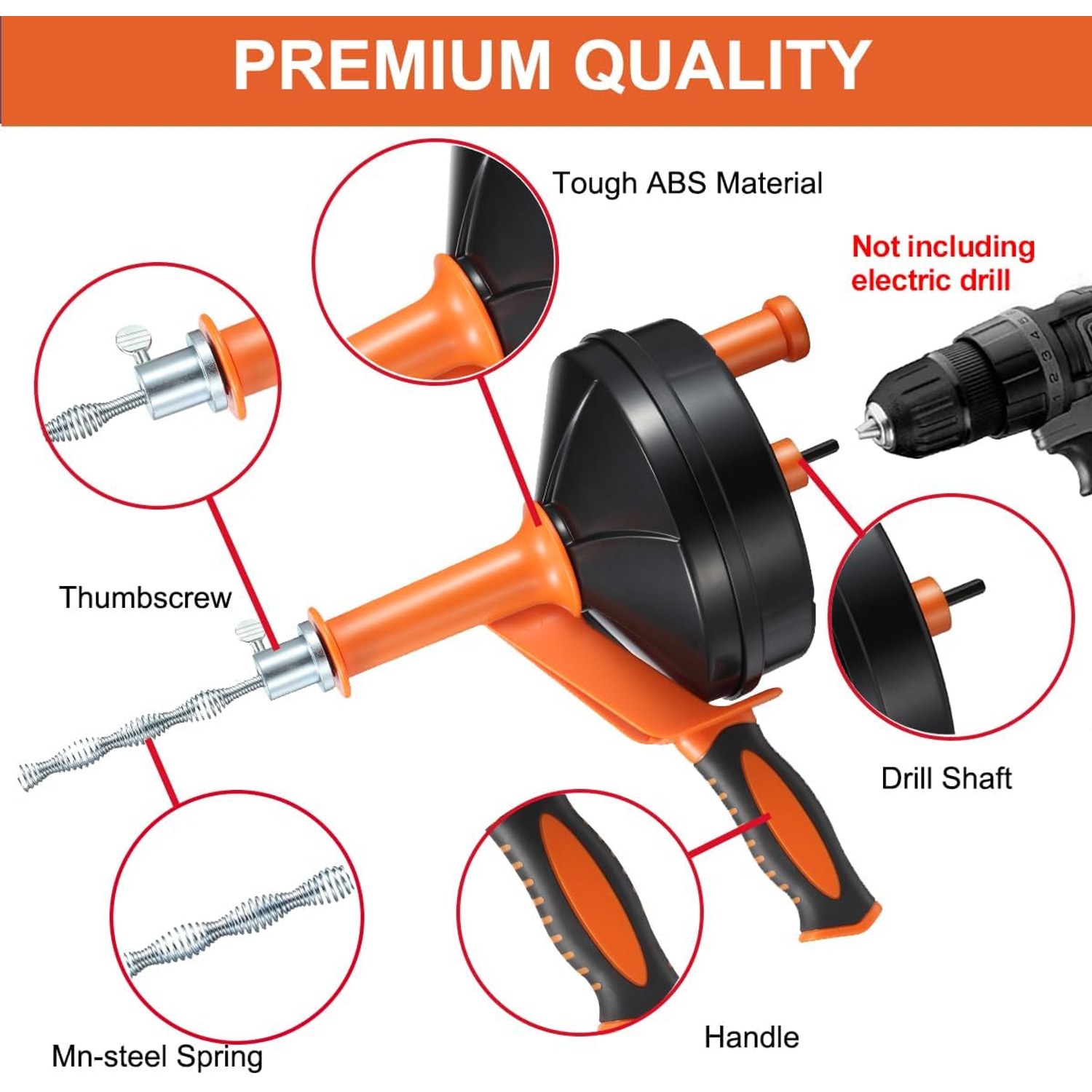
The tool is simple. A long flexible steel cable lives coiled inside a plastic drum. You loosen the thumbscrew, pull out a length of cable by hand, and feed it into the drain opening. When you feel it stop against something, you tighten the thumbscrew so the cable is locked to the drum, then turn the crank knob.
Turning the drum spins the cable. The tip at the far end either drills through the blockage, breaks it into pieces small enough to flush away, or hooks a hair mass so you can pull the whole thing back out. Then you loosen the screw, feed a bit more cable in, lock it again, and repeat.
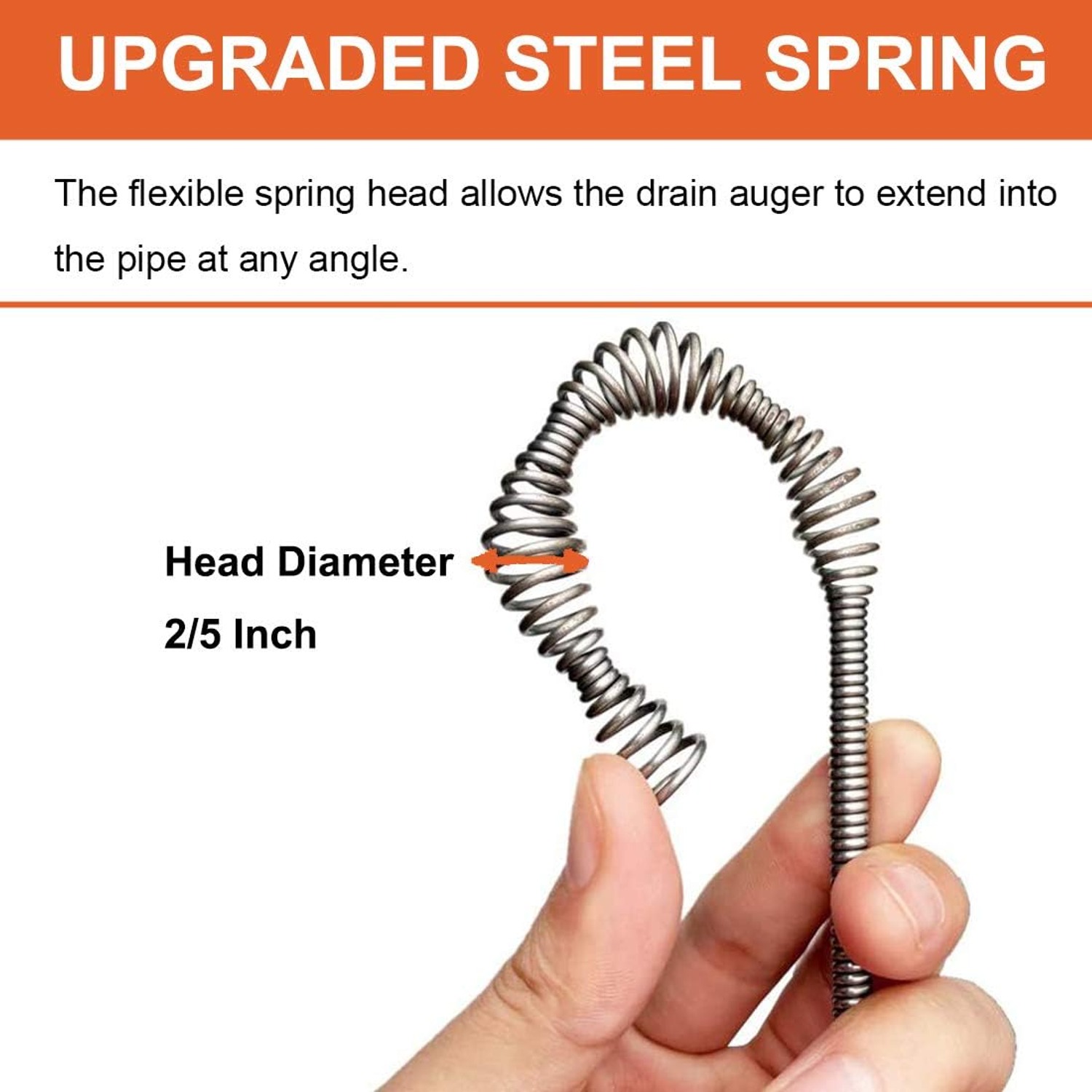
This particular auger carries 24.61 feet of 72A Mn-steel cable. The steel choice is the quiet detail that matters. Spring steel bends around a P-trap and the elbows behind it, then springs back rather than staying bent. A cheap stiff cable stops at the first curve and you end up pushing against a wall of plastic for twenty minutes, convinced the clog is harder than it is.
The drum and the grip handle are high-impact ABS, and there is a metal mouth at the drum opening where the cable exits. That mouth takes the rubbing wear that would otherwise chew through plastic after a few jobs.
Hand crank or drill
You get both options here. The large crank knob is sized to turn comfortably by hand, and the grip handle gives you something solid to hold while you do it. Working by hand gives you feel. You can tell the difference between the cable snagging on a bend and the cable biting into a clog, and that feedback stops you forcing things.
The drill adapter is for when hand turning is not cutting it. Fit the adapter to a cordless drill, run the drill at a moderate speed, and the cable spins far faster than your wrist can manage. The drill is not included, which is normal for this type of tool, since most households already own one.
A tip worth taking seriously: start by hand even if you intend to use the drill. Feed the cable in manually until you find the blockage, then switch. Starting on the drill from the drain opening means you are spinning cable through empty pipe for no reason, and that is how cables get whipped and kinked.
Which drains it suits
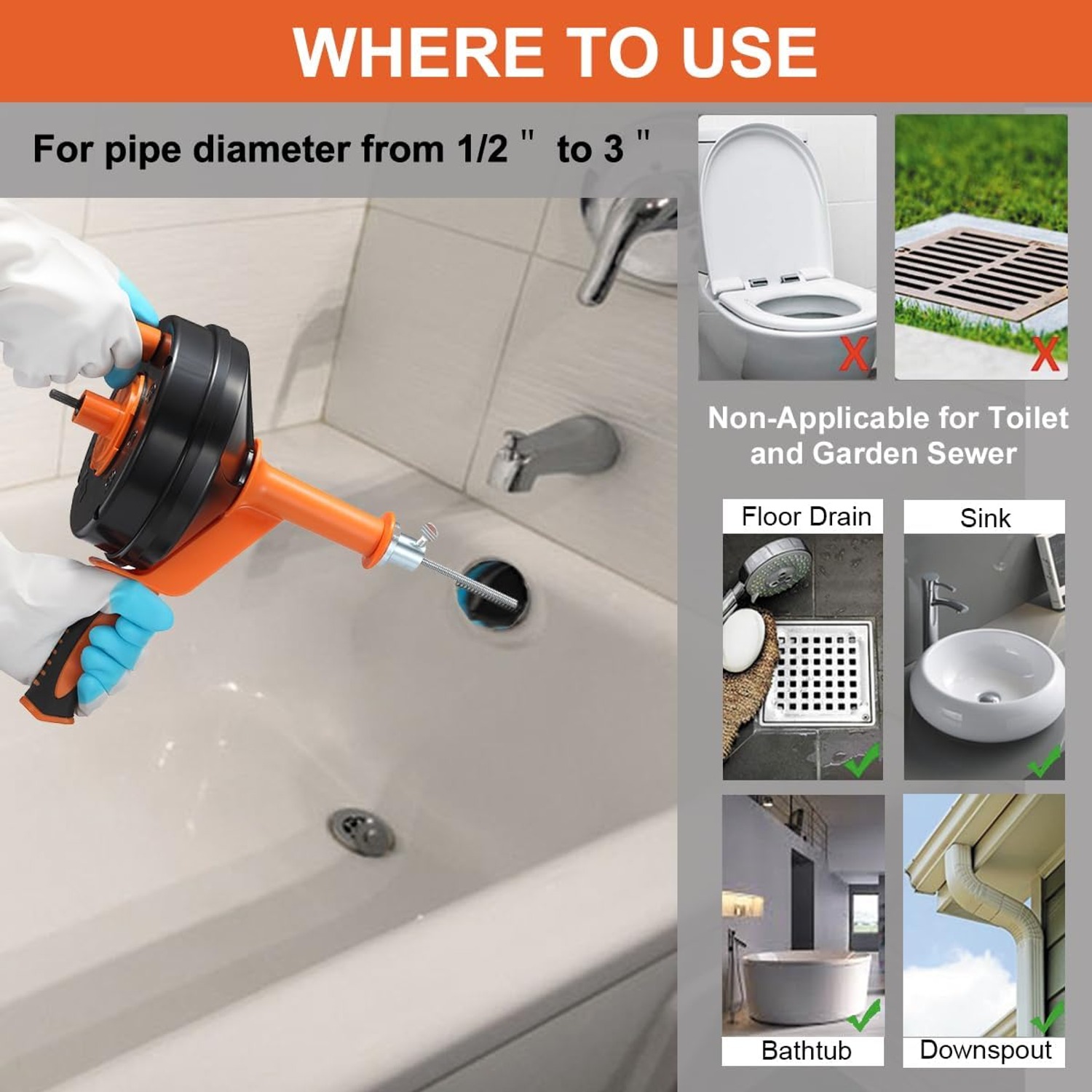
The working range is pipe diameters from roughly half an inch to three inches. In a normal home that covers the kitchen sink, bathroom sink, bathtub, shower, utility and laundry sinks, floor drains and downspouts. If you have been searching for the best plumbing snake for hair clogs, this size range is exactly the one that handles them.
What it does not cover is toilets. Do not use it there. A toilet needs a closet auger, which is short, curved to match the bowl, and sleeved so bare metal never touches porcelain. Running a drum cable into a toilet bowl will leave scratch marks you cannot polish out.
It also is not a main sewer line machine. If several fixtures back up together, if you smell sewage, or if the same drain blocks again within weeks of clearing it, something structural is going on. Roots, a sag in the pipe or a partial collapse all need a plumber with a camera.
Working through a clog without making it worse
Loosen the thumbscrew anticlockwise. Pull out a meter or so of cable. Feed it into the drain until you meet resistance. Tighten the thumbscrew clockwise. Turn the knob clockwise and keep a little forward pressure on the cable.
When the tip binds and will not advance, do not lean on it. Back the knob off anticlockwise two or three turns to release the tip, then go clockwise again. That back and forth motion is what works a cable through a packed clog. Steady pressure in one direction mostly just jams the tip.
Once you feel the cable drop through into open pipe, run water while the cable is still in there. If it drains, you are done. Loosen the thumbscrew and feed the cable back into the drum by hand, wiping it with an old rag as it comes. The cable does not retract by itself, and it is not anchored to the drum, so never pay out every last inch of it into a pipe.
Two safety notes. First, never snake a drain that has fresh chemical cleaner sitting in it, because the spinning cable flicks that liquid back at you. Second, when you loosen the thumbscrew with the cable extended, keep the corkscrew tip pointed away from people.
Some sinks have a fixed strainer or a pop-up stopper that will not come out. In those cases you either remove the stopper assembly or undo the P-trap under the sink and feed the cable into the pipe from there. Put a bucket underneath before you undo anything.
Looking after it
The enemy is rust. The cable comes out wet, so wipe it down as you wind it back in and let it dry fully before the tool goes back in the cabinet. Rinse off heavy grease. Store it somewhere dry, and leave the thumbscrew loose so the clamp is not under tension for months.
The gloves that come with it are not an afterthought. A used cable is dirty and the cut end of steel wire can be sharp, so wear them. Wash them or swap them when they get past it.
The weight is 4.1 pounds, which is light enough to carry around the house one handed. Most people stand the drum on the floor or balance it on the vanity while they work.
A routine beats an emergency
If you share a house with long hair, or you cook a lot, consider running the auger through your worst drain every two to three months before it fully blocks. Clearing a partly narrowed pipe takes five minutes. Clearing a fully blocked one takes half an hour and a lot more mess.
That habit is also what makes a reusable drain cleaning tool worth owning. One tool in the cabinet handles years of problems, instead of a steady stream of bottles that only ever buy you a few weeks.
The short version
This is a 25 ft drum auger with a 72A Mn-steel cable, an ABS drum with a metal mouth, a thumbscrew cable lock, a crank knob for hand use and a drill adapter for when you want more speed. Gloves are included, the drill is not.
Use it on sinks, tubs, showers, utility sinks, floor drains and downspouts with pipes between about half an inch and three inches. Keep it away from toilets. Feed by hand, lock the screw, crank clockwise, back off when it binds, and wipe the cable on the way back in.
If your problem is a hair mat or a grease ring in a household drain, this reaches it. If water is backing up across the whole house, put the auger down and pick up the phone.