
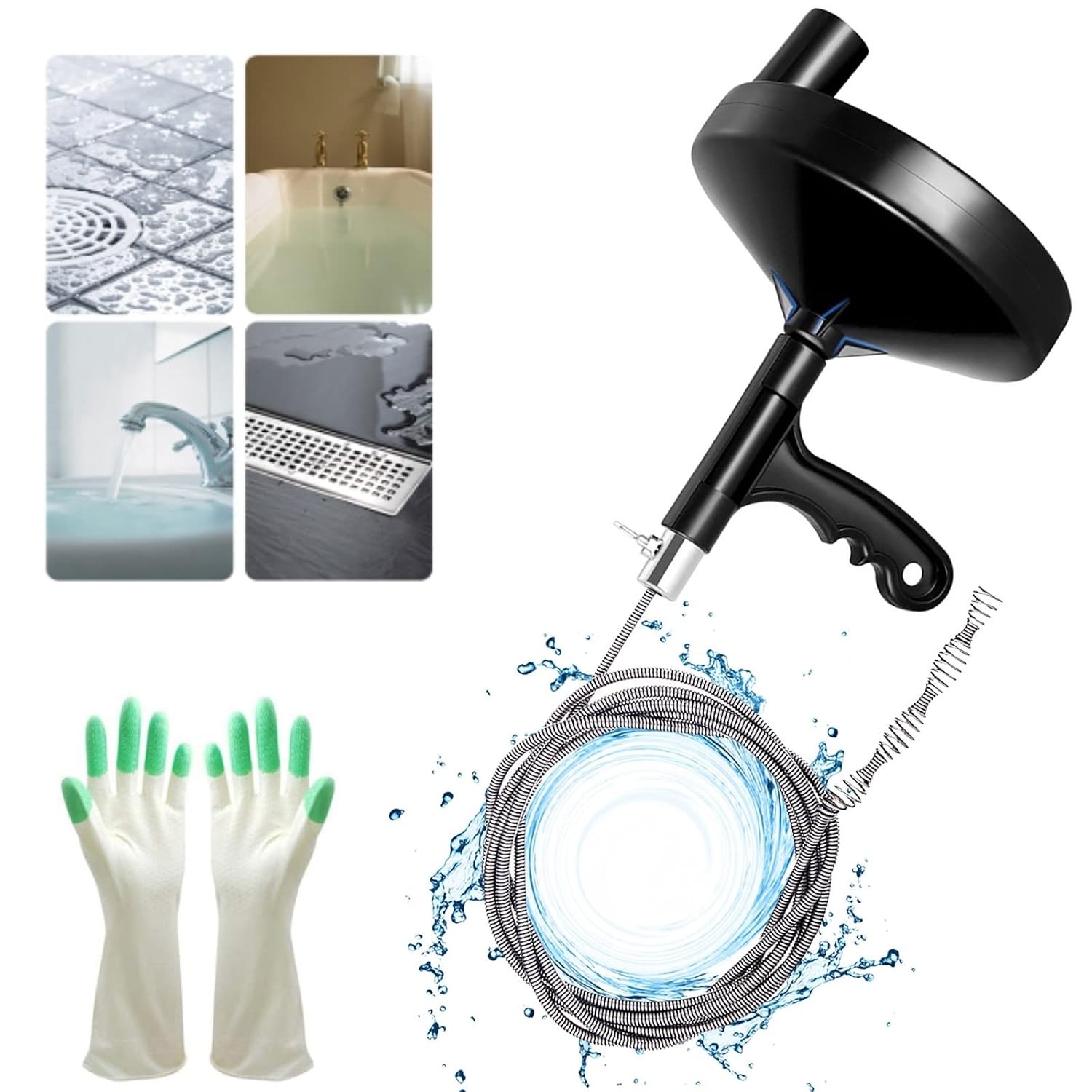
The complete guide
How to Choose and Use a 25 Ft Drain Auger
The problem with a slow drain
Nobody calls a plumber the first time a sink drains slowly. You run hot water. You pour something down it. You give it a few jabs with a plunger and tell yourself it is fine. Then it stops draining altogether, usually on a weekend, usually when the kitchen is full of dishes.
The reason the quick fixes stop working is simple. The blockage is almost never right under the drain opening. It sits a foot or two past the trap, where the pipe turns and the flow slows down. Grease cools there and hardens. Hair collects around soap film. Coffee grounds and rice settle in and build up a plug. A plunger pushes against water and air, and water does not compress, so most of that effort goes nowhere useful.
A drain auger goes to the blockage and takes it apart. That is the whole idea behind this tool.
How a drum auger actually works
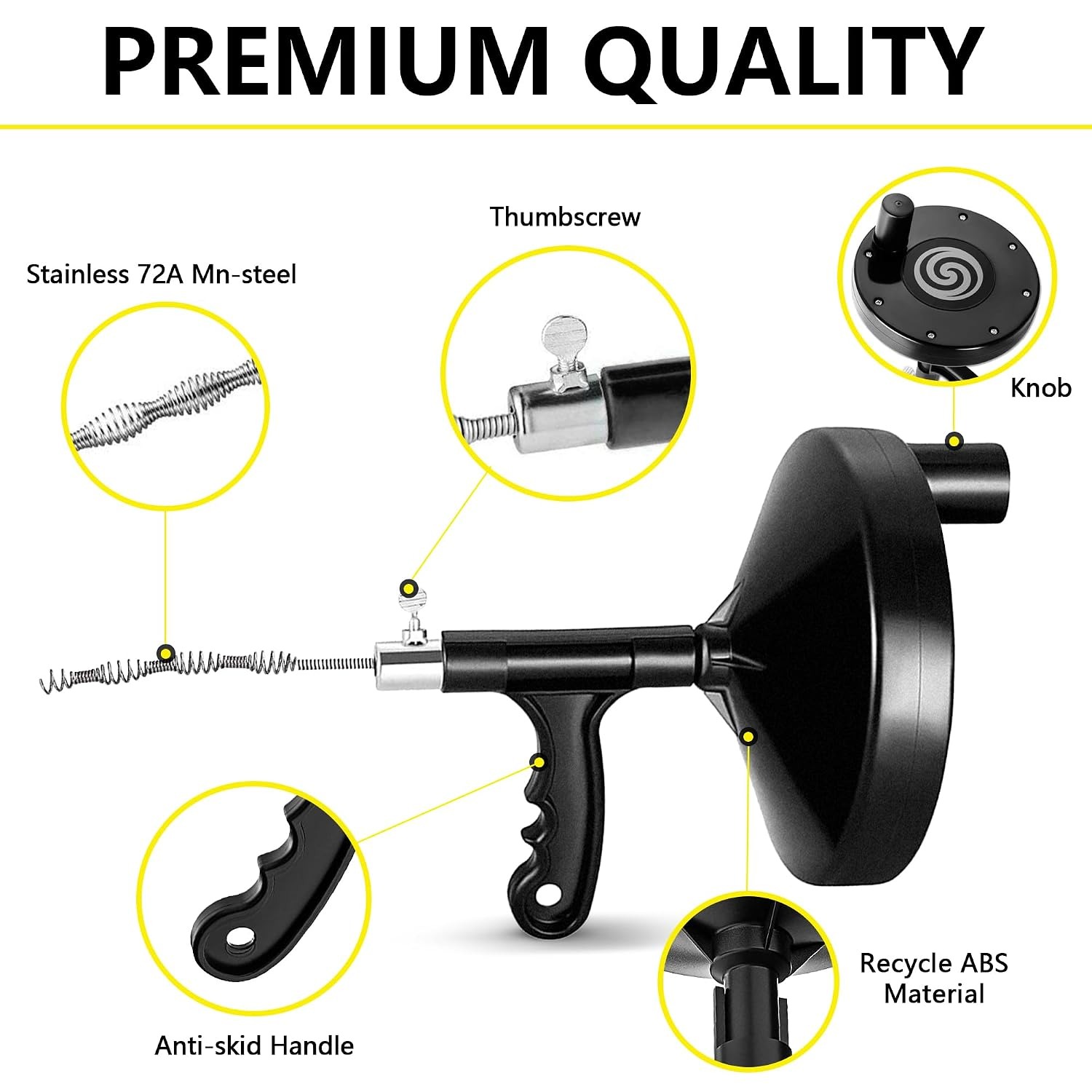
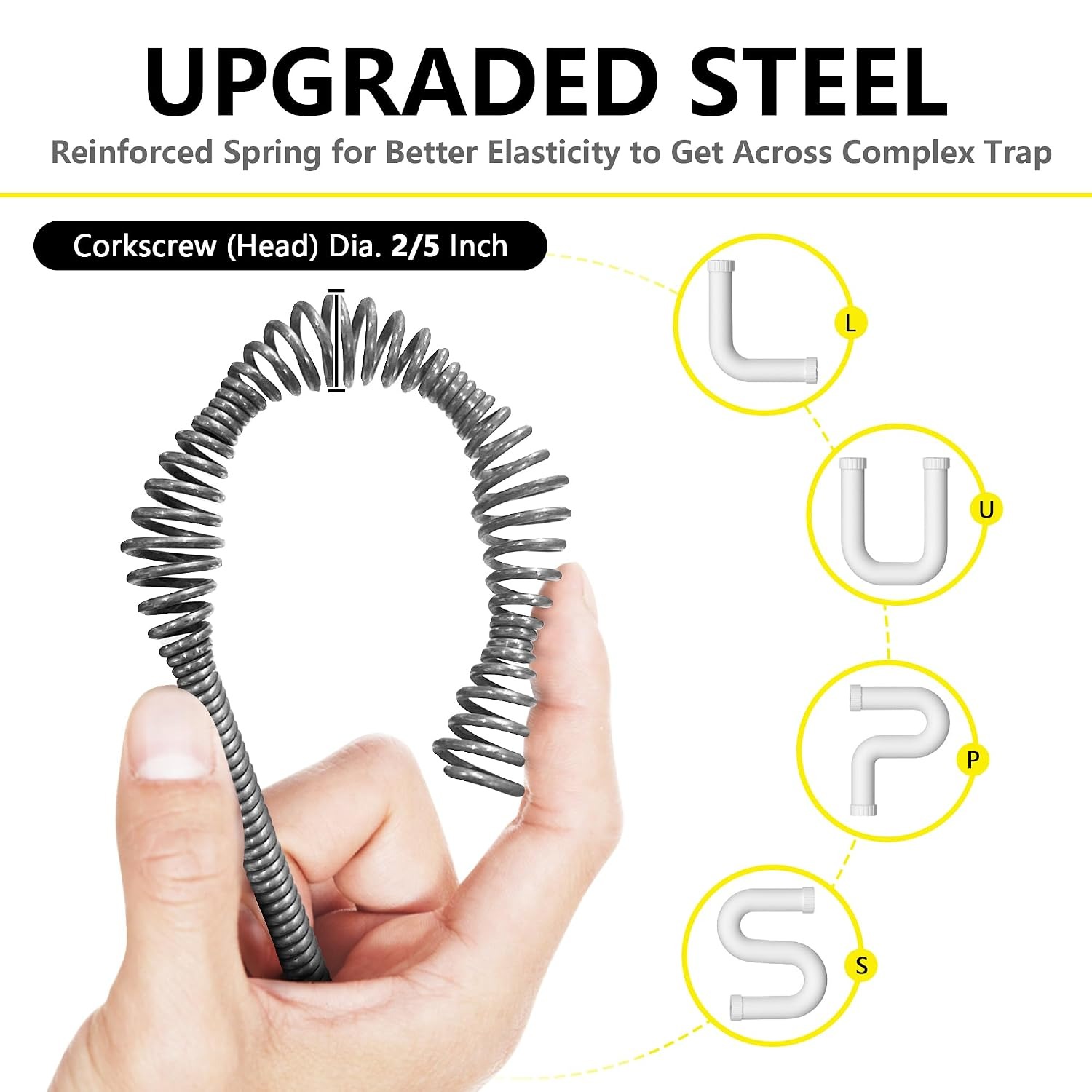
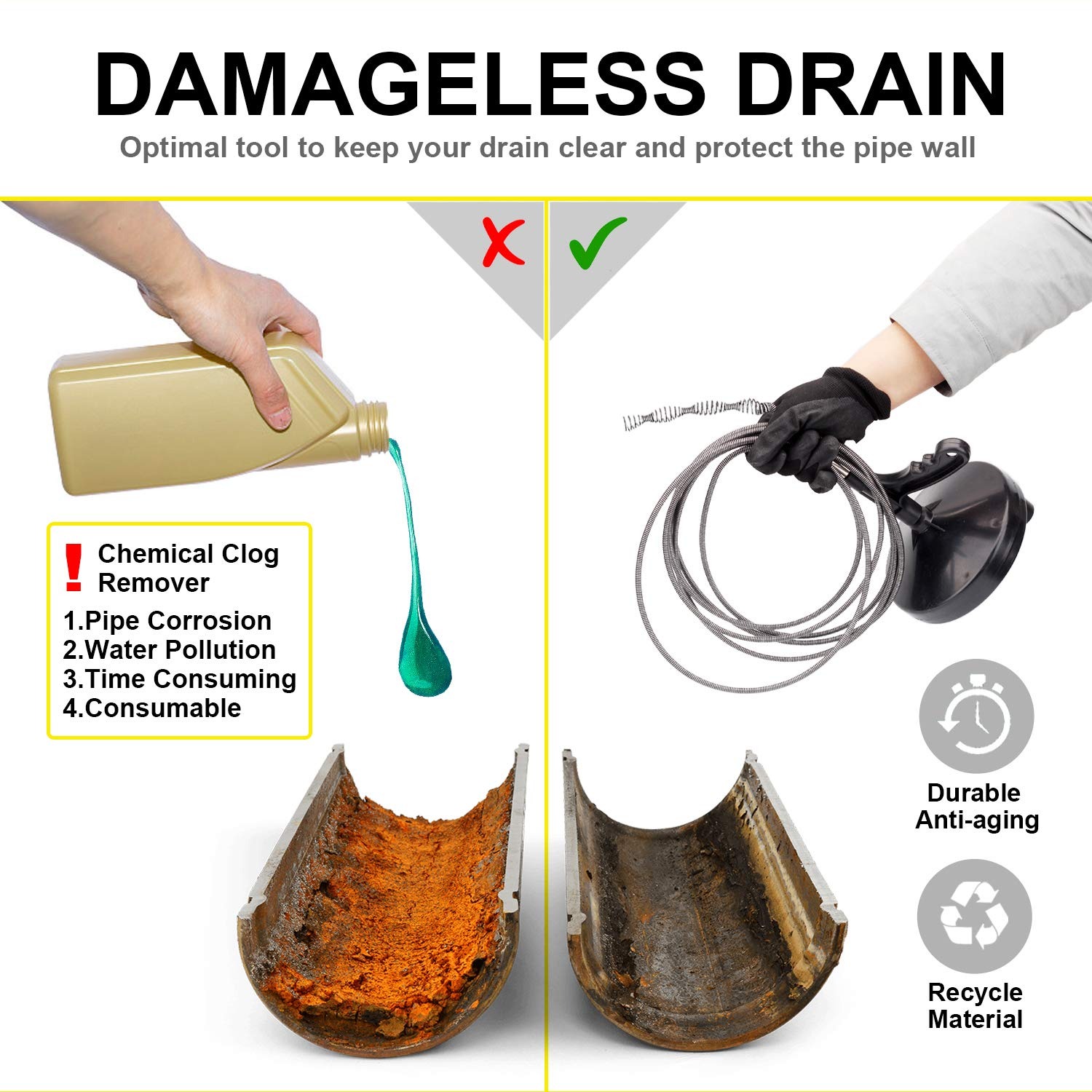
Inside the housing is 25 feet of high carbon steel cable wound into a coil. Carbon steel is used because it springs. Bend it around the U-bend under your sink and it follows the curve, then straightens again on the other side instead of staying folded.
The business end is a spiral point with a 90 degree cutting angle. When you turn it, that spiral either bores into a soft plug or hooks it. Hair is the clearest example. A spinning spiral catches the strands, wraps them up and brings the whole mat back out when you retract the cable.
The housing is high impact ABS. It serves two purposes. It keeps the cable coiled neatly so you are not wrestling with seven meters of loose steel on your kitchen floor, and it contains the dirty end between jobs.
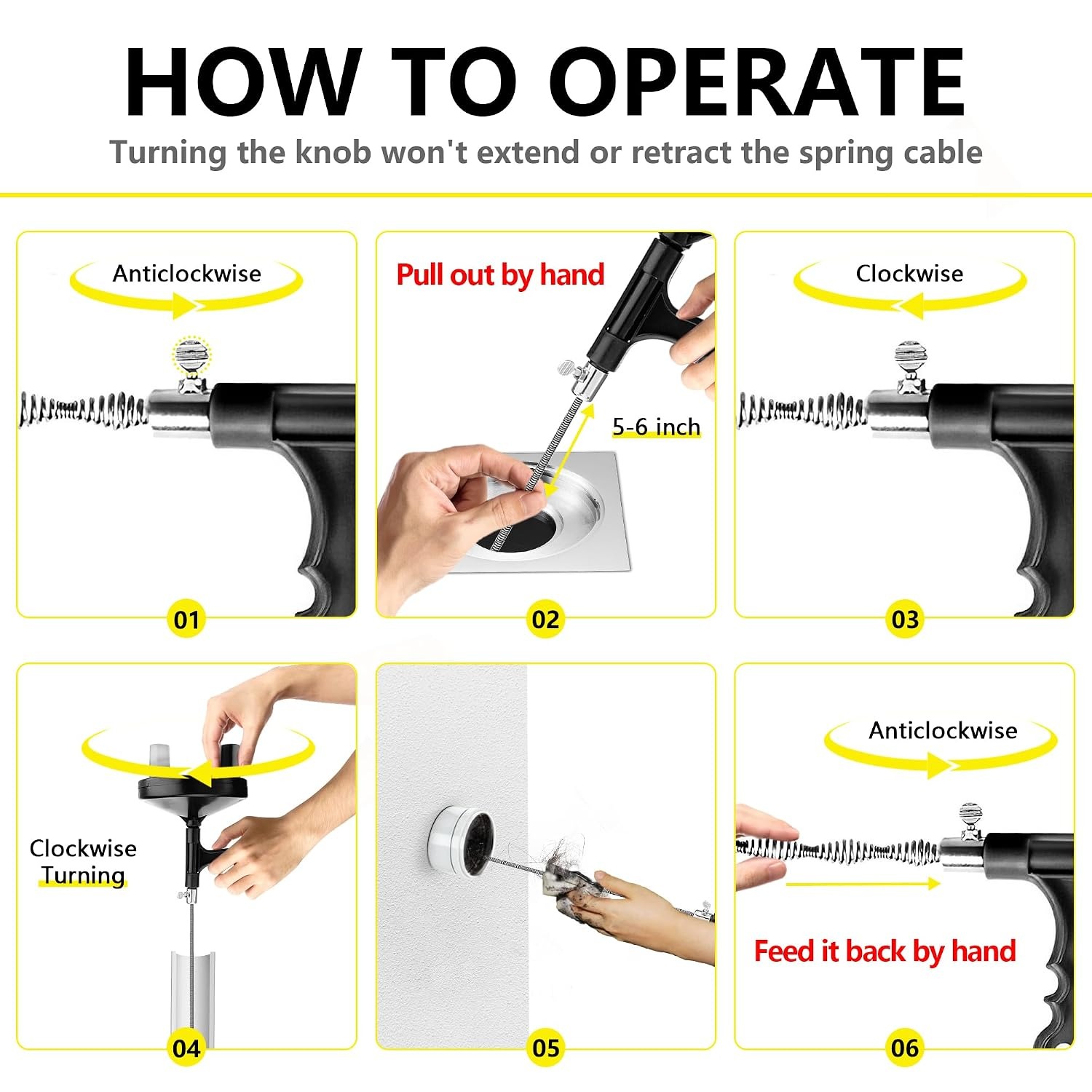
One detail matters more than anything else in this guide. On this style of auger, the knob does not wind the cable. You pull the cable out by hand and push it back in by hand. The knob is a stop screw that clamps the cable where you want it. People who expect a winding mechanism get confused in the first minute and decide something is broken. Nothing is broken. Feed by hand, clamp, turn, release, feed more.
Who this suits
This is a household tool. If your drains back up two or three times a year, or you live somewhere with old pipework, or you have long hair in the house and a shower that takes forever to empty, this is the right size of tool.
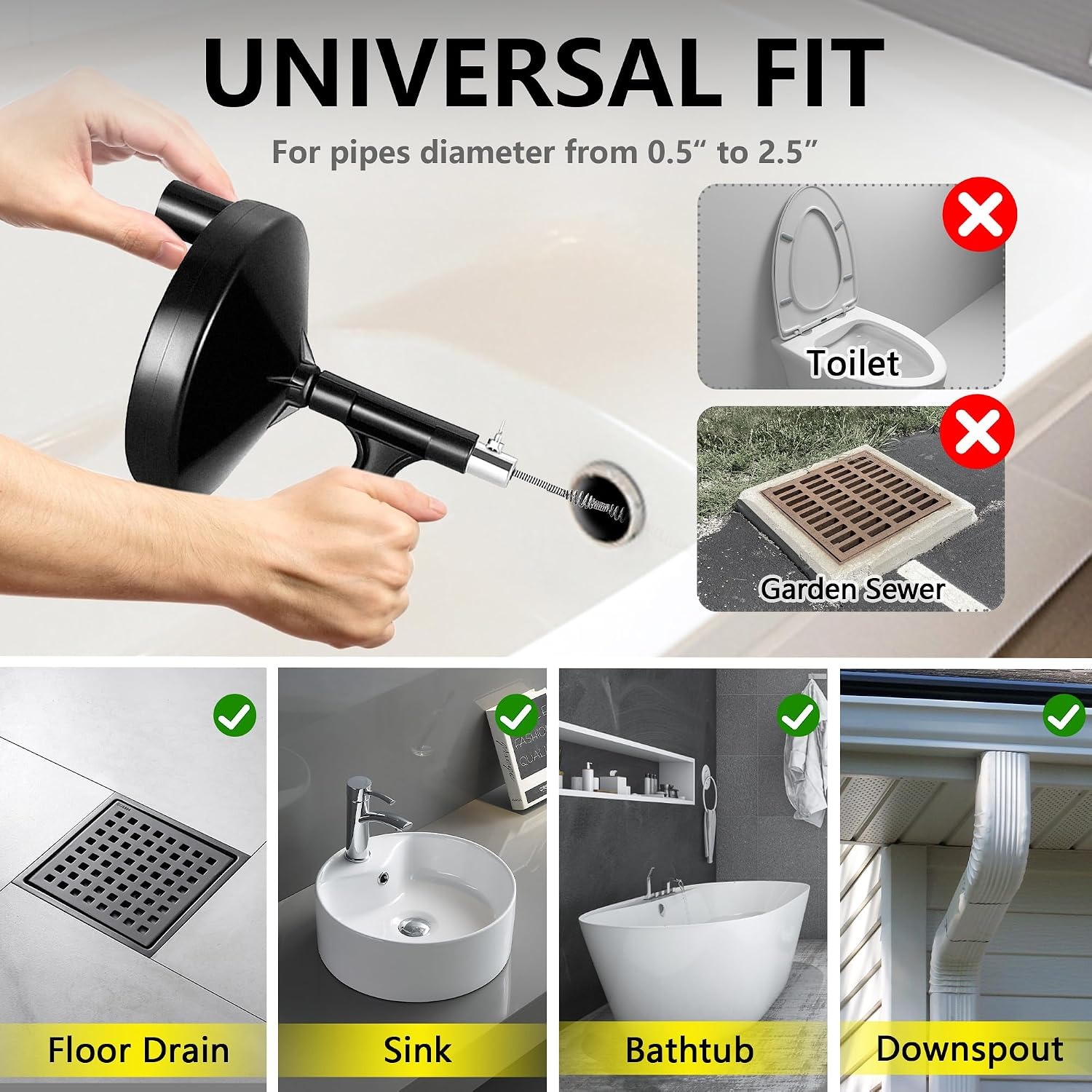
It covers kitchen sinks, bathroom sinks, showers, bathtubs, floor drains and the short sewer runs connecting them. Pipe diameter should fall between half an inch and two and a half inches. That range takes in nearly all domestic drain pipes.
It is not for toilets. Toilets need a closet auger, which is short, rigid, and sleeved so the cable never touches the porcelain. Using a long bare cable in a toilet bowl risks scratching the glaze, and the cable tends to coil back on itself in the bowl rather than going where you want.
It is also not a main sewer line machine. Those are powered drum machines with much heavier cable, and they are usually rented rather than owned. If the blockage is past 25 feet, or more than one fixture is backing up at the same time, that is a sign the problem is in the main line and worth a professional call.
What to look for when you compare augers
Cable length is the headline number, but it is not the only thing worth checking.
Cable material is the first. Carbon steel is the standard for a reason. Cheaper augers sometimes use a thinner, softer wire that kinks the first time it meets real resistance, and once a cable kinks it never feeds smoothly again.
Housing type is the second. An open coil auger is cheaper and lighter, but you handle the wet cable constantly and there is nowhere tidy to put it afterwards. An enclosed drum keeps everything contained. The upgraded metal mouth on this one reduces the wear that happens where cable rubs against housing, which is the spot that usually fails first on budget tools.
Grip comfort is the third, and it is underrated. You may spend ten or fifteen minutes turning this thing. A pistol style grip spreads the load across your whole hand instead of pinching it between two fingers, and that is the difference between finishing the job and giving up halfway.
Gloves are the fourth. It sounds trivial. It is not. The first time you pull a cable out of a kitchen drain you will understand why they are in the box.
Using it without making a mess
Clear the area first. Put a bucket under the trap if you are working below a sink, and lay an old towel down. Something will drip.
Loosen the stop screw and pull out around a meter of cable. Feed the tip into the drain opening and push until it stops moving easily. Tighten the screw. Now turn the grip in a steady clockwise motion while applying light forward pressure.
When the cable will not advance further, loosen the screw, feed out more cable, tighten again and carry on. Turning is what gets you around bends. Pushing harder is what kinks cables. If the tip will not round a corner, back off a few inches, turn, and try again with a lighter touch.
You will know you have hit the clog when the cable stops advancing but still turns freely. Keep turning with gentle pressure. You may feel it bite, or you may feel it suddenly give and slide forward. Either is good news.
Retract slowly. Expect to pull debris back with the tip, so have the bucket ready. Then run warm water down the drain for a minute and watch how fast it goes. If it swirls away properly, you are done.
Looking after it
Rinse the cable under warm water before it goes back in the drum. Wipe it down and let it dry. Carbon steel is tough but it will rust if you coil it away wet and leave it in a damp garage for six months.
Dry the gloves separately rather than stuffing them in with the tool. Store the whole thing somewhere dry and out of the way. A light wipe of oil along the cable is worth doing if you know it will sit unused for a long stretch.
Check the cable occasionally for kinks or flattened spots. A kinked section will snag inside the drum and makes feeding harder every time.
The short version
A slow drain is almost always a blockage sitting just past the trap, and a plunger cannot reach it. A 25 ft drain auger can. The cable is high carbon steel with a spiral tip, it stores in an ABS drum, you feed and retract it by hand, and the screw locks it at your chosen length. It suits sinks, showers, tubs and floor drains between half an inch and two and a half inches, but not toilets.
Buy it once, learn the technique in ten minutes, and the next blocked sink becomes a short job rather than a phone call.