
The complete guide
How to Choose and Fit a Drain Hose Extension Kit
The problem nobody mentions until moving day
Appliance makers fit a drain hose that assumes a tidy, convenient laundry. The machine goes right there, the standpipe is right here, and the hose stretches the meter or so between them. Then you get into a real house. The washing machine has to go in the corner because that is where the door swings. The dishwasher sits at the end of the counter and the drain is under the sink at the other end. The dehumidifier needs to run continuously in a basement with the only floor drain three meters away.
In all of those cases, the factory hose is the limiting factor. You end up shoving the machine out further than you wanted, or running the hose uphill over the top of a cabinet, or draining into a bucket and emptying it. None of those is a fix.
A drain hose extension kit 23 ft long solves it the dull, direct way. More hose, a way to join it to what you already have, and clips to hold it where you put it.
What you are actually buying
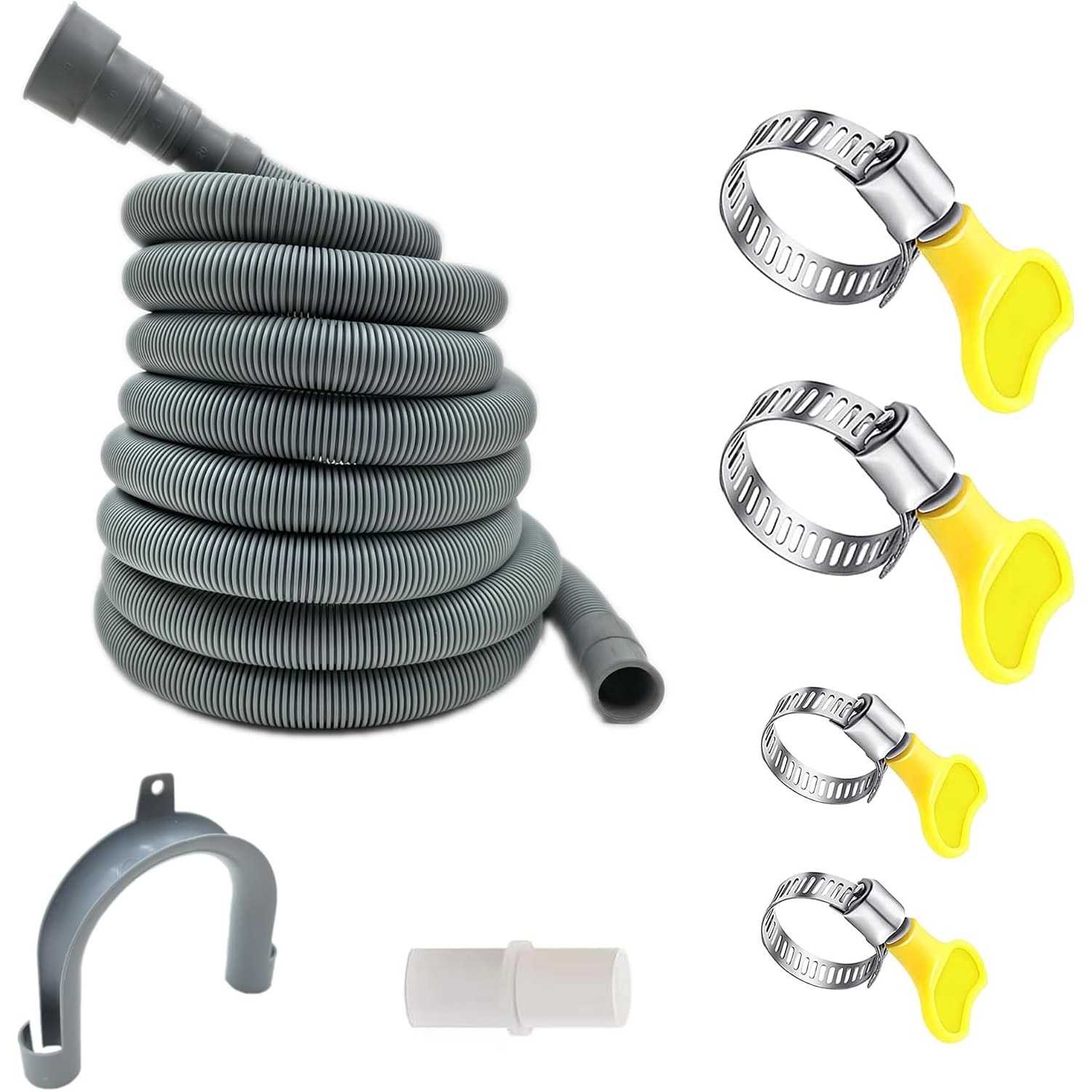
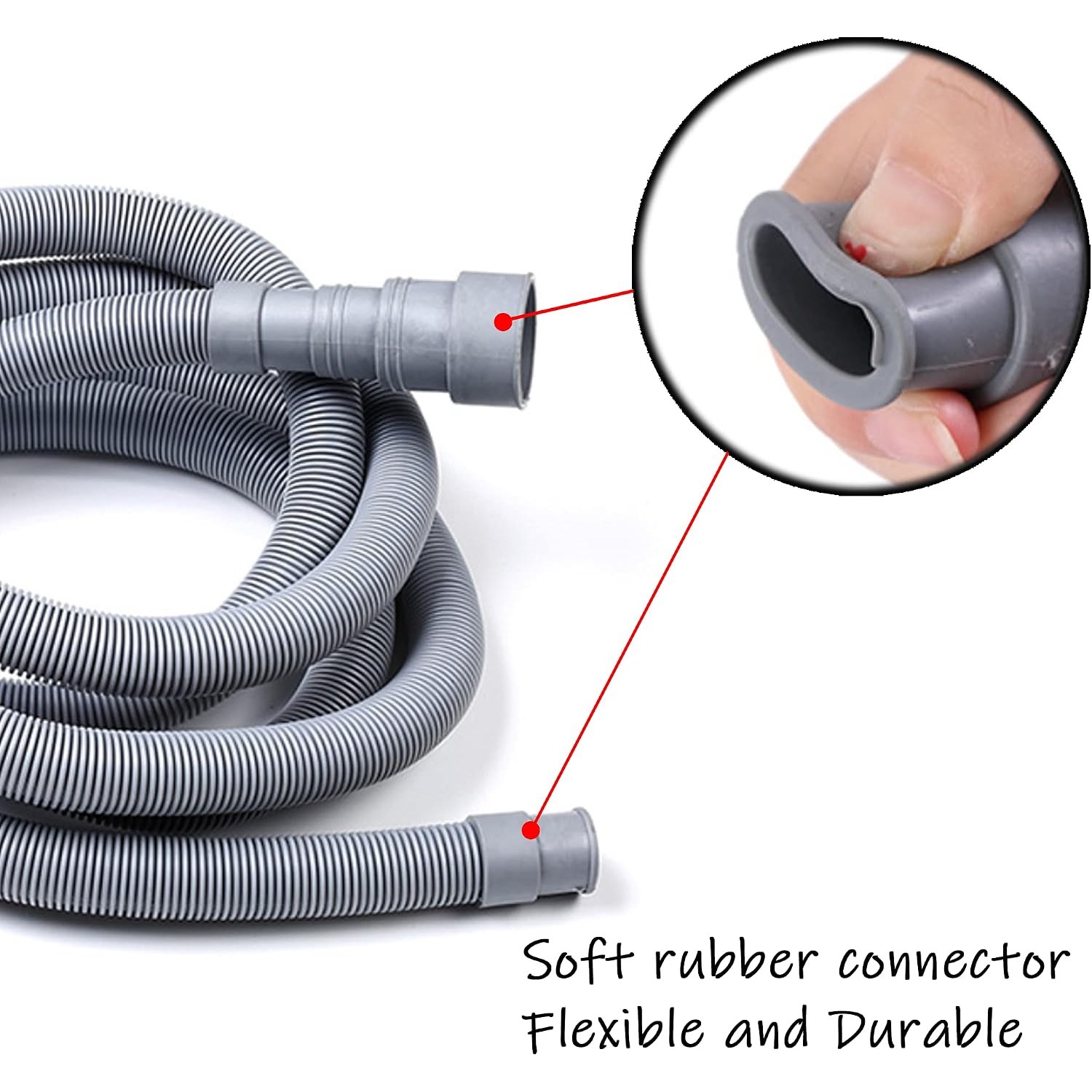
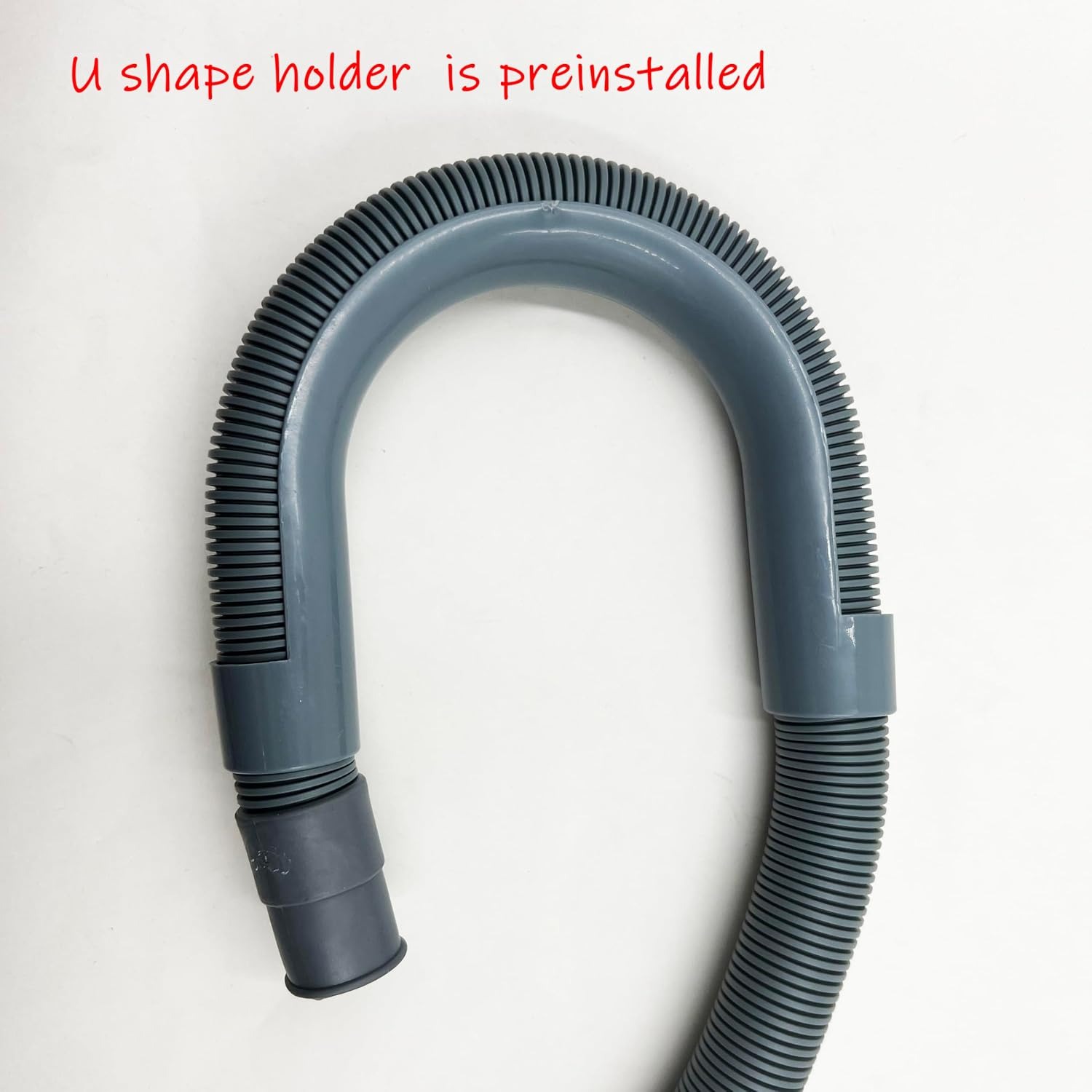
This kit is four things in a small box. The hose is the main item, 276 inches of EVA with an outside diameter of 38.1 mm and a wall thickness of 1 mm. EVA stands for ethylene vinyl acetate. It is a soft, flexible plastic, which matters because a drain hose has to bend around corners and under counters without squashing shut. Stiffer plastics crease. EVA curves.
Then there is the extension adapter. This is the part that lets you keep the hose already attached to your appliance and simply add to it. You push one end of your existing hose onto the adapter, push the new hose onto the other end, and you have a single longer run. No wrestling the old hose off a cramped pump outlet.
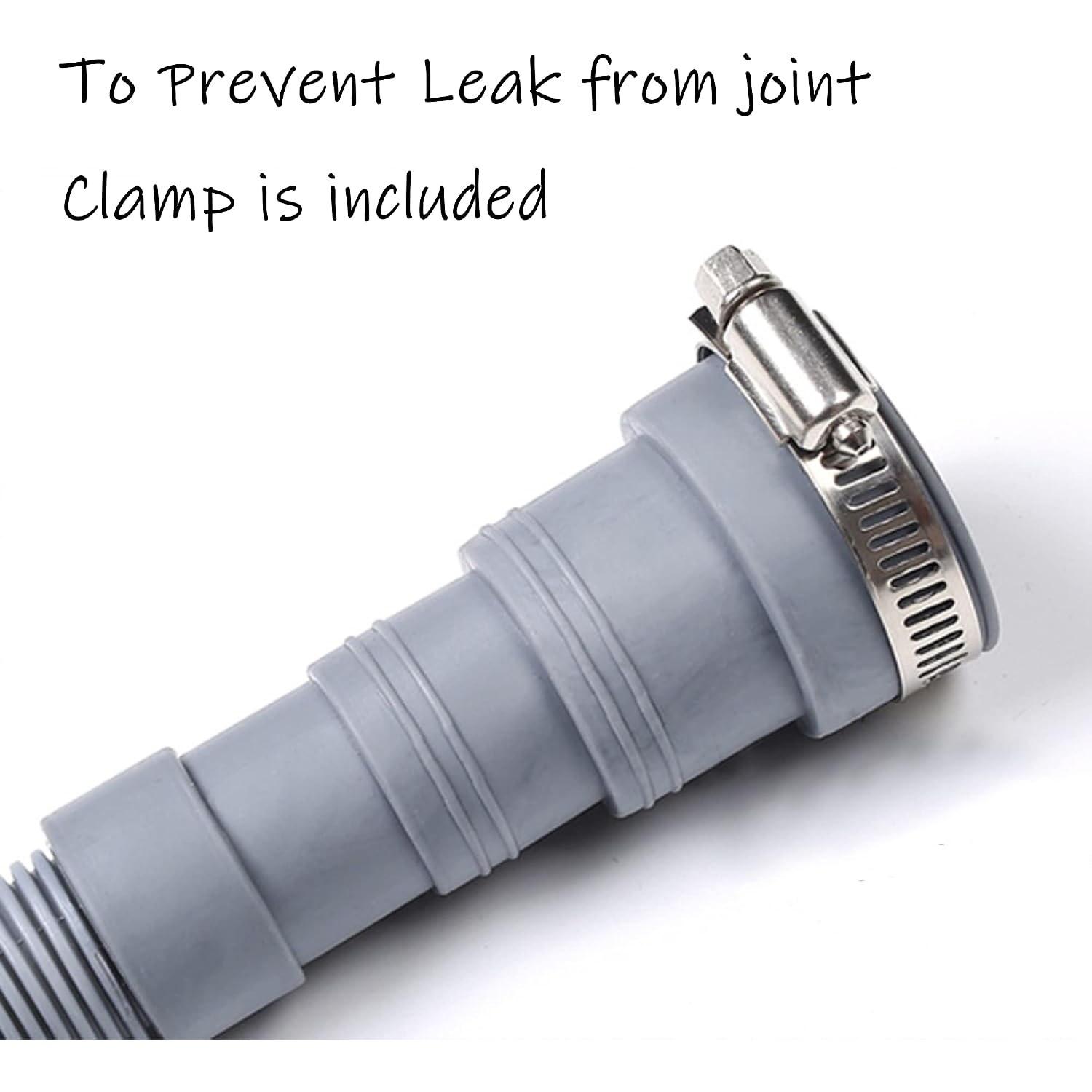
Two hose clamps come with the kit. You do not strictly need them for a push fit, but they are cheap insurance. A clamp over each joint stops the hose creeping off under water pressure. Tighten them firm, not brutal, because the hose wall is only a millimeter thick.
Last is the U-shaped hanger. It looks like an afterthought. It is not. It holds the discharge end of the hose in a hook over a laundry tub, sink or standpipe, so the hose cannot slide out and dump a full drum of water on the floor. Anyone who has come back to a flooded laundry knows exactly why this part exists.
How appliance drainage actually works
Understanding this makes fitting the hose much easier.
Your washing machine does not just let water fall out. It has a drain pump that pushes water up and out. That pump has limits. It is rated for a maximum height, often around a meter from the floor, and it has a practical limit on how far it can push water horizontally. Beyond that, the pump struggles, cycles take longer, and some machines throw a drainage error code.
So length is useful, but it is not free. The right approach with a long washer drain hose is to use the length you need and no more. If the drain is four meters away, use four meters and a bit of slack, not all 23 feet coiled behind the machine. Excess hose sitting in loops holds water, which smells over time and adds resistance.
Height matters just as much. If the standpipe is higher than your pump can manage, you will get water left in the drum. Check the appliance manual for the maximum discharge height before you commit to a route.
Dishwashers have a related issue. Most need a high loop or an air gap so dirty sink water cannot siphon back into the machine. If you are fitting a dishwasher drain hose extension, keep that loop in place. The extra length goes after the loop, not instead of it.
Measuring before you order
Take a tape measure and follow the actual route the hose will take, not the straight line. Go along the wall, around the cabinet, behind the machine. Add a meter on top for slack and bends. That is your working number.
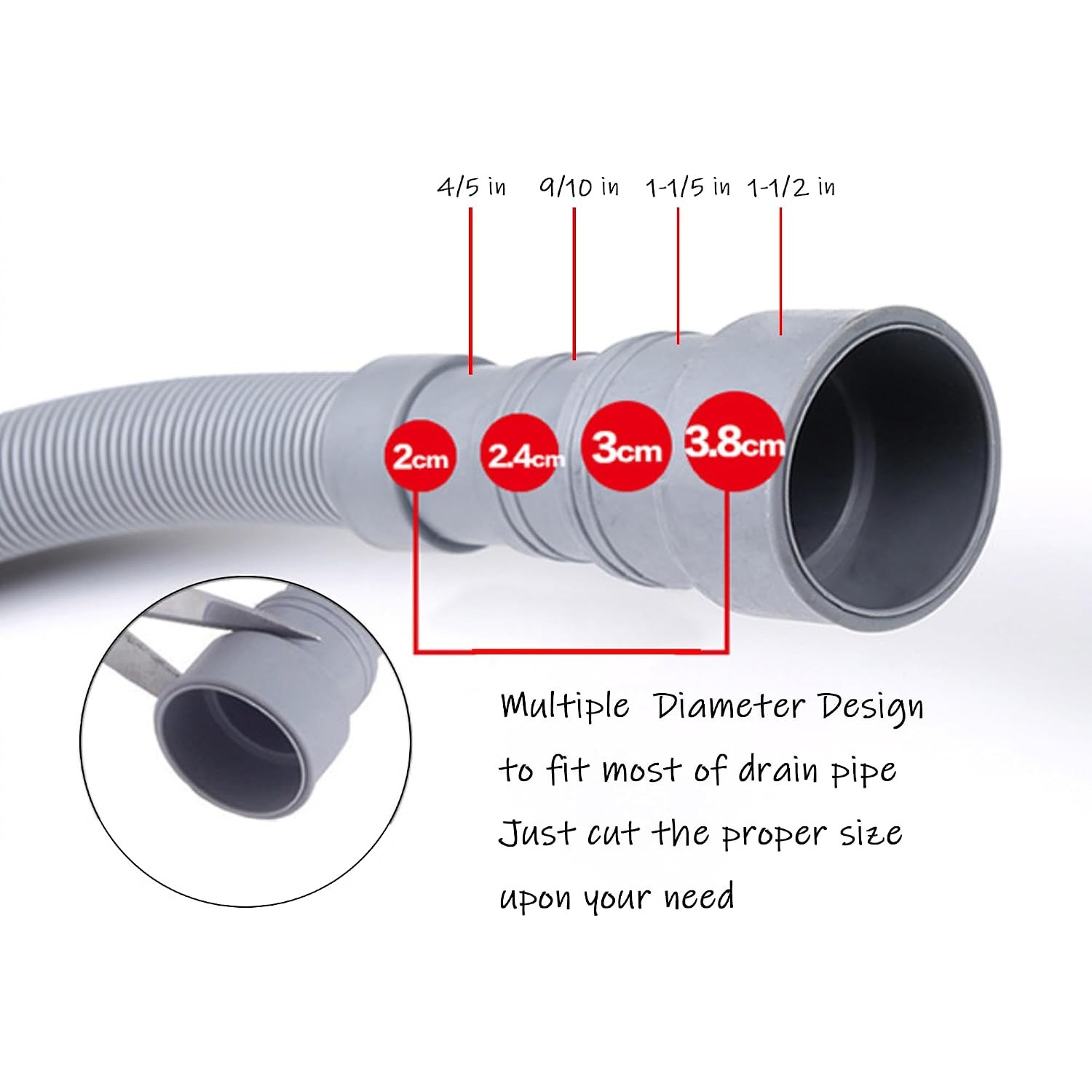
Then measure the appliance outlet diameter. The formed end of this hose is stepped, which means it narrows in stages. You cut back to the step that matches your outlet or drain opening. It covers a useful spread of common sizes, so most domestic appliances are catered for. If your outlet is unusually large or small, measure first and check with us.
One rule worth repeating. Do not cut the hose until you are certain. A cut hose cannot be returned, and it is very easy to trim one step too far.
Fitting it without a plumber
Pull the appliance out far enough to work behind it. Unplug it. If you are extending rather than replacing, leave the original hose on the machine.
Push the existing hose end onto one side of the adapter. You may need to warm the hose with hot water for the last centimeter if it is stiff. Push the new hose onto the other side. Slide a clamp over each overlap and tighten.
Route the hose along your chosen path. Keep bends wide. If a section wants to fold, clip it to the wall with a cable tie or a hose clip rather than forcing it. Trim the formed outlet end to the right step for your drain and insert it, or hook it over the tub with the U hanger.
Push the machine back, but leave enough gap that the hose is not crushed against the wall. Plug in. Run a short rinse and spin cycle and watch both joints for the full drain. If there is a drip, the clamp is either in the wrong spot or needs another turn.
Who this suits
People with an awkward laundry layout, obviously. Anyone fitting a portable washer that drains into a kitchen sink. Basement dehumidifier owners who want continuous drainage instead of emptying a tank. Renters who cannot move plumbing but can move a hose. And anyone whose original hose has split, cracked or started weeping at the join and just wants a flexible drain hose that works.
It is less suited to anyone needing a manufacturer-certified replacement part for a warranty claim. For that, go to the appliance maker.
Keeping it working
Flush the hose with clean water once or twice a year. Detergent and lint build up inside and narrow the flow. A little white vinegar in the flush helps if there is residue.
Check the clamps every few months. Vibration from a spin cycle loosens things slowly. A quarter turn now and then prevents a surprise later.
Keep the hose away from heat sources and avoid hard folds. If you take it off and store it, coil it loosely rather than folding it flat, because a permanent crease in EVA becomes a weak point.
The short version
You get 23 feet of flexible gray EVA hose, an adapter so you do not have to remove your existing hose, two clamps and a hanger that stops the end escaping. It fits by hand. It suits washing machines, dishwashers, dehumidifiers and portable washers with compatible outlet sizes.
Measure your route, add slack, check your appliance manual for maximum discharge height, and only cut once you are sure. Do that and this is a half-hour job that stops dictating where your appliances live.