

The complete guide
How To Clear A Hair Clog Yourself With A Barbed Drain Snake
The real reason your shower drains slowly
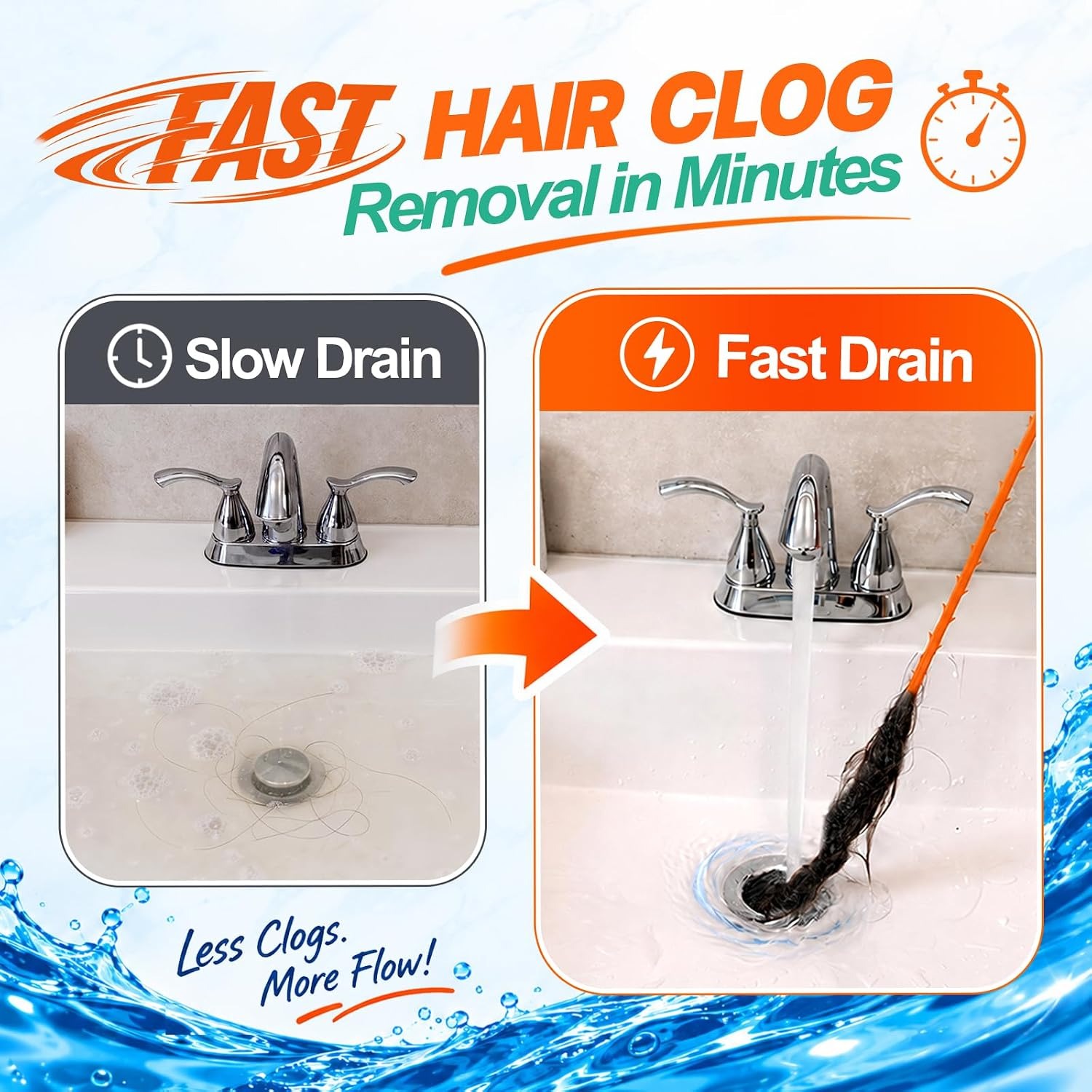
Water pooling around your feet is almost never a broken pipe. It is hair. Every shower sheds a few strands, and those strands catch on the inside of the drain and on the lip of the trap below. Soap, conditioner and shower gel coat them. Over weeks and months, the whole thing turns into a dense gray mat that water has to squeeze past.
You will notice it gradually. First the water takes a second or two to clear. Then it pools while you are still rinsing. Then one morning you are standing in it. The clog did not happen overnight, it just finally got big enough to matter.
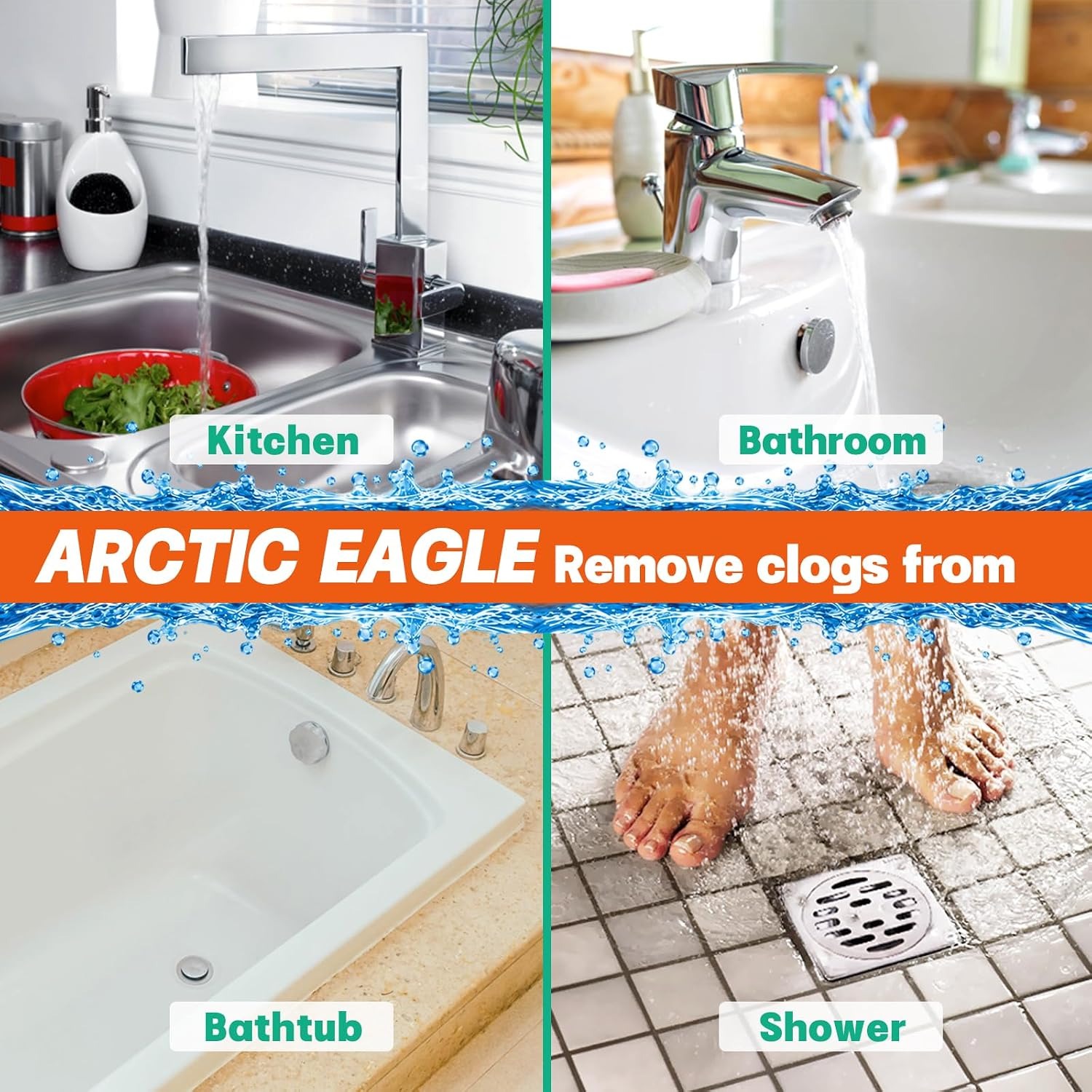
The same thing happens in the bathroom sink, where it is hair plus toothpaste and shaving stubble, and in the kitchen sink, where it is food strands and grease. Different ingredients, same stubborn result.
Why chemicals so often disappoint
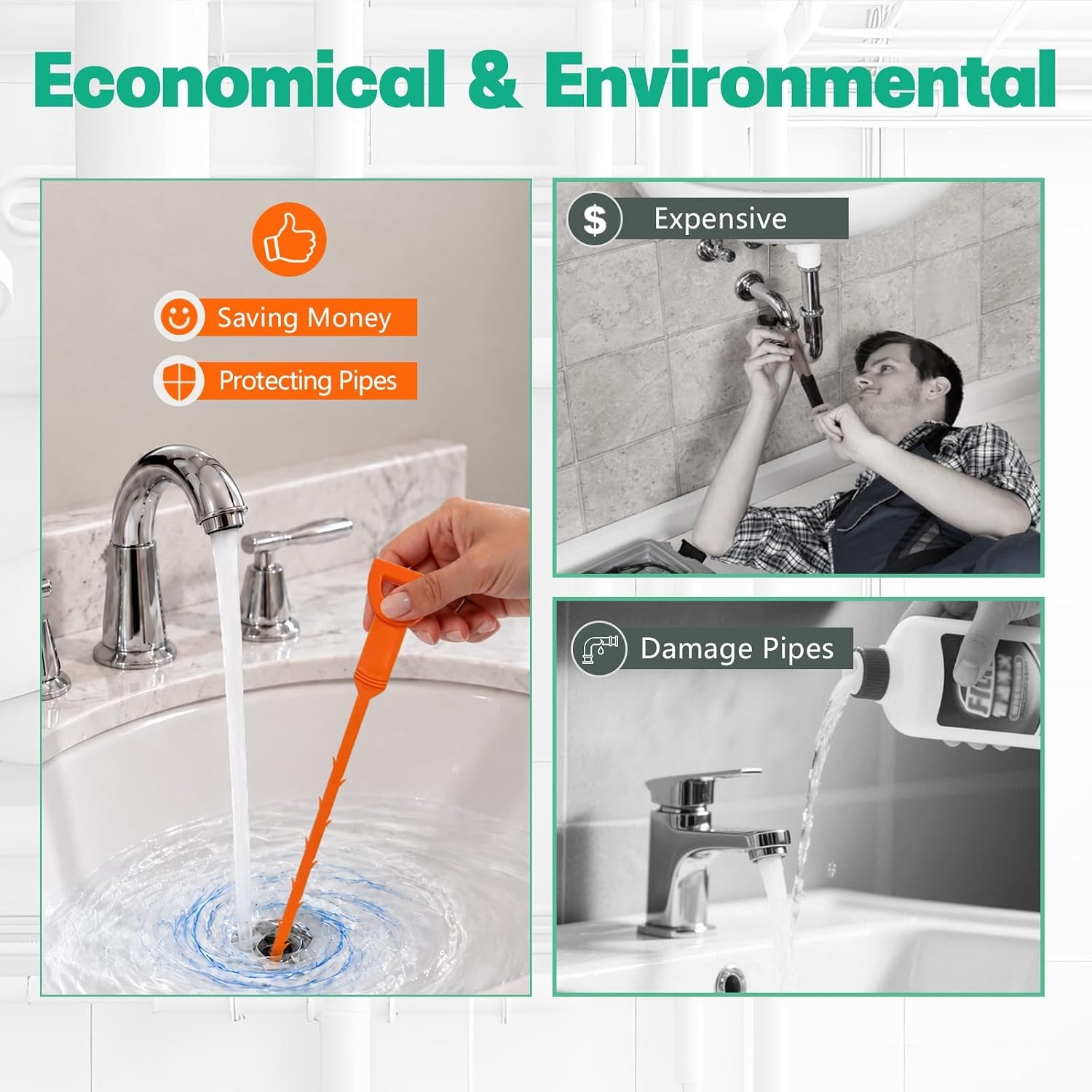
The usual first move is a bottle of drain cleaner. Sometimes it helps. Often it does not, and here is why. Caustic cleaners work by breaking down organic matter, but a packed hair ball is dense, and the liquid tends to run around it rather than soak through it. You get a partial clear, the water moves again for a week, and then you are back where you started with a slightly smaller bottle and a slightly worse clog.
There is also the practical side. Those products are nasty to handle, they smell, and you need to keep them away from children and pets. If you have older pipes or a septic system, regular use is not ideal either. None of this means chemicals are useless, but they are a poor match for the specific problem of hair.
Pulling the clog out physically solves it properly. You see what came up, you trash can it, and the pipe is genuinely clear rather than partially eaten away.
How a barbed drain snake works
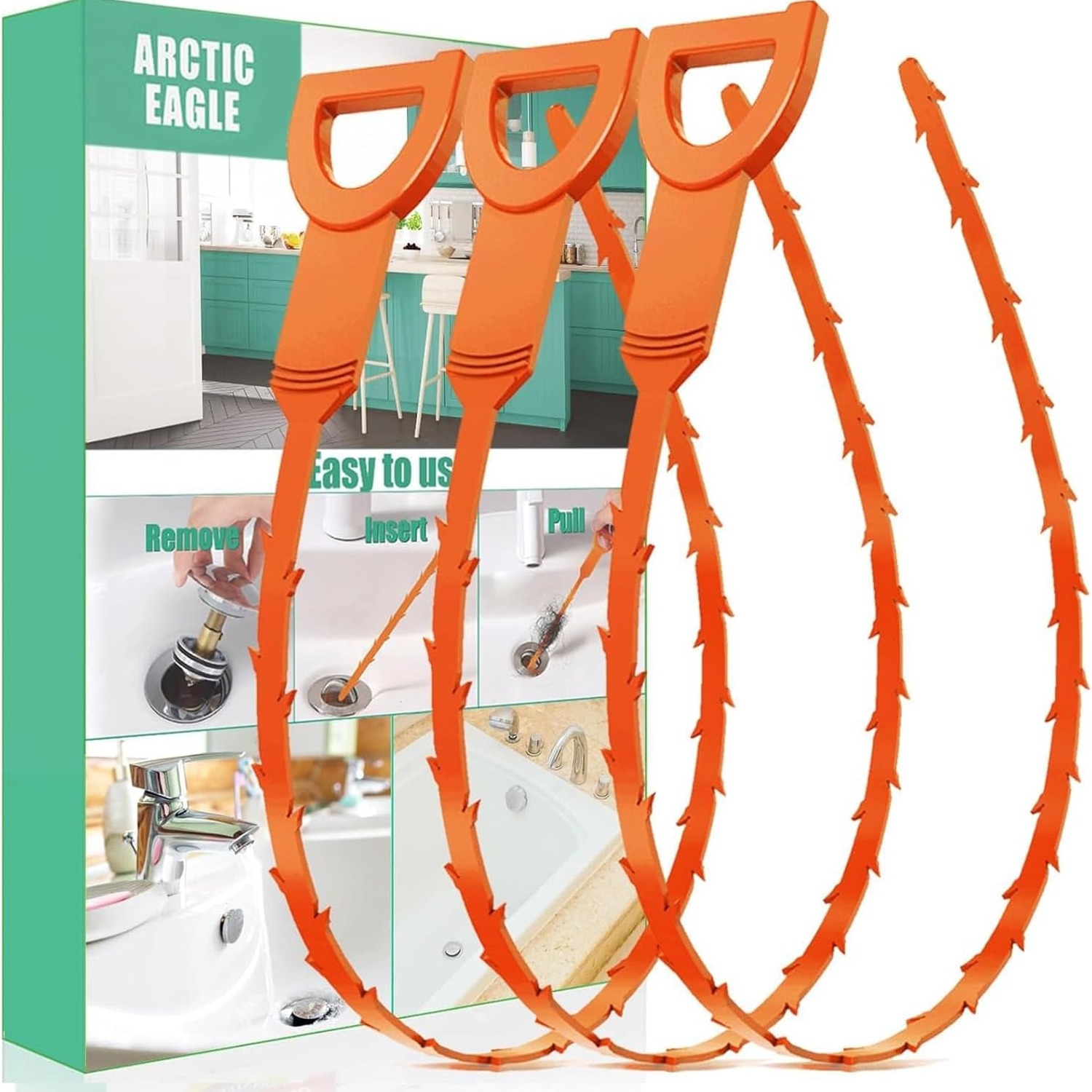
The tool is simple. Each wand is a long, thin strip of flexible plastic with rows of small teeth running down both sides. The teeth angle backwards, toward the handle end.
That angle is the clever part. Going in, the barbs lie flat against the wand and slide past obstructions easily. Coming out, they stand proud and snag anything fibrous. Hair wraps around them, the mat lifts, and the whole thing comes up through the drain with the wand.
The flexibility matters just as much. Below every drain there is a U-shaped bend called a P-trap, which holds a little water to stop sewer smells coming up. That bend is the single most common place for a clog to form, because the water slows there and debris settles. A rigid rod simply stops at the top of that curve. A flexible barbed drain snake bends and keeps going, which means you can reach the actual problem rather than poking at the top of it.
Using it, step by step
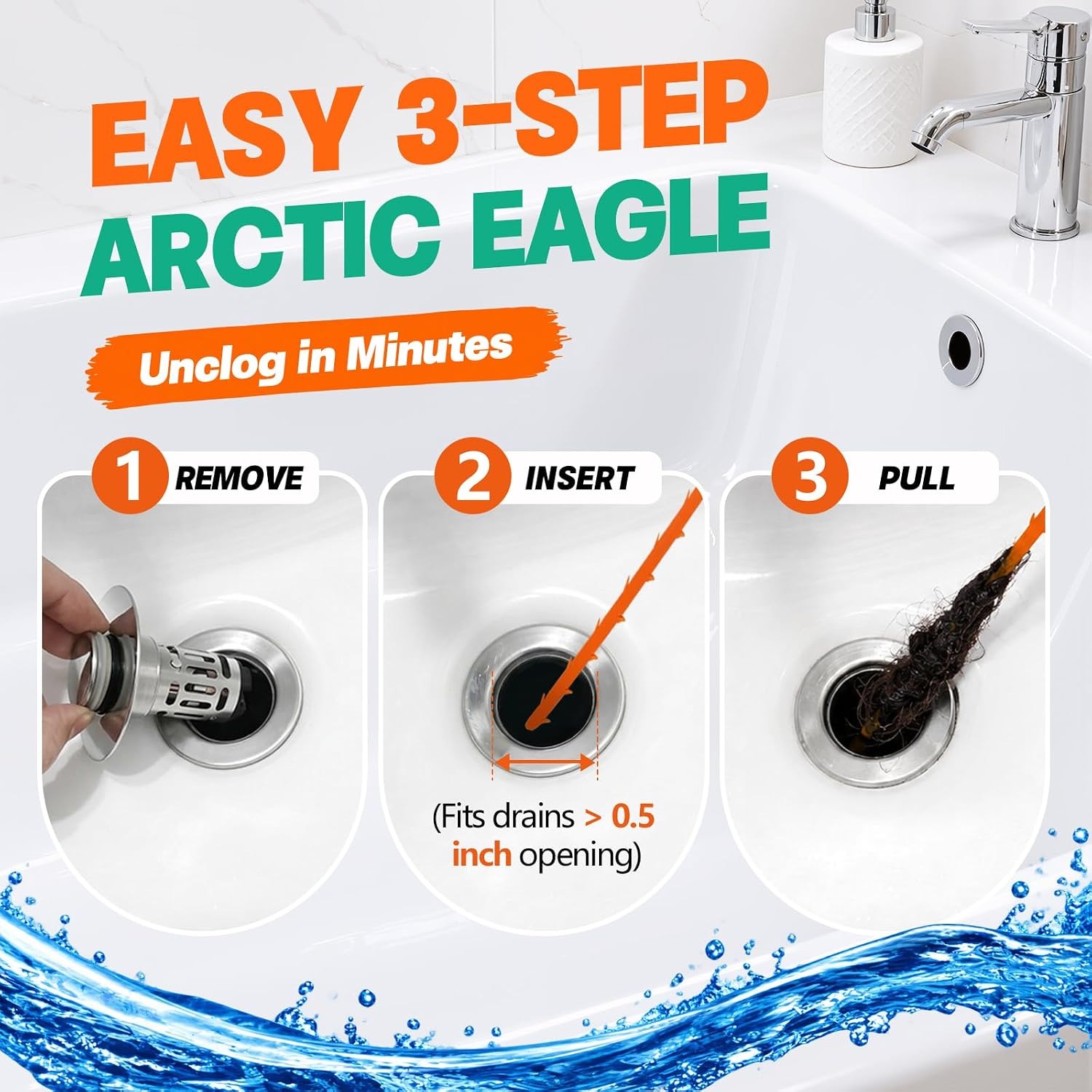
Clear anything off the drain first. If the strainer lifts out or unscrews easily, take it off. If it does not, no great loss, as the wand is thin enough to feed through the slots in most grates.
Push the wand in slowly. You will feel it stop when it reaches the bend. Do not force it. Twist it gently between your fingers and ease it forward, and it will usually find its way around.
Once it is in as far as it will go, rotate it a full turn or two. This wraps the hair around the barbs. Then draw it back up steadily. Do not yank. A slow, firm pull keeps the clump together.
Have a plastic bag or some newspaper ready, because what comes up is unpleasant. Wipe the wand off, then go back in. Two or three passes usually clear a bad drain completely. Finish by running hot water for a minute to flush any loose bits through.
If you pull up nothing at all and the drain is still blocked, the problem is probably further along than this tool reaches. That is the point to think about a longer auger or a plumber.
Where else it comes in handy
Shower and tub drains are the obvious use, but the three pack earns its keep elsewhere.
The bathroom sink collects a surprising amount in the overflow area and around the pop-up stopper. A quick pass every few weeks keeps it draining properly and cuts down on that faint smell sinks sometimes develop.
Kitchen sinks collect different debris. Stringy vegetable peel, rice, coffee grounds bound up with grease. The wand grabs those too, and a sink unclogger tool kept under the kitchen cabinet means you deal with a slow sink before the dishes starts backing up.
Laundry drains are worth a mention as well. Lint from towels and clothing builds up in much the same way as hair, and the same tool handles it.
Why three is the right number
It might look like padding, but having three wands genuinely changes how often you use them.
The honest truth is that tools kept in the shed get used once. Tools kept within reach of the problem get used regularly. Put one in a bag under the main bathroom sink, one in the second bathroom or ensuite, and one under the kitchen sink, and suddenly clearing a slow drain is a two minute job you do when you notice it, not a weekend project you keep putting off.
If you rent out a property or manage a share house, a spare wand handed to a tenant costs almost nothing and may save you a call-out.
Looking after them
Maintenance is minimal but worth doing. Rinse the wand under hot running water straight after use, while the gunk is still soft. A drop of dish soap and an old brush shifts anything clinging between the barbs.
Dry it before storing. Keep it flat or loosely coiled so the teeth are not bent or crushed, and store it somewhere dry rather than sitting in a damp cabinet corner. Treated reasonably, a plastic wand like this lasts a long time, because there is nothing on it to wear out.
One safety note. Do not use it in a drain where chemical cleaner is still sitting. Flush the pipe thoroughly with water first, or you risk splashing something caustic onto your hands.
Prevention beats clearing
Once the drain runs properly again, a little habit keeps it that way. A cheap hair catcher strainer over the shower drain catches most of the hair before it ever gets in. Empty it when you clean the bathroom.
Flushing the drain with a kettle of hot water once a week helps with soap residue in bathrooms and grease in kitchens. And running the wand through once a month, even when nothing seems wrong, takes thirty seconds and stops the next clog before it builds.
Regular small effort beats occasional big effort, which is true of most household maintenance.
When you need more than this
Be realistic about the limits. A 20 inch wand clears hair and fiber within reach of the drain and trap. It will not clear tree roots in an outside line, a collapsed section of pipe, or a blockage several meters down the main run.
The signs that you are past DIY are worth knowing. Several fixtures backing up at once, gurgling from a different drain when you run the faucet, water coming up in the shower when the toilet flushes, or sewage smells around outside drains. Any of those, call someone with a camera and a proper machine.
For the everyday slow shower, though, you do not need any of that.
The short version
Most slow bathroom drains are a hair clog sitting just below the surface or in the trap. Chemicals often miss it. A flexible barbed wand hooks it out in a couple of minutes, and you can see exactly what came up.
This pack gives you three 20 inch wands, each 0.45 inches wide, so check your drain opening is at least half an inch across. Keep one near each drain, rinse after use, and run one through monthly as a habit.
It is a small, cheap, low-tech tool. For the specific job of pulling hair out of a drain, it is hard to beat.