
The complete guide
How to Clear a Slow Drain Yourself, Step by Step
The problem nobody deals with until it is bad
Drains fail slowly. The water takes a second longer than it used to, and you barely register it. A month later the sink holds a puddle while you shave, and the shower pan has an inch of gray water sloshing around your ankles. By the time it bothers you enough to act, there is usually a solid plug of hair, soap and grease sitting just out of sight.
Most people reach for a bottle at this point. Chemical cleaners can soften a thin film, but a dense, matted hair clog is a physical object. Pouring liquid onto it is a bit like trying to dissolve a bird's nest. The liquid finds a channel, drains away, and the clog stays put. That is why the sink works for two days and then slows down again.
The fix is to take the blockage out. That is all a drain snake tool set does. No waiting, no fumes in a closed bathroom, no guessing whether it worked.
What is in the kit and what each piece does
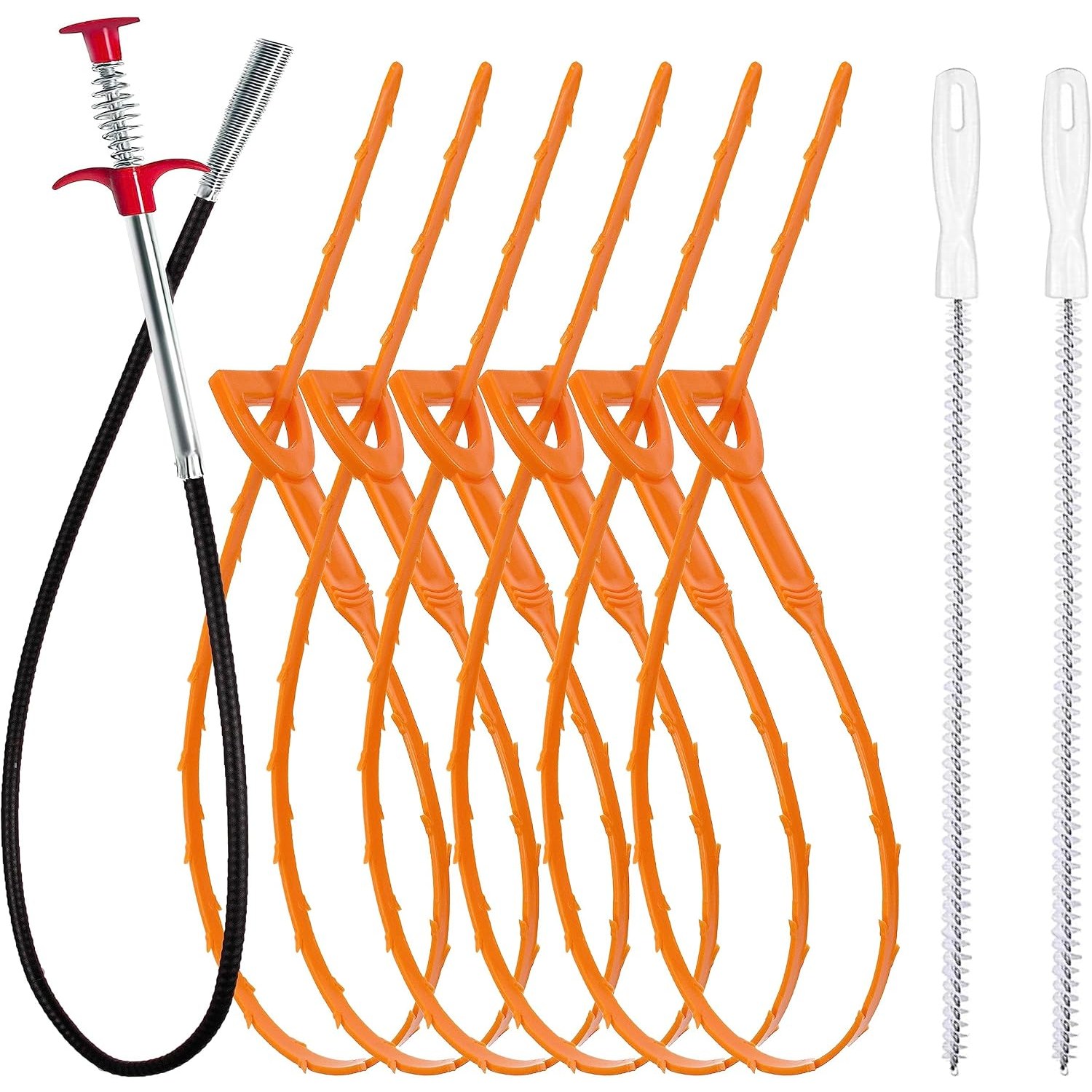
This set has nine tools and they split into three jobs.
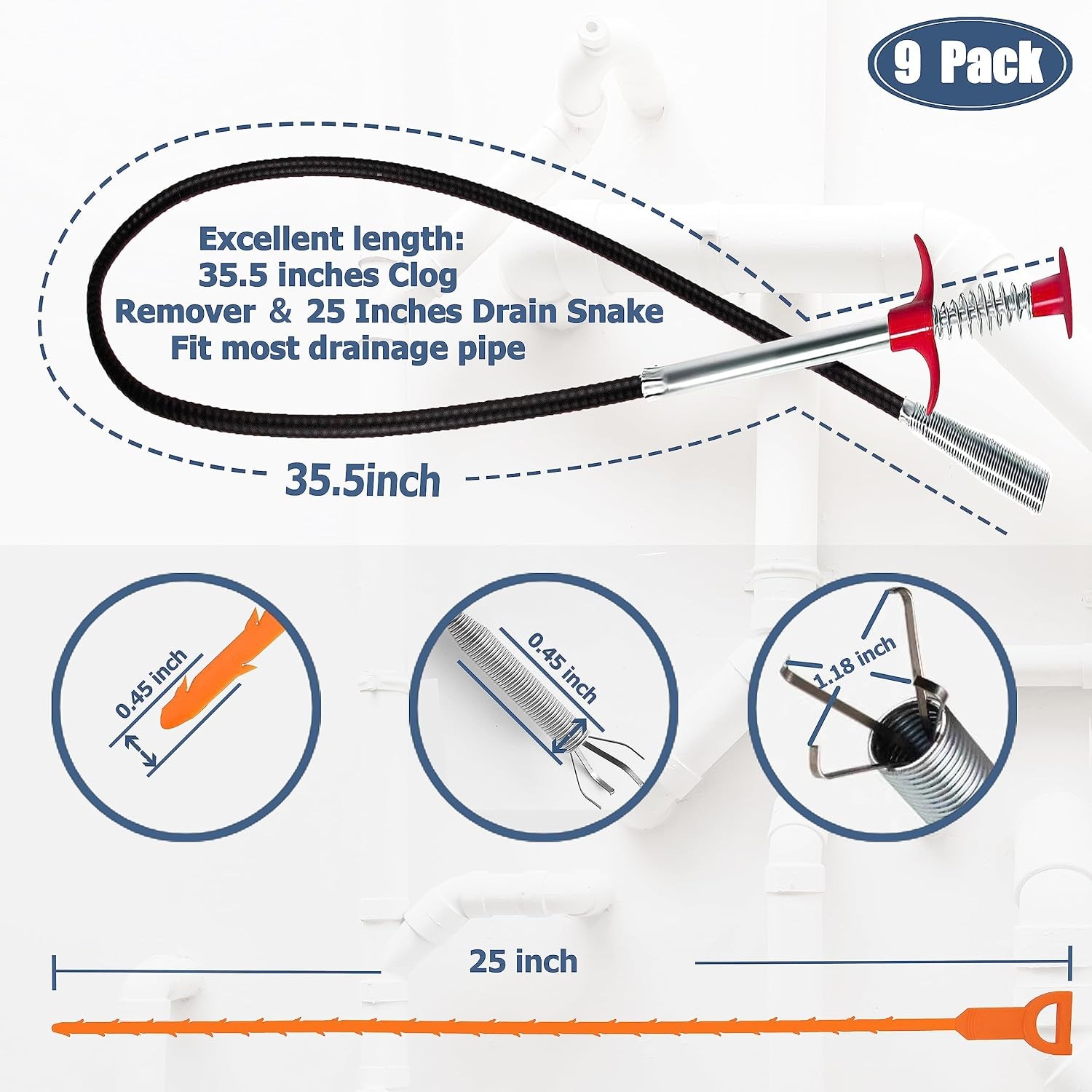
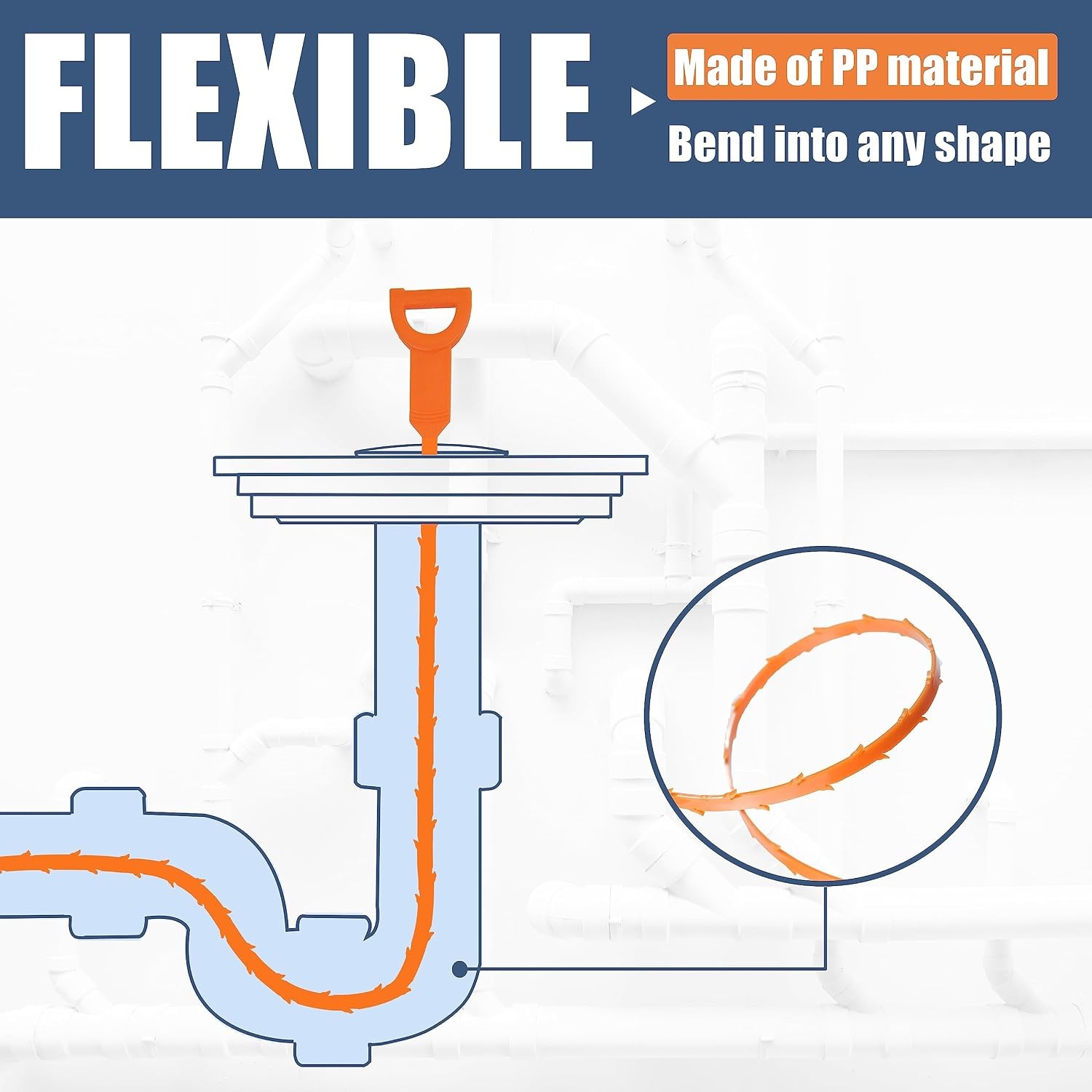
The six 25-inch drain snakes are the workhorses. They are flexible wands covered in small hooked teeth. The teeth fold back as you push the wand in and stand up as you pull it out, so the hair catches and travels up with the tool. Twenty-five inches is a useful length because it gets you past the drain opening and through the first bend, which is where the majority of bathroom clogs sit. Most cheap versions stop around 20 inches and miss exactly that spot.
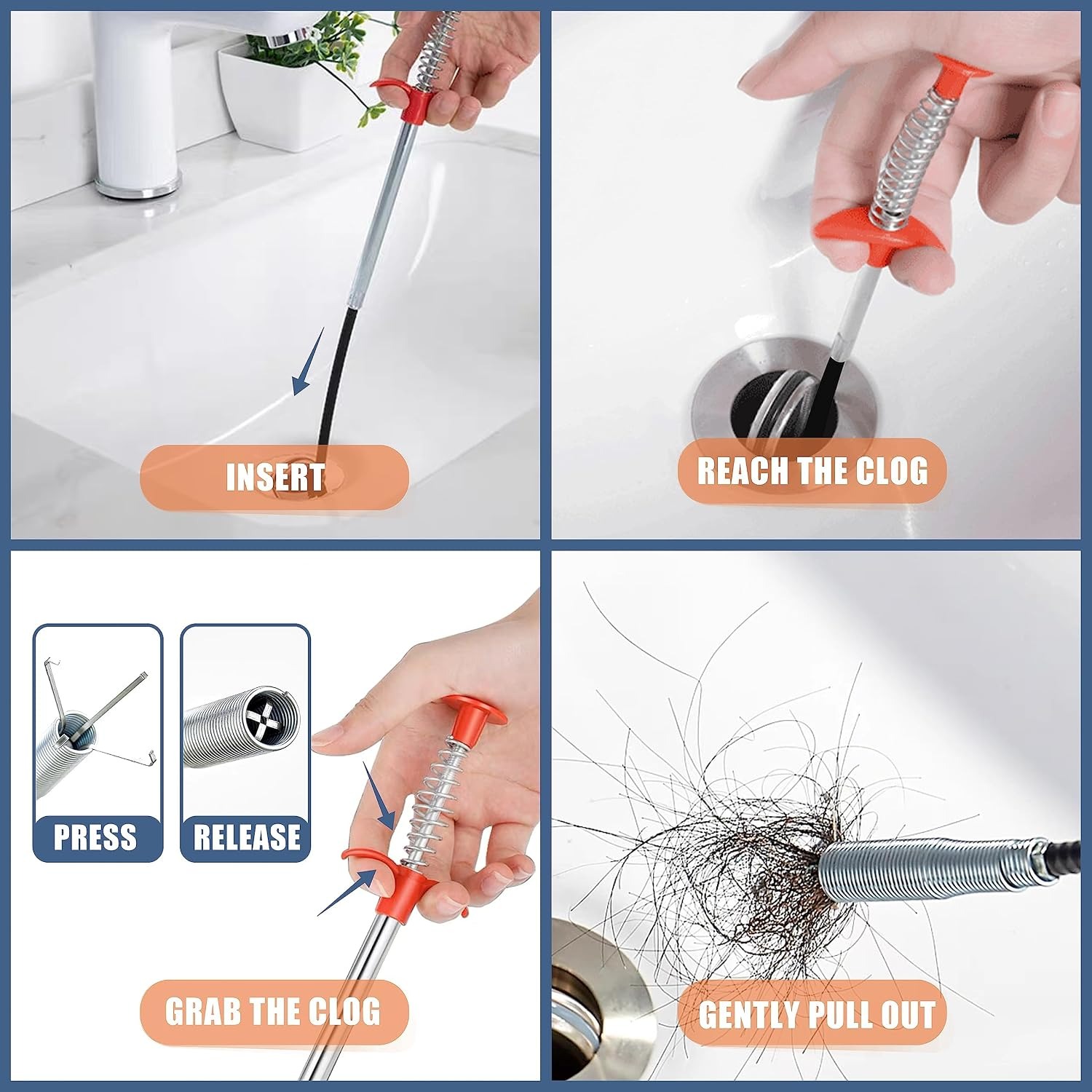
The 35.5-inch claw grabber is for everything else. It has a four-prong jaw at the tip that you open and close with the handle. When the problem is a bottle cap, a razor cover, a hair tie, a toy or a compacted wad of wipes, a barbed stick just slides past it. A claw closes around the object and holds on. The shaft is flexible, so it bends through the curve of a P-trap instead of stopping dead at the elbow.
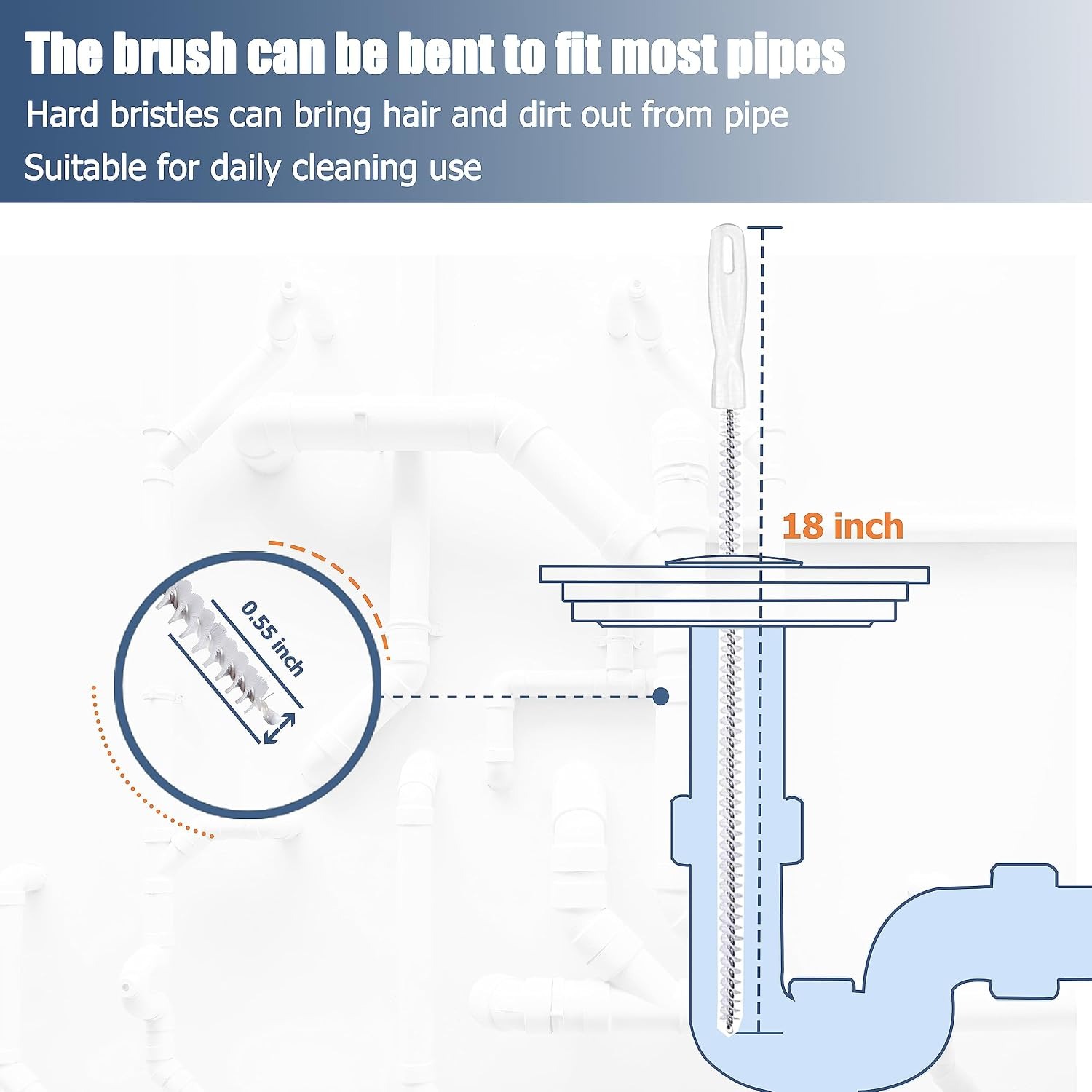
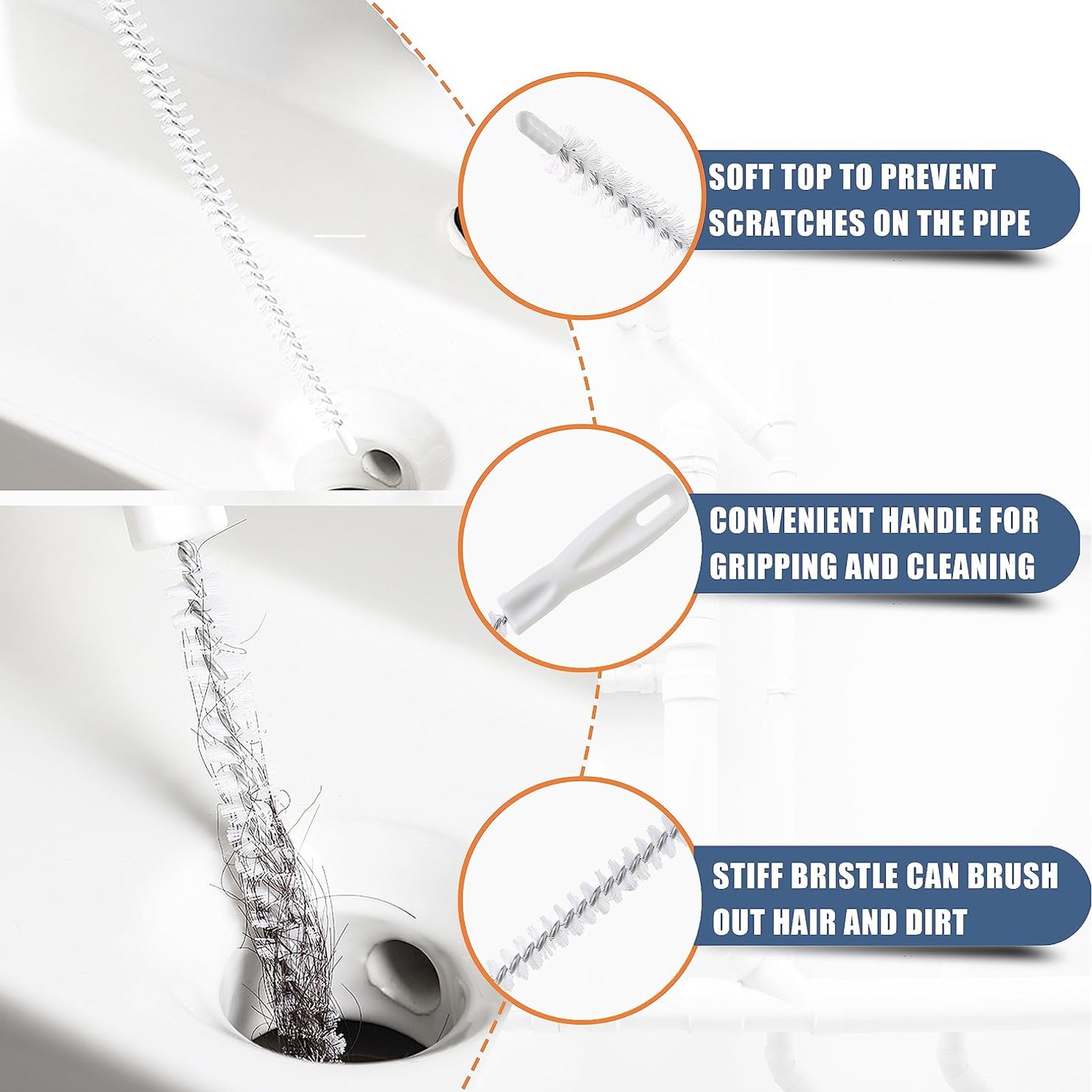
The two pipe brushes do the part most people never think about. After you pull a clog out, the inside of the pipe is still coated in a greasy, slimy film. That film is the glue. Every hair that goes down afterwards sticks to it, and within weeks you have a new clog in the same place. Running a brush through that first stretch of pipe strips the film away and takes most of the drain smell with it.
Doing the job without making a mess
Set up before you start. Lay a towel or some newspaper around the drain, open a trash bag, and put on gloves. What comes out is not pleasant and you do not want to be hunting for a bag with a dripping wand in your hand.
If the sink is holding water, scoop out as much as you can first. Working blind in murky water is how tools get dropped.
Take the drain opening cover off if it lifts or unscrews. Some shower and sink drains have a pop-up stopper that twists out. If yours does not come apart easily, leave it, since the snakes are thin enough to feed past most grilles.
Now push a snake in. Go slowly and keep a firm hold on the handle. When you feel resistance, give the wand a half turn to let the barbs bite, then draw it back up at a steady pace. Do not yank. The clog often comes out in sections rather than one lump, so expect to repeat this three or four times until the wand comes back clean.
If the snake keeps coming back empty but the water still will not move, swap to the claw grabber. That usually means the blockage is a solid object rather than hair.
Once the water runs freely, run the hot faucet for a minute, then feed a pipe brush in and scrub the walls. This last step is the one that buys you months instead of weeks.
Which drains it suits
The set is made for household drains, which covers bathroom sinks, shower pans, bathtubs, kitchen sinks, toilets and sewer drain openings. Bathrooms are the obvious use because hair is the number one cause of domestic blockages. Kitchens are a little different. Grease and food scraps are the usual culprits there, so the brushes often matter more than the snakes.
It is worth being clear about what the kit cannot do. If your problem is tree roots in an outside line, a collapsed pipe, or a blockage several meters down the system, a hand tool is not going to reach it. Signs of that kind of trouble include several fixtures backing up at once, gurgling from a toilet when you run a sink, or water appearing outside. That is a plumber's job and no amount of pushing will fix it.
Choosing between hand tools, chemicals and a plumber
Chemical cleaners have their place for a thin, early-stage slowdown. They are poor value on an established clog, they are harsh on older pipework, and they create a real hazard if you then stick a tool into a pipe full of caustic liquid. If you have already poured something down, flush with plenty of water and wait before using any tool.
A motorised auger is the opposite end of the scale. It is powerful, and it is also expensive, heavy, and capable of damaging a plastic trap if you are not practiced with it. For a once-a-season bathroom clog it is far more machine than the job needs.
Hand tools sit in the middle, which is why a reusable drain cleaning tool set is the sensible first purchase for most homes. It costs less than a single plumber call-out, stores in a drawer, and handles the routine problems that make up the large majority of blocked drain calls.
Keeping the drains clear afterwards
A little maintenance beats a lot of rescue work.
Fit a hair catcher over the shower and sink drain openings. They are cheap and they stop the problem at the source.
Scrape plates into the trash instead of rinsing scraps down the kitchen sink, and never pour cooking fat down a drain. It goes down as a liquid and sets as a solid.
Once a month, run a pipe brush through each main drain and flush with hot water. It takes two minutes per drain and is the single most effective habit for avoiding blockages.
Look after the tools too. Rinse them straight after use, wash with a little dish soap, dry them fully and store them together in a bag. Metal left wet in a cabinet does not age well, and keeping used tools bagged stops drain residue spreading to everything else in there.
The short version
A slow drain is almost always a physical blockage, and the quickest fix is to pull it out rather than try to dissolve it. The six 25-inch snakes handle hair, the 35.5-inch claw grabber handles solid objects, and the two brushes clean the pipe wall so the next clog takes much longer to form. Everything rinses and goes back in the drawer. For the price of one bottle of cleaner or a fraction of a call-out fee, you get a kit that stays useful for years.