
The complete guide
How to Choose and Use a 50 Inch Drain Snake
The slow drain nobody deals with until it stops
A drain rarely blocks overnight. It fades. First there is a small puddle around your feet at the end of a shower. A few weeks later the water is still going down after you have dried off and left the room. Eventually it stops moving at all, usually on a Sunday, usually when you have people coming over.
What is actually happening in there is simple and a bit grim. Hair comes off your head, catches on the inside of the pipe, and soap and conditioner residue bind it into a mat. Each new strand sticks to the last. The mat grows sideways until it narrows the pipe to a trickle. By the time you notice, there can be a surprising amount of material packed into the first meter of pipework.
The reason this is worth knowing is that it tells you what kind of tool you need. The clog is soft, it is made of fibers, and it is close to the opening but not close enough to grab. You do not need pressure. You need something long and thin that can reach it and hook onto it.
Why reach is the thing that matters
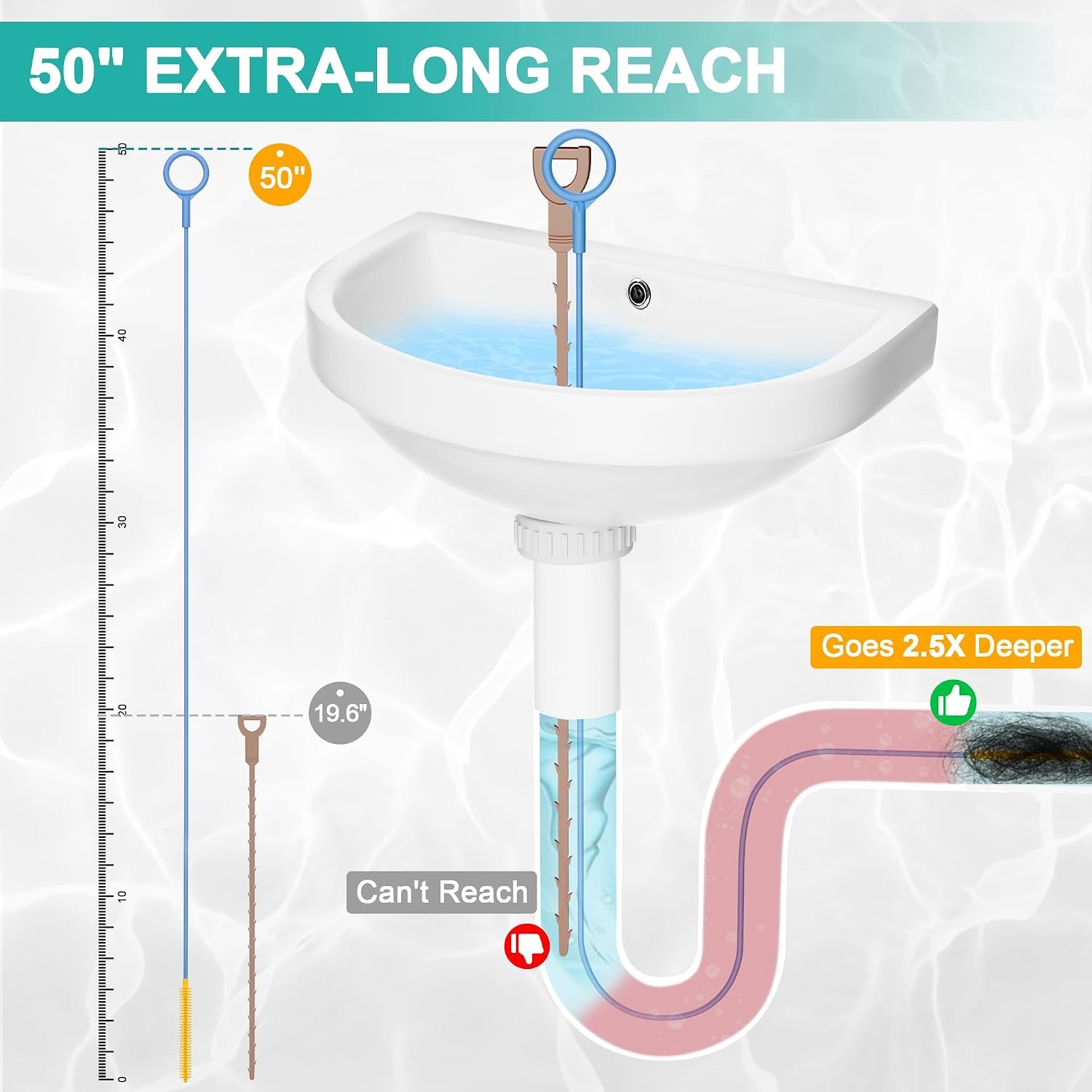
Short plastic hair sticks sell in huge numbers because they are cheap and they are sitting next to the till. They are about 18 to 20 inches long, which sounds fine until you understand the shape of your drain.
Below the drain opening there is a trap, a U shaped bend that holds a small amount of water to block sewer smells from coming back up. Hair collects right at and just past that bend. A 20 inch stick can usually reach the top of the trap. It often cannot get around it. So people fish out a bit of the clog, the water runs slightly better for a week, and then it goes back to how it was because most of the mat is still sitting there.
A 50 inch snake goes past the trap and keeps going. That is the entire point of the extra length. You are not clearing the part you can see, you are clearing the part you cannot.
Thin beats thick for home use
There is a temptation to assume a bigger, heavier tool must be better. For household hair clogs that is backwards.
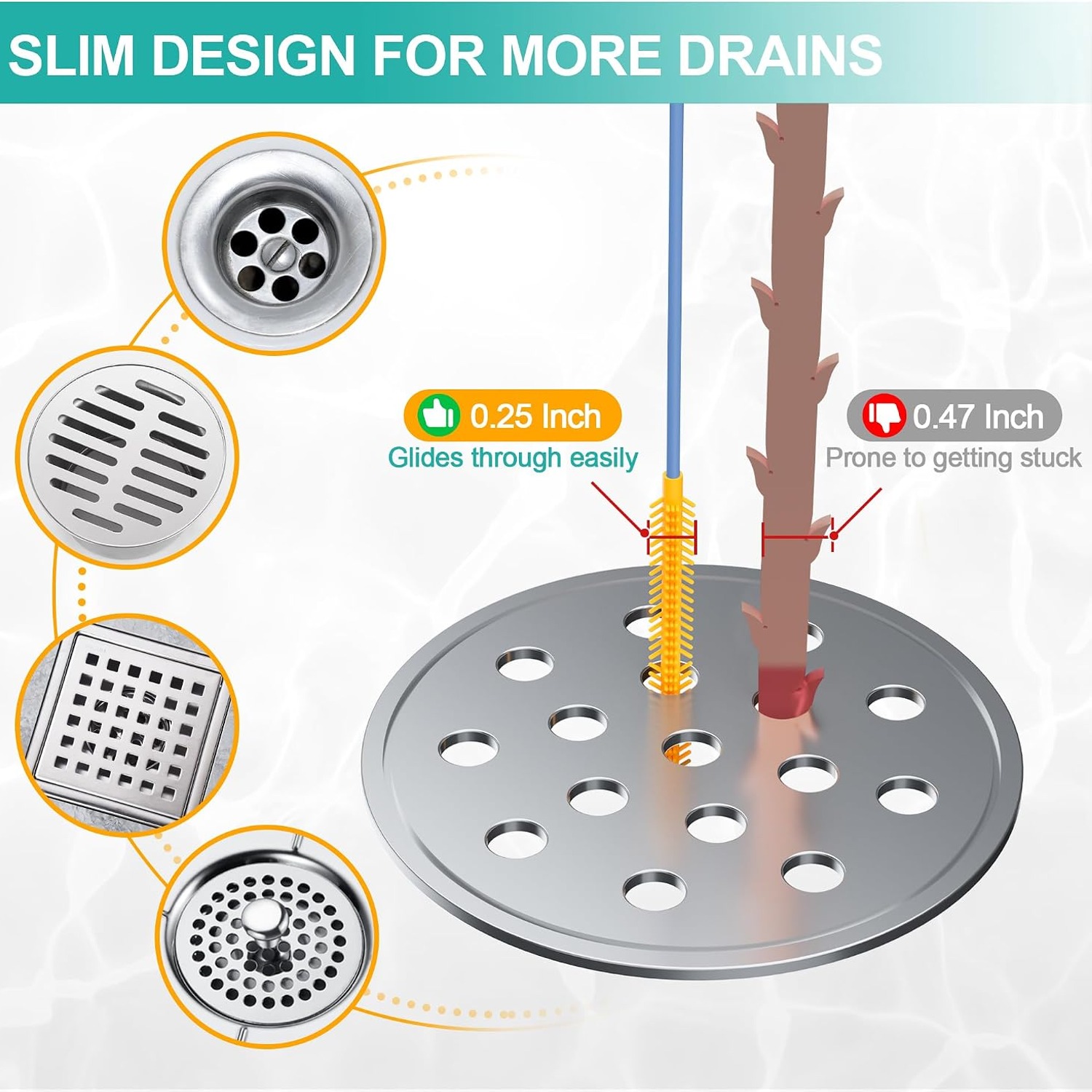
Drain openings are small. A grated shower drain has slots of a few millimeters. A bathroom sink has a pop up stopper mechanism sitting right in the throat of the pipe. A thick auger will not go through any of that, so before you have cleared anything you are unscrewing fittings and lying on a wet bathroom floor with a flashlight.
At 0.25 inches across, this snake slides through most grates and around most stoppers without any dismantling at all. It also bends more readily, which means it follows the pipe instead of jamming against the first curve. Thin and flexible gets you to the clog. Thick and rigid gets you to the first bend.
The hook is doing the work
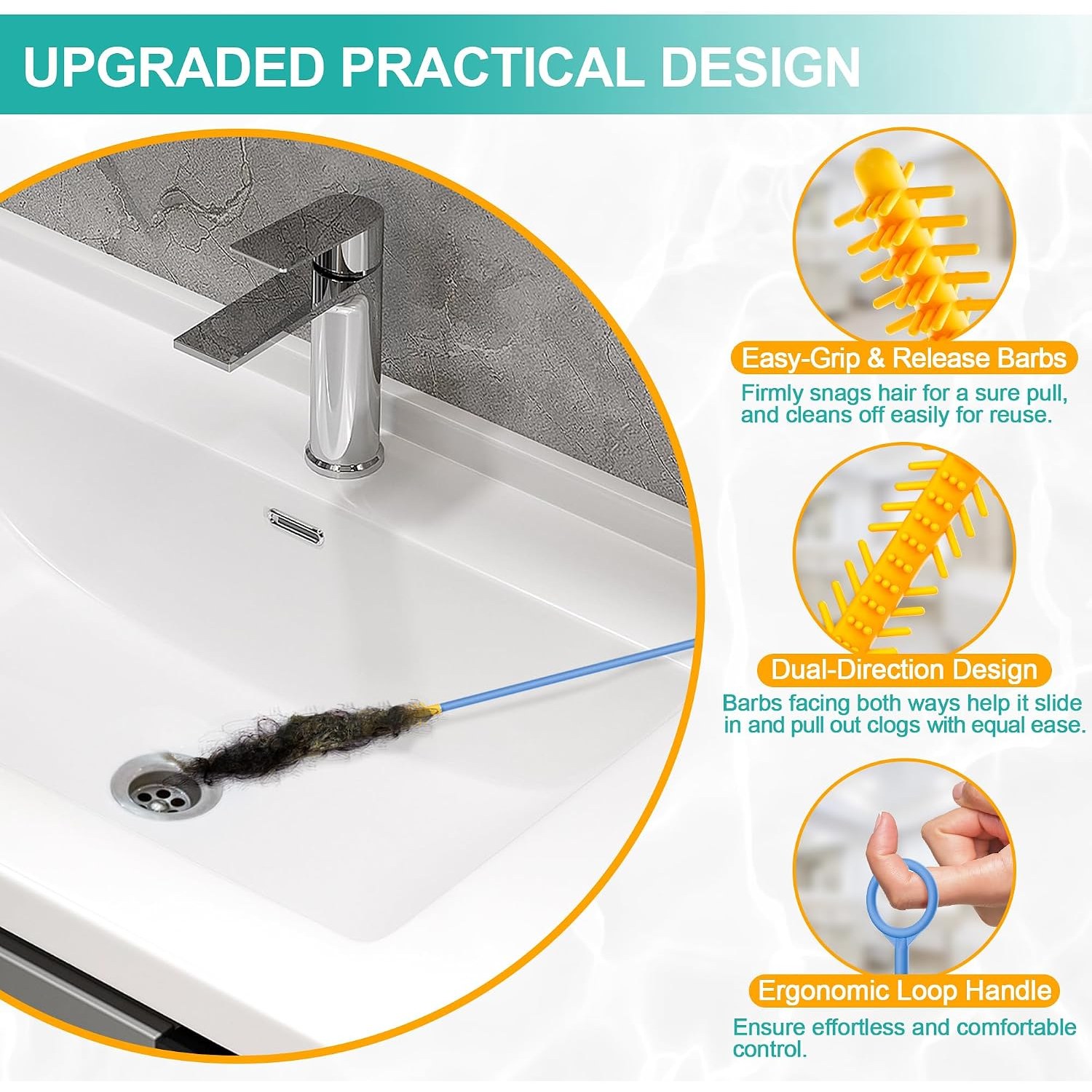
Look at the business end. The tip is barbed, and those barbs face back up the shaft. Going down, they fold flat and the snake slides easily. Coming back up, they open out and grab anything fibrous.
That direction matters because it determines what happens to the clog. A plunger pushes. A chemical dissolves the outer layer. A barbed snake pulls, which means the hair mat leaves your plumbing entirely rather than relocating 30cm further along to form a worse blockage later.
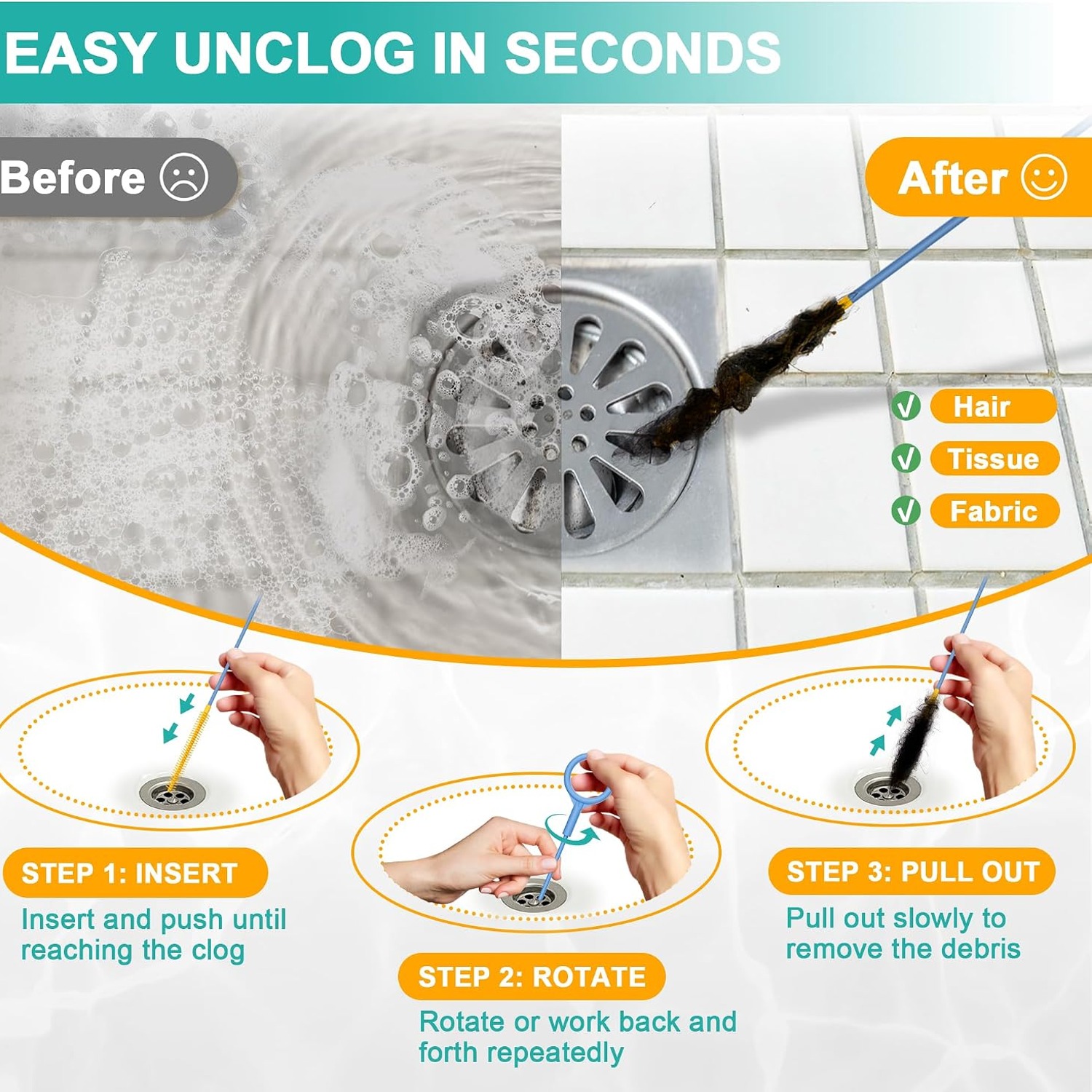
The technique is not complicated. Push until you feel it stop. Turn it a handful of times, which winds the hair onto the barbs like spaghetti on a fork. Then pull back slowly. If you pull fast the clog can slip off. Slow and steady brings the whole thing up in one go, and it is genuinely satisfying in a way you will not admit to anyone.
Expect to do it two or three times on a drain that has been neglected. The first pass takes the bulk, later passes clean up what is left.
Steel versus plastic, and why it is not close
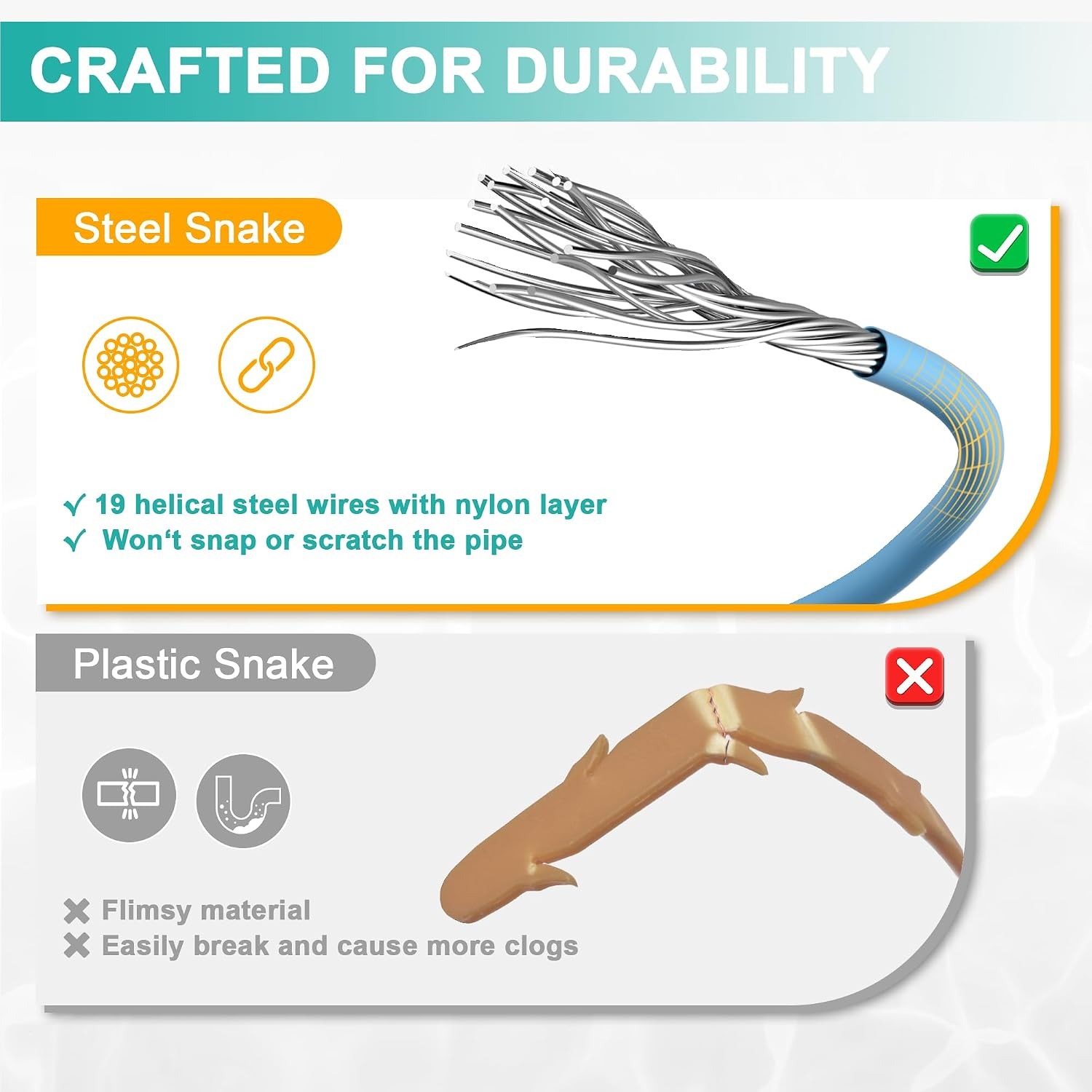
The cheap disposable versions are molded plastic. They have two problems. The barbs are shallow so they lose their grip, and the shaft snaps. A snapped plastic stick in a drain is a genuinely bad outcome, because now you have a rigid foreign object wedged in the pipe and a real job on your hands.
A stainless steel drain snake bends and springs back. You can push it hard against a bend, feel it flex, and have it keep its shape afterwards. It also survives being rinsed, dried and stored dozens of times, which plastic does not.
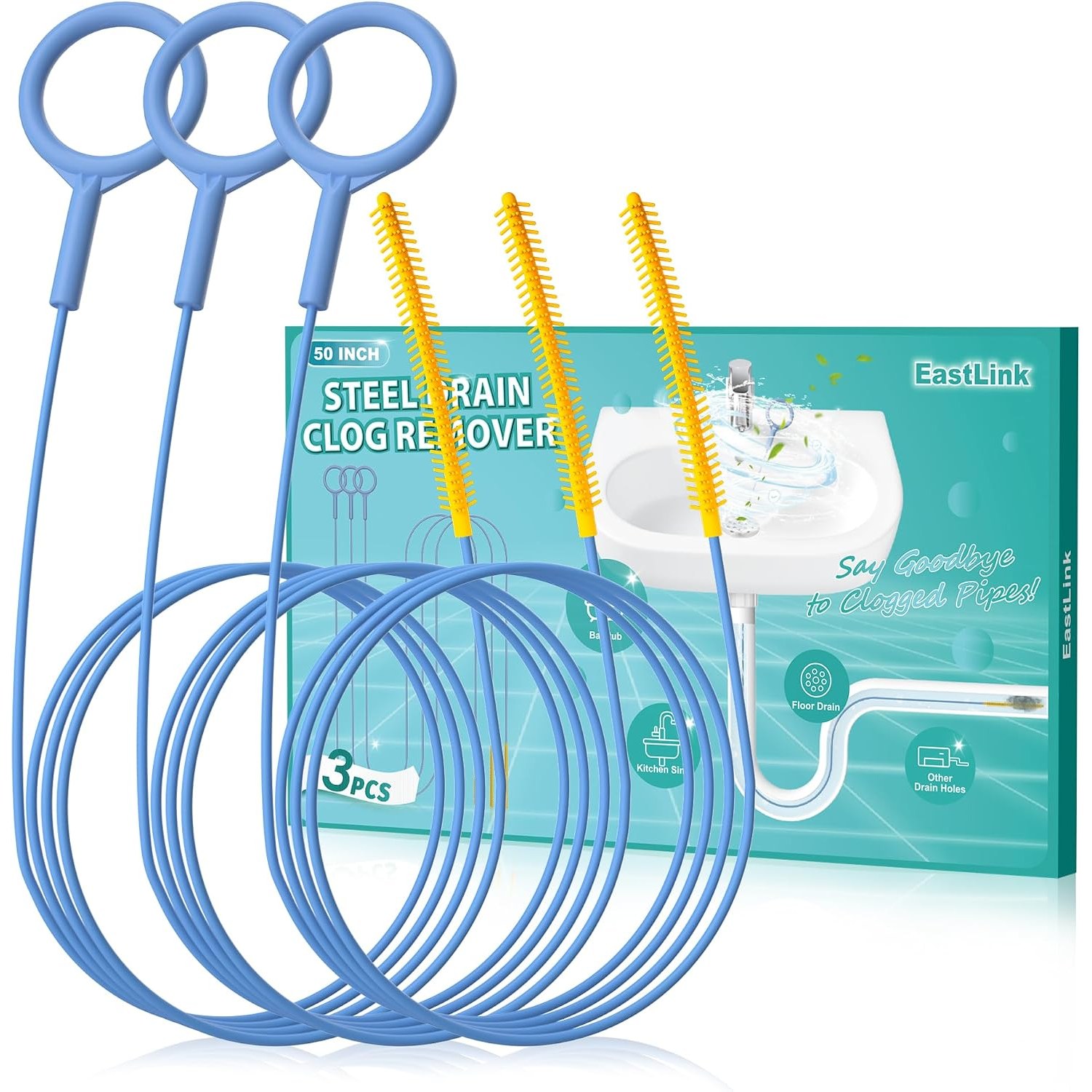
That reusability changes the math. A disposable stick costs a few coins but you use it once. A steel snake you keep in the cabinet for years. Three of them, which is what this pack is, covers a whole house.
Who this suits
Renters get a lot out of it. Older rental properties have older plumbing and landlords who take their time, and having a shower drain hair remover in a drawer means you deal with the problem on your own schedule.
Anyone with long hair in the house will use it regularly. So will households with multiple people sharing one bathroom, because the volume adds up fast.
It also suits people who would rather not keep caustic liquid under the sink. Those products work on some clogs, do nothing on others, and are unpleasant to store around kids and pets. Pulling the hair out mechanically avoids all of that.
Where it is not the right answer is anything structural. If your drain is blocked because of a collapsed pipe, roots, or a hard object someone dropped down there, no hand tool fixes it. If water is backing up in more than one fixture at once, that points to a main line issue and you want a plumber.
Getting the most out of it
Treat it as maintenance rather than emergency equipment. Running it through the main shower every month or two takes two minutes and stops the clog ever reaching the point where water stops moving. That is far easier than dealing with a fully blocked drain.
Put a towel down before you start. Have a trash bag open next to you. Wear gloves. What comes out is unpleasant, and the clean up is the part people regret not planning for.
Afterwards, rinse the tip under hot running water and strip the debris off by hand or with an old brush. Dry the shaft properly before putting it away so you are not storing damp metal. Coil it loosely rather than folding it into a sharp bend, which keeps the shaft true.
Once the clog is out, run hot water for a minute or two to flush the loosened residue along. Some people follow up with a kettle of hot water and a bit of dish soap, which helps shift the greasy film the hair was stuck to.
The short version
A slow draining shower is almost always a hair clog sitting just past the trap, too deep for fingers and out of reach of a short plastic stick. A 50 inch snake that is thin enough to fit through a grate and flexible enough to round a bend will get to it, and a barbed hook tip will pull it out in one piece.
Stainless steel means it does not snap and it does not go in the trash after one use. Three in a pack means you can put one in every bathroom and still have a spare. It costs less than a single plumber visit and it works without pouring anything nasty down your pipes.
Use it before the water stops rather than after, and you will mostly forget drain problems exist.