
The complete guide
How To Choose And Use A Flexible Drain Brush
The smell that comes back no matter what you pour down there
You clean the sink. You wipe the drain opening. A week later the smell is back, and the water still takes its time going down. The reason is simple and slightly unpleasant. The problem is not in the bowl you can see. It is a few inches inside the pipe, where hair, soap film, toothpaste, grease and skin cells have built up into a soft layer on the pipe wall.
Nothing in a normal cleaning cabinet reaches that layer. A sponge stops at the opening. A cloth will not bend. Chemical cleaners dissolve part of the mess and leave the rest behind, which is why the smell returns on a schedule. The fix is physical. You have to get bristles onto that surface and scrub.
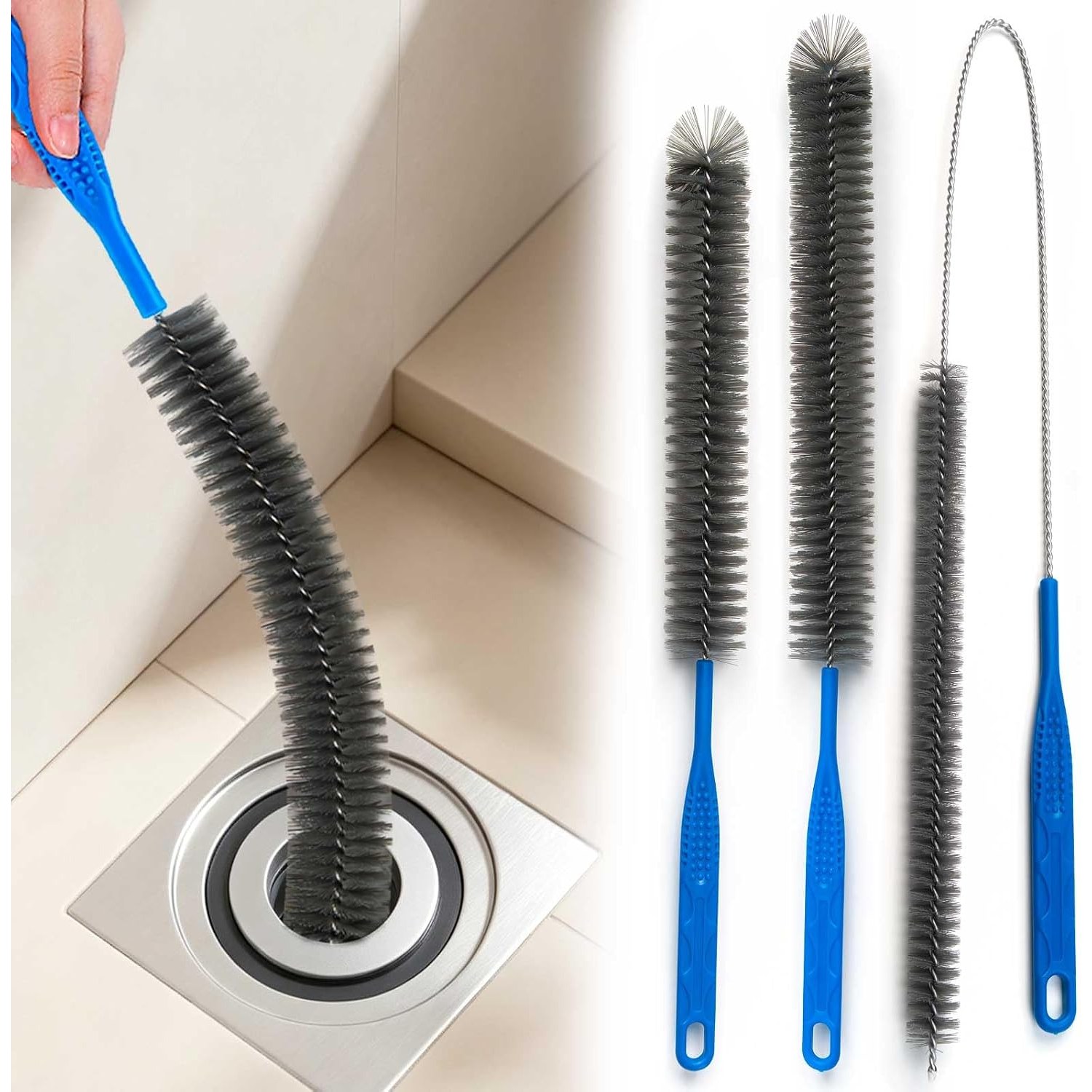
That is the whole job of a flexible drain brush. It is a long, thin, bendy brush that goes past the strainer, follows the curve of the pipe and takes the build-up off with it.
How a flexible drain brush actually works
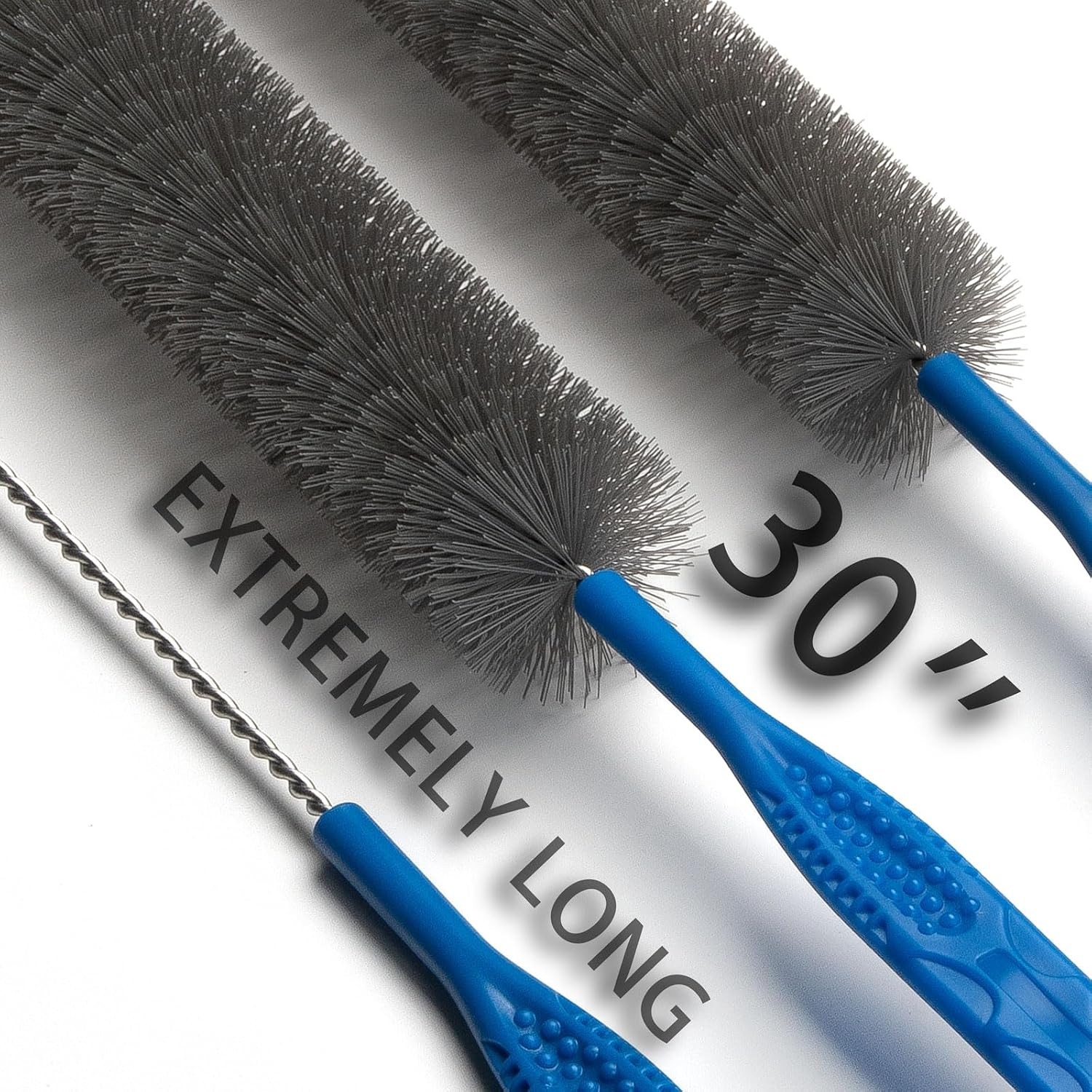
The design is straightforward. A stainless steel core runs down the middle, with nylon bristles twisted into it so they stick out in all directions. The handle is plastic.
The steel core is the clever part. It bends when you push it round a corner, holds its shape while you work, and springs back when you pull it out. Wire without that quality would either refuse to bend or stay crumpled after one use. A good core is what separates a brush that lasts from one you throw out after a month.
The bristles do the scrubbing. Nylon at a medium firmness is the right balance for household plumbing. Softer and it just slides over greasy film. Harder and it fights you when the pipe bends, and you risk marking a soft finish. Medium bristles grip hair, hold onto grease and still flex through a trap.
Because the bristles stick out all the way round, you are cleaning the full circle of the pipe at once. That is a different thing from poking a wire down a drain. A wire makes a hole through the gunk. A brush removes it.
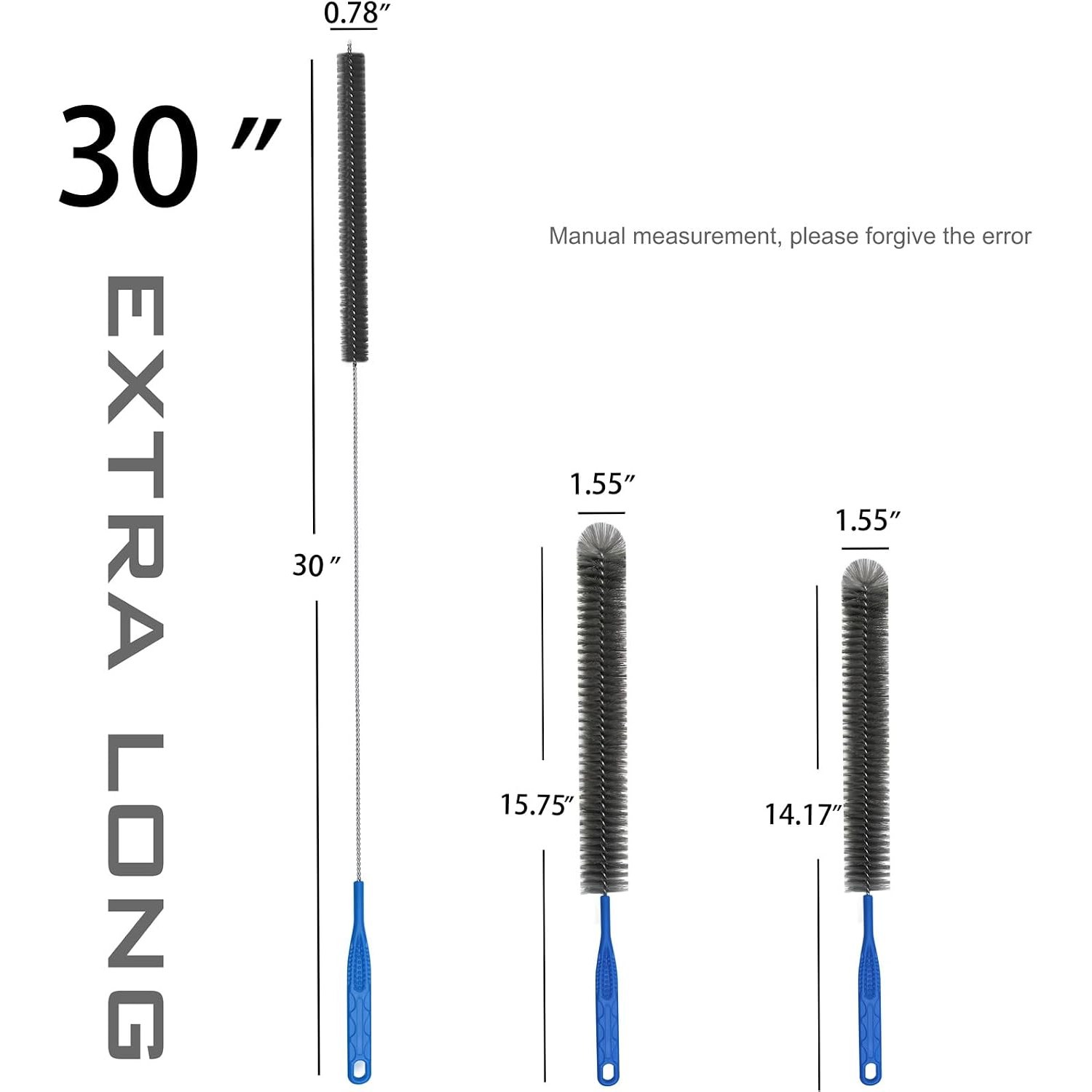
This set gives you three brushes in different sizes, with product dimensions of 2.76 inches long by 0.7 inches wide by 12.6 inches high, and the whole lot weighs 0.14 kg. Having more than one size is more useful than it sounds, which we will come back to.
Where you will end up using it
Most people buy it for one drain and then keep finding jobs.
Kitchen sink. Grease is the enemy here. It cools on the pipe wall and catches everything that follows. A quick in-and-out pass with hot water running makes a real difference, and it is why a decent drain cleaner tool earns its place under the sink.
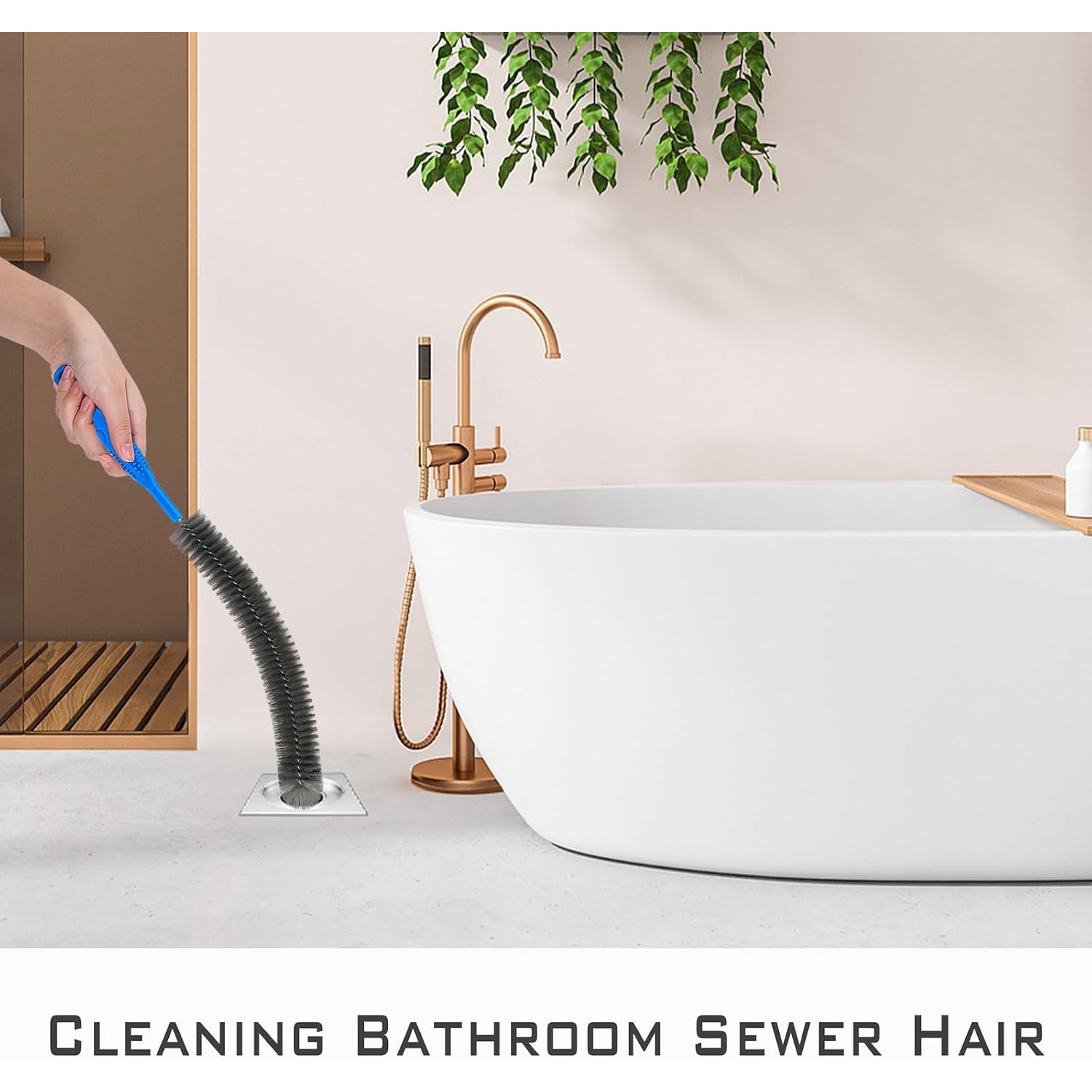
Bathroom sink and tub. Hair and soap scum bind together into a gray rope. The brush pulls it out in one go, which is far more satisfying than it should be.
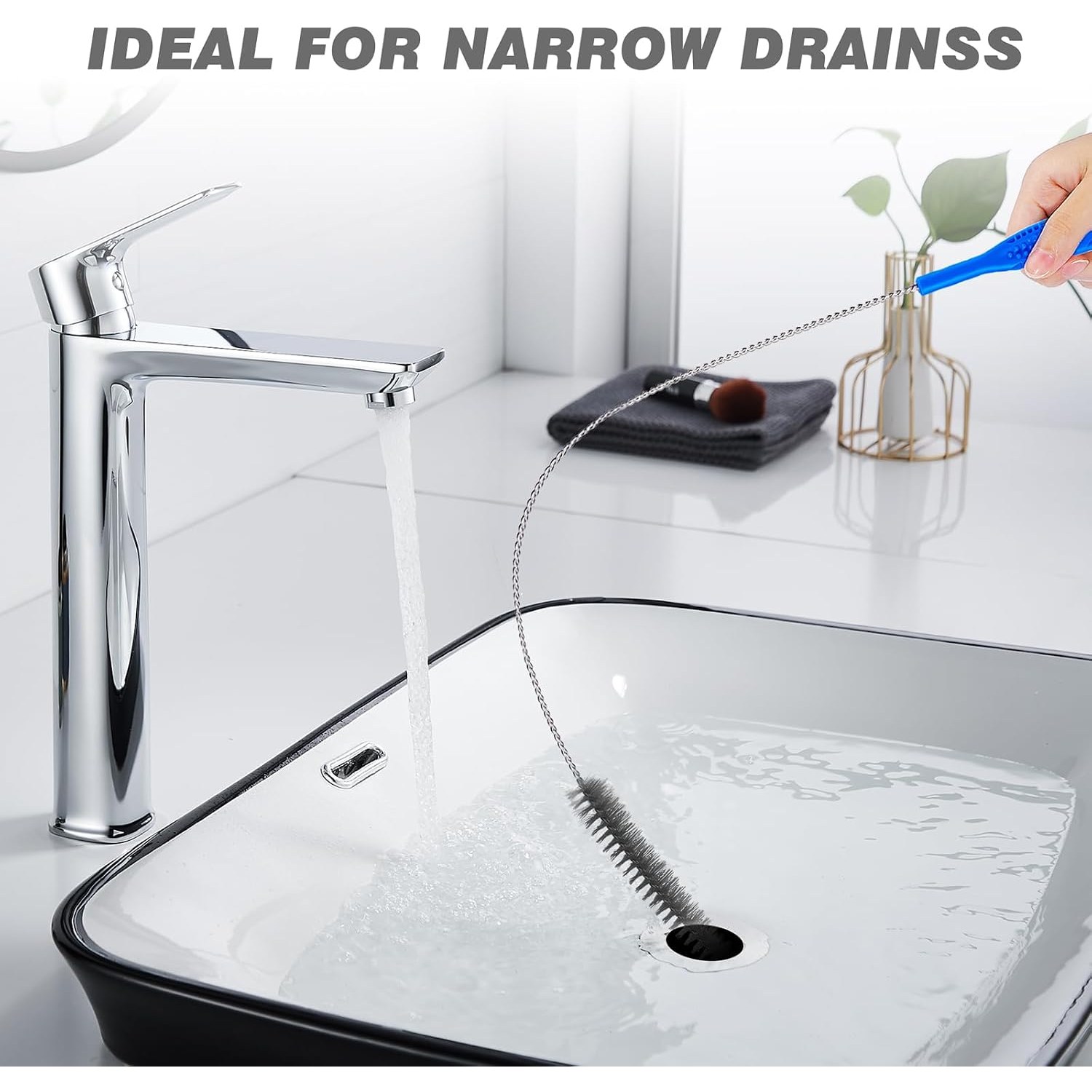
The overflow hole. This is the one almost everybody forgets. That little hole near the rim of your sink or tub leads into a hidden channel, and that channel gets properly slimy. It is often the actual source of a bathroom smell that you have been blaming on the drain. A slim brush is the only easy way in.
Toilet jet holes. Under the rim and at the base of the bowl there are small holes that direct the flush. Limescale narrows them over time and your flush gets weaker. Clearing them restores the pressure.
Refrigerator condenser coils. Dust and lint between the coils make the fridge work harder and run hotter. A long flexible brush gets in between them. Unplug the fridge first, every time.
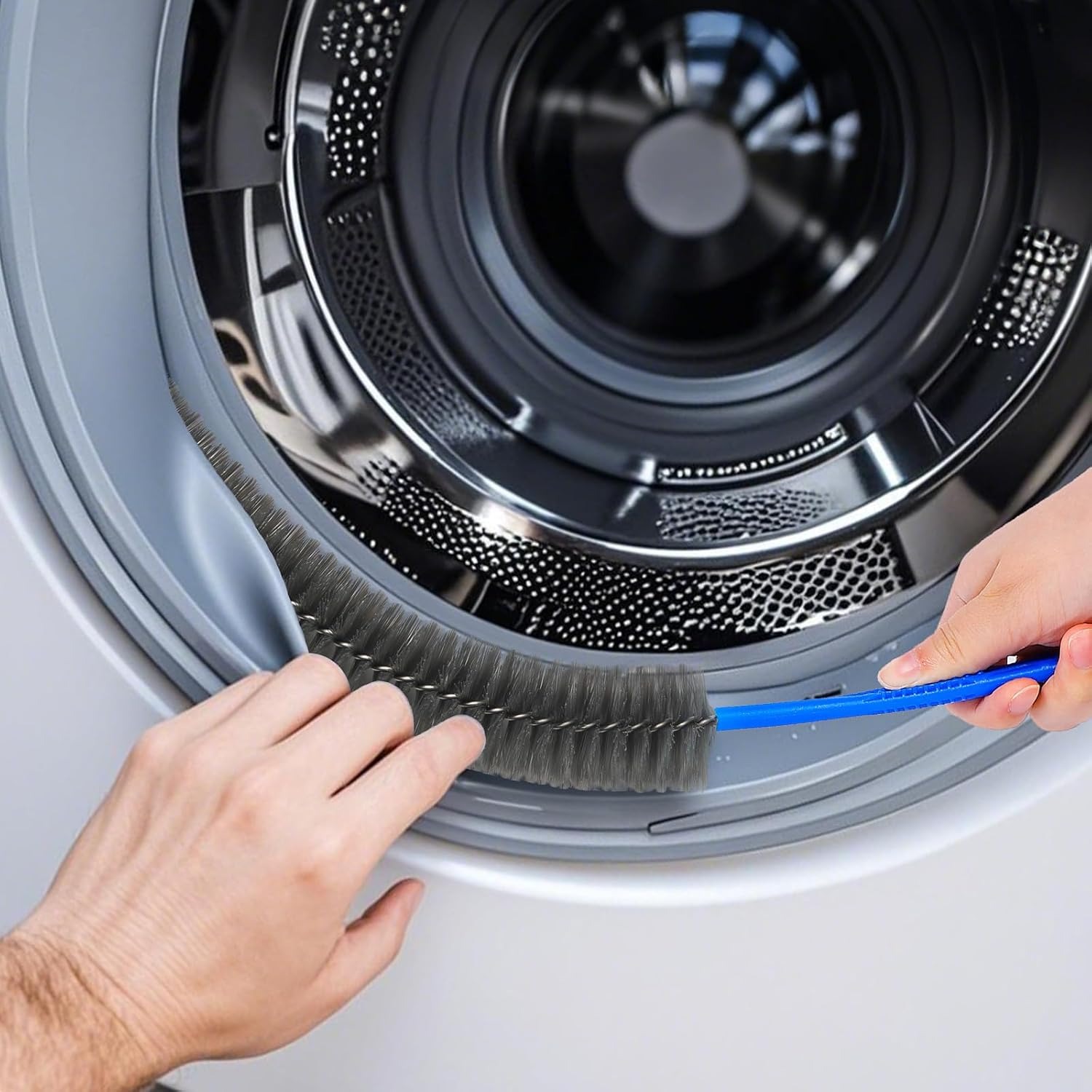
Bottles, straws, vents and tracks. Tall water bottles, reusable straws, the groove in a shower screen track, the slot in an air vent. Anywhere your hand will not fit and a cloth cannot reach.
Choosing the right brush from the set
Match the brush to the hole. This is the single most important habit.
If you force a wide brush into a narrow overflow hole, two things happen. You bend the core out of shape, and you do not actually clean anything, because the bristles are crushed flat instead of standing up against the wall. The right brush should go in with a bit of resistance but not a fight.
Use the wider brushes for kitchen sink drains and shower outlets. Use the slimmer ones for overflow holes, toilet jets, straws and narrow gaps. If you are between sizes, go smaller. A slightly small brush used with a bit of twisting motion cleans better than a big one jammed in place.
One more tip. Twist as you push and pull. A straight in-and-out stroke scrubs a line. A twisting stroke scrubs the whole circumference.
Technique that gets results
Run the hot faucet first for thirty seconds. Warm grease moves. Cold grease does not.
Insert the brush slowly and let the core find the bend rather than shoving it. When you hit resistance, twist gently and keep going. Work it back and forth several times, then pull it out, clear off whatever came with it, and go again. Two or three passes is normal.
Finish by running hot water for a minute to flush away what you loosened. If you want, add a squirt of dish soap to the bristles for the second pass on a kitchen drain.
Do not use the brush to try and clear a solid blockage. If water is sitting still and not moving at all, that is a different problem and needs a drain snake or a plumber. This tool is for prevention and maintenance, and it is very good at that.
Looking after the brush
Care takes about twenty seconds. Pull off the hair, rinse the bristles under warm water, add a little soap if it feels greasy, rinse again, shake it out and stand it bristle-end up to dry.
That last bit matters. A brush left damp in a closed drawer will start to smell, and then you are cleaning the thing you clean with. Standing it upright in a jar or hanging it lets the water run out of the bristle base.
Keep the handle out of long soaks and away from heat. The bristles are nylon, suitable for metal, plastic, porcelain and tile, so you have plenty of freedom on surfaces. Replace a brush when the bristles splay permanently or the core picks up a kink it will not straighten out of.
Why mechanical cleaning beats chemicals
Drain chemicals have their place, but they have two drawbacks for routine use. They are harsh on older pipes and seals, and they rarely remove everything, which means the film that remains becomes the base layer for the next build-up.
Scrubbing removes material. It also lets you see what came out, which tells you how often you need to do it. If your brush comes back clean, stretch the interval. If it comes back loaded, shorten it.
There is a cost angle too. A brush set you keep for a long time replaces a repeated purchase of bottles, and the best household cleaning brush set tends to pay for itself inside a few months.
The short version
Slow drains and bad smells are usually a surface problem a few inches inside the pipe, not a blockage. A flexible drain brush gets there, scrubs the whole pipe wall and pulls the mess out with it.
This set gives you three sizes on a stainless steel core with nylon bristles at medium firmness, weighing 0.14 kg in total. Pick the brush that fits the opening, twist as you work, rinse it properly and stand it up to dry.
Do it once a two weeks and the problem you used to deal with twice a year quietly stops being a problem at all.