

The complete guide
How to Choose a Shower Drain Hair Catcher That Actually Drains
The problem nobody wants to deal with
Every bathroom has a slow drain story. Water starts taking a second longer to disappear, then a few seconds, then you are standing ankle deep halfway through a shower. By the time you notice, there is already a wad of hair and soap sitting in the trap below, and getting it out means a bent wire, a bottle of chemicals, or a call to someone who charges by the hour.
Hair is almost always the starting point. A single strand is nothing. A few hundred strands, bound together with soap residue and skin oils, become a mat that catches everything else that comes along. The fix is not clever plumbing. It is stopping the hair at the surface, before it has anywhere to go.
That is all a drain hair catcher does. The difference between a good one and an annoying one comes down to three things, which is what this guide is about.
How a chain mesh catcher works
Most drain covers are a flat disc with holes punched in it. Water goes through the holes, hair sits on top. It works, up to a point. The trouble starts when you try to clean it. Hair threads itself through the holes and wraps around the edges, so you end up pinching at wet strands with your fingers or poking them out with a toothbrush.
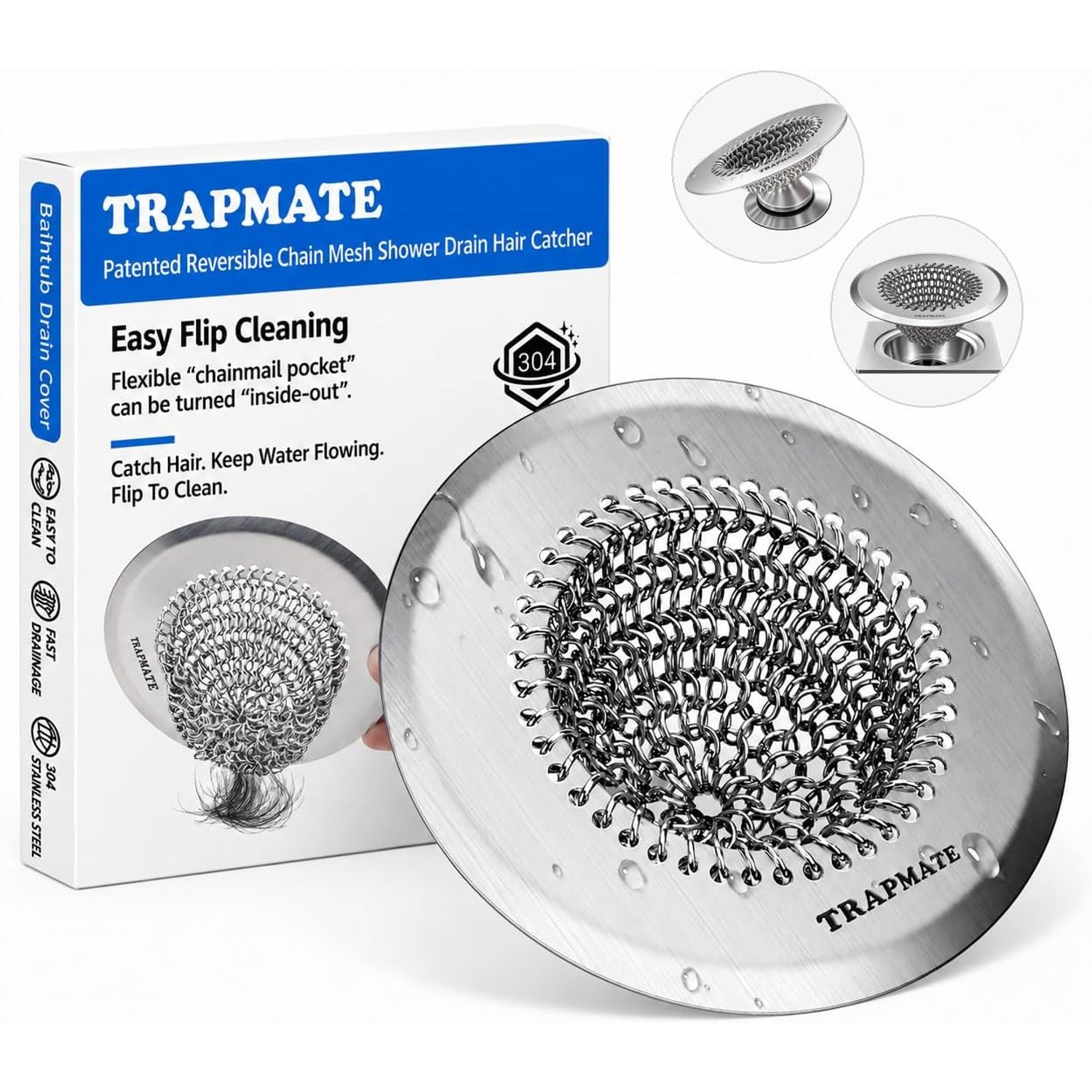
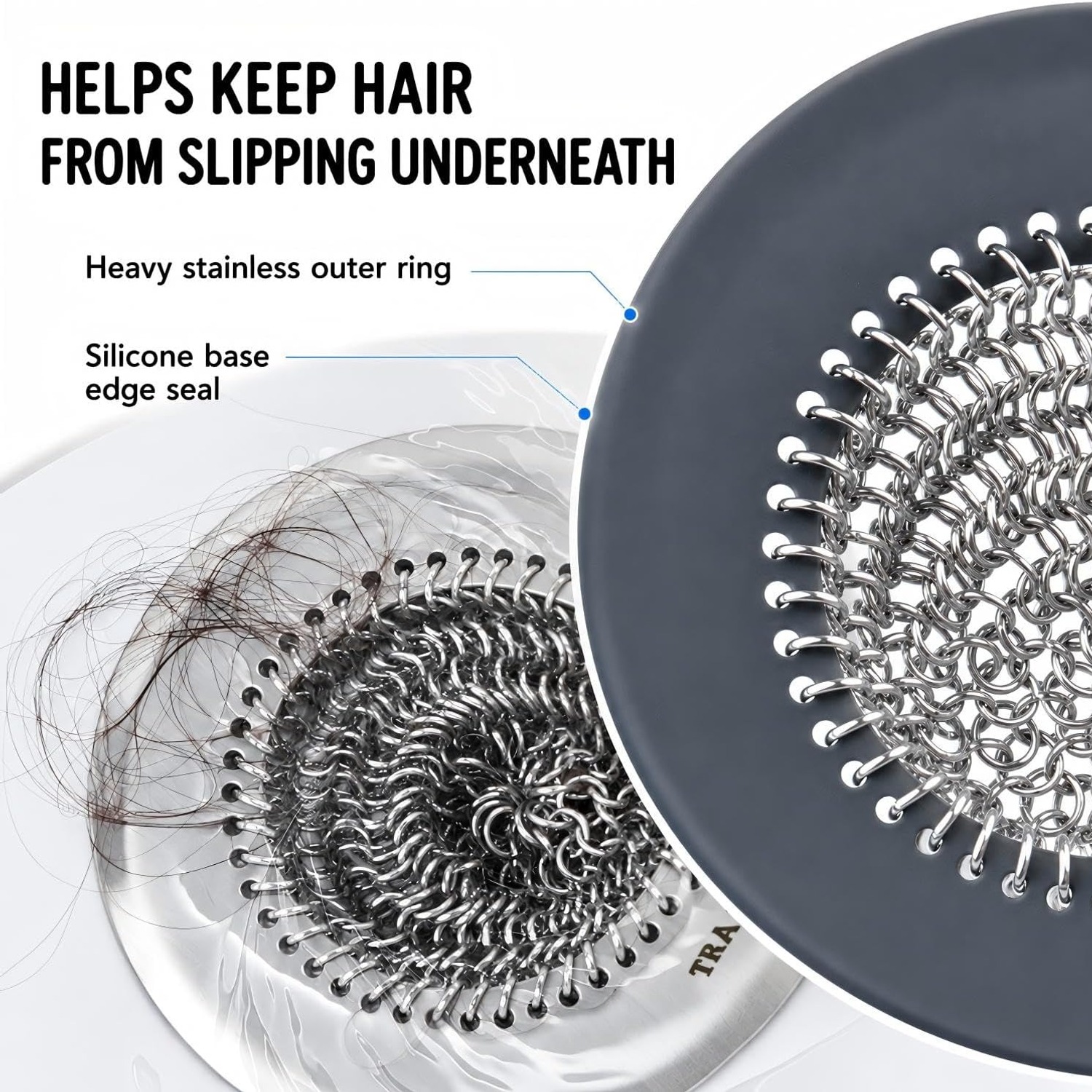
A chain mesh catcher takes a different approach. Instead of a rigid plate, it uses a flexible mesh made of small interlocking steel links, shaped into a shallow pocket that sits over your drain. Hair lands on the mesh and tangles in the links. Water runs straight through the gaps between them.
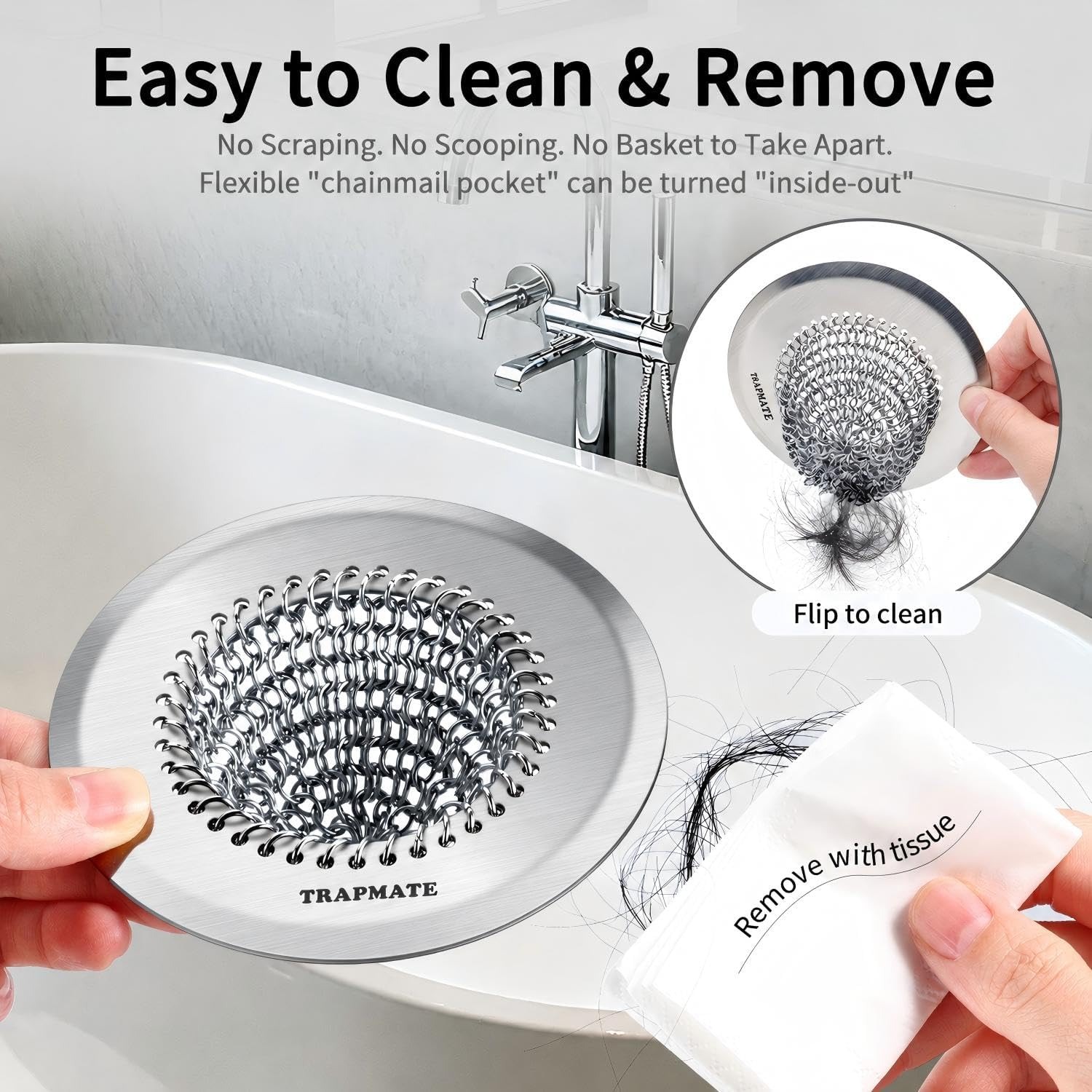
The useful part is the flexibility. Because the pocket can bend, it can also be turned inside out. You pick the catcher up, hold it over a trash can, and push the mesh through itself. Whatever was sitting in the pocket falls away in one piece. No picking, no unwrapping, no wet hands. That single design choice is the reason people who have tried both tend not to go back to flat strainers.
The other advantage of flexibility is fit, which we will come to shortly.
Drainage speed matters more than people expect
There is a trade-off hiding in every hair catcher. Smaller holes catch more hair, but they also restrict water. Push it too far and you have solved a slow drain by creating a slower one.
Fine mesh screens are the usual offenders. They catch everything, including soap scum and lint, and they clog within a week. You end up with water pooling around your feet, which is exactly what you were trying to avoid.
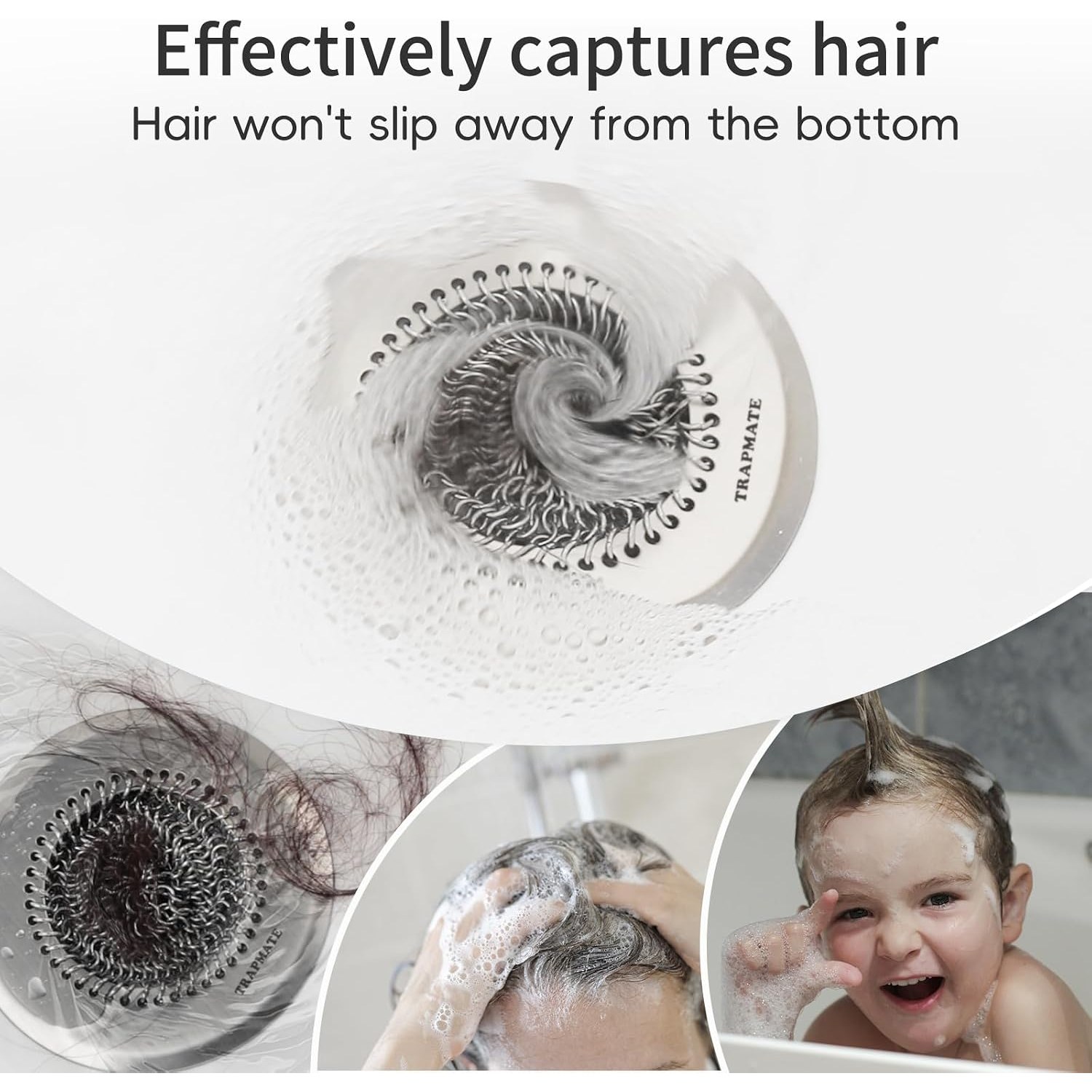
Open chain links strike a better balance. The gaps are wide enough that water moves through at close to the drain's normal rate, but hair does not fall straight through. Long strands drape across the links and catch. Short clippings settle into the pocket. Grit and lint mostly stay behind too.
So when you are comparing options, do not just look at how much it catches. Look at what people say about flow. The best shower drain hair catcher is the one you forget is there, because nothing pools and nothing backs up.
Will it fit your drain?
This is where a lot of purchases go wrong. Drains are not standardized in the way you might assume, and there are two very different styles in most bathrooms.
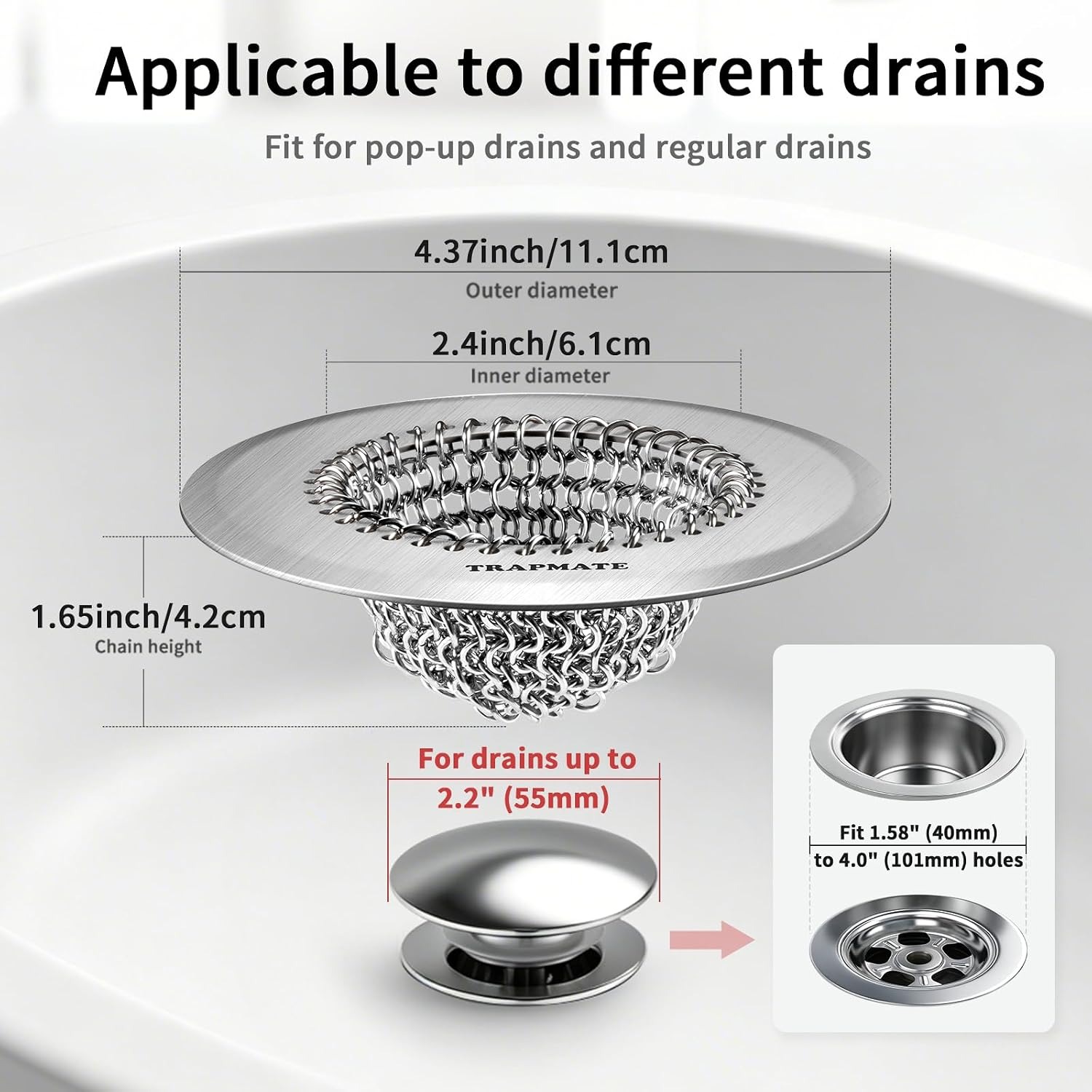
The first is a plain grate, flat or slightly recessed, usually round. Nearly any cover will sit on one of those. The second is a pop-up stopper, the kind with a raised button or dome in the middle that you press to open and close. Rigid covers do not deal well with those. They perch on the dome, wobble, and leave gaps around the edge where hair sneaks past.
A flexible mesh handles both. It drapes over whatever shape is underneath, contouring to the raised stopper rather than balancing on it. That means you do not have to unscrew anything, remove existing hardware, or work out how to disassemble a fitting you have never touched.
The number to check is the diameter. This catcher is built for a 4.4 inch drain opening and groove. Before you order, take a tape measure and go across the widest part of your drain opening. If you are near that figure, you are fine. If your drain is noticeably larger or smaller, look for a size that matches instead, because an undersized cover will not seal at the edge and an oversized one will not sit flat.
Materials and why they matter in a wet room
A bathroom is a hard environment for anything. Constant water, soap, heat and humidity will warp cheap plastic, grow mold in seams and corrode anything that is not meant to be wet.
Stainless steel is the standard answer. It handles permanent damp without rusting through, it holds its shape, and it has enough weight to matter. Weight is not a minor detail here. A light cover will shift under a strong shower stream or float off entirely when a tub drains. A steel mesh stays put.
Silicone does the other half of the job. The base grips the surface under it, which stops sliding, and it sits between the metal and your shower pan so there is a bit of give at the contact point. It also lets the rim sit close against the drain surface, which is what stops fine hair from working its way underneath.
If you want the best stainless steel drain strainer for a shared bathroom, the combination of a weighted steel mesh and a grippy silicone base is what you are looking for. Steel alone slides. Silicone alone is too light.
Who gets the most out of one
Households with long hair, obviously. If anyone in the house has hair past their shoulders, the volume that goes down the drain in a month is genuinely surprising.
Shared bathrooms are the next group. More people means more hair, and nobody wants to be the one clearing someone else's.
Then there are pet owners. Washing a dog in the tub sends an enormous amount of coat down the drain in one go, and that is the kind of event that blocks a pipe in a single afternoon.
Renters are worth mentioning too. Because nothing is screwed or glued in place, a drain cover like this goes in when you arrive and comes out when you leave. No damage, no explaining to a landlord.
And if you have already had a blocked drain cleared once, you probably do not need convincing. The cost of a plumber visit dwarfs the cost of prevention.
Keeping it working
Care is simple but it does need doing. Empty the pocket regularly, ideally after each shower, while the hair is loose and comes away cleanly. A pocket left to fill will eventually restrict flow, which defeats the purpose.
Once a week, give the mesh a proper wash. Warm water and a little dish soap, with a soft brush if soap scum has settled between the links. Rinse it, shake it, let it dry. Lift it and clean the area underneath at the same time, since residue builds up on the drain surface and can stop the rim sealing properly.
Skip harsh abrasives and steel wool, particularly on the silicone. If you are using a chemical drain cleaner for any reason, take the catcher out first and rinse it before putting it back.
That is the whole routine. A few seconds daily, a couple of minutes weekly.
The short version
Hair causes most slow drains, and the simplest fix is catching it at the surface. A flexible chain mesh cover does that without choking the water flow, which is the main complaint people have with fine screens.
The flip to empty design is the practical difference. Turning the pocket inside out over a trash can gets rid of a week's hair in one movement, so the job never feels like a chore and therefore actually gets done.
Check your drain measures around 4.4 inches, confirm you want something that works over a pop-up stopper as well as a flat grate, and that is really all the decision there is. Stainless steel and silicone handle the wet, the weight keeps it in place, and your pipes stay clear.