
The complete guide
How to Choose a Kitchen Sink Strainer That Actually Stops Clogs
The slow clog nobody notices
Blocked kitchen drains almost never start with one dramatic event. They start with a worn out drain plug that only catches the big stuff, and a few months of rice, tea leaves, coffee grounds, onion skin and cooking fat slipping past it. Each bit is tiny. Together they coat the inside of the drain pipe, narrow it, and eventually hold everything else back.
By the time the sink is draining slowly, the problem is already a meter down the pipe where you cannot reach it. The fix is either a bottle of caustic drain cleaner or a plumber, and neither is cheap or pleasant.
A mesh basket sink strainer is the boring preventative version. It sits in the drain opening, catches the material before it ever gets into the pipe, and takes about four seconds to empty. Not exciting, but it is the single cheapest thing you can do for your kitchen plumbing.
What makes a mesh basket different
Walk through any hardware aisle and you will see three kinds of thing sold as a sink strainer. There is the flat perforated disc that sits on top of the drain. There is the slotted plug that came with the sink, usually with four or five wide openings. Then there is the deep mesh basket.
The flat disc works but fills fast and shifts about. The slotted plug is really a stopper that happens to have holes, and the holes are wide enough that anything smaller than a pea goes straight through. The mesh basket is the one designed for the job: fine woven steel that holds small particles, formed into a cup that hangs down into the drain throat so it holds a useful amount before it needs emptying.
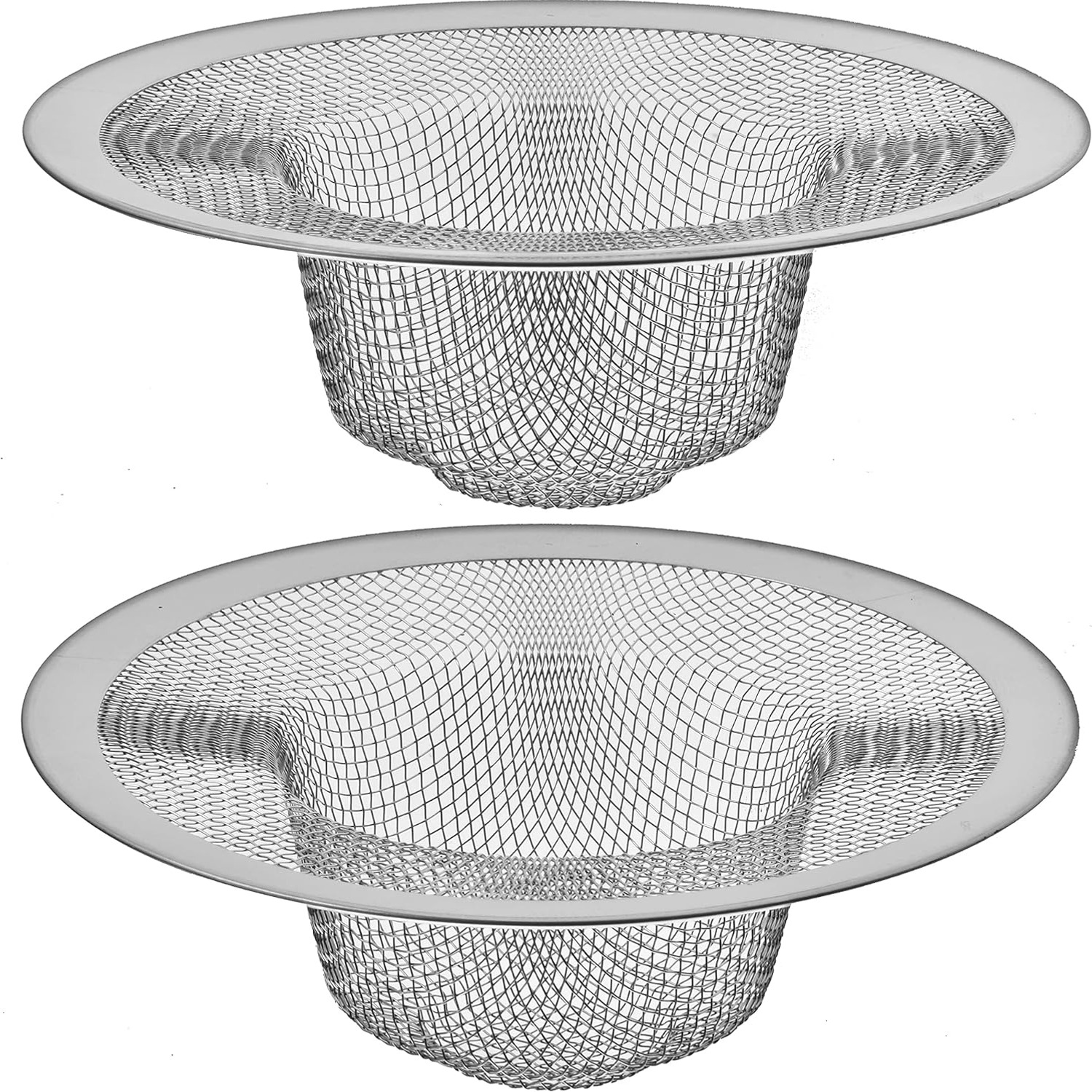
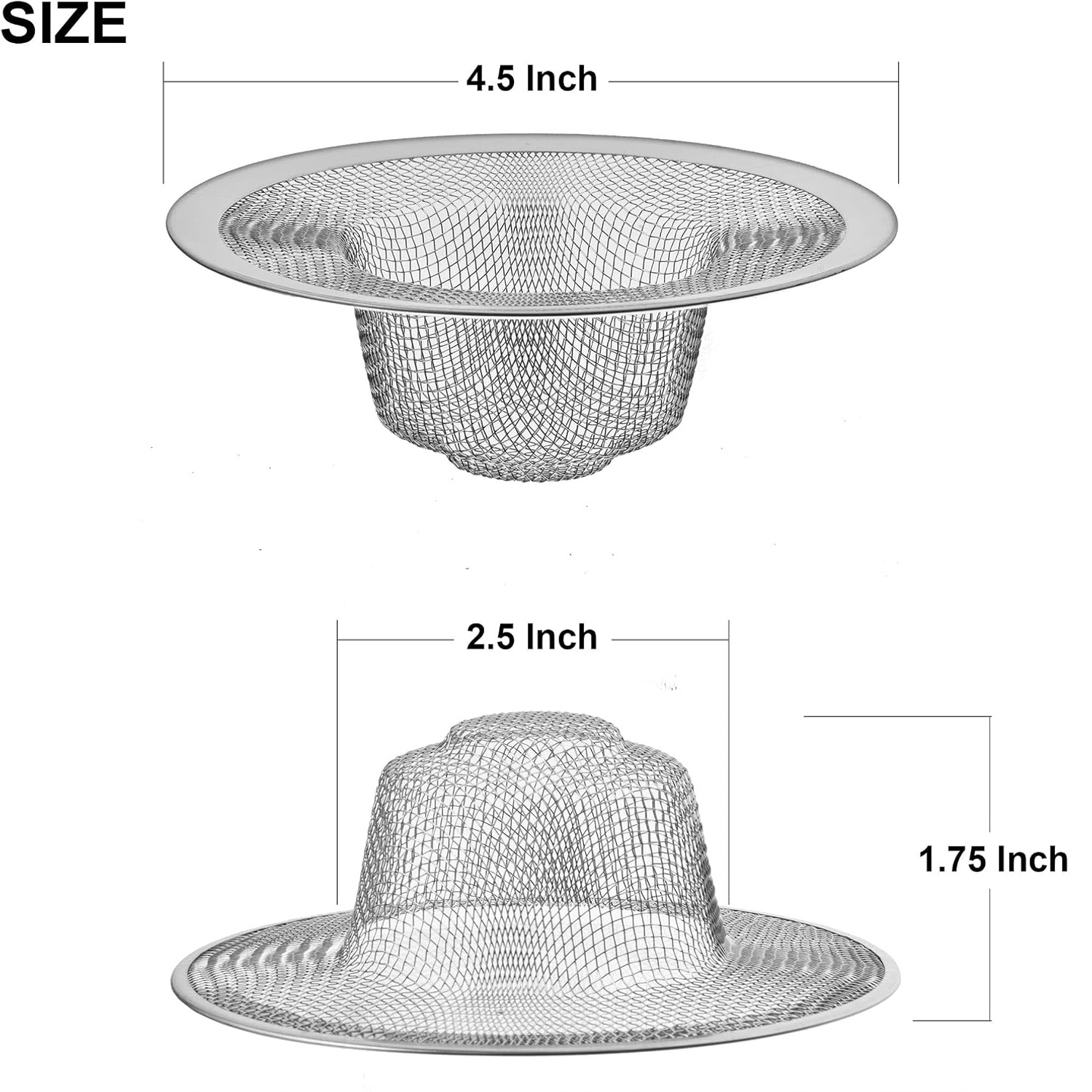
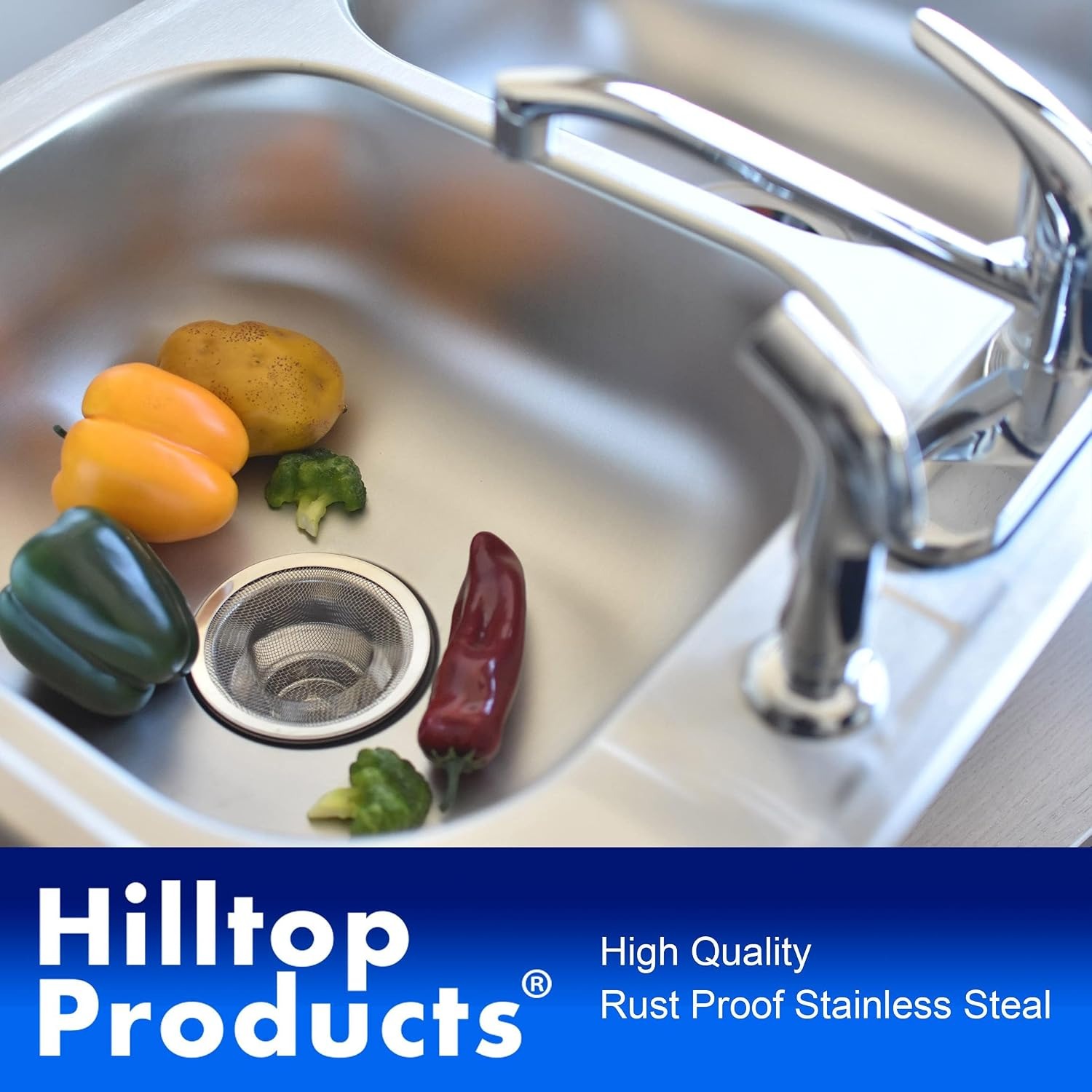
This set is the third kind. Each basket is 4.5 inches across the rim and 1.75 inches deep, made from stainless steel mesh, and sized for the standard 3.5 inch US kitchen sink drain opening. The manufacturer lists it as anti-clogging and rustproof, which in plain terms means fine holes and steel that will not corrode in a permanently wet spot.
Why depth matters more than people expect
Hole size gets all the attention, but depth decides how often you interact with the thing. A shallow screen holds about one plate scrape. Scrape a second plate and water starts backing up, so you stop mid wash-up, fish the screen out, rinse it, put it back and carry on.
A 1.75 inch deep cup holds a lot more. In a normal evening of cooking and dishwashing for a family, you can usually get through the whole lot and empty the basket once at the end. That one change is the difference between a strainer you use and a strainer you pull out and leave on the draining board because it kept interrupting you.
Depth also means the basket sits down inside the drain throat rather than perching on top. It stays put when you knock it with a pan, and water is funneled into it rather than running around the edges.
Why two baskets is the right number
A two pack is not just a value play. There are three normal ways people use the second one.
If you have a double bowl sink, you cover both drains. Most households with a double bowl end up using one side for washing and the other for rinsing or soaking, and both sides see food.
If you have a single bowl, the spare goes in the dishwasher while the first one keeps working. There is no gap where the drain is unprotected, which is usually when something bad goes down it.
And if you have a RV, a holiday place, a laundry tub with a matching drain, or a flatmate with a sink problem, the second one finds a home. Stainless keeps indefinitely in a cabinet, so a spare costs you nothing to store.
Checking it will fit before you order
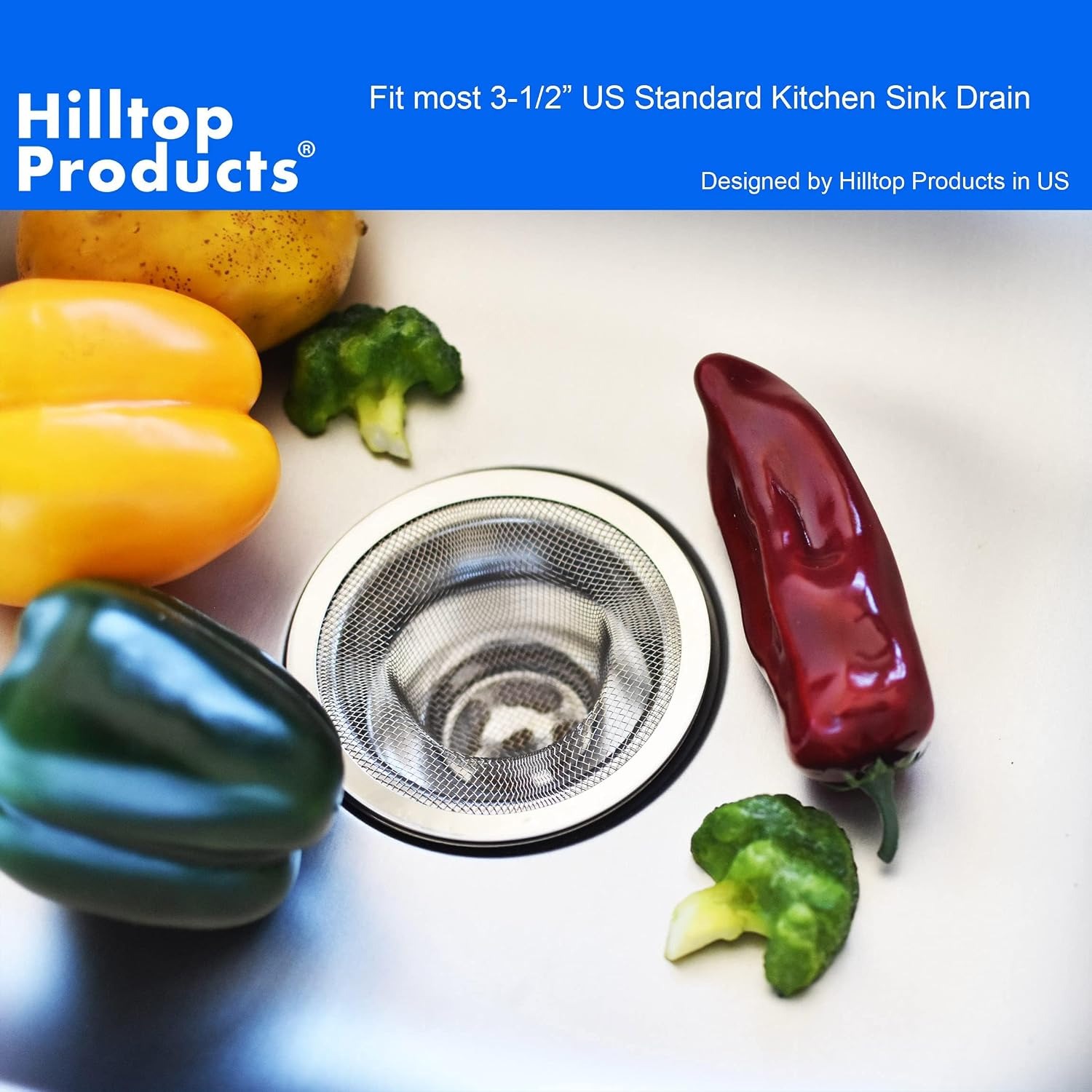
This is the one step worth doing properly. Kitchen sink drain openings are standardized at 3.5 inches across most of the US market, and this strainer is built for exactly that. But sinks imported from elsewhere, older sinks, bar sinks and most RV sinks can use something different.
Take out whatever is currently in the drain. Measure straight across the circular opening at its widest point, from the inside edge on one side to the inside edge on the other. That number is what matters. If it is close to 3.5 inches, this basket drops in and the rim rests on the lip.
Do not measure your old strainer's outside rim. That is always wider than the hole it sits in, which is how it stays put, and using it will give you a reading around 4 to 4.5 inches and confuse things.
Living with it day to day
The routine is simple. The basket stays in the drain. You wash the dishes as normal. Scraps, grounds and crumbs collect in the cup instead of going down the pipe.
When you are done, lift the basket out by the rim, tip the contents into the trash or the compost bin, rinse it under the faucet and drop it back. If you run it under hot water from the underside, the flow pushes particles out of the mesh rather than driving them further in.
Once a week it earns a proper clean. Warm water, dish soap, and a soft brush or an old toothbrush worked over both faces of the mesh. The reason is fat. Cooking oil and grease leave a film that collects fine particles and gradually dulls both the look and the drainage. A weekly scrub keeps the holes clear.
Avoid steel wool, bleach soaks and scouring powders. Stainless steel is tough, but abrasives leave scratches that trap residue and make future cleaning harder.
Who gets the most out of it
Anyone cooking with rice, pasta, grains or coffee benefits straight away, because those are exactly the particles that a slotted plug ignores. Households without a garbage disposal benefit too, since every scrap either goes in the trash or into the pipe, and a basket makes the choice for you.
If you do have a disposal, a steel basket in the drain is cheap protection against the things that wreck them: teaspoons, bottle caps, peach stones, bits of glass. You lift it out when you genuinely want to run food waste through, then put it back.
Renters are another obvious case. A basket costs very little, needs no tools and no modification to the sink, and leaves with you when you move. It also makes a drain blockage, which is the sort of thing landlords argue about, far less likely in the first place.
How this compares to the alternatives
A silicone strainer is quieter in a steel sink and softer on delicate surfaces, but silicone holds grease and smells over time, and the flexible rim can lift when water pushes hard. A plastic strainer is the cheapest option and will do a season or two before it stains and goes brittle near hot water. A stainless mesh basket costs a bit more and keeps going.
Against a proper under-sink grease trap or a disposal unit, a basket does far less. It also costs a fraction as much, needs no installation, and handles the majority of day to day food waste, which is the part most people actually need solved.
The short version
Kitchen clogs build slowly from small particles that wide-slotted drain plugs let through. A fine stainless steel mesh basket catches those particles at the top of the drain where you can tip them straight in the trash.
This set gives you two baskets, each 4.5 inches across and 1.75 inches deep, built for the standard 3.5 inch kitchen sink drain opening and listed as rustproof. The depth means fewer interruptions during the dishes. The pair means both bowls of a double sink are covered, or you always have one in the drain while the other is being cleaned.
Measure the inside of your drain opening first. If it is around 3.5 inches, these drop in, take no tools, and start doing the job the moment you put them down.