
The complete guide
How to Choose and Use a Drain Snake for Hair Clogs
The real reason your shower drains slowly
It almost never starts as a blockage. It starts as a delay. The water used to vanish and now it hangs around your ankles for a few seconds. A month later it is a puddle. A month after that you are showering in a shallow tub.
What is happening underneath is simple. Every time you wash, a few strands of hair go down the drain. Most of it rides through, but some catches on a seam, a rough patch, or the lip of the trap. Once a few strands anchor themselves, every wash adds more. Soap, conditioner, shampoo, and skin oils bind it all together into a soft gray mat that acts like a filter. Water still gets past, just less of it each week.
This is why pouring something down the drain so often disappoints. A chemical cleaner can soften the surface of that mat and buy you a few days of better flow, but the core of it usually stays anchored where it was. You end up buying another bottle a two weeks later. The only thing that genuinely ends the problem is getting hold of the mat and pulling it out.
How a drain snake works
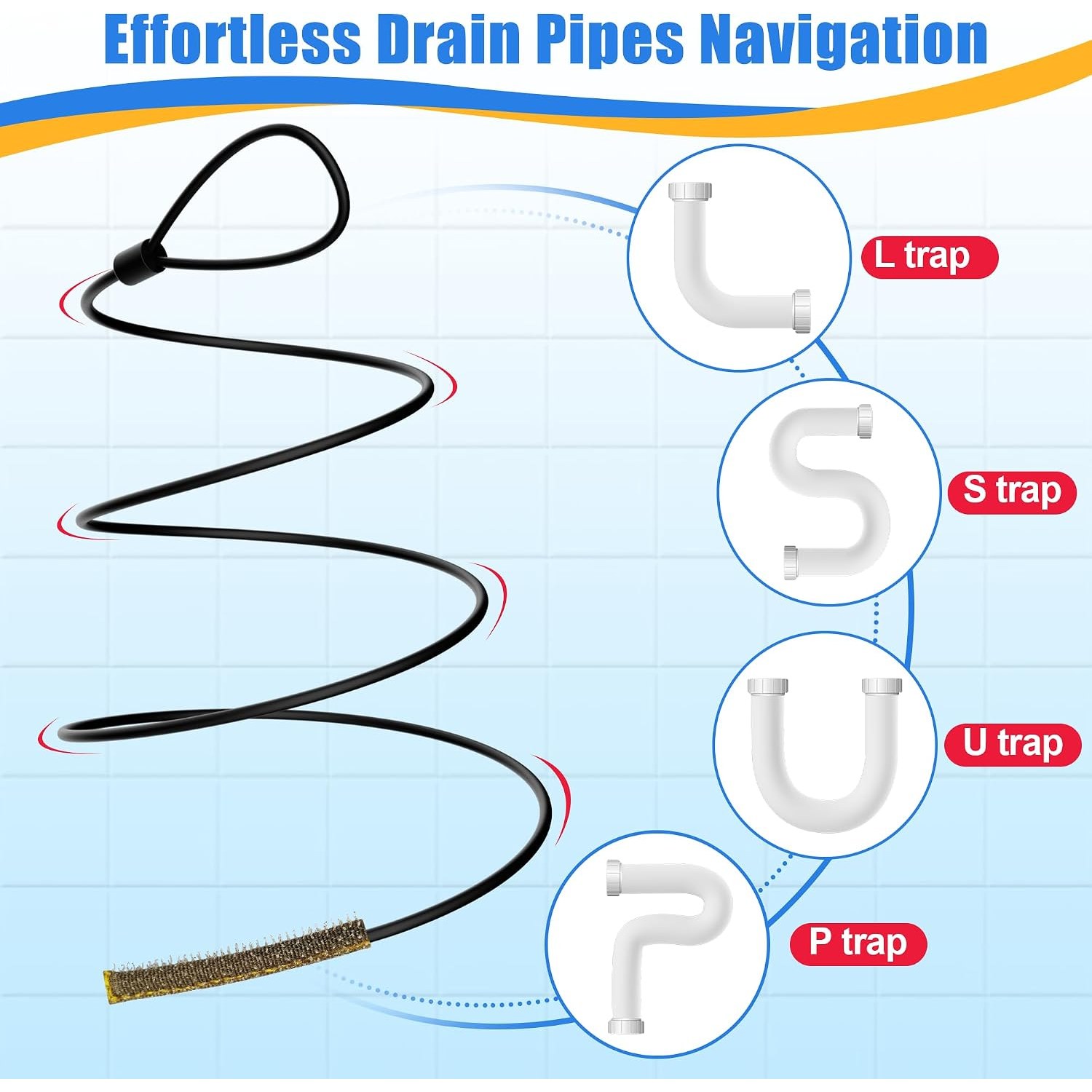
A drain snake is a long flexible shaft with a grabbing tip. You push it down the drain, past the grate and into the pipe, spin it so the tip catches, and draw it back up with the clog attached.
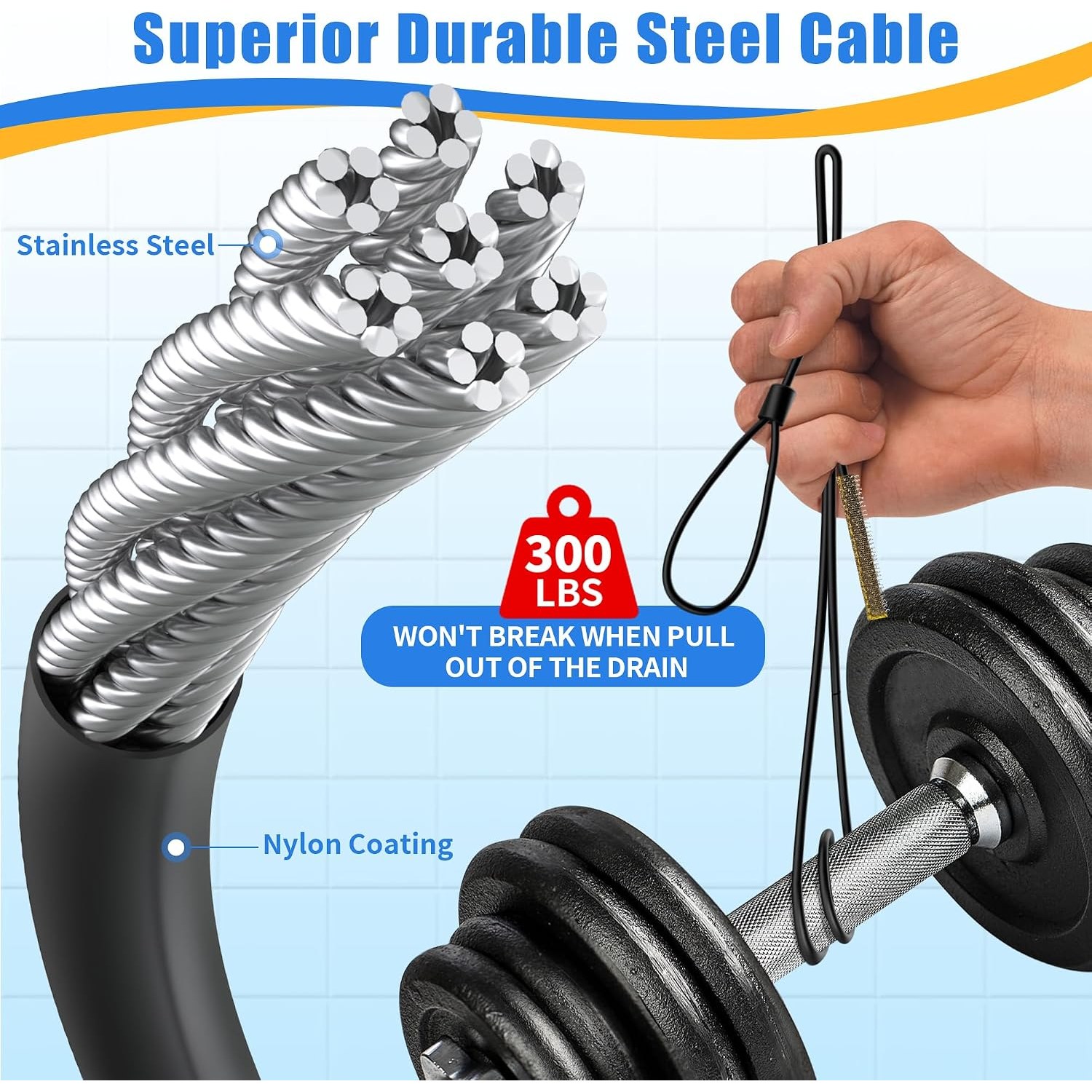
The design of this one is worth understanding because it explains why it handles hair well. The core is stainless steel, which gives it the backbone to push past a bend without folding up on itself. Wrapped around it is a nylon coating, and that is what makes it flexible enough to follow the curve of your plumbing instead of jamming against it. The manufacturer rates the core to resist breaking under 300 lbs of pulling force, so a firm tug on a stubborn plug is not going to leave you with half a tool stuck in the pipe.
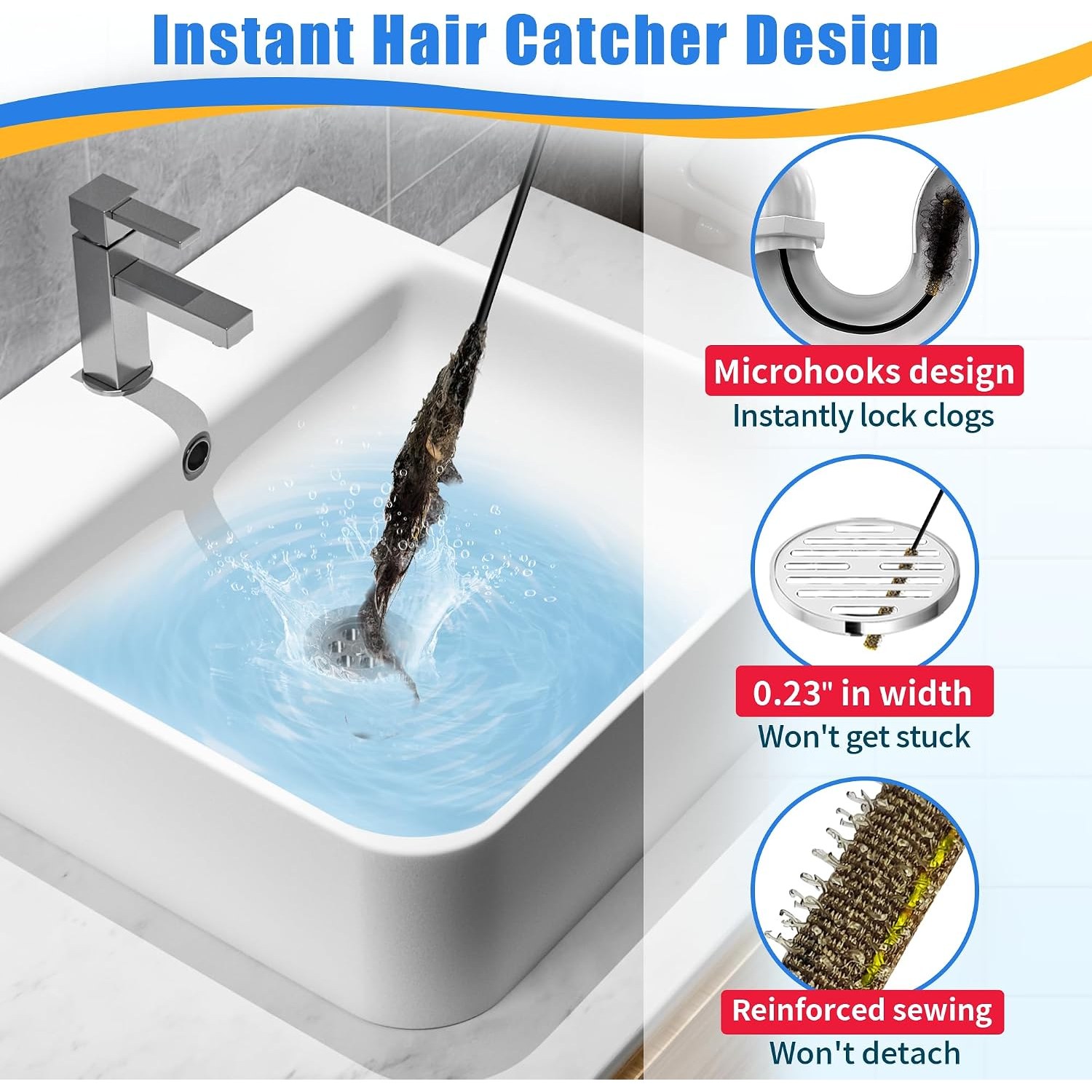
The tip is covered in small hooks, stitched and glued in place rather than just molded. That matters more than it sounds. Thin plastic strips with molded barbs are cheap, but the barbs can shear off when you pull against real resistance, and now you have a second problem in your drain. A properly attached hook tip comes back up with everything still on it.
Then there is the width. The head is 0.23 inches across. A lot of drain tools are defeated before they even start because they will not fit through a shower grate or past a sink pop-up. A slim sink snake slides straight in, which means no unscrewing, no dismantling, and no trip to the hardware store for a wrench you do not own.
Why 30 inches is the useful length
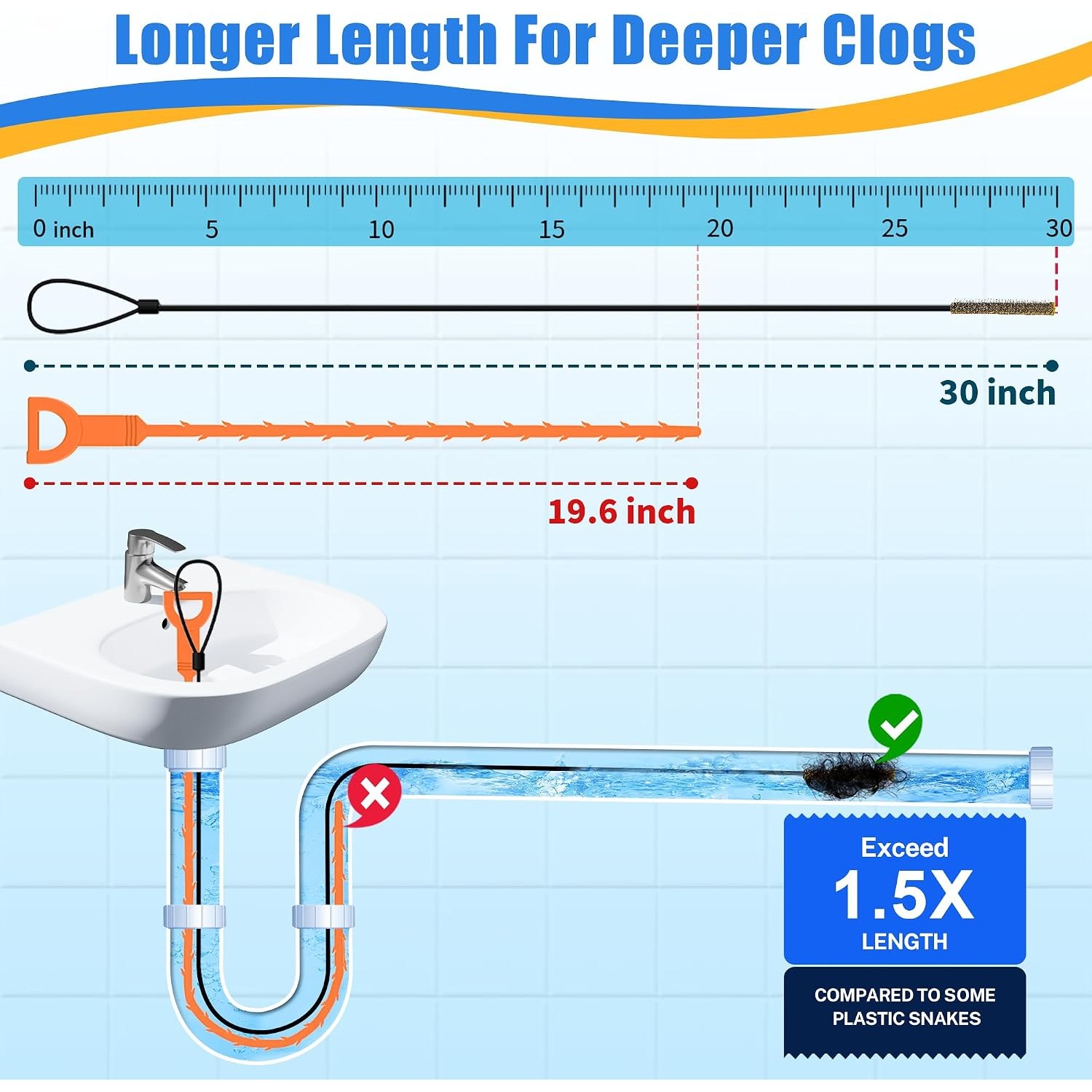
Short drain tools, the 18 or 20 inch kind, usually get you as far as the top of the trap. That is fine if the hair is sitting right at the grate, and sometimes it is. But the stubborn stuff tends to collect a bit deeper, right where the pipe changes direction and the flow slows down.
At 30 inches you reach into and often through that curve. For a standard bathroom shower, tub, or sink, that covers the zone where the vast majority of household clogs live. It is long enough to be genuinely useful and short enough to stay easy to control, which is the trade-off. Very long cable augers reach further but are awkward in a small bathroom and tend to be overkill for hair.
Who this suits
Anyone with long hair in the house, or several people sharing a bathroom, will get use out of it. So will pet owners, since dog and cat hair after a tub goes the same place. Older homes with narrower or rougher pipework tend to clog faster, so if your place has been standing a while, this is the sort of thing worth having before you need it.
It also suits people who would rather not keep caustic chemicals under the sink. If you have small children, or you are on a septic system, or you simply do not like the idea of pouring something corrosive into your plumbing every few weeks, a mechanical tool sidesteps the whole question.
Landlords and anyone running a rental find a multipack useful for a different reason. A slow drain is one of the most common maintenance calls there is, and it is also one of the easiest to solve without sending anyone out. Leaving a couple of snakes in the property means the problem often gets handled before it becomes a phone call.
How to use one properly
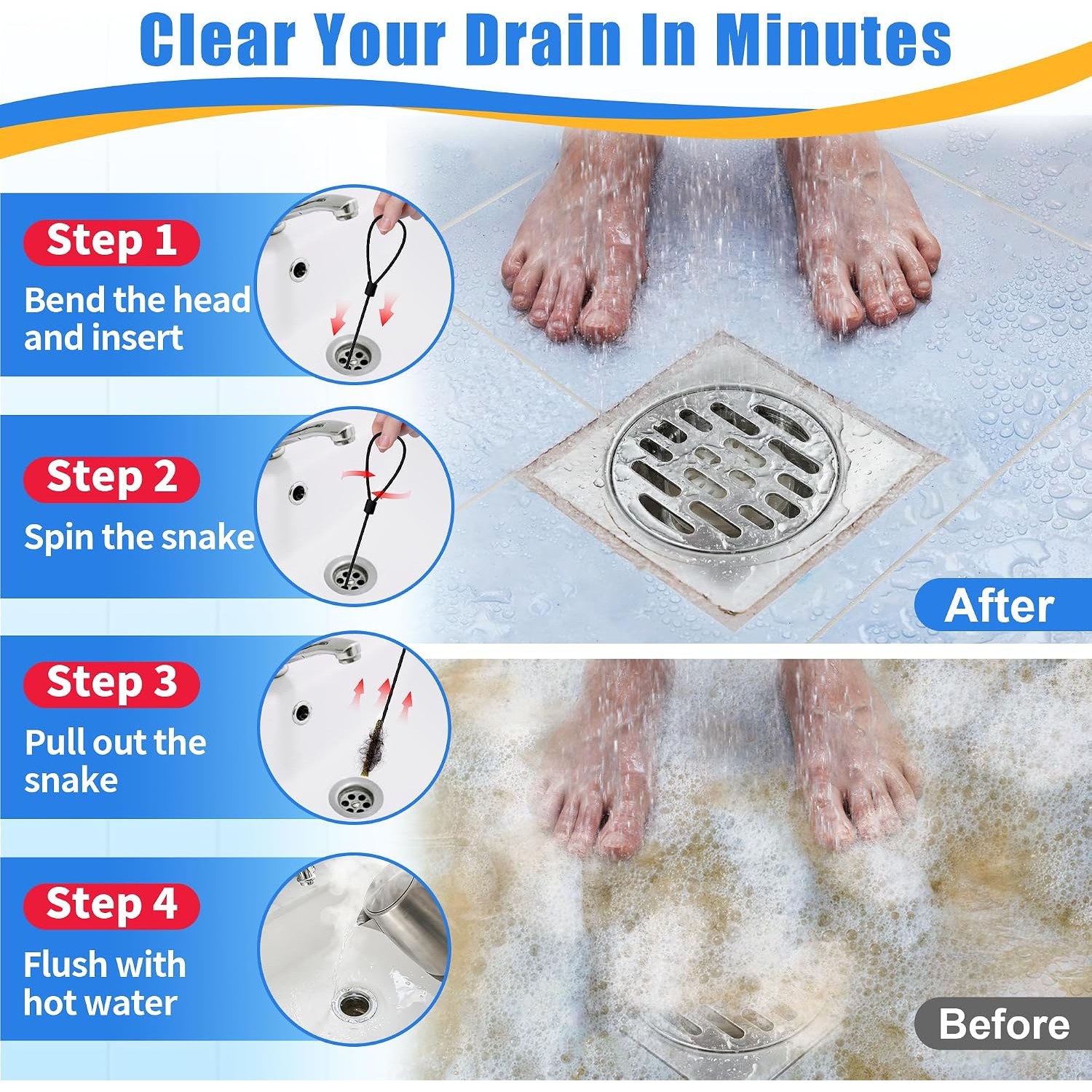
Lay a towel down first. This job produces things you would rather not look at, and you will want somewhere to put them. Have a trash bag and a pair of gloves ready.
Put a slight bend in the first inch or two of the tip. That small curve is what lets the head find its way past the lip of the grate and around the bend rather than nosing straight into the pipe wall. Feed it down slowly until you meet resistance.
Now spin it. Several full turns, with gentle downward pressure. You are trying to wind the hooks into the hair mat the way a fork winds up spaghetti. Then pull up steadily. Do not yank. A slow, firm draw keeps the clog together on the tip instead of tearing bits off it.
Clean the tip into your bag, then go again at a slightly different angle. Hair rarely sits in one tidy lump, and the second and third passes often bring up as much as the first. When the snake comes back clean twice in a row, run the hot faucet for a minute and watch the flow. If it drains properly, you are finished.
Looking after them
Rinse under hot running water, wipe down, and let it dry fully before it goes away. That is the whole routine. The nylon coating does not need anything special, but it does appreciate not being stored damp in a dark cabinet.
Store them flat or loosely coiled. The one thing that shortens the life of any flexible tool is creasing it in the same place repeatedly, so avoid folding one tightly to fit a drawer. A bag hung on a hook, or a small bucket under the sink, works well.
With five in the pack you can spread them out. One by the main shower, one in the second bathroom, one in the laundry, one in the kitchen, and a spare. That removes the single biggest reason people put this job off, which is not wanting to go and find the tool, then wash it afterwards.
A word on prevention
Once you have cleared a drain, keeping it clear is much less work. A quick pass with a snake every month or two in your busiest shower takes about ninety seconds and stops hair from ever building into a mat. It is the difference between a minor chore and a flooded floor.
A cheap hair catcher over the grate helps as well, provided you actually empty it. The two together mean most households never see a serious blockage again.
The short version
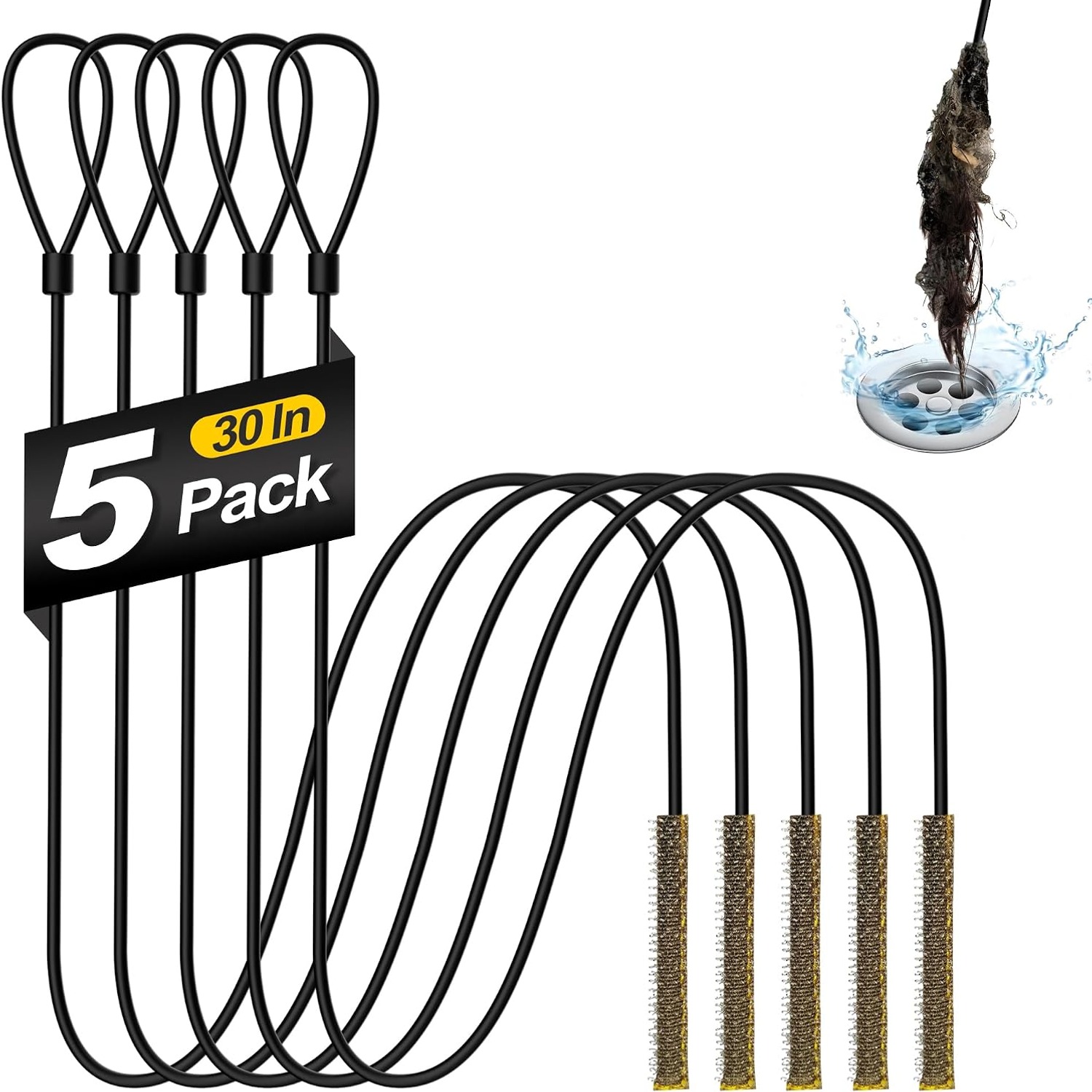
Hair clogs are physical, so the fix should be physical too. A 30-inch nylon-coated steel snake with a slim 0.23 inch hooked tip goes where the hair is, grabs it, and brings it out, with nothing left behind in the pipe. The steel core handles the pulling, the nylon handles the bends, and the narrow head means it fits through grates without any dismantling.
Five in a pack is the practical part. Keep one near every drain, use them before the water starts pooling, and the whole problem becomes a two-minute job you barely think about.