
The complete guide
How to Choose an Outdoor Basement Drain Cover That Actually Keeps Water Moving
The problem nobody plans for
Most basement flooding is not dramatic. There is no burst pipe and no river rising. There is a drain at the bottom of some concrete steps, a storm in October, and a dozen wet leaves that settled across the grate like a dinner plate. Water has nowhere to go, so it climbs. By the time it reaches the door seal, it is already in the house.
The same thing happens by patios, garage entries, window wells and sunken side paths. Any drain at the lowest point of a hard surface is a collection point for everything the wind brings. Grass clippings after mowing. Blossom in spring. Twigs and seed pods all summer. Then the big one, fall leaf fall, which arrives at the same time as the heaviest rain of the year.
What makes it worse is that these drains are usually out of sight. Nobody looks at the bottom of the basement steps for weeks on end. The blockage builds quietly, and the first sign of trouble is standing water.
An outdoor basement drain cover is a cheap, boring piece of equipment that heads all of this off. It is not clever. It just stops the leaves reaching the hole.
How a raised cover works
The important word is raised. A flat screen laid over a drain seems logical, but it fails in the exact conditions you bought it for. Wet leaves lie flat, stick to flat surfaces and form a seal. The moment that happens, every opening in the screen is covered at once and water simply sits on top.
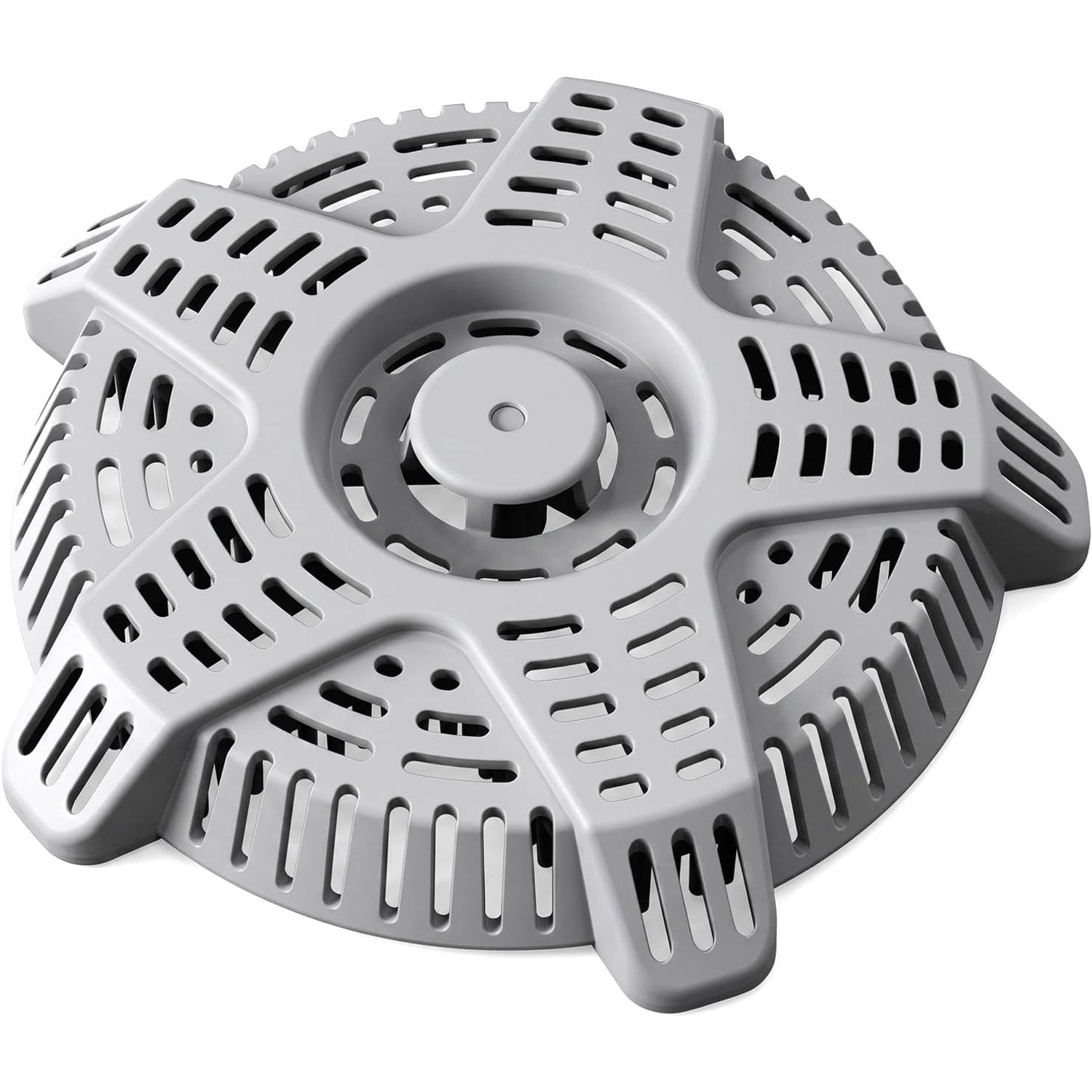
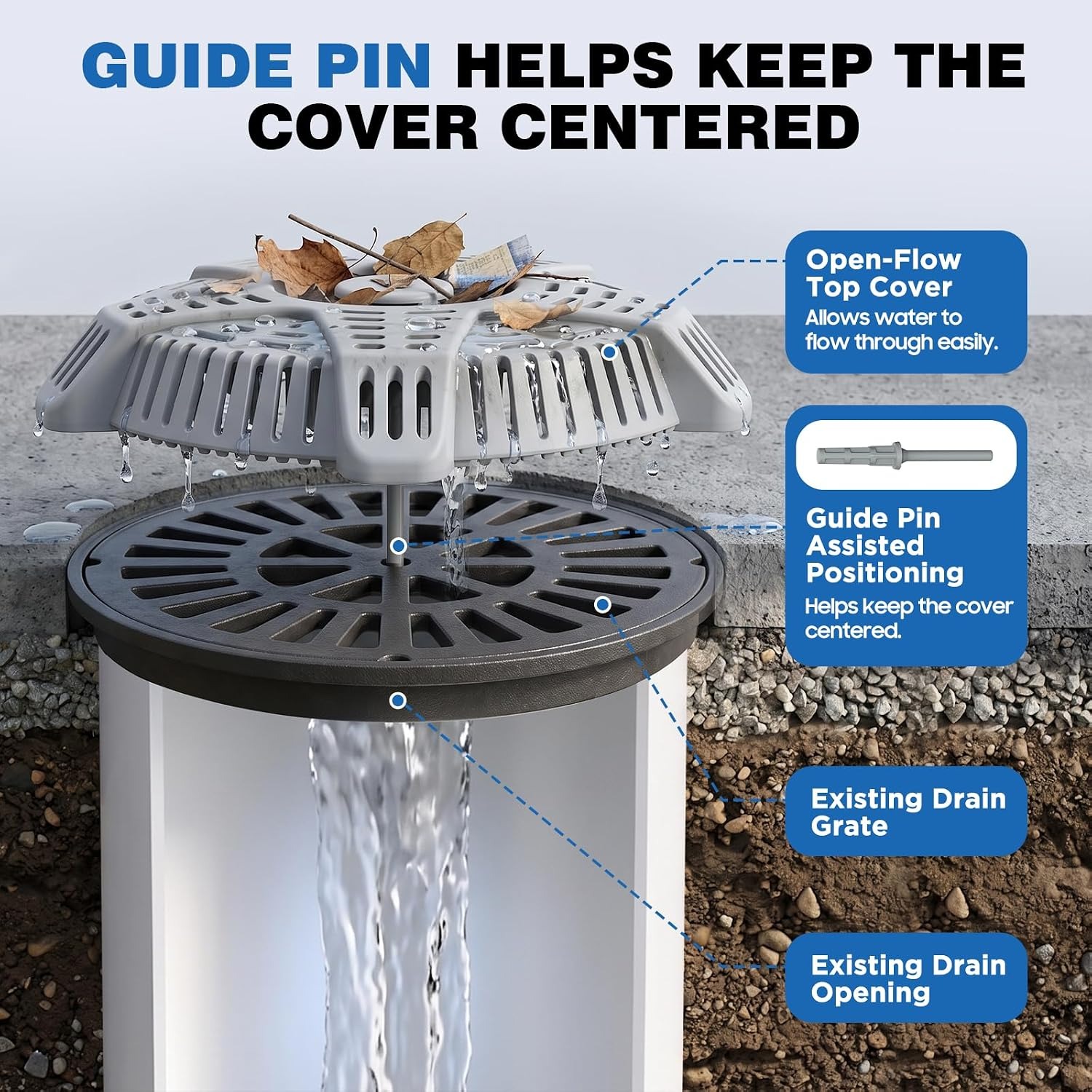
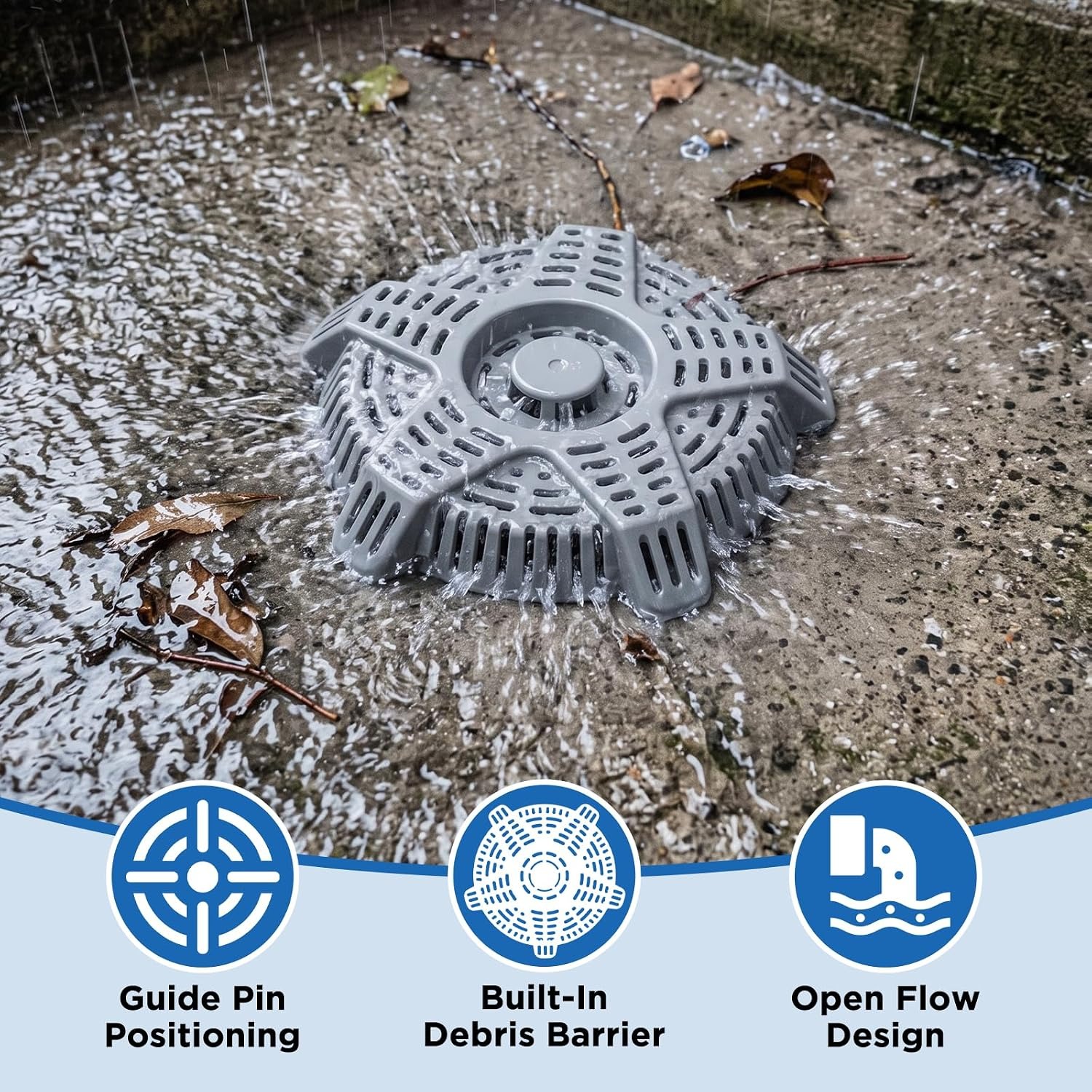
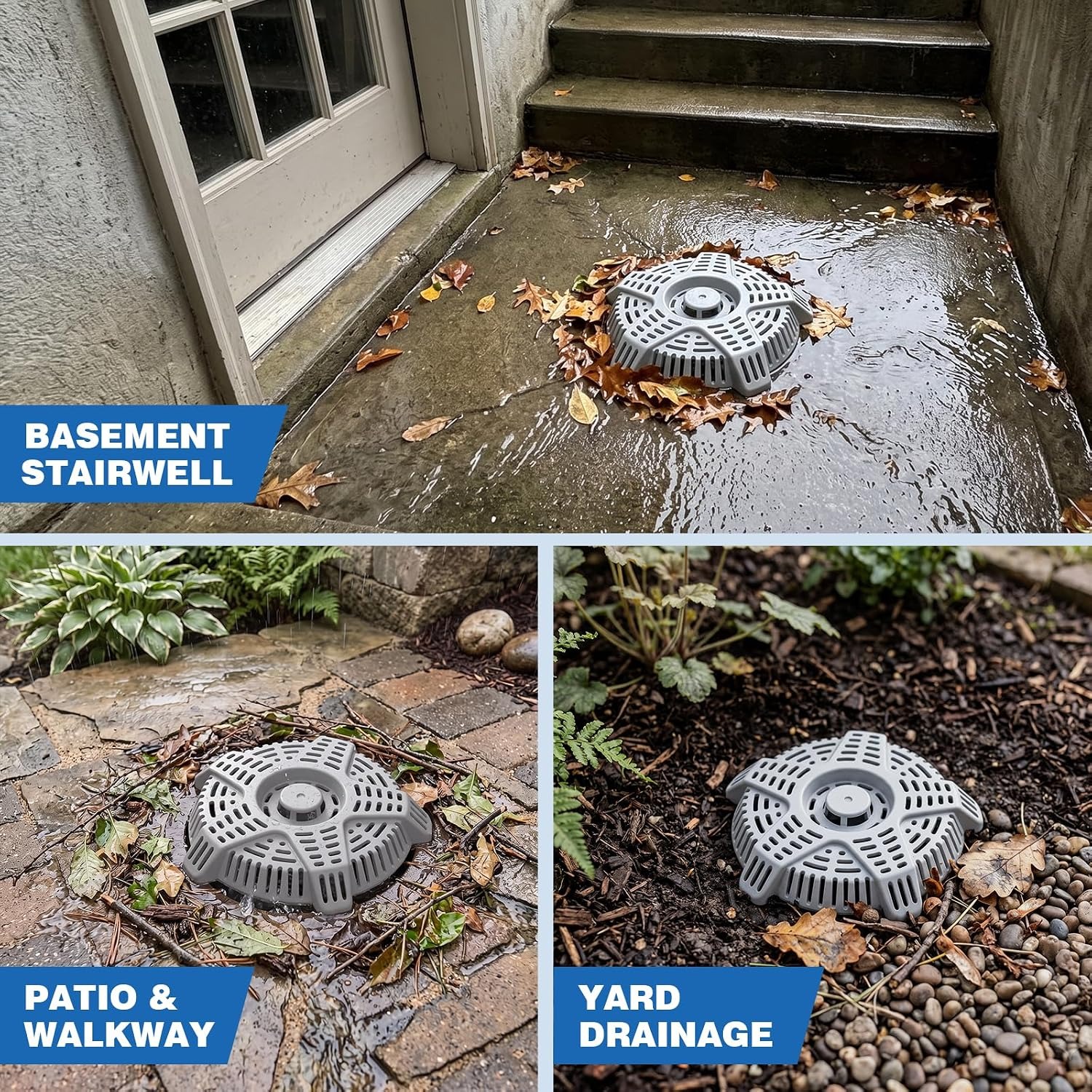
A domed cover changes the geometry. This one stands about 2 inches high with slots around the sides, so the openings are at different heights. Debris collects at the base, where gravity puts it, while the upper slots stay clear. Water keeps finding a way in. You get a grace period instead of an instant blockage, and that grace period is often the difference between a drain that copes with a storm and one that does not.
Width matters too. At around 12 inches across, this cover is considerably wider than the drains it protects. That overhang means leaves blowing across the ground hit the outside of the dome and tend to drift past, rather than being funneled into the opening. A cover that only just spans the drain does not give you that.
Then there is the guide pin underneath. It drops into the drain opening and acts as an anchor. During a downpour, surface water moves fast and pushes at anything in its path, and a loose cover that slides off two feet downstream is worse than no cover at all, because you think you are protected. The pin keeps the cover sitting where you put it.
Who this suits
If you have a basement entrance with steps leading down to a door, this is written for you. Those stairwells are water traps by design and the single drain at the bottom carries the entire load.
It also suits sunken patios, courtyards with a central drain, garage aprons, window wells and any yard drain that sits under a tree. If you have a downspout that discharges near a drain, add that to the list, since gutters deliver leaves and water together in one concentrated rush.
Renters are worth a mention. Because nothing is drilled or fixed, there is no permission to ask for and nothing to repair when you move. You put it down, and when you leave, you pick it up.
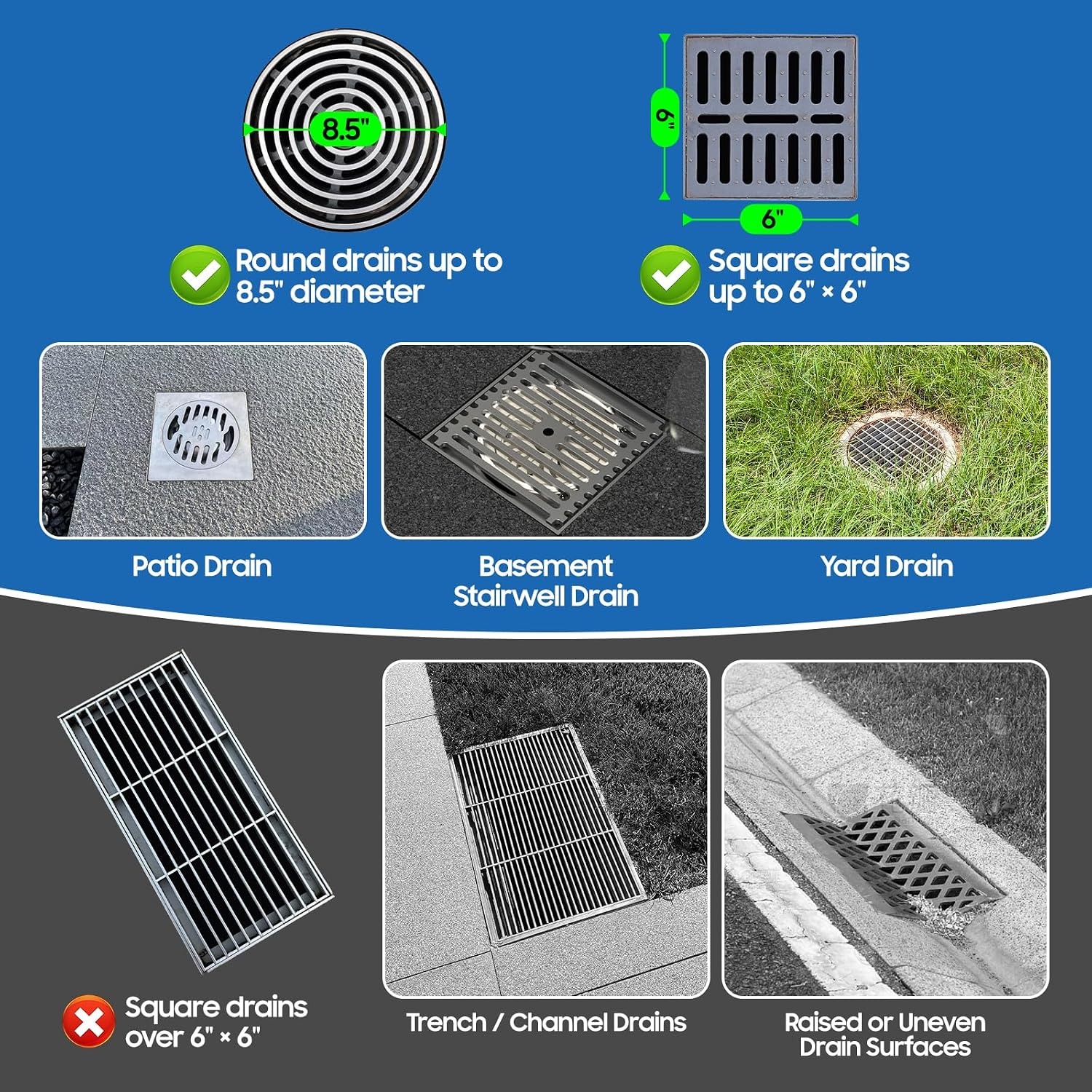
Where it is not the right tool: anywhere vehicles drive. This is a plastic debris guard with no load rating, so a driveway crossing point needs a proper traffic-rated grate. The same caution applies to a drain sitting in a main walking line, where a 2-inch raised dome becomes a trip hazard. Position it off to one side if you can.
Choosing the right size
Start with a tape measure. For a round drain, measure the diameter of the opening, not the frame. This cover handles round drains up to 8.5 inches. For a square drain, measure one side, and anything up to 6 inches is within range.
If your drain is smaller than those numbers, you are fine. A wider cover over a smaller opening works perfectly well, and the extra overlap is a bonus. If your drain is larger, this is not the product for you, because the cover would sit inside the opening or balance awkwardly on the edge.
Next, check the surface around the drain. You want a reasonably flat, firm area roughly 12 inches across so the cover sits level. Cracked or heavily sloped concrete can make it rock. Sweeping away grit and loose stone before you place it makes more difference than people expect.
One last check is clearance. Think about whether the drain is behind a door that swings out, or under a step. Two inches of height is not much, but it is enough to catch a door that clears the ground by a hair.
Looking after it
The cleaning routine is short. Lift the cover, tip the leaves into a trash can, rinse the slots with a hose and put it back. Two minutes, maybe three if it has been a while.
How often depends on your season and your trees. Through summer, a check every few weeks is plenty. Through fall, make it weekly, and check again after any storm that brings down a lot of leaf litter. If you only remember one thing, remember to look before a forecast downpour rather than after it.
While the cover is off, glance at the drain itself. Covers catch what falls from above, but silt washes in at ground level over time and no surface cover prevents that. A quick look every couple of months tells you whether the drain below needs attention.
For stubborn grime in the slots, a soft brush and mild soapy water does the job. Skip solvents and harsh cleaners, which can make outdoor plastic brittle over time. Do not stack heavy items on top of it, and do not use it as a step.
In winter, clear snow off it. When the thaw comes, you want that meltwater to have a clear path down rather than finding out the hard way that the slots were packed solid.
A few honest limitations
It will not stop odors. A slotted cover is open by design, and drain smells come from the trap or the line below.
It will not fix a drain that is already blocked. If water is pooling now, clear the drain first, then fit the cover to keep it clear.
It is not a pest barrier. No slot dimensions are given, so if keeping animals out is your main goal, buy something sold for that purpose.
And it still needs you. A cover that has been left to fill with three seasons of leaf mulch is just a lid. The product reduces the work. It does not remove it.
The short version
Drains at the bottom of basement steps, patios and window wells block for one simple reason, which is that leaves fall on them and nobody notices. A raised slotted cover sits over the opening, catches the debris on top and keeps several water paths open even as leaves gather around the base.
Measure your drain first. Round openings up to 8.5 inches and square openings up to 6 inches per side are covered by this 12-inch dome. Make sure there is a flat patch around the drain for it to sit on, and keep it out of driveways and main walking lines.
After that it is a drop-in job with no tools, a guide pin to hold it steady, and a two-minute clean whenever the leaves pile up. For the small cost and the small effort, it is one of the easier ways to avoid finding water at the bottom of your steps.