
The complete guide
Buying a Reversible Chain Mesh Sink Strainer, A Practical Guide
The small annoyance that adds up
Nobody thinks much about the sink strainer until the dishes stalls. You are halfway through a stack of plates, the water stops going down, and you realize the little metal cup in the drain has packed itself solid with rice and bits of lettuce. So you fish it out, tip it over the trash, and nothing moves. The wet scraps have molded themselves to the inside. Out come the fingers, or a fork, or a quick rinse that flicks dirty water across the counter.
It is a two minute job that happens three times a day. Over a year that is a lot of poking at cold food waste.
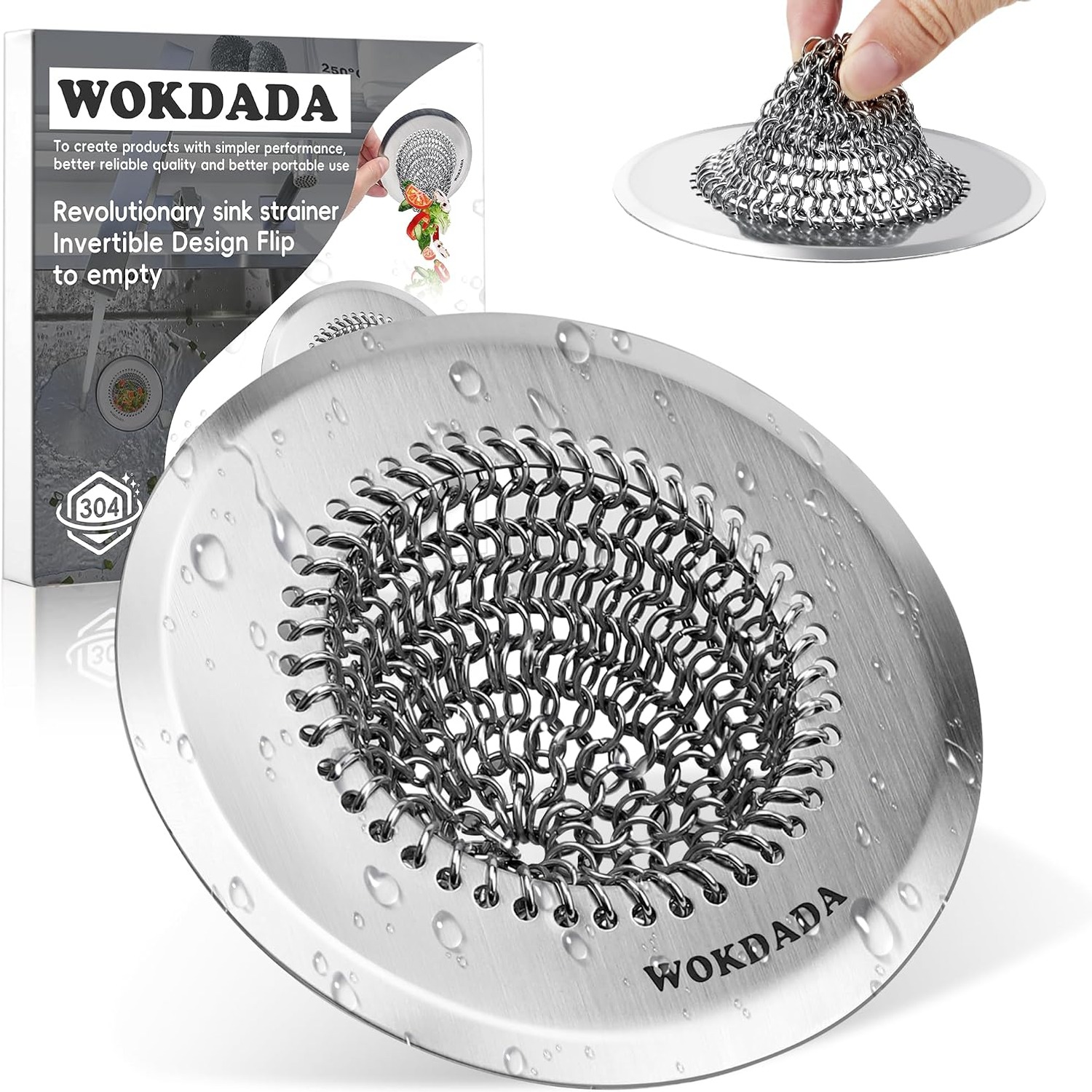
The reversible chain mesh sink strainer exists because someone looked at that problem and asked why the basket has to be rigid. If the mesh can bend, the whole thing can turn inside out. Everything that was trapped inside is suddenly on the outside, and gravity does the rest.
How the chain mesh design works
A traditional strainer is a stamped metal cup. Water can only leave through the holes in the bottom and sides, and those holes are quickly covered by whatever lands on them. Once a layer of coffee grounds settles, the strainer is effectively a bowl.
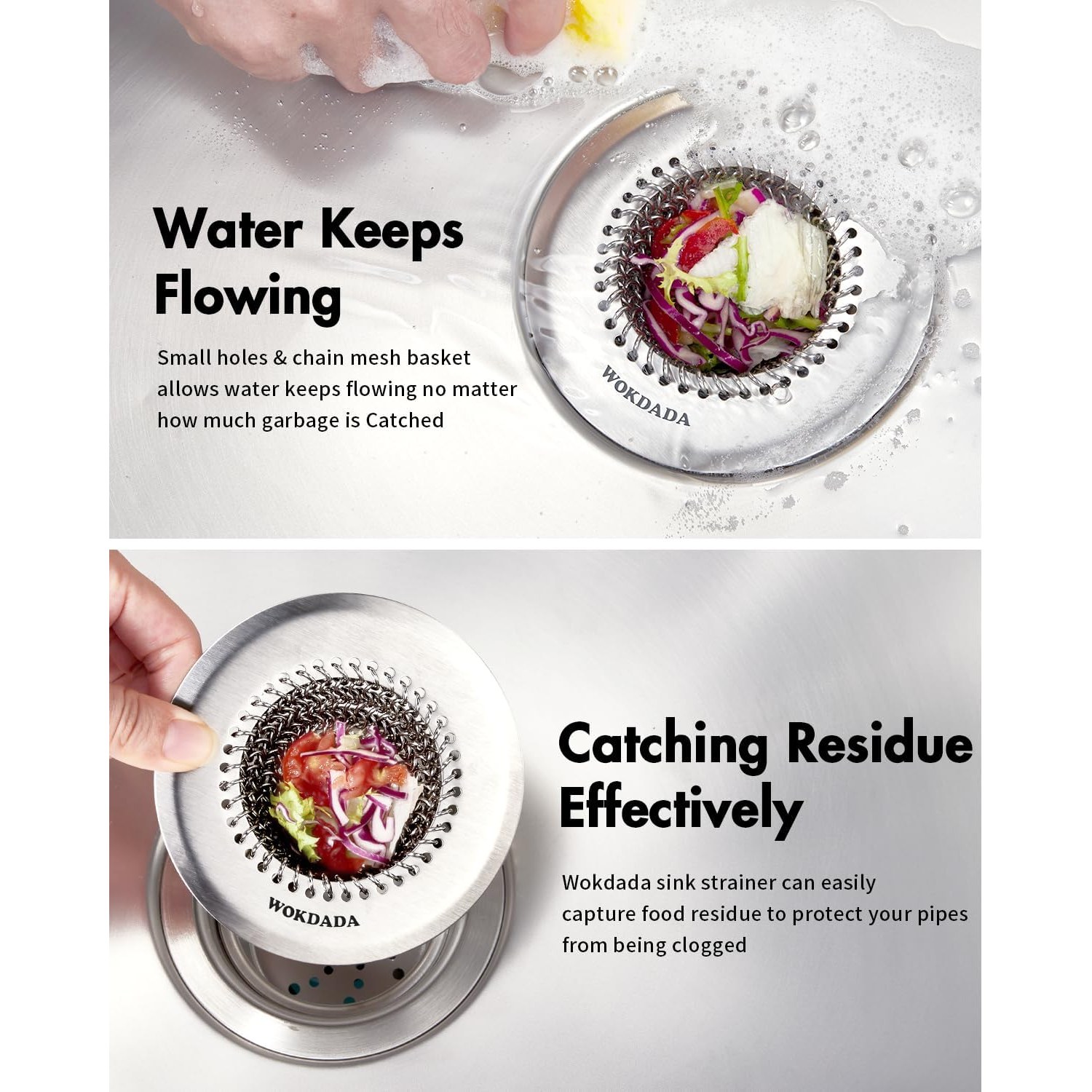
Chain mesh works differently. The basket is built from interlinked stainless steel rings, so water passes through the gaps between the links everywhere, not just where someone punched a hole. On top of that, the metal ring at the rim carries its own drainage openings. That gives the water two separate escape routes, which is why the sink keeps emptying even when the basket is holding a real load.
The aperture is 3 mm. That number matters more than it looks. Too fine and the mesh behaves like fabric, blocking with the first handful of tea leaves. Too coarse and small debris slips through to your pipes. At 3 mm you catch peelings, pasta, rice, crumbs, coffee grounds and hair, while suds and water run straight past.
Then there is the flip. You lift the strainer by its ring, hold it over the trash, and push the base of the pocket up and through. The mesh inverts, the contents drop, and the surface you are left with is smooth metal that rinses in a couple of seconds. The weight of the waste actually helps the inversion along, so a full basket is easier to empty than a nearly empty one.
Materials, and why 304 matters
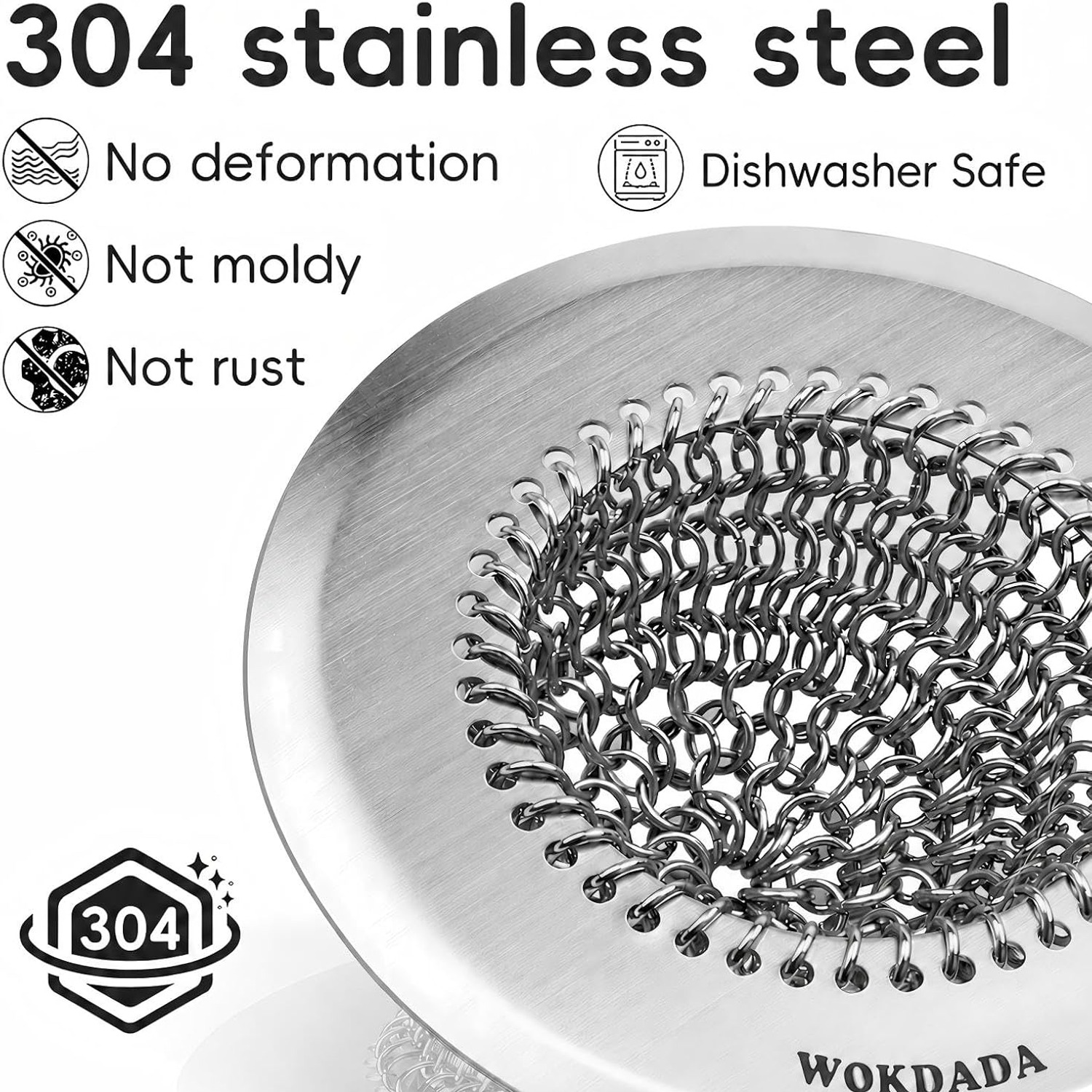
This strainer is made from 304 stainless steel and hand finished. Grade 304 is the standard in kitchens for a good reason. It stands up to hot water, detergent, salt and the acid in things like lemon rind and tomato without pitting or turning dull quickly.
Compare that with the two common alternatives. Plastic strainers are cheap and they work for a while, but they stain brown from coffee and tea, they hold smells, and they go brittle where boiling pasta water hits them. Thin chrome plated steel looks fine in the shop and then the plating lifts at the edges within a year, and once it lifts, rust follows underneath.
Bare stainless steel has no coating to fail. It can mark if you attack it with steel wool or leave bleach sitting on it, but in normal use it looks much the same in year three as it did in week one.
Who this suits
If you cook from scratch, this is an easy yes. Chopping vegetables, draining pasta and rinsing rice all produce exactly the kind of debris that clogs a standard basket mid job. A deeper chain mesh pocket holds a lot more, so you empty it once at the end rather than three times during.
Households with a slow drain history should also look hard at it. Most blocked kitchen pipes are a slow build of food solids and grease, not one dramatic event. Catching the solids at the drain is the cheapest plumbing you will ever do.
It also travels well beyond the kitchen. The maker lists bathroom vanity sinks, bathtub drains and RV sinks as suitable, because the flexible mesh adapts to different recess shapes. In a bathroom it is catching hair instead of food, and the flip to empty action is arguably even more welcome there. For anyone fitting out a van or a boat, where the plumbing is small bore and a blockage is a genuine problem, a food catcher at the drain is a sensible piece of kit.
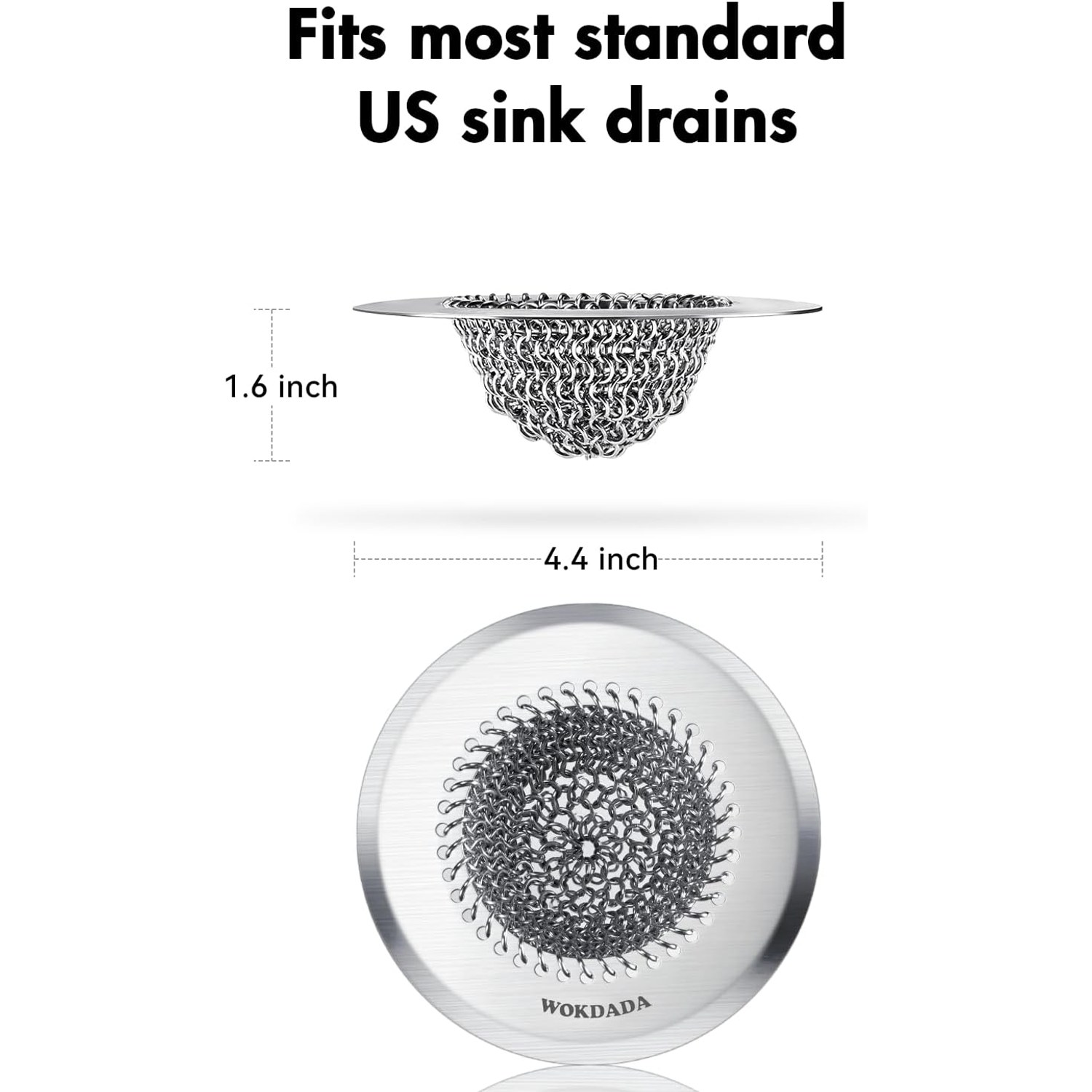
Who might want something else? If your drain opening is well away from 4.4 inches, fit will be the problem, not the product. And if you want something that locks in place permanently as part of the plumbing, this is a lift out basket, not a fixed fitting.
Getting the size right
This is the one thing worth checking before you order, and it takes thirty seconds.
Take a tape measure and measure straight across the drain opening in your sink, at the widest point of the recess where a strainer would sit. If you get something close to 4.4 inches, you are in the right place. Most standard kitchen sinks in most markets land there, which is why that size is so common.
If your sink has an unusual stepped recess, measure the diameter of the ledge the strainer rests on rather than the hole itself. If you are between sizes, it is better to be slightly under than slightly over, since a strainer that is a touch small still sits in the recess while one that is too large will not drop in at all.
Depth is the other dimension. This one is 1.6 inches deep, which gives useful capacity without the basket sitting so low that it interferes with the plumbing below.
Living with it
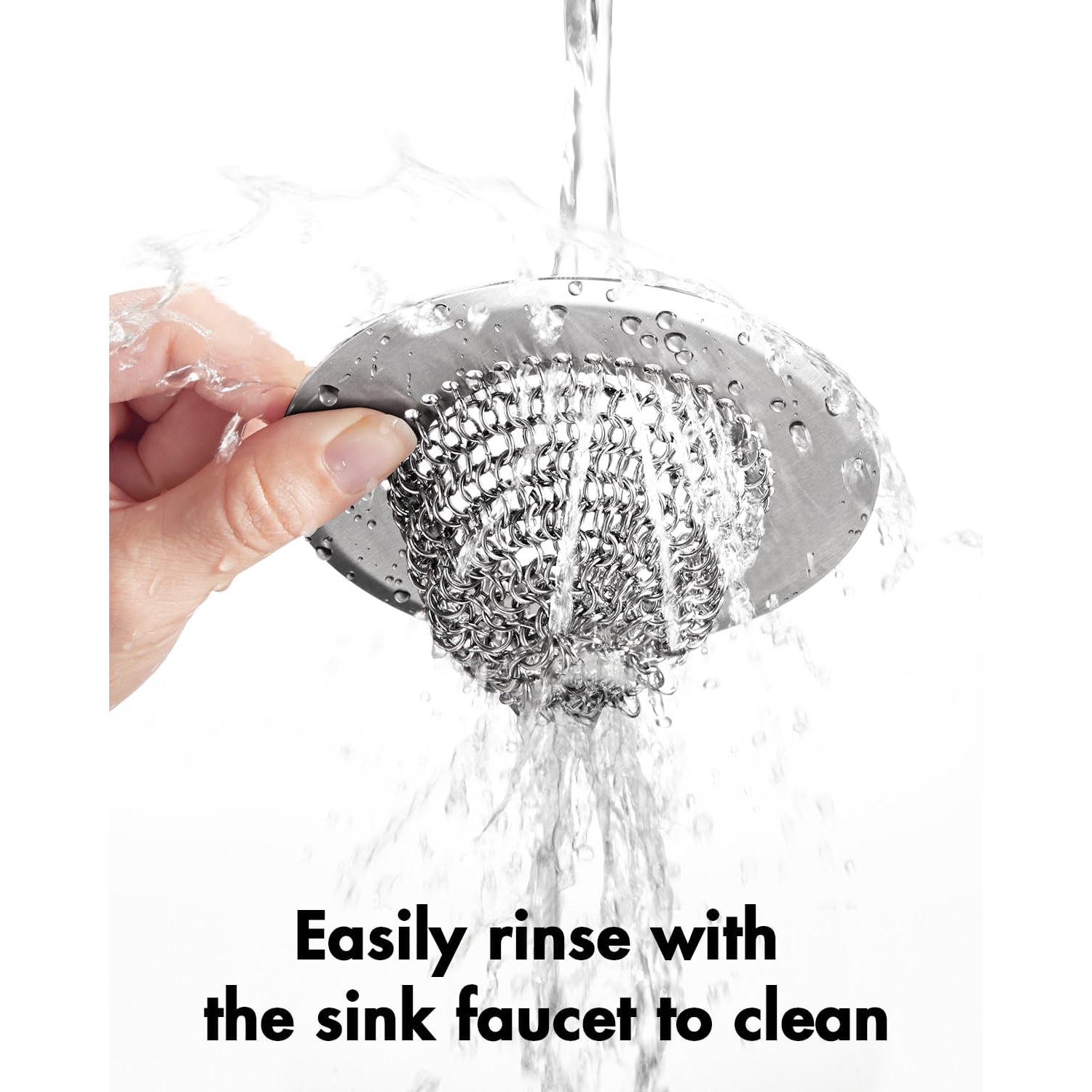
Day to day care is genuinely simple. Flip it over the trash, rinse under the faucet, drop it back in. Because you are rinsing a smooth outer surface rather than digging around inside a cup, it does not splash across the counter.
Once a week, give it a proper clean. Warm water with a little dish soap, a soft brush worked through the links, then a rinse and a shake dry. If you would rather not think about it, put it on the top rack of the dishwasher and let the machine handle it, since the maker confirms it is dishwasher safe.
A few things to avoid. Steel wool and scouring powders will scratch the finish. Bleach left sitting on stainless steel for hours can mark it, so do not soak it in neat bleach overnight. And let it dry before you put it away if you are storing it rather than leaving it in the drain, because trapped moisture in a closed cabinet is what causes water spots.
Treated normally, a stainless steel strainer is one of the longest lasting things in a kitchen. There is no motor, no seal and no plating, just metal.
A couple of habits that help
Scrape plates into the trash before they reach the sink. The strainer is a safety net, not a disposal system, and it works better when it is catching the bits you missed rather than everything.
Avoid pouring fat and oil down the drain, strainer or no strainer. Grease is liquid when it leaves the pan and solid once it cools in the pipe. The mesh will not stop it, and over time it is what glues everything else together into a blockage. Let it set in a jar and trash can it.
And empty the basket at the end of each wash the dishes rather than leaving it overnight. Wet food sitting in metal will start to smell by morning. The flip takes three seconds, which is the whole point.
The short version
The reversible chain mesh sink strainer solves a specific irritation. It empties without you touching the contents, it keeps water draining when a normal basket would have given up, and it holds more before it needs clearing. The 304 stainless steel build handles hot water and detergent without rusting or staining, and it goes in the dishwasher when you want it properly clean.
Check that your drain opening is around 4.4 inches, rinse it after each use, and keep abrasives away from it. That is about the extent of the commitment. For a part of the kitchen you use every day and think about almost never, it is a worthwhile upgrade on the flimsy cup that came with the sink.