
The complete guide
How to Choose a Rubber Tub Stopper That Actually Holds Water
The slow leak nobody budgets for
There is a particular kind of tub disappointment. You run it hot, you get in, and twenty minutes later the water is at your waist instead of your shoulders. Nobody pulled the plug. The plug is just not sealing any more.
It happens for simple reasons. Rubber plugs go hard with age and stop flexing into the drain rim. Pop-up mechanisms get stiff, the linkage drops out of adjustment, or the rubber washer on the underside perishes. Kitchen sinks suffer the same thing, except there the result is a sink that will not hold enough water to wash a roasting tray.
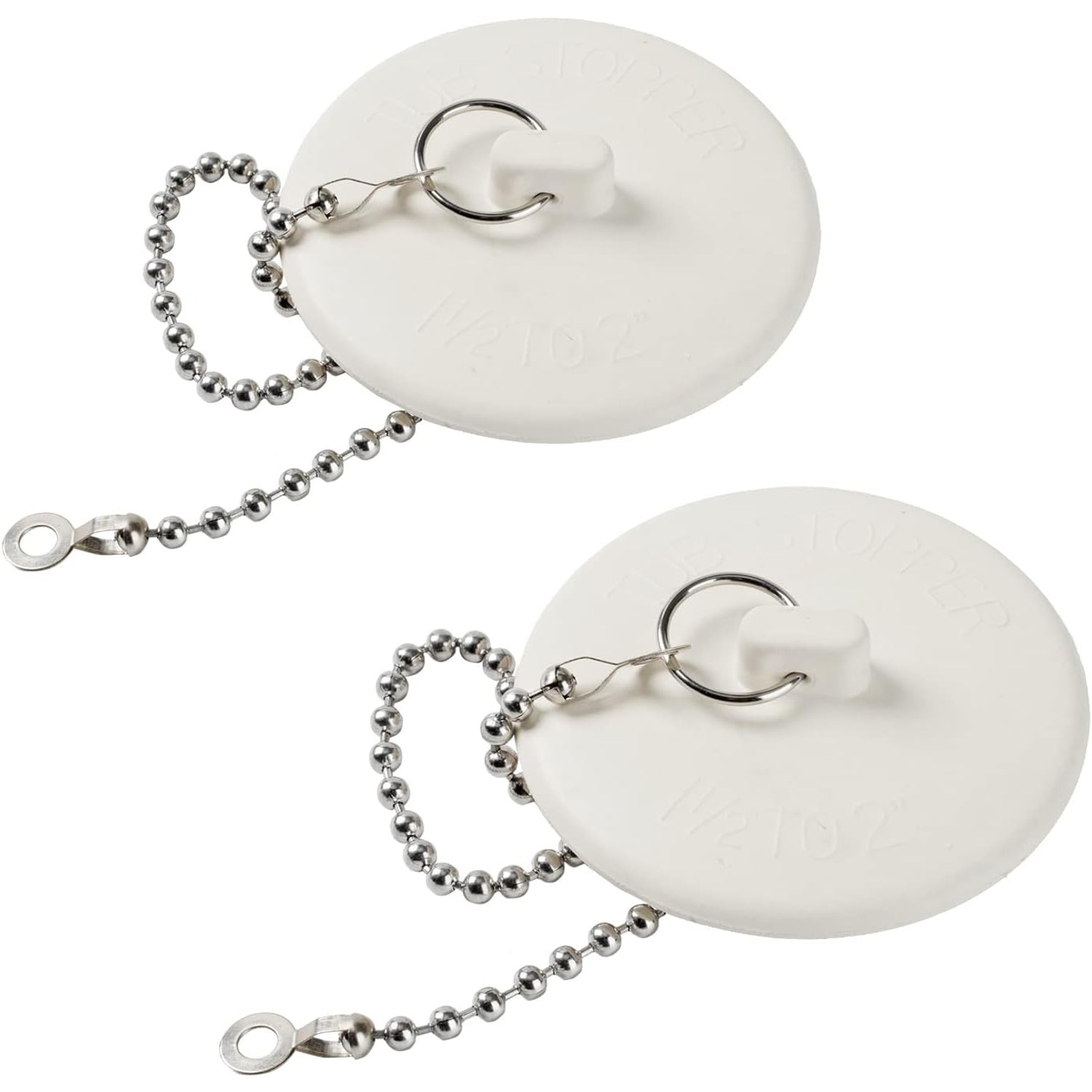
The fix is usually not a plumber. It is a new plug. A rubber tub stopper with chain 2 pack is about as low-tech as home repairs get, and that is the point. There is nothing in it to break.
How a rubber plug seals
A rubber stopper does not clamp or screw into place. It works on pressure. You seat the plug in the drain opening, the soft rubber face meets the rim, and then the weight of the water above does the rest. A full tub puts real downward force on a small area, and that force squeezes the rubber tight against the metal.
This is why rubber plugs often outperform a tired pop-up. A pop-up relies on a mechanism holding a washer at exactly the right height. A rubber plug just sits there and lets physics do the work. Fewer parts, fewer failure points.
It also explains the most common complaint, which is a slow weep rather than a sudden drain. That is almost always debris. A single hair caught between the plug and the rim creates a channel for water. Wipe the rim, wipe the plug face, reseat it, and the weep usually stops.
Getting the size right
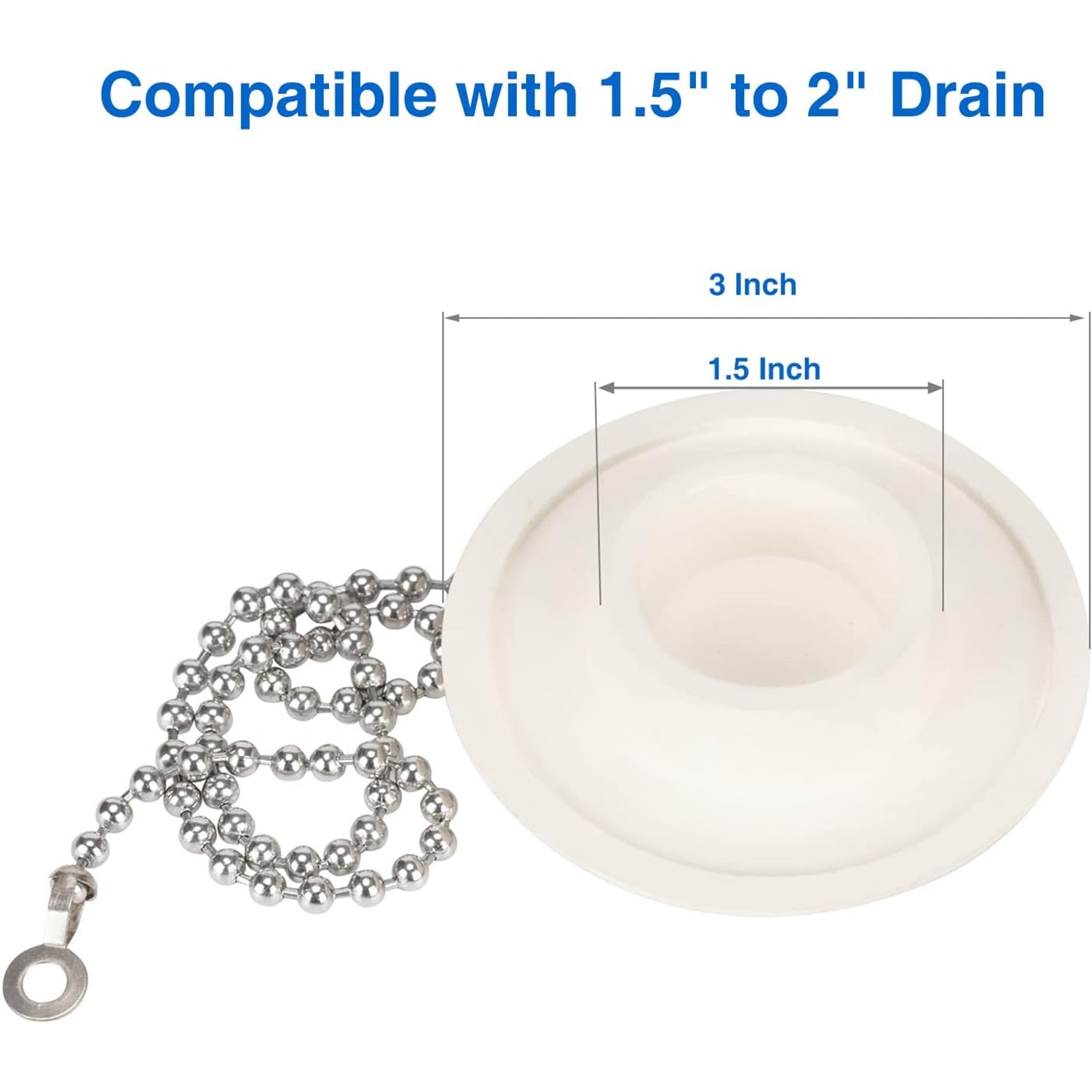
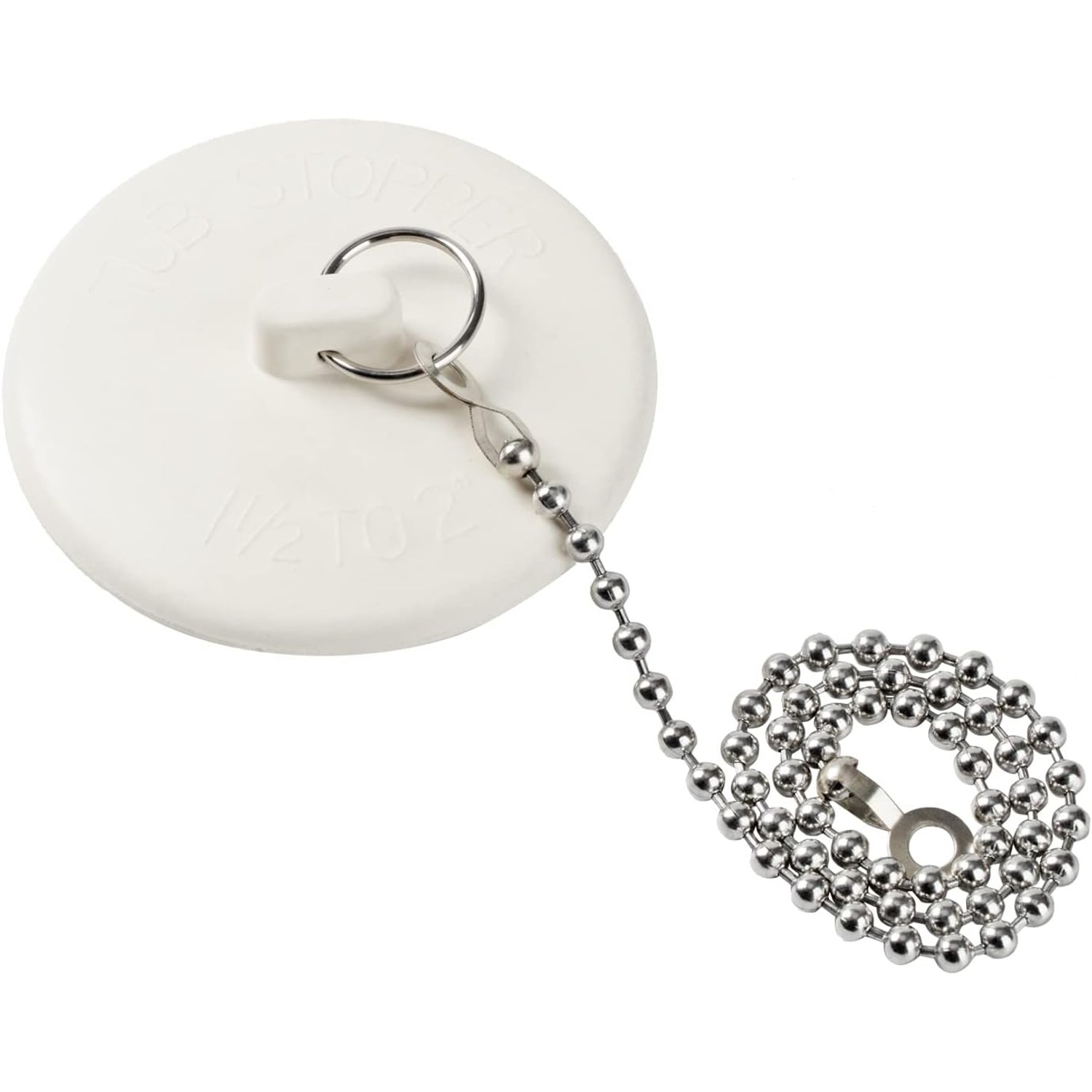
This is the only part worth being careful about. These stoppers are made for drains measuring 1.5 inches to 2 inches across. That range covers the large majority of standard tubs, kitchen sinks, laundry tubs and utility sinks, but it is not every drain on earth.
Measuring takes thirty seconds. Pull the old plug, lay a ruler or tape across the opening, and read the widest inside distance. The measurement you want is the hole, not the decorative metal rim around it. If your number lands between 1.5 and 2 inches, you are fine.
A couple of situations need a second look. If your drain has a fixed strainer basket that sits proud of the rim, the plug cannot lie flat and will not seal. Remove the strainer first. If there is a crossbar inside the drain, check whether it sits flush or slightly below the rim. Flush or lower is fine, raised is not.
People who have struggled to find the best universal drain plug for an odd sink often find the 1.5 to 2 inch range is the sweet spot, because it is where manufacturers standardized decades ago.
Why the chain matters more than you think
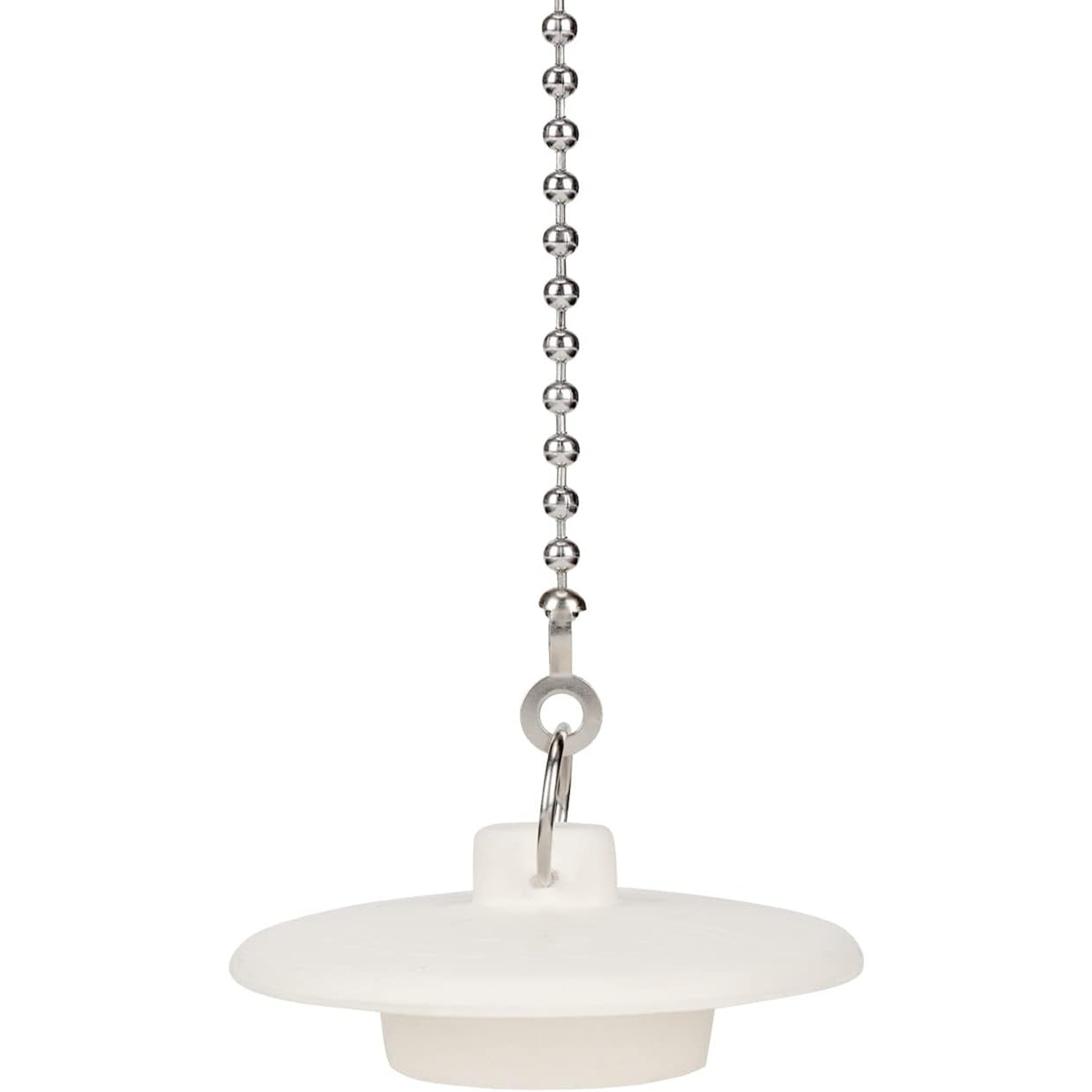
Each stopper comes with a 15 inch stainless steel beaded chain and a split hang ring on top of the plug. It sounds like a minor detail. It is not.
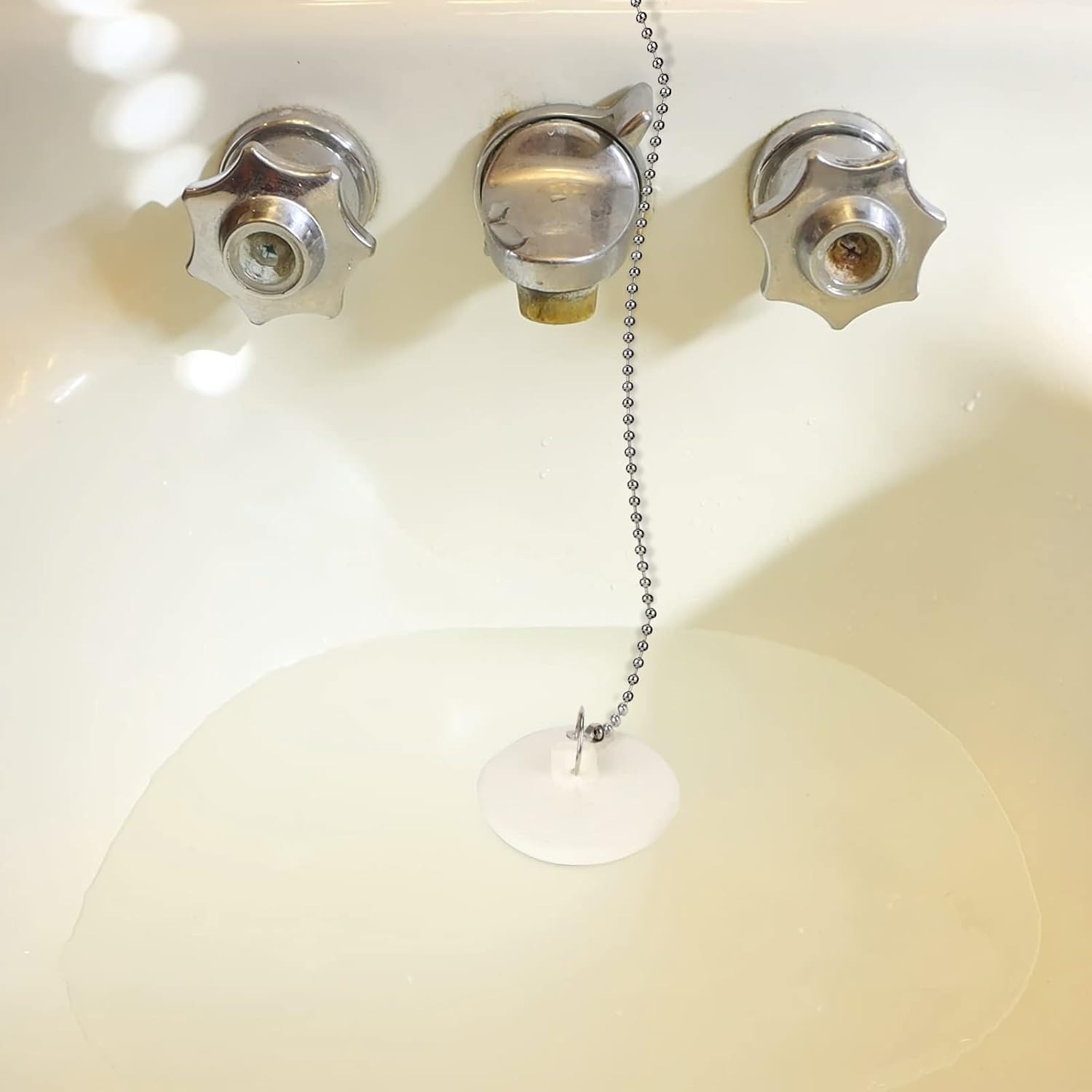
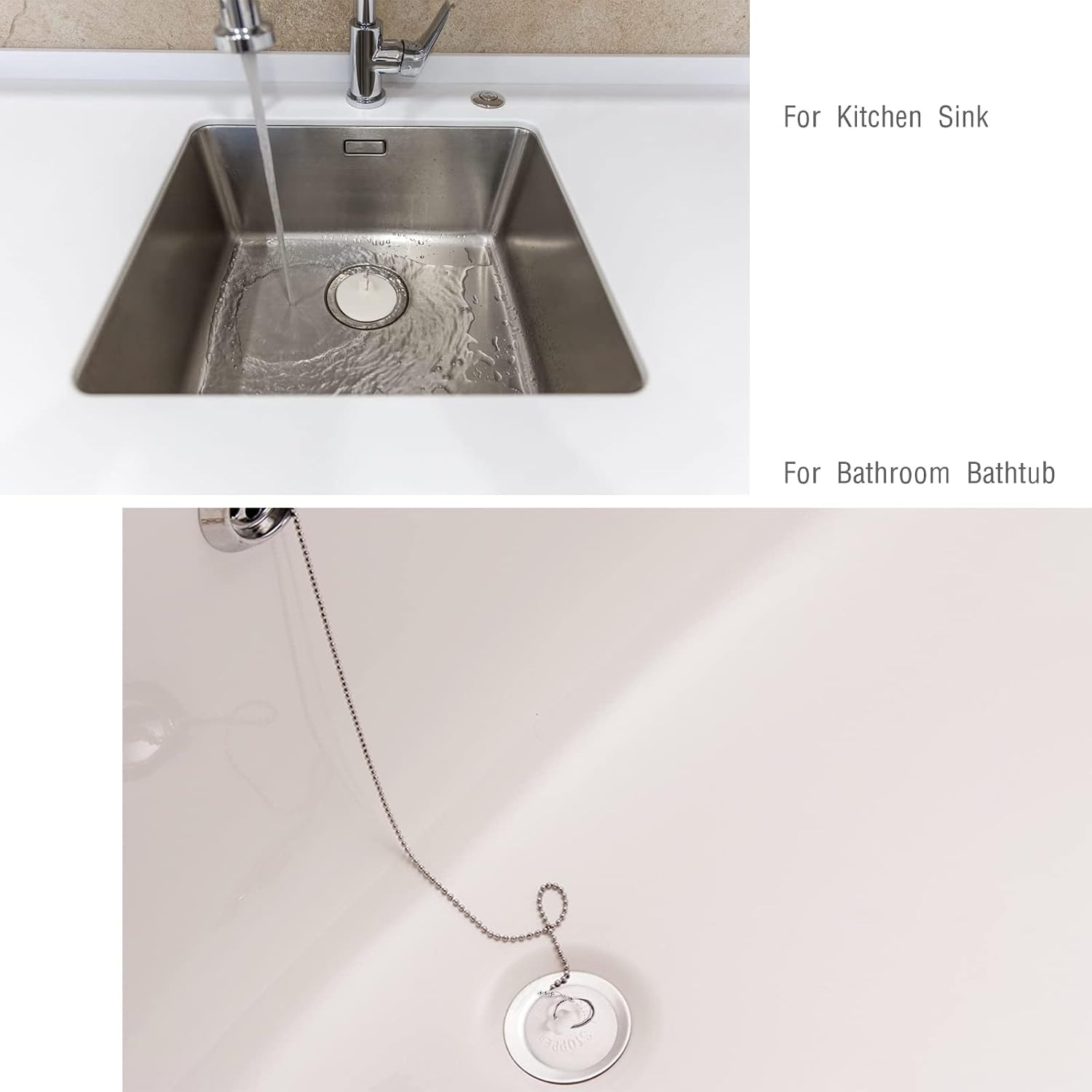
Loose plugs disappear. They get knocked off the edge of the tub, land behind the toilet, go into a drawer during a clean and never come out. Then you need a tub and you cannot find the plug. The chain stops that cycle. Clip one end to a faucet, an overflow screw or a small hook, and the plug lives permanently within arm's reach of the drain it belongs to.
The chain is also a practical handle. Wet, soapy hands and a flush-sitting plug are not a great combination. Pulling a beaded chain is easier than scrabbling at a ring with slippery fingers. At 40 cm, the chain is long enough to reach around most tap arrangements without being so long it coils in the water.
If you prefer a loose plug, the chain detaches through the split ring. Keep it in the cabinet in case you change your mind.
Who this suits
Renters get a lot out of a plug like this. You cannot start replacing tub hardware in a property you do not own, but you can drop a rubber plug into a drain and take it with you when you leave. It solves the problem without touching anything permanent.
Older houses are the other big use case. Original fittings often have drain openings that modern branded plugs do not match, and a plug sized across a range rather than one fixed diameter has a much better chance of seating properly.
Anyone with more than one sink benefits from a two pack. One in the tub, one in the kitchen. Or one in use and one in the cabinet, so a lost plug is a thirty second problem rather than a trip to the shops. For a laundry tub or slop sink that gets rough treatment, a spare is sensible rather than optional.
Families with young children tend to like the simplicity too. There is no mechanism a small child can break and nothing sharp. Just keep the small split ring and chain out of reach of small children, as you would with any small part.
Choosing between plug types
It is worth knowing what else is out there so you can tell whether this is the right call.
Pop-up plugs are neat and built into the tub, but they fail and they are fiddly to adjust. Flip-top and click-clack stoppers look tidy and cost more, and they rely on a spring mechanism that eventually stops clicking. Silicone disc covers sit on top of the drain rather than in it, which works well on flat drains and poorly on recessed ones. Metal plugs with rubber gaskets last a long time but only fit one specific diameter.
A plain rubber plug sits at the simple end. It is not the prettiest option. What it gives you is reliability, a wide fit range and a price that makes keeping a spare easy. If you want something you fit once and forget about, this is usually it.
Keeping it working
Care is not complicated, but it does make a difference to how long the rubber stays soft.
Rinse the stopper under warm water after use and wipe the sealing face. Soap film builds up into a slick layer that interferes with the seal, and hair is the number one cause of slow leaks. A quick wipe prevents both.
Every few weeks, wash it properly with mild dish soap and a soft cloth, then let it dry rather than dropping it straight back into standing water. Dry the beaded chain too, since stainless steel stays cleaner when it is not left wet.
Skip the bleach soaks and the scouring pads. Harsh chemicals dry rubber out and make it brittle, and abrasives scratch the sealing face. If you want to deal with staining, a paste of bicarbonate of soda and a gentle scrub is kinder and works well enough.
Store the spare plug somewhere dry. Heat, direct sun and freezing temperatures all shorten the life of rubber, so a bathroom cabinet is better than a windowsill or an unheated shed.
The short version
If your tub drains while you are in it, or your kitchen sink will not hold water, the problem is almost certainly the plug. Measure the inside of your drain opening. If it falls between 1.5 and 2 inches, a rubber stopper from this pack will seat into it and hold.
You get two plugs, two stainless steel beaded chains at 15 inches each, and split hang rings for easy lifting. The material is rubber with stainless steel, the color is white, and the whole pack weighs 0.11 kg.
No tools, no mechanism, no adjustment. Drop it in, clip the chain to the faucet, and have a proper tub again.