

The complete guide
How to Choose and Fit a Screw-In Shower Drain Cover
The small part that makes a shower look old
Most bathrooms do not age evenly. The tiles hold up, the glass can be cleaned, the tapware usually survives longer than people expect. The shower drain cover is the piece that gives in first. It lives in standing water, it gets trodden on wet, it collects soap and shampoo residue, and nobody cleans under it as often as they should. After a few years the chrome lifts, the plating pits, or a plastic grate turns a tired yellow-gray that no amount of scrubbing fixes.
The annoying part is that the drain underneath is almost always fine. You are not looking at a plumbing problem, you are looking at a trim problem. That is a much cheaper thing to solve. Swapping a worn grate for a matte black shower drain cover takes a screwdriver and a few minutes, and it quietly updates the floor in a way people notice without quite knowing why.
How a screw-in strainer actually works
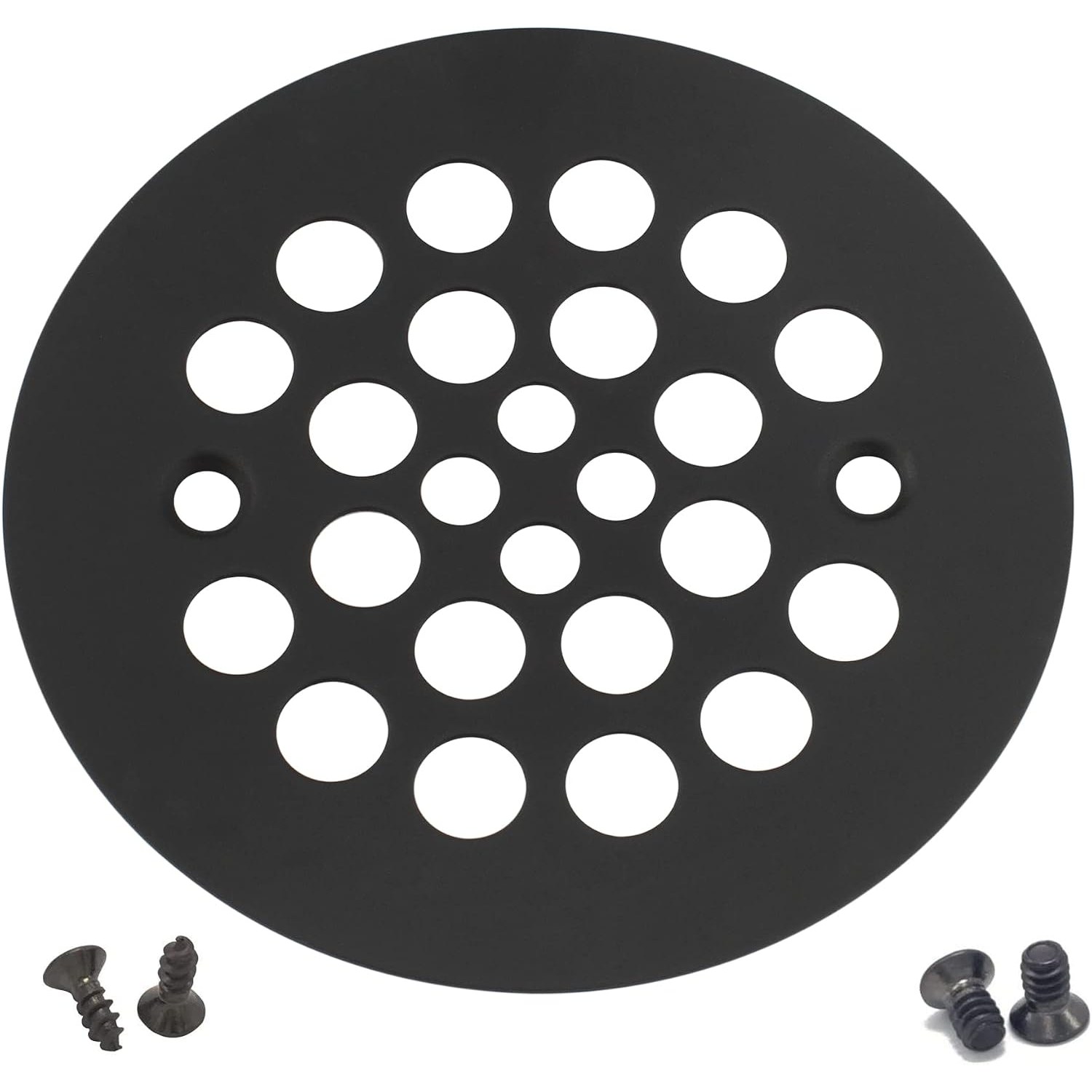
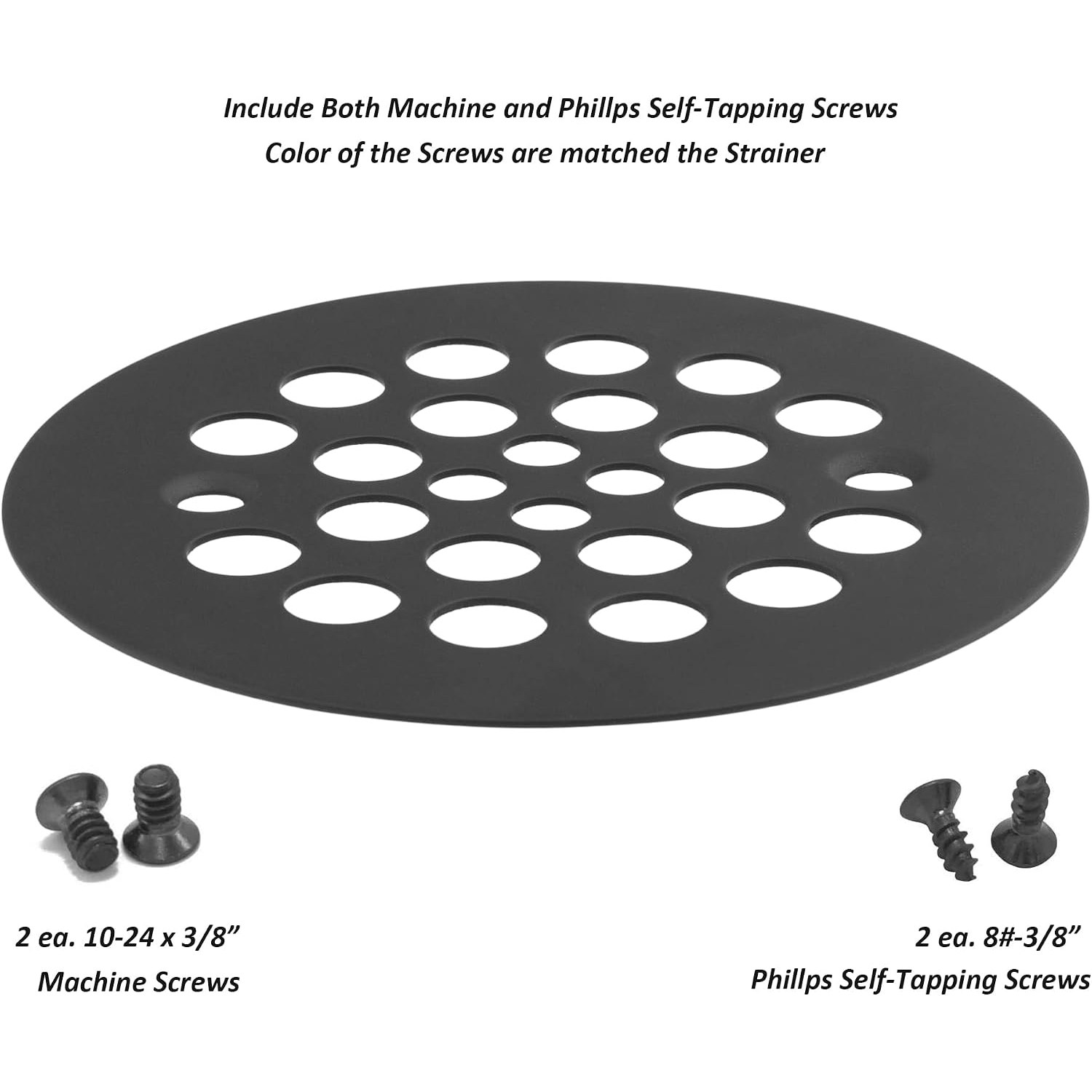
A screw-in drain cover sits in a machined recess at the top of the drain body. Two screws pass through the grid and thread into bosses cast into that body, pulling the grid down so it sits flush and does not shift underfoot. That is the whole mechanism. There is no seal, no gasket, no clever locking system.
The grid itself does two jobs. The obvious one is cosmetic, covering an unattractive hole in the floor. The useful one is straining. The slots are sized to let water through fast while holding back hair, sand, bits of soap and anything else that would otherwise travel into the pipe and start building a clog. Hair is the real culprit in most blocked showers. It catches on the underside of fittings, grabs soap residue, and grows into a mat. A strainer grid moves that collection point up to where you can see it and pull it out with your fingers.
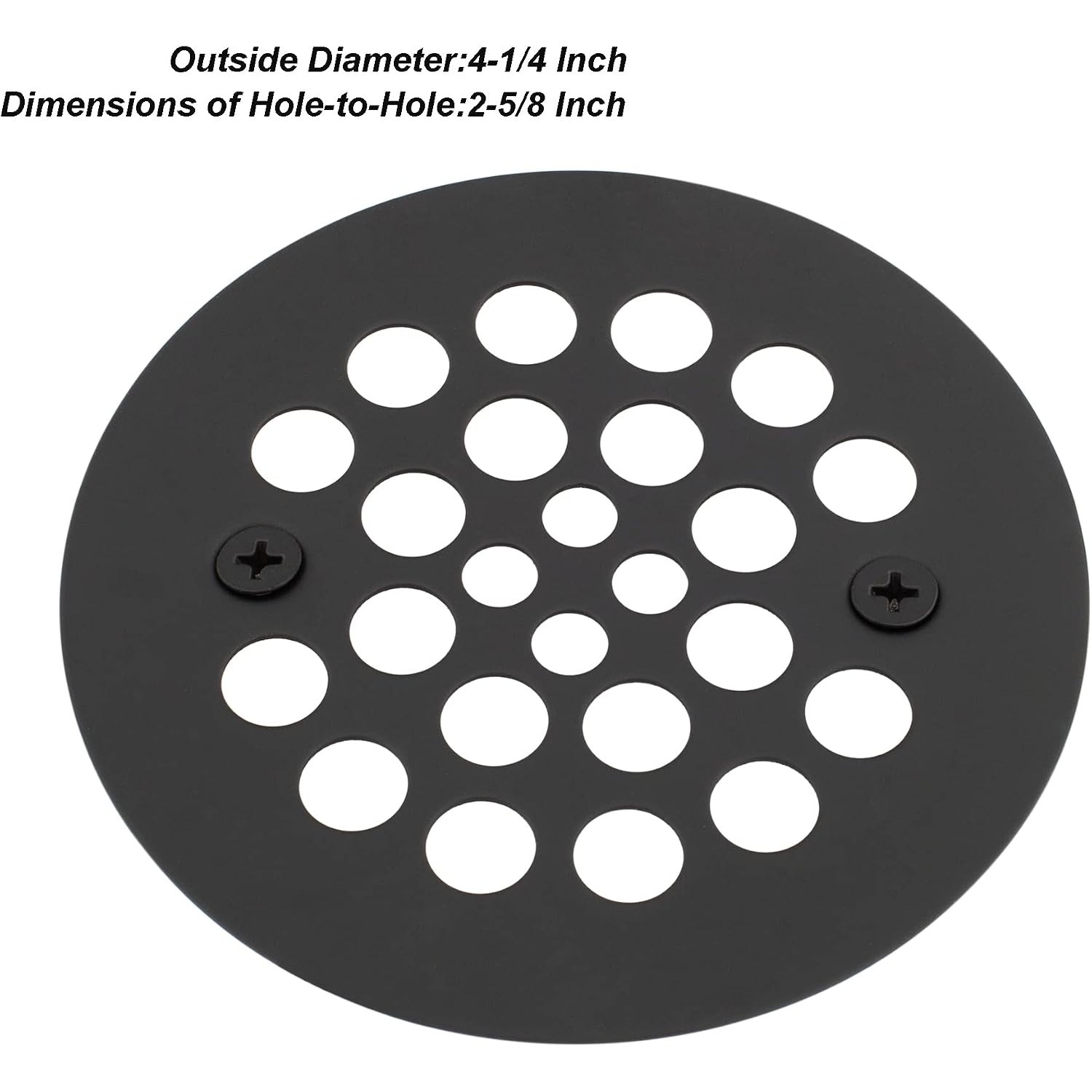
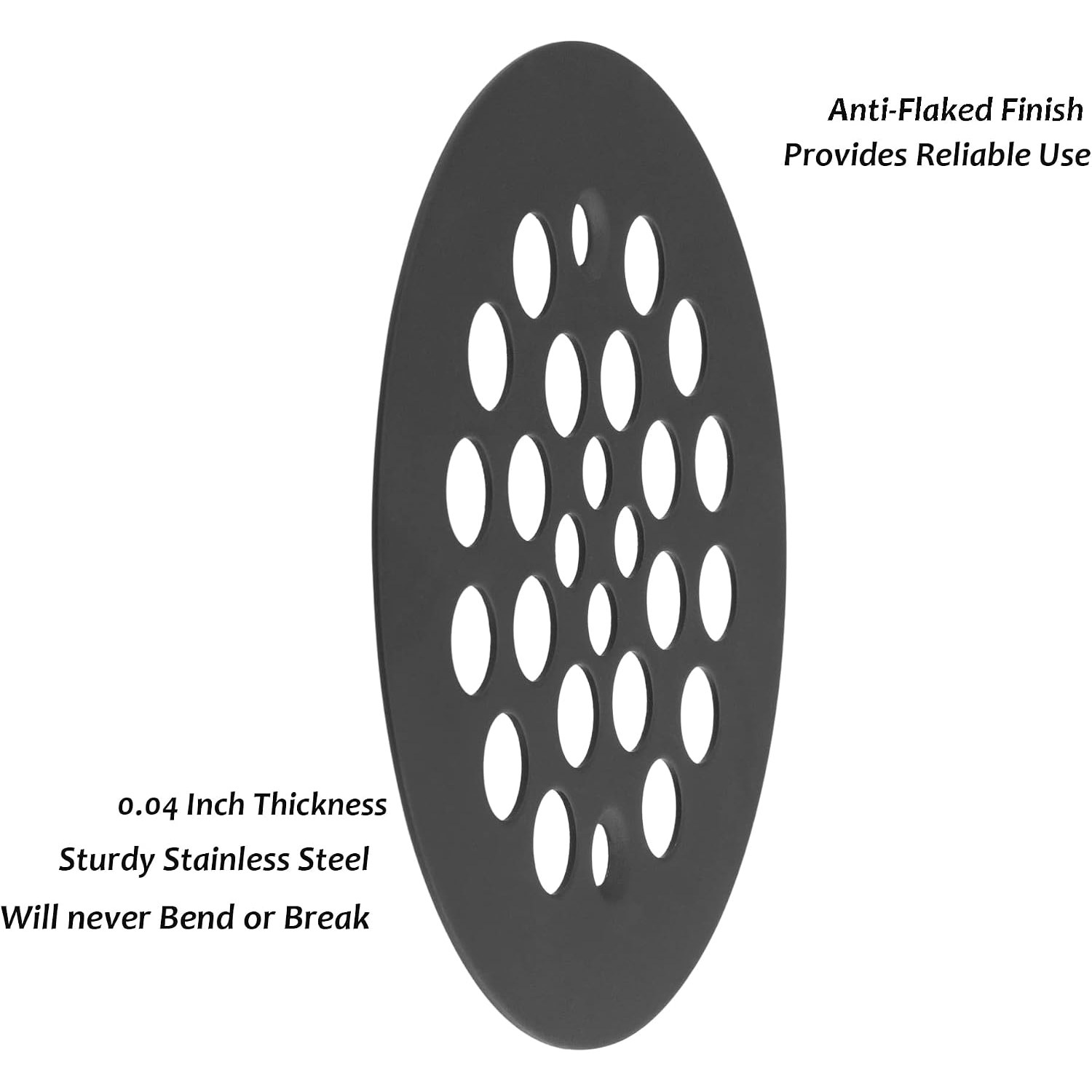
This particular cover is stainless steel with a matt finish, and the product details list anti rust among its features. Listed size is 4.25 inches across and 0.04 inches thick, which keeps the face flat under weight while still sitting down in the recess rather than standing on top of the tile.
Measure before you order anything
This is the step people skip and then regret. Screw-in drain grates come in a cluster of similar sizes, and a few millimeters is the difference between a clean fit and a part going back in the post.
Take two measurements. First, the outside diameter of your existing grate, measured across its widest point. Second, the center-to-center distance between the two screw holes. Measure from the middle of one hole to the middle of the other, not from the edges. If your current cover is cracked or missing, measure the diameter of the recess in the drain body instead and note where the screw bosses sit.
This cover is specified for a 4.25 inch groove diameter and a 4.25 inch hole size. If your numbers match, you are in good shape. If they do not, look for a replacement strainer grid in your actual size rather than hoping the fit will be close enough. It will not be. A grid that is slightly too big will not seat, and one that is slightly too small will rock every time you step on it.
Who this suits
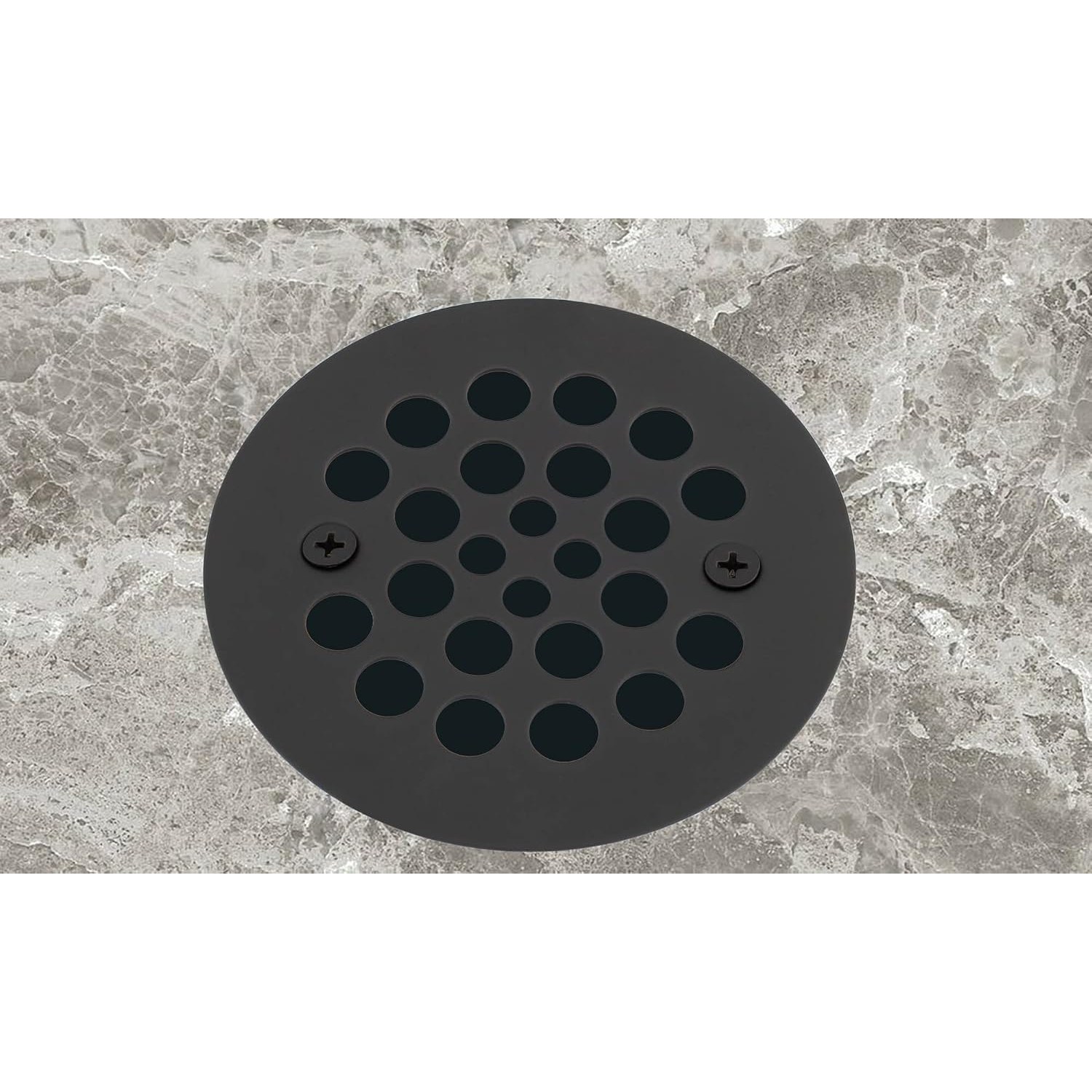
It suits anyone doing a small refresh rather than a full renovation. If you have swapped a showerhead or a mixer to matte black, the old chrome grate suddenly looks out of place, and a matching cover closes that gap cheaply. It also suits landlords and anyone preparing a property for photographs, because a clean drain reads as a well-maintained bathroom.
It suits households with long hair, where the drain backs up predictably every few months. A installed strainer grid is not a cure, but it moves most of the hair to a spot you can reach without tools.
It is less suited to drains that are not screw-in. If your current cover simply lifts out, or clips, or is a long linear channel grate, this is the wrong shape entirely. It also will not help if your drain has no screw bosses left, which happens on older plastic bodies where the threads have stripped. In that case the drain body itself needs attention.
Fitting it without drama
Start by clearing the old screw heads. Soap scum fills them over the years and a driver will cam out and strip the head if you try to force it through the gunk. A pin, a toothpick or a small pick clears them in seconds. Then press down firmly as you turn, so the driver stays seated.
Lift the old grate out and take a proper look underneath. This is your one easy chance to clear the drain throat, so pull whatever has collected there. Wipe the recess so the new grid can sit flat on a clean seat. Grit left behind is the most common reason a new cover sits high or rocks.
Drop the new grid in, line up the holes, and start both screws by hand before tightening either. Then take them down in turns, a few threads at a time, so the grid pulls down evenly. Stop when it is snug. The screws hold the grid in place, they do not clamp a seal, and overtightening a thin grid can bow the face or strip a plastic boss.
If a screw refuses to move, a drop of penetrating oil and ten minutes of patience usually wins. If a head strips, a small extractor set is the safe route. Neither is a reason to panic.
Keeping it looking new
Finishes do not fail from use, they fail from cleaning. Harsh products are what dull a matte black surface, not water and feet. Warm soapy water and a soft cloth handle normal soap scum. Dry the face afterwards if you care about water spots. Keep bleach, scouring powders, steel wool and strong acidic descalers away from it.
The other half of maintenance is the grid lift. Every two to four weeks, back the screws out, raise the grid, pull the trapped hair and rinse everything. It takes two minutes and it does more for drainage than any bottle of chemical cleaner. Households with long hair may want to do it weekly. If you are already doing this, you will probably never need to call anyone about a slow shower.
A note on matching finishes
Black fittings vary a little between brands. One maker's matte black leans slightly warm, another leans cool, and strong downlights will show that difference more than daylight does. Expect a close match with your tapware rather than a perfect one. In practice, on a floor, under a shower, nobody notices. What people do notice is a pitted chrome grate sitting in the middle of a black-installed bathroom.
If you are updating two bathrooms, buy both covers at the same time. Finishes can shift slightly between production batches, and ordering together keeps them consistent.
The short version
A worn drain cover is a trim problem, not a plumbing problem, and it is one of the cheapest fixes in a bathroom. Measure the outside diameter of your current grate and the center-to-center screw spacing first, because fit is the only thing that can go wrong here. If you land on 4.25 inches, this stainless steel grid in matt black drops straight in with the screws supplied.
After that, clear it regularly, clean it gently, and it will go on doing its quiet job. Hair stays out of the pipe, the floor looks finished, and you get to stop thinking about it.