
The complete guide
How To Choose And Use A 100 Ft Sewer Jetter Kit
The problem with a slow drain
A slow drain rarely gets better on its own. It starts as a sink that takes a few extra seconds to empty, then becomes a gurgle in the shower, then one wet morning you find water standing in the yard drain outside. By that point the blockage is usually well down the line, past anything a plunger or a bottle of chemical can reach.
That is the gap a jetter fills. A hand auger might get a few meters and poke a hole through the middle of a grease plug. The water flows again for a week, then stops, because the pipe wall is still coated. Jetting works on the whole bore of the pipe, not just the center, and it pushes the mess down and out rather than leaving it sitting there.
How a jetter hose actually works
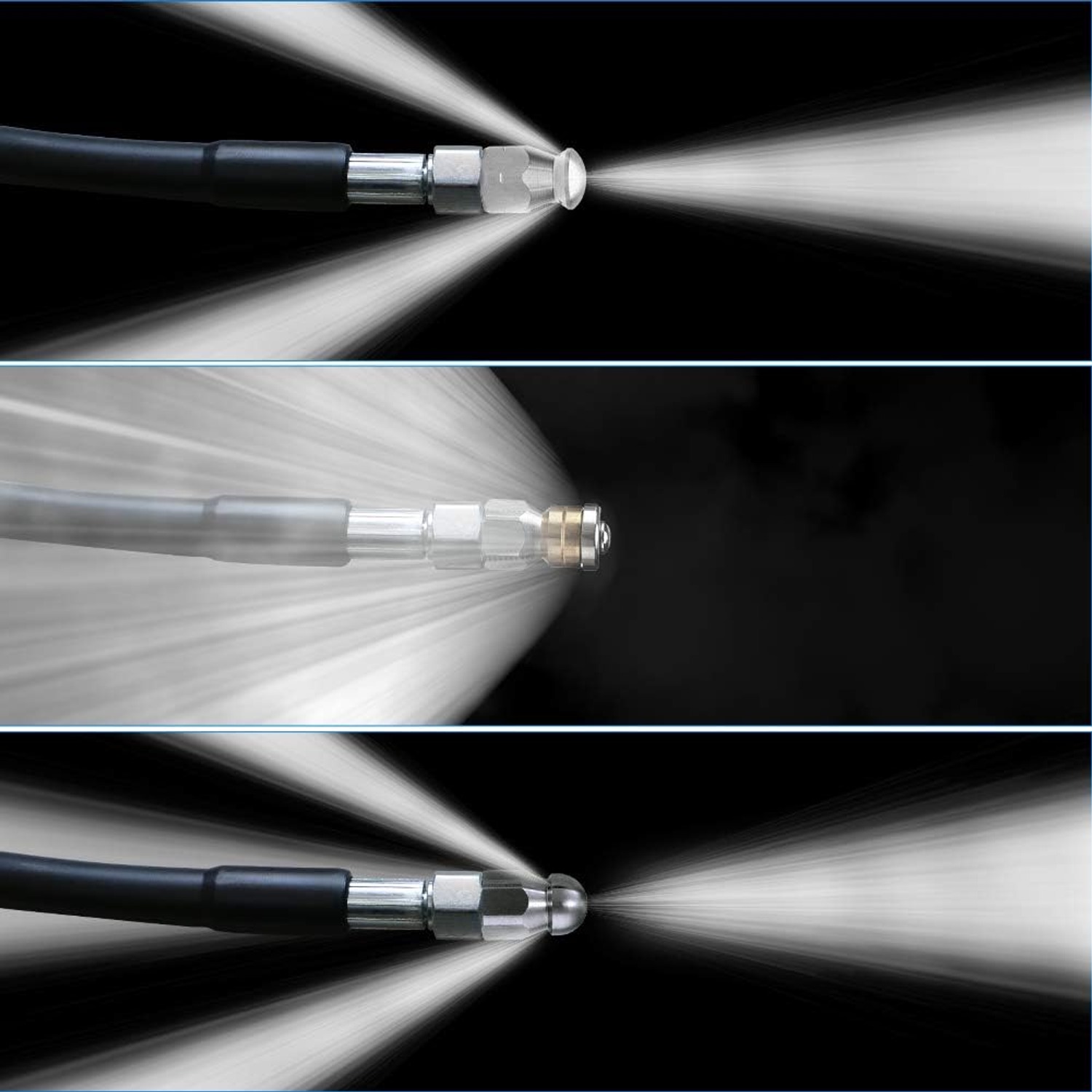
The clever part is the nozzle, not the hose. Most jetting nozzles have three or four jets pointing backwards at a shallow angle, around 33 degrees on the heads in this kit. When you pull the trigger, those backward jets do two things at once. They push the nozzle forward so the hose crawls into the pipe without you having to force it, and they blast the pipe wall behind the nozzle, lifting grease and silt and sending it back toward the access point.
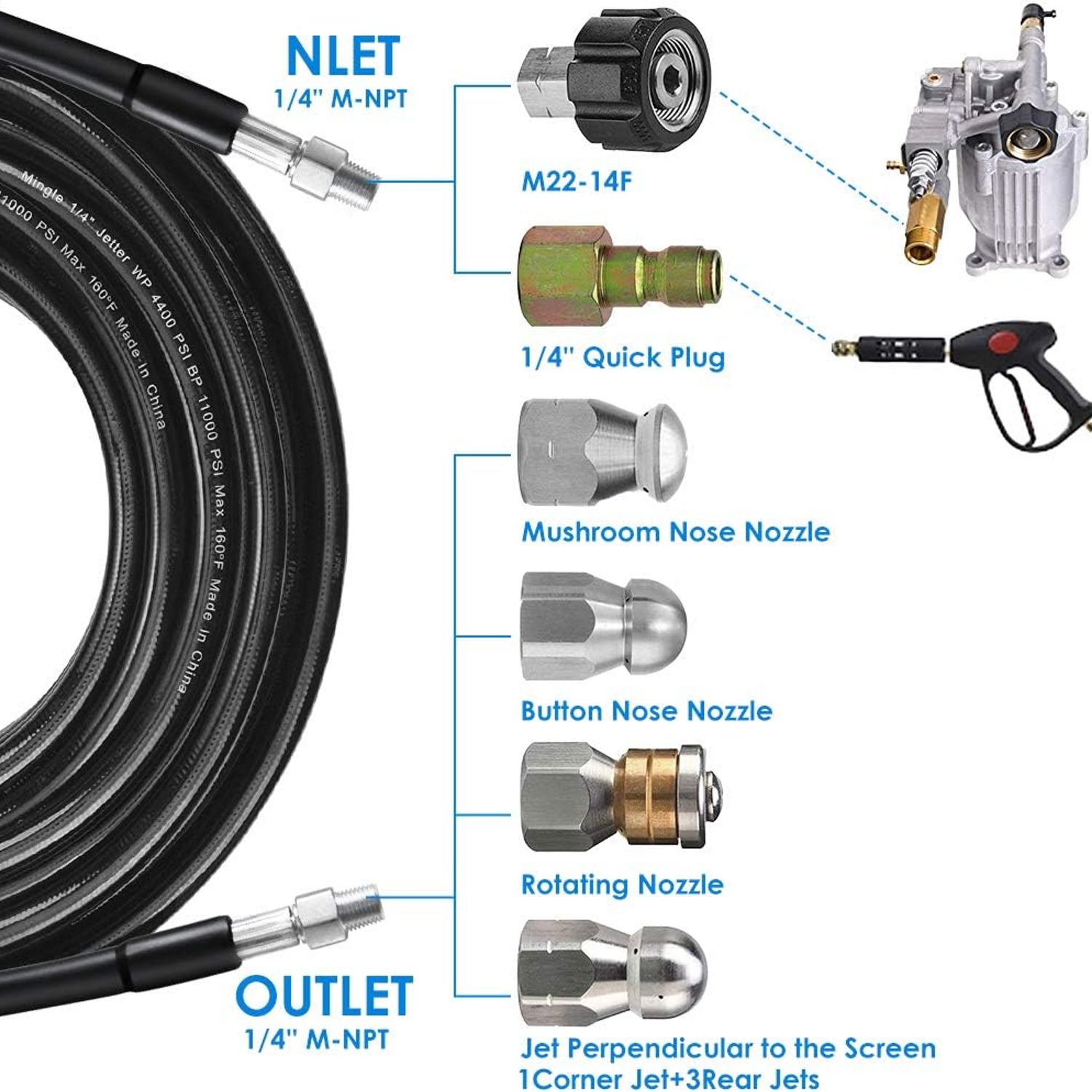
Some nozzles add a forward jet. The button nose head in this kit has one 0 degree jet straight ahead with a 4.0 orifice, which is what you want when something solid is sitting in the way. The forward jet breaks the face of the blockage while the rear jets clear the debris and keep the hose moving.
The rotating head takes a different approach. Its three backward jets spin, so instead of cutting three fixed lines along the pipe you get an even sweep around the full circumference. For a long run of pipe that has slowly furred up with soap and fat, that is the better tool.
Then there are the awkward spots. A 0.25 inch hose is flexible, but it cannot always turn into a tight branch or a sharp bend. The side hole nozzle and the corner nozzle both send water sideways for exactly that reason. You park the nozzle near the junction and let the sideways jet do the reaching.
Pressure, flow and what your washer can do
People fixate on PSI. It matters, but flow matters just as much. Pressure breaks the blockage apart. Flow carries the pieces away. A machine with a decent liters per minute figure will clear a pipe more comfortably than a high pressure machine with a thin trickle behind it.
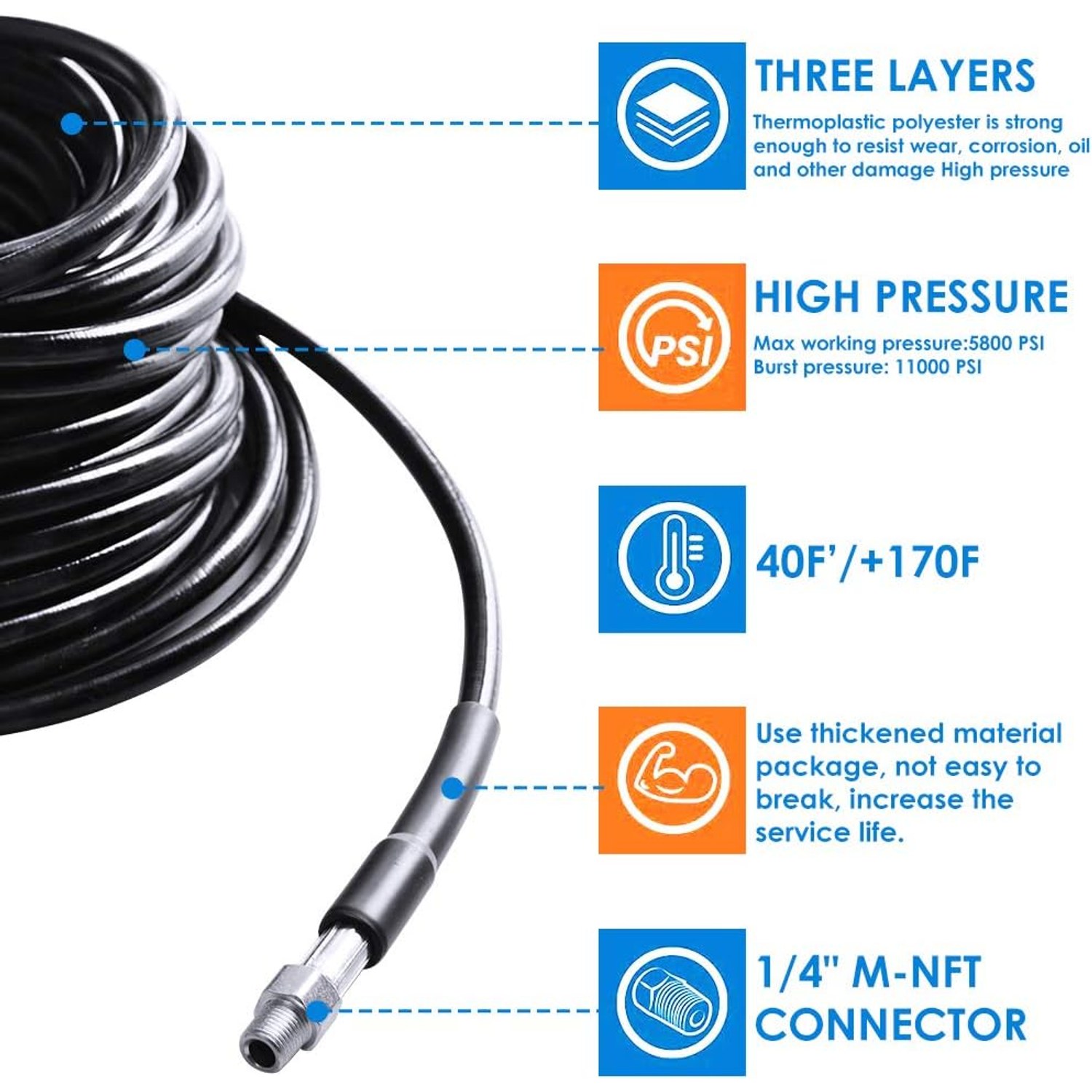
This hose is rated to a maximum of 5800 PSI, which sits above the output of almost every domestic petrol or electric washer. In practice, that means the hose is not your limiting factor. Your washer is. Work within your machine's rating, and do not assume a higher-rated hose lets you push the pump beyond what the manufacturer allows.
The construction is worth understanding too. Inside there is a chemically bonded polyester textile weave, which is the layer taking the load. Outside there is a thermoplastic polyurethane cover, chosen because it resists weather, oil, abrasion and ozone. A jetter hose spends its life being dragged across rough concrete and into pipes full of unpleasant things, so the cover is not a cosmetic detail.
Who this kit suits
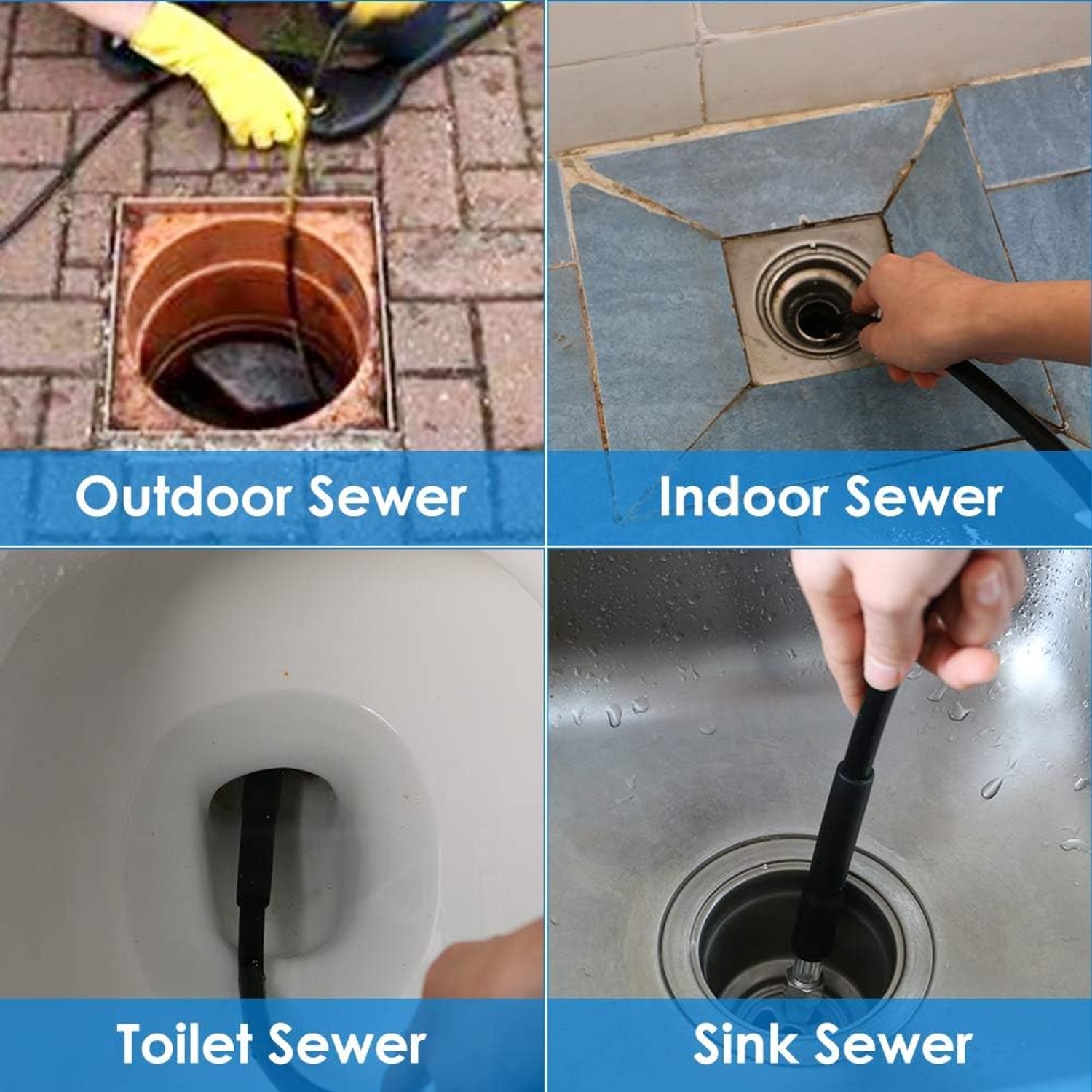
Homeowners with a pressure washer and a drain that misbehaves every winter are the obvious group. So are people on larger blocks with long driveway drains, rural properties with field drains, and anyone living in an older house with clay or cast iron pipework that collects deposits.
It also makes sense for small trades. Landscapers, cleaners, property managers and caretakers all run into blocked yard drains and downspouts, and calling a drain contractor for a thirty minute job gets expensive fast. A kit like this pays for itself quickly in that context.
Who it does not suit: anyone without a pressure washer, since the kit supplies no pressure of its own. It is also not the right answer for a collapsed pipe, a major root invasion or a main sewer line fault. If a blockage returns within days of a good clean, something structural is likely wrong and a camera inspection is the sensible next step.
Choosing the right length and fittings
A hundred feet sounds like a lot until you measure your own run. From a kitchen sink to the boundary on an average suburban house, you can easily use sixty or seventy feet. Add bends, which eat length, and the extra reach stops feeling generous and starts feeling right.
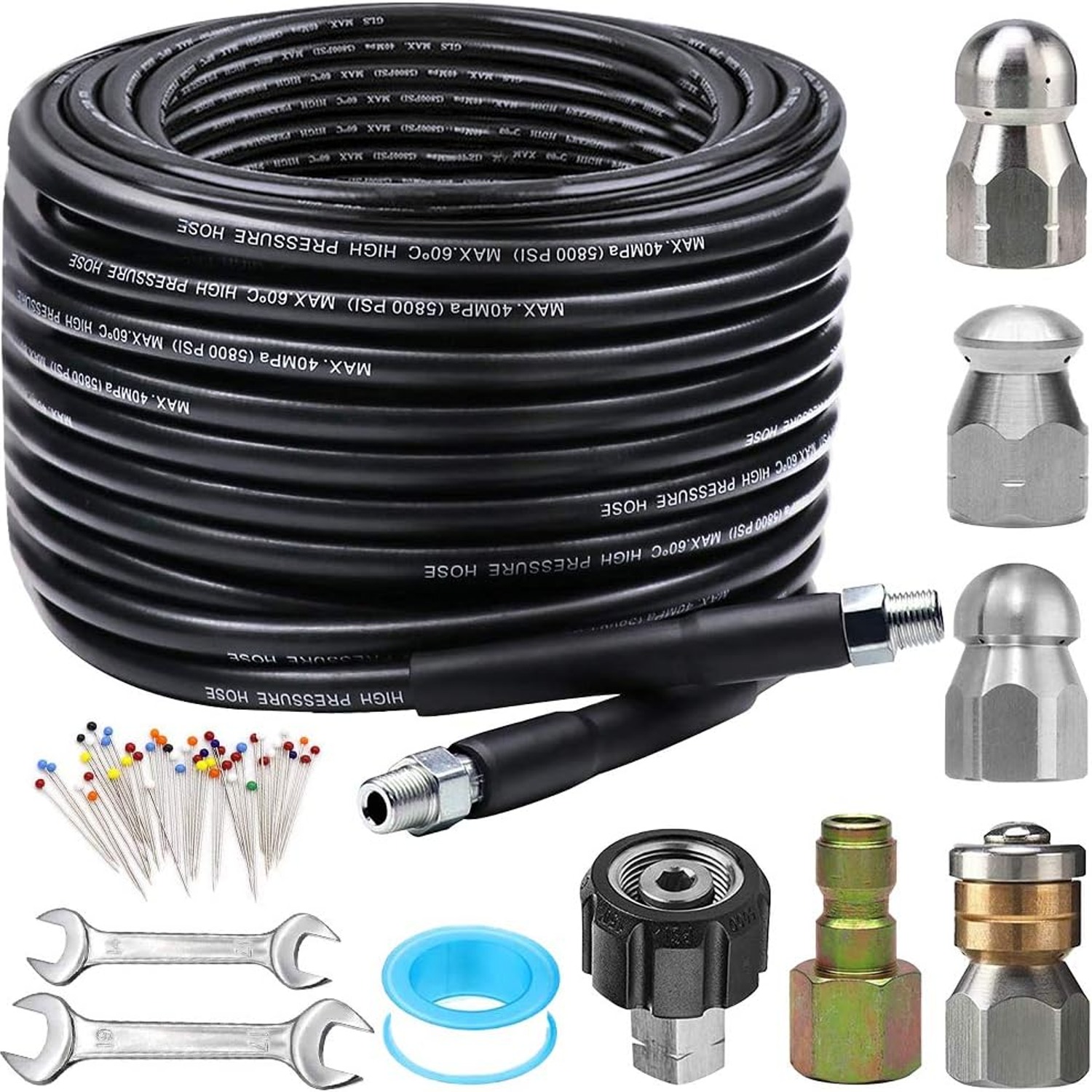
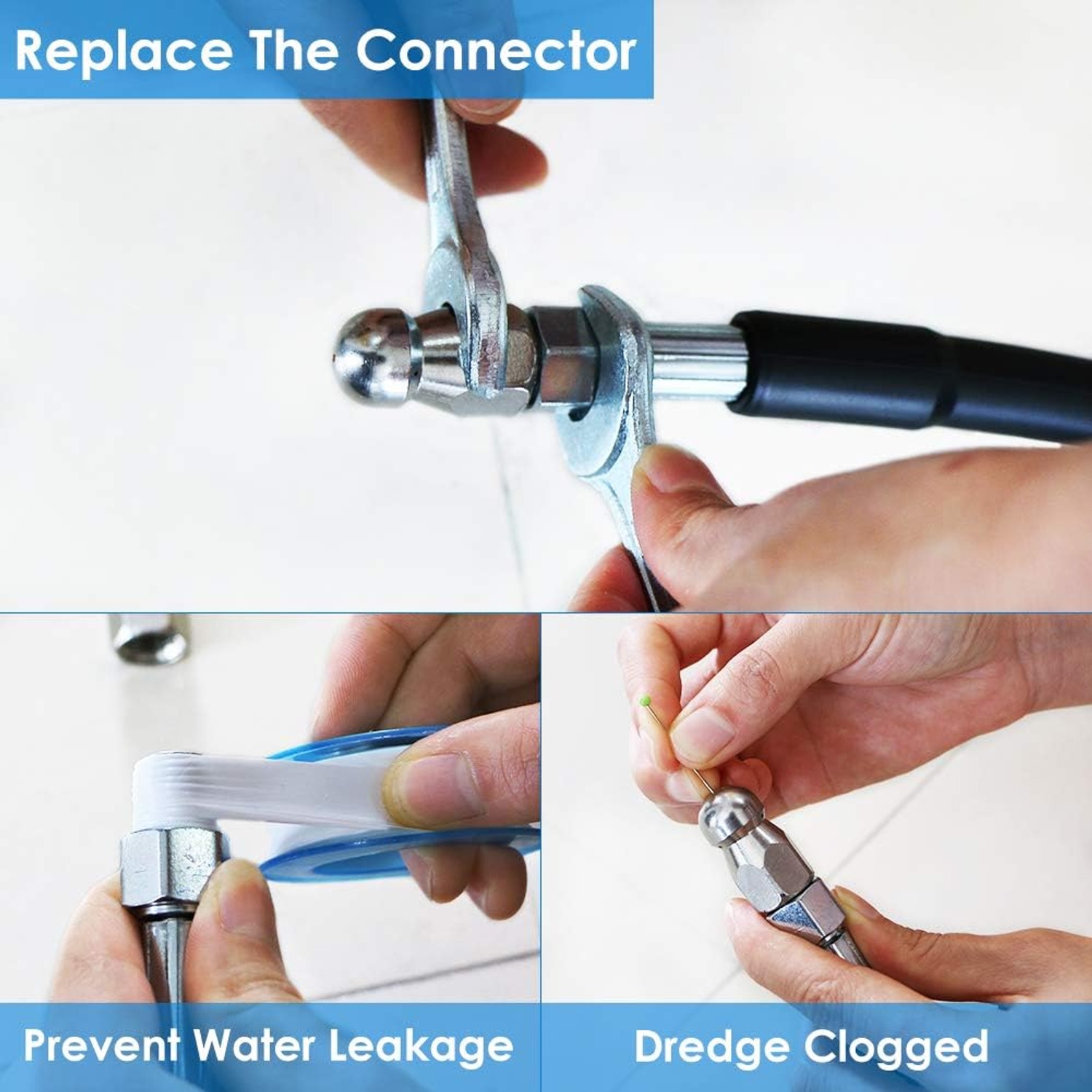
Fittings are where most first-time buyers get caught out. This kit includes an M22 female to 1/4 inch female NPT coupler and a 1/4 inch quick-connect plug, which handles the common outlet setups on consumer washers. The quick-connect part matters more than it sounds, because during a real job you will swap between the jetter and your normal lance several times. Threading a fitting on with wet, cold hands is miserable. Clicking a plug in is not.
Two wrenchs are packed in for fitting nozzles and couplers properly, and waterproof tape is there to seal threads. The box of pins is the quiet hero. A nozzle orifice is small, grit gets into it, and the jet performance drops off a cliff. A pin clears it in seconds without a trip back to the shed.
Working safely
High pressure water is genuinely dangerous. Treat the nozzle like a tool that can injure you, because it can.
Feed the nozzle at least a meter into the pipe before you open the trigger. If a jetter nozzle is running outside the pipe, the rear jets will throw the hose around hard. Likewise, shut the water off before you pull the nozzle back near the opening. Mark the hose with tape a meter from the nozzle so you have a visual warning as you retrieve it.
Wear eye protection and waterproof gloves. Stand to the side of the access point, not over it, because material comes back out with force. If you are working near an open chamber, think about your footing before you think about the drain.
Looking after the kit
Flush the hose through with clean water when you finish. Anything you leave inside will dry and set. Wipe the outside down, especially the fittings, so grit does not end up in the thread next time.
Dry it before you coil it, and coil it loosely. Tight folds and kinks are the main way these hoses die early. Store it out of direct sunlight, and if your shed freezes in winter, drain it properly first.
Check the nozzles before each job rather than during. Hold them up to the light and look at every orifice. Thirty seconds of checking saves a lot of standing around in the rain wondering why nothing is happening.
The short version
If you own a pressure washer and a drain that keeps blocking, a jetter hose is the single most useful attachment you can add. This kit gives you 100 feet of TPU covered, polyester reinforced hose rated to 5800 PSI, four nozzles that cover straight runs, soft build-up and awkward bends, quick-connect fittings, and the small tools you need to keep it all working.
It will not fix a broken pipe, and it will not replace a professional for serious root damage. For the ordinary grease, silt and leaf litter blockages that cause most household drain trouble, it does the job properly, and it keeps doing it year after year.