EzyDrains Company America
Company
Shop By Category
Guides
T&Cs
Shop Online
  • Free delivery across the United States on orders of $50 or more
  • Flat $15 delivery on orders under $50
  • No sales tax is added at the checkout
  • Delivery in 5 to 7 days, after a 24 to 48 hour handling time
  • Express delivery available at checkout for $22
  • Eco Pack packaging

Sewer Jetter Kit 50 Ft with Gun | Pressure washer drain hose | drain jetting nozzle kit

50 Ft Sewer Jetter Kit with Pressure Washer Gun and 3 Nozzles

$77.99
  • 50 Foot Reach
  • Rated To 5800 PSI
  • Three Nozzle Types
  • Fittings Included

Price: $77.99

  • Delivery time: 5 to 7 days, after a 24 to 48 hour handling time
  • Free delivery across the United States on orders of $50 or more, $15 flat on orders under $50. No sales tax at the checkout
  • Pay by card or PayPal, handled by the payment provider
  • 15 days to change your mind, our own policy, and faulty goods put right at our cost
Product specifications
Set NameSewer Jetter Kit
ColorRed - With Gun
Hose Length50 feet
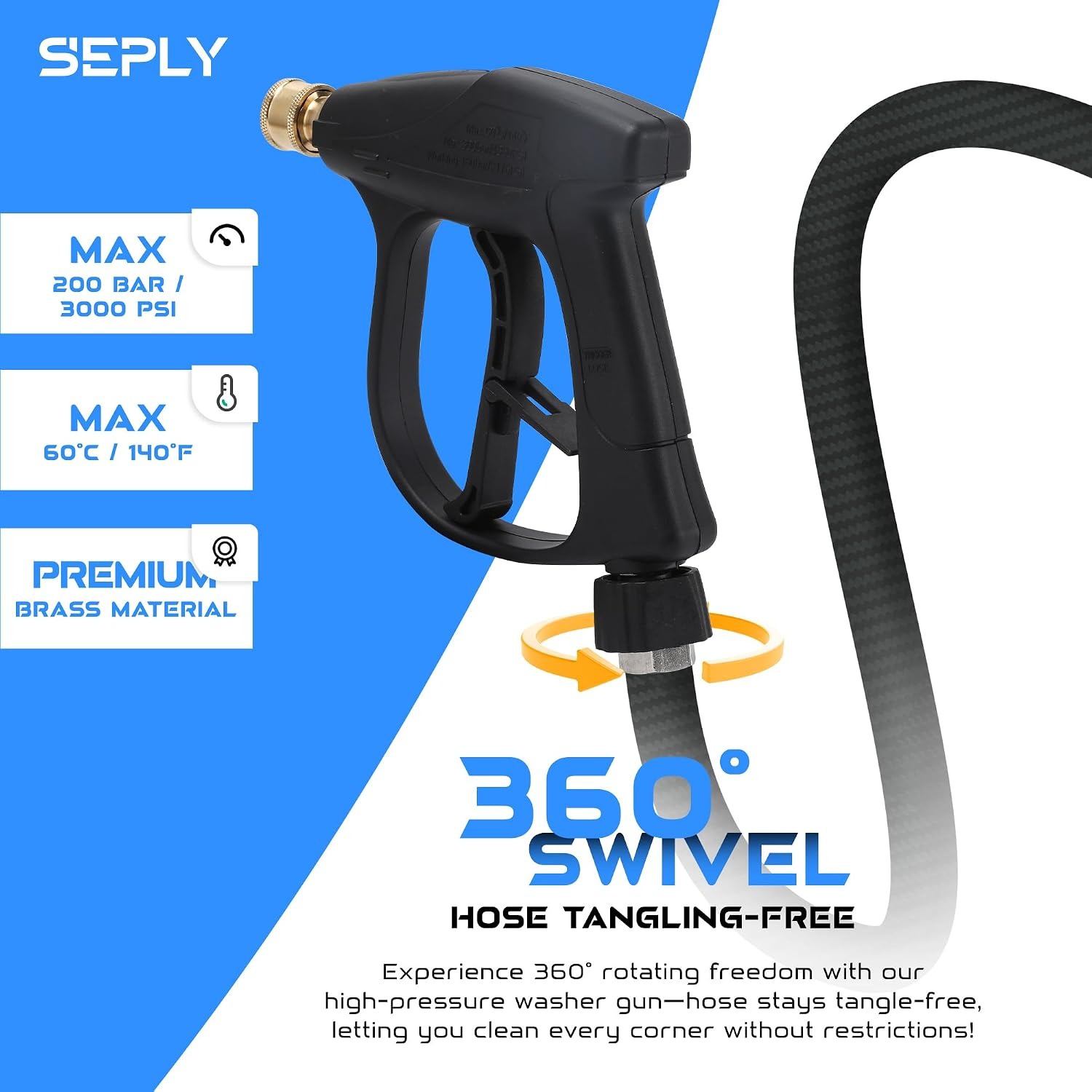
Maximum Pressure5800 psi
Outside Diameter1.5 inches
Product Dimensions28 in L x 2 in W
Item Weight2.12 kg
Number Of Packs1
Unit Count1
Weight2.12 kg
Shipping & returns

Tracked delivery to United States addresses. Standard delivery is free on orders of $50 or more and a flat $15 on orders under $50. Express Delivery is a paid upgrade at $22 on any order. Allow 5 to 7 days, after a 24 to 48 hour handling time. No sales tax is added at the checkout.

You have 15 days from delivery to change your mind on an unused item in its original packaging, with proof of purchase. That is this shop's own policy: there is no federal cooling-off period on an online purchase in the United States. You pay return shipping and a non-refundable $29 per order handling charge, and refunds are processed 24 to 48 hours after we receive the item.

If it arrives faulty, damaged, incomplete or not as described we put it right at no cost to you, return shipping included, and the 15 day window and its handling charge do not apply. Nothing on this page limits the implied warranty of merchantability or any right your state's consumer protection law gives you.

Shipping details · Refunds and returns

50 Foot ReachEnough hose to travel a long run of pipe from one access point.
Rated To 5800 PSIMatches the output of most domestic and prosumer pressure washers.
Three Nozzle TypesButton nose, rotating and corner heads for different blockages.
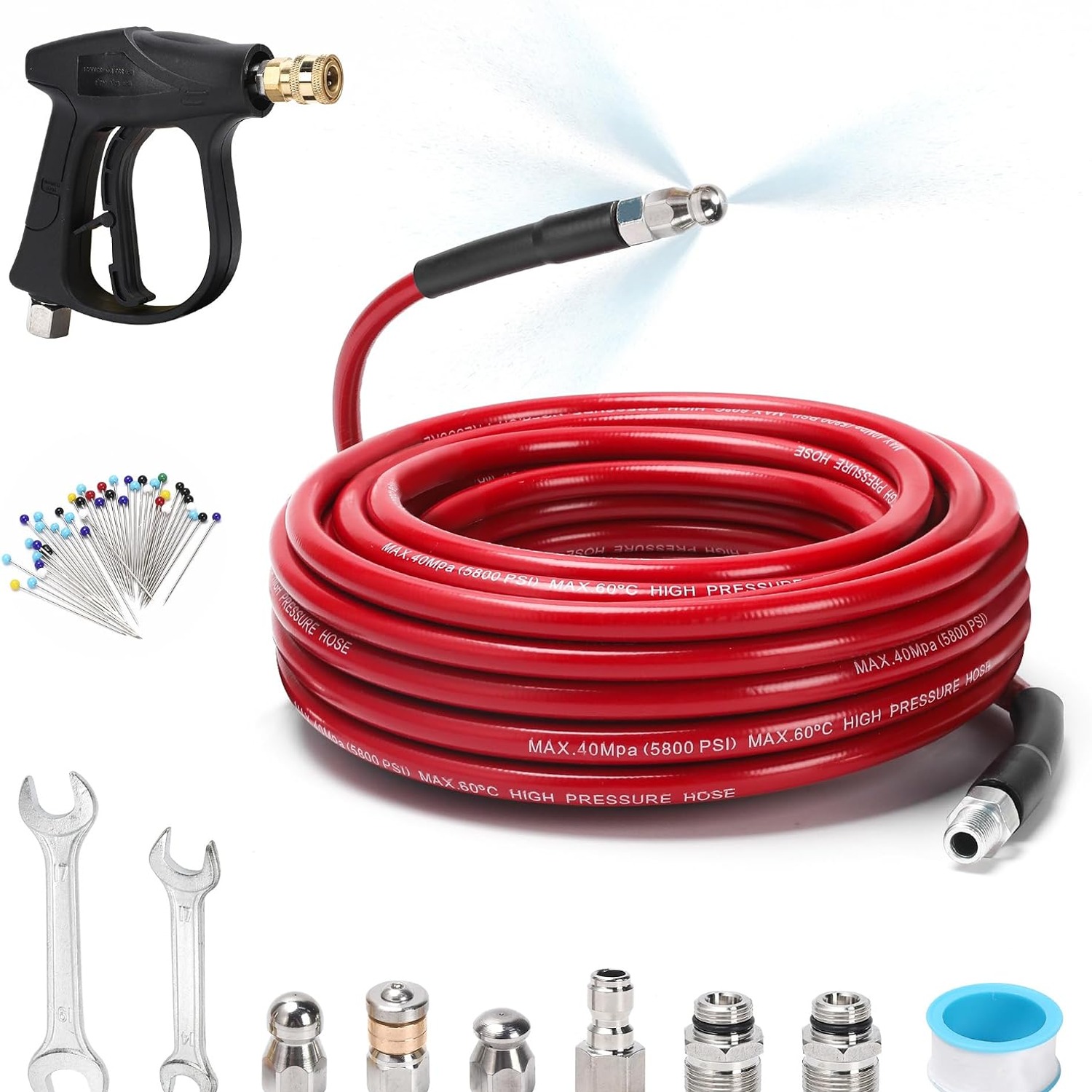
Fittings IncludedTwo M22 adapters, a quick connect plug, wrenchs, tape and a pin box.

Clear a blocked line yourself with a sewer jetter kit 50 ft with gun that turns your pressure washer into a proper drain machine.

A 50 foot jet hose rated to 5800 psi, three task-specific nozzles, a trigger gun, two adapters, a quick connect plug, wrenchs, waterproof tape and a pin box for clearing nozzle jets.

Turns the pressure washer you already own into a drain jetting machine without hiring a plumber for routine blockages.

The 50 foot hose is flexible enough to follow bends and long runs, so you can work from a single clean-out point.

Three nozzles cover the common jobs, from blasting a solid plug to scouring grease off the full pipe wall.

Quick connect fittings and two M22 adapters mean it bolts onto most common washer guns and lances.

Spanners, waterproof tape and a pin box for clearing the jets are packed in, so the kit is ready to use on arrival.

50 Ft Sewer Jetter Kit with Pressure Washer Gun and 3 Nozzles

A blocked drain is one of those jobs that always lands at the worst moment. The sink backs up on a Sunday, the outside yard drain starts to smell, or the laundry waste gurgles every time the machine empties. Calling someone out is fine for a collapsed pipe, but a lot of blockages are just grease, soap scum, hair, silt or root hair that has slowly narrowed the bore. That is exactly what a water jetter is built for, and this kit gives you the hose, the gun and the heads to do it with a pressure washer you probably already own.

50 Ft Sewer Jetter Kit with Pressure Washer Gun and 3 Nozzles

The heart of the kit is a 50 foot jet hose rated to 5800 psi with a 1.5 inch outside diameter. Fifty feet is a useful working length for a house. It will usually reach from a clean-out or an open yard drain through the first couple of bends and well down the main run. The hose is flexible enough to feed around elbows rather than fighting you at every turn, and because the thrust from the rear-facing jets pulls the head forward, the hose tends to feed itself once it is moving.

50 Ft Sewer Jetter Kit with Pressure Washer Gun and 3 Nozzles

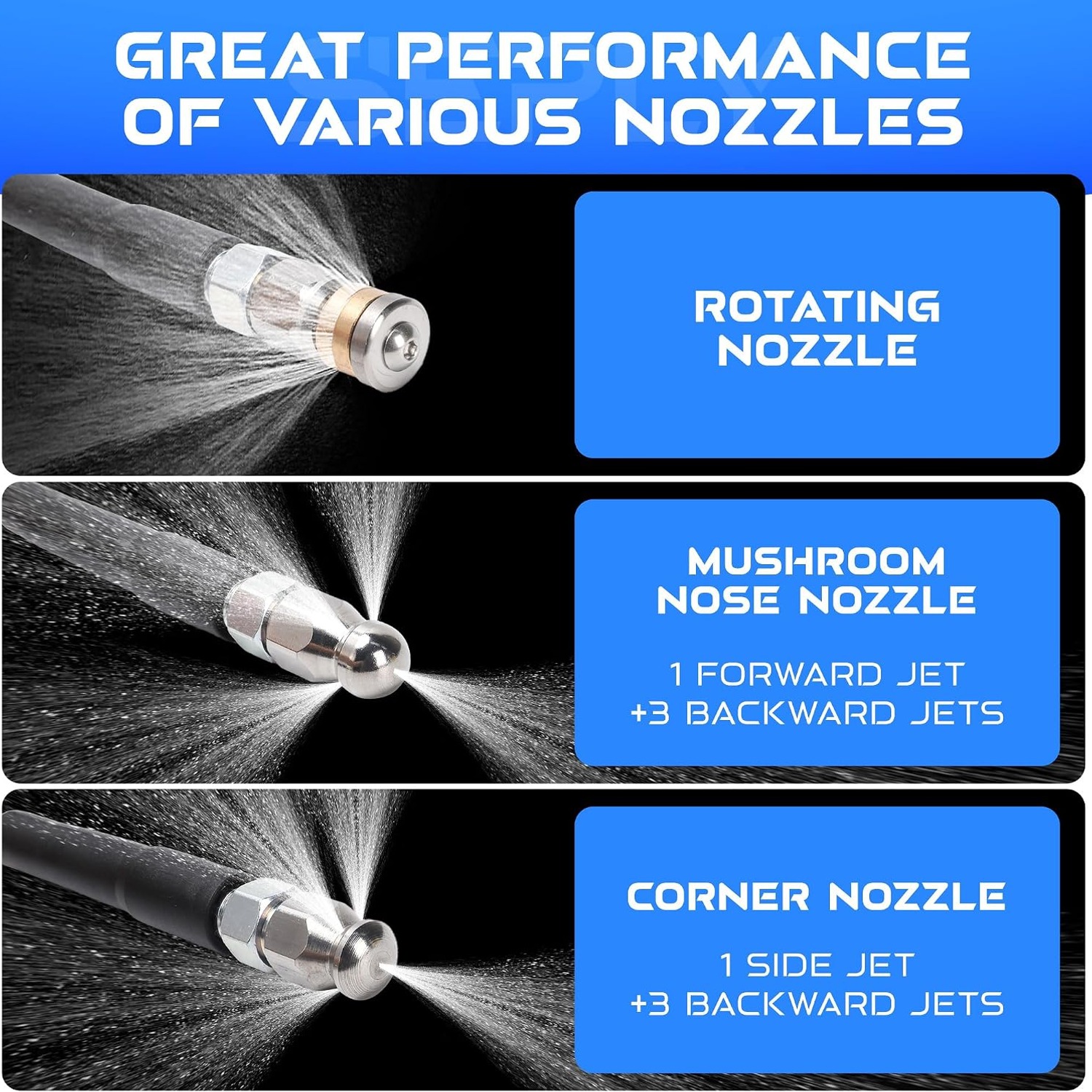
Three nozzles are supplied, and each one has a job. The button nose head concentrates a forward jet for punching through a solid plug of debris. The rotating nozzle spins the stream so it scours the full circumference of the pipe wall, which is the one you want for greasy kitchen lines and general build-up. The corner nozzle helps you get a head around an awkward bend where a straight head keeps stalling. Between them you can both open a blockage and then clean the pipe properly on the way back out.

50 Ft Sewer Jetter Kit with Pressure Washer Gun and 3 Nozzles

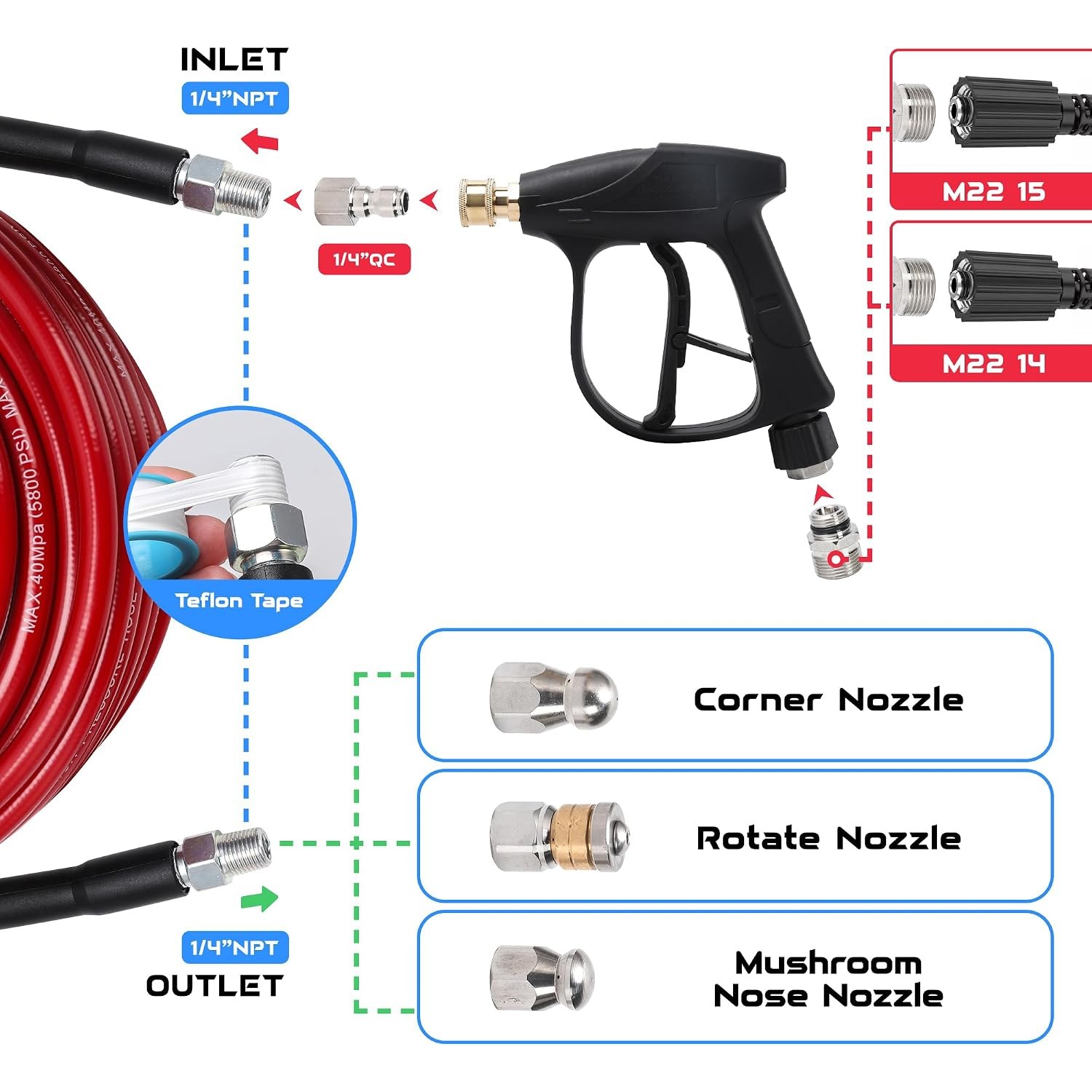
Fitting it up is straightforward. The kit includes a pressure washer trigger gun, two adapters (one M22 to 15 mm male and one M22 to 14 mm male), a quarter inch quick connect plug, two wrenchs, a roll of waterproof thread tape and a small pin box for poking out a clogged jet orifice. Those small parts matter more than they sound. A kit without the right adapter or without a pin to clear the nozzle is a kit that sits in the shed, and this one is packed to go straight to work.

50 Ft Sewer Jetter Kit with Pressure Washer Gun and 3 Nozzles

The build is aimed at the environments drains actually live in, which means grease, grit, mud and standing water. Rinse the hose and heads through with clean water when you finish, check the jets with the pin, and coil the hose loosely for storage. Done that way, a jetter kit becomes a maintenance tool rather than an emergency one. A yearly run through the kitchen drain and the outside lines keeps the small blockages from ever becoming the Sunday night kind.

Not sure yet? That is fine.

You can change your mind. You have 15 days from delivery on any unused item in its original packaging. That is this shop's own policy and not a statutory right, because there is no federal cooling-off period on an online purchase in the United States. You pay the cost of sending the goods back, and a non-refundable $29 per order handling charge applies.

If it turns up faulty, damaged, incomplete or not as described, that is on us: we repair it, replace it or refund it and we pay return shipping. The 15 day change of mind charges do not apply to a faulty item, and nothing here limits the implied warranty of merchantability or your state's consumer protection law.

Frequently Asked Questions

What exactly is a sewer jetter kit?

It is a long, flexible high pressure hose with a special nozzle on the end that connects to a pressure washer. Water sprays backwards out of the nozzle, which drives the hose forward down the pipe while scouring the walls. It clears blockages with water instead of a mechanical cable.

What comes in the box?

You get one 50 ft sewer jet hose, one pressure washer gun, a button nose nozzle, a rotating nozzle, a corner nozzle, two adapters (M22 to 15 mm male and M22 to 14 mm male), a quarter inch quick connect plug, two wrenchs, a waterproof tape roll and a corsage pin box for clearing the jets.

How long is the hose?

The hose is 50 feet long, which is roughly 15 meters. That is usually enough to reach from an outdoor clean-out through the first bends and well down a domestic main run. It is one of the more practical lengths for a house or small commercial site.

What pressure is the hose rated to?

The maker states a maximum pressure of 5800 psi. That is a ceiling, not a requirement, so it comfortably suits domestic and prosumer pressure washers that produce far less. Never run a machine above the hose rating.

Do I need my own pressure washer?

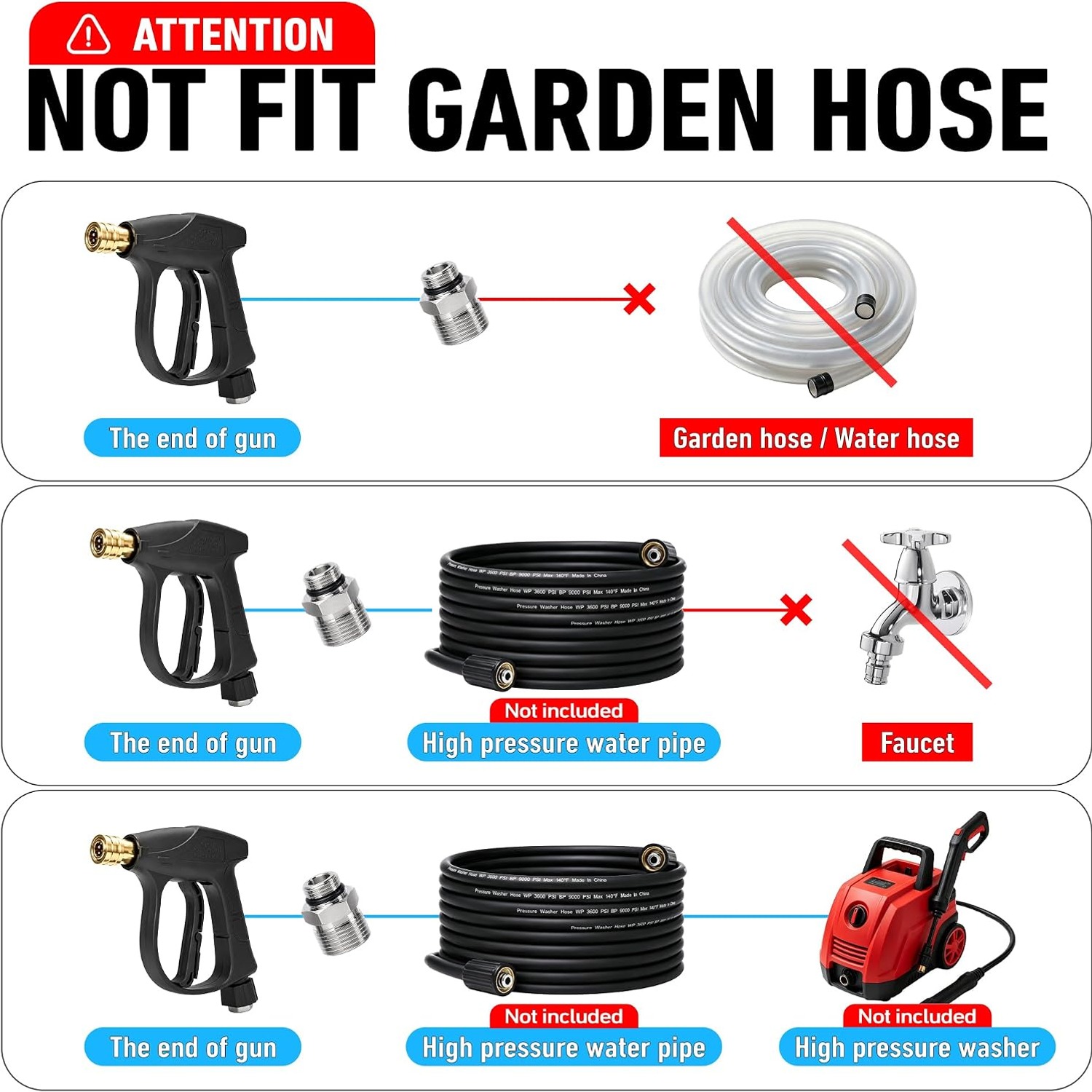
Yes. This is a jetting kit, not a complete machine, so it relies on the pump and motor of a pressure washer you supply. Any washer with a compatible M22 or quick connect outlet and reasonable flow will drive it.

Will it fit my pressure washer?

Two adapters are supplied, M22 to 15 mm male and M22 to 14 mm male, plus a quarter inch quick connect plug. Between those fittings it matches most common domestic washers. Check the thread size on your machine's outlet or lance before ordering if you are unsure.

What is the difference between the three nozzles?

The button nose puts most of the water into a forward jet, which is what you want for punching through a solid plug. The rotating nozzle spins the spray for a full 360 degree scour of the pipe wall. The corner nozzle is shaped to help the head turn through tight bends.

Which nozzle should I start with?

For a complete blockage, start with the button nose to open a path. Once water is moving again, swap to the rotating head and work the line a second time to clean the walls properly. That second pass is what stops the blockage returning quickly.

How does the hose move down the pipe by itself?

Most of the jets point backwards at an angle. The reaction from that backward spray pushes the nozzle forward, and it drags the hose behind it. You feed slack in by hand and let the thrust do the traveling.

What kind of blockages will it handle?

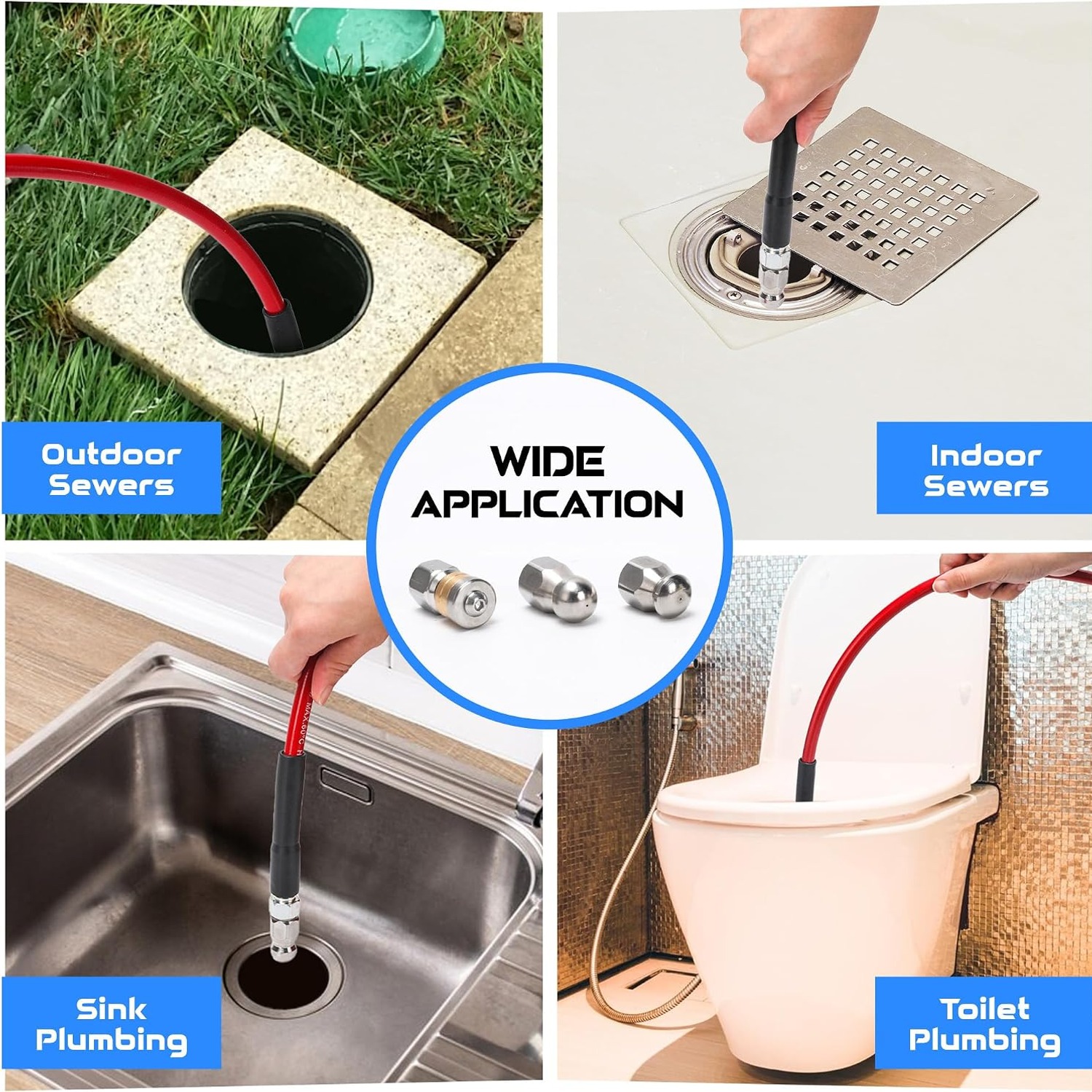
Grease, soap scum, hair, food waste, silt, sand and general build-up all respond well to water jetting. It is a good choice for a kitchen drain jetter job or a silted outdoor line. A collapsed, crushed or badly root-bound pipe needs a camera survey and a plumber.

Can it cut tree roots?

Fine root hair and small growth can be cut back by a high pressure rotating jet, but heavy root masses usually need a mechanical cutter. If roots keep returning, the pipe likely has a joint fault that water alone will not fix.

Is it safe for PVC pipe?

Sound modern PVC handles jetting well, which is why professionals use water on it every day. The risk comes from old, cracked or poorly joined pipe. Start at lower pressure, keep the head moving, and stop if you hear or see anything unusual.

What about cast iron or clay pipes?

Cast iron and clay are commonly jetted too, and the water actually suits them because it washes scale and grit away rather than scratching the bore. Older clay sections with failed joints are the weak point. If the pipe is known to be fragile, get it inspected first.

Can I use it on a toilet?

It is designed for drain and sewer lines accessed through a clean-out or yard drain, not for feeding down a pan. Trying to push the head through a toilet trap risks damage to the ceramic and makes a mess. Use the proper access point instead.

Will it work on a kitchen sink drain?

Yes, from an accessible point in the line. Kitchen waste is one of the most common jetting jobs because of the grease load, and the rotating head is very effective on it. Remove the trap or use a clean-out rather than forcing the head through a sink strainer.

Can I use hot water?

Only if your pressure washer is rated for hot water and you stay within its temperature limit. Hot water helps a great deal on grease. Cold water still works well, it just takes a few more passes.

How do I start the hose into the drain?

Feed several feet of hose into the pipe before you pull the trigger, so the nozzle cannot whip back out. Many people mark the hose with tape a short distance from the nozzle as a reminder. Always release the trigger before pulling the head back near the opening.

Why did the hose stop feeding forward?

Usually it has reached a tight bend, a change of direction or a solid obstruction. Pull back a meter and feed it in again with a gentle pumping action. If it keeps stalling at the same point, switch to the corner nozzle.

What do I do if a nozzle gets blocked?

That is what the pin box is for. Shut the machine down, release the pressure, then clear the jet orifices with the pin and flush clean water through. Blocked jets are usually grit from the drain and are a normal part of the job.

Does it need any safety gear?

Wear eye protection, gloves and boots, and keep your face away from the drain opening when the gun is live. Drain water carries bacteria, so wash the dishes well afterwards. Never point the gun at anyone or test a nozzle in open air near people.

How much pressure do I actually need?

Flow matters as much as pressure for jetting. A domestic washer in the 1800 to 3000 psi range with decent liters per minute will clear most household blockages. The hose rating of 5800 psi simply means it is not the limiting part.

What is the hose outside diameter?

The listed outside diameter is 1.5 inches. That measurement comes from the maker's details. The hose is flexible enough to follow standard domestic bends.

How heavy is the kit?

Listed item weight is 2.12 kg for the complete set. That makes it easy to carry to a drain and to store on a shelf or hook. Listed product dimensions are 28 inches long by 2 inches wide for the packed kit.

What is the kit made of?

The material is not specified by the maker, so we will not guess at it. The maker describes the kit as built for wet, greasy and muddy conditions. If a specific material spec matters for your job, contact us before ordering.

How do I look after the hose?

Flush it through with clean water after each job, let it dry, then coil it loosely for storage. Keep it out of prolonged sun and away from sharp edges, oils and solvents. Check the fittings for wear and re-tape threads if a joint weeps.

How often should I jet my drains?

Once a year is a sensible rhythm for a busy household, and twice a year if you have a greasy kitchen line or heavy leaf fall into outside yard drains. Routine jetting is far easier than emergency jetting. That is the real argument for owning a blocked drain clearing kit rather than hiring one.

Is this suitable for a beginner?

Yes, with a little care. The fittings are simple, the gun is a standard trigger design, and the main skill is feeding the hose patiently rather than forcing it. Read your pressure washer manual first and start on an easy outdoor line.

Can a business use it?

It suits property maintenance, small cafes, landlords and caretakers doing routine line cleaning. For all-day commercial jetting on large diameter mains, a dedicated trailer jetter is the right tool. This is a maintenance kit, not a contractor rig.

Does it make a good gift?

It goes down well with anyone who owns a pressure washer and a house with older plumbing. It is practical rather than decorative, so it suits the person who likes fixing things themselves. Pack it with a pair of gloves and eye protection for a complete present.

What if it is not right for my setup?

Get in touch with our team and we will sort it out. If the kit does not fit your washer or does not suit the job, we will talk you through the options and arrange a return within the return window, provided the item is unused and in its original packaging. Tell us your washer model and drain size and we will help you choose next time.

How to Choose and Use a 50 Ft Sewer Jetter Kit

6 min read EzyDrains Company

The problem with a slow drain

A drain rarely blocks overnight. It narrows. Grease cools and sticks to the pipe wall, soap scum grabs hair, silt settles in the low spots, and the bore gets smaller month by month. You notice a gurgle, then a slow sink, then one day the water simply sits there.

At that point most people reach for a chemical. Chemicals can burn a hole through a soft plug, but they do nothing about the hard ring of build-up lining the pipe, and the blockage returns. A drain rod or a hand snake punches a path through, which is better, but again the pipe wall stays coated.

Water jetting is the method that actually cleans the pipe. A nozzle with rear-facing jets travels down the line, scours the walls, and flushes the debris back toward the chamber. That is why plumbers use it, and with a kit like this one you can do the routine version of the same job with the pressure washer in your garage.

How a jetter actually works

The idea is simple once you see it. The hose carries high pressure water to a small nozzle. Most of the holes in that nozzle point backwards at an angle. When you squeeze the trigger, water sprays rearward, and the reaction from that spray pushes the nozzle forward. It pulls the hose along behind it and cuts into whatever is in the way.

A forward hole, where one is installed, does the drilling. The backward jets do two jobs at once. They provide the thrust, and they blast the pipe wall clean as the head travels. On the way back out, the same jets push all that loosened material toward the access point so it leaves the system.

This kit covers both halves of that job with its three heads. The button nose concentrates the water for breaking through a plug. The rotating nozzle spins so the spray sweeps the full circle of the pipe, which is the most effective choice for grease. The corner nozzle is shaped to negotiate a tight change of direction where a straight head keeps nosing into the pipe wall and stalling.

What you need to run it

You supply the pressure washer. The kit supplies everything between the washer and the blockage: the gun, the 50 foot hose, the heads and the fittings.

Connection is the first thing to check. Two adapters are included, M22 to 15 mm male and M22 to 14 mm male, along with a quarter inch quick connect plug. Those three fittings cover the great majority of domestic machines. Look at your washer outlet or the base of your lance, note the thread, and match it up before the water goes on.

Pressure is the second thing. The hose carries a maximum rating of 5800 psi, which is well above what a household washer produces. That headroom is good news, because it means the hose is not the weak link in the chain. In practice, flow rate matters just as much as pressure for jetting. A machine with a healthy liters-per-minute figure will carry debris out of the pipe better than a high pressure, low flow unit.

Who it suits

This is a tool for homeowners, landlords, caretakers and small site maintenance people. If you own the property and deal with the same stubborn kitchen line or the same silted yard yard drain every year, owning a drain cleaning hose for a pressure washer pays for itself quickly.

It also suits anyone with a long outdoor run. Driveway drains, garage floor traps, stable yards and allotment lines all fill with grit and leaf litter, and they are easy jetting jobs because access is usually open and the pipe is straight.

Where it is not the answer is structural failure. If a pipe has collapsed, been crushed by a vehicle, or is packed solid with mature roots, no amount of water will put that right. The tell is a blockage that returns within weeks at exactly the same spot. That calls for a camera survey, not another pass with the hose.

Choosing the right length

Fifty feet is a sweet spot for domestic work. Shorter hoses run out before you reach the interesting part of the line. Much longer hoses lose pressure to friction, get heavy to handle, and are awkward to coil and store.

Think about where your access points are. Most houses have a clean-out or an inspection chamber, and the distance from there to the next chamber is usually well inside 50 feet. If you can work from both ends of a run, you effectively double your reach. That is the normal way to clean a long line anyway, because you always want the debris to have somewhere to go.

Working safely and getting good results

Put the eye protection on first. Drain water is dirty, it comes back out under pressure, and a nozzle running in open air is genuinely dangerous. Gloves and boots are sensible too.

Feed several feet of hose into the pipe before you touch the trigger. If the nozzle is near the opening when the water hits full pressure, it can whip back out. A lot of people wrap a piece of tape around the hose a couple of feet behind the nozzle as a visual reminder of where the danger zone starts. Release the trigger before you pull the head back past that mark.

Work in stages. Feed in a few feet, let the head cut, feed in a few more. If it stops moving, draw back a meter and push again with a gentle pumping rhythm. That little back-and-forth is usually enough to get a head past a bend. If it refuses at the same point every time, change to the corner nozzle.

When the line is running, do not pack up. Feed the rotating head all the way back down and draw it out slowly. That return pass is where most of the real cleaning happens, and it is the difference between a drain that stays clear for a year and one that blocks again in a month.

Looking after the kit

Grit is the enemy of a jetting nozzle. The orifices are small, and a single piece of sand will spoil the spray pattern. After every job, shut the machine down, release pressure, and run clean water through the hose and head. Check each jet with the supplied pin and poke out anything lodged inside.

Let the hose dry before you coil it. Coil it loosely rather than in tight loops, hang it if you can, and keep it out of permanent sunlight. Store the nozzles and adapters together in a bag or box so you are not hunting for the right fitting the next time the sink backs up.

Keep an eye on the joints. Threaded fittings in a wet, gritty environment eventually weep. The waterproof tape included in the kit is there for exactly that, so re-wrap a thread the moment you see a drip rather than waiting.

The short version

If you already own a pressure washer, this kit converts it into a tool that clears and cleans drains instead of just rinsing patios. You get 50 feet of hose rated to 5800 psi, a trigger gun, three nozzles for three different situations, two M22 adapters, a quick connect plug, wrenchs, tape and a pin box for the jets.

Use the button nose to open a blockage, the rotating head to scour the pipe clean, and the corner head when a bend fights you. Flush and dry everything afterwards, run the lines once or twice a year as maintenance, and most household drain problems stop happening at all. For the ones that do not stop, you will at least know quickly that the pipe itself needs attention.

Browse the shop

Not sure it fits your washer?

Send us your pressure washer model and the size of the drain you need to clear, and we will tell you whether this kit is the right match.

Ask us a question

Page summary

The Sewer Jetter Kit is a 50 foot drain jetting set that connects to a pressure washer. The jet hose is rated to a maximum 5800 psi and has a 1.5 inch outside diameter. The kit includes a pressure washer gun, three nozzles (button nose, rotating and corner), two adapters (M22 to 15 mm male and M22 to 14 mm male), a quarter inch quick connect plug, two wrenchs, waterproof tape and a pin box for clearing nozzle jets. Listed item weight is 2.12 kg and listed product dimensions are 28 inches long by 2 inches wide. Color is described as Red with Gun. Material, country of origin and warranty are not specified by the maker.