
The complete guide
How to Choose a Sink Strainer and Stopper Basket
The small part that saves a big plumbing bill
Nobody thinks about the basket in their kitchen drain until the water stops going down. Then you are standing there with a full sink of greasy dishwashing water, poking at the drain opening with a fork and wondering how long it has been like this.
Most kitchen blockages are not dramatic. They are the slow kind, built from months of small things. Rice grains. Bits of onion skin. Coffee grounds. A smear of fat that cooled and set in the pipe, then caught everything that came after it. Each one is tiny. Together they narrow the pipe until the water has nowhere to go.
A basket strainer stops that at the source. It sits in the drain opening, holds back anything solid, and lets water through. You lift it out, tip it in the trash, rinse, and drop it back. That is the whole system. It costs about the price of a takeaway coffee round and it does more for your plumbing than any bottle of drain cleaner.
How a strainer and stopper combo works
The version here does two jobs with one part, which is why it gets called a combo.
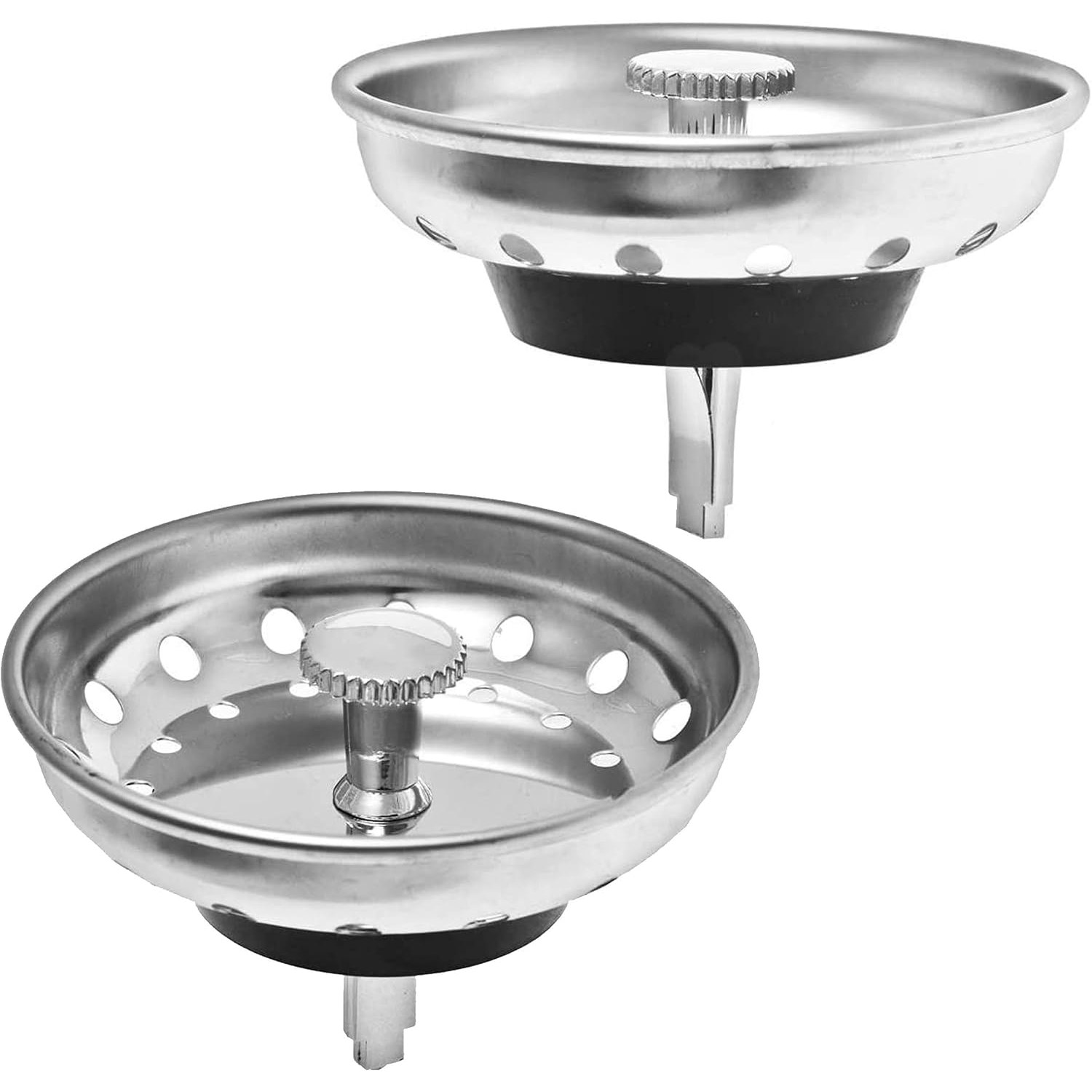
As a strainer, it is a stainless steel cup with 32 holes punched around it. Water passes through the holes. Scraps stay in the cup. The hole count matters more than it sounds. Too few holes and the water pools around the rim while the cup fills. Thirty-two spreads the flow out so the sink keeps clearing even when the basket is half full.
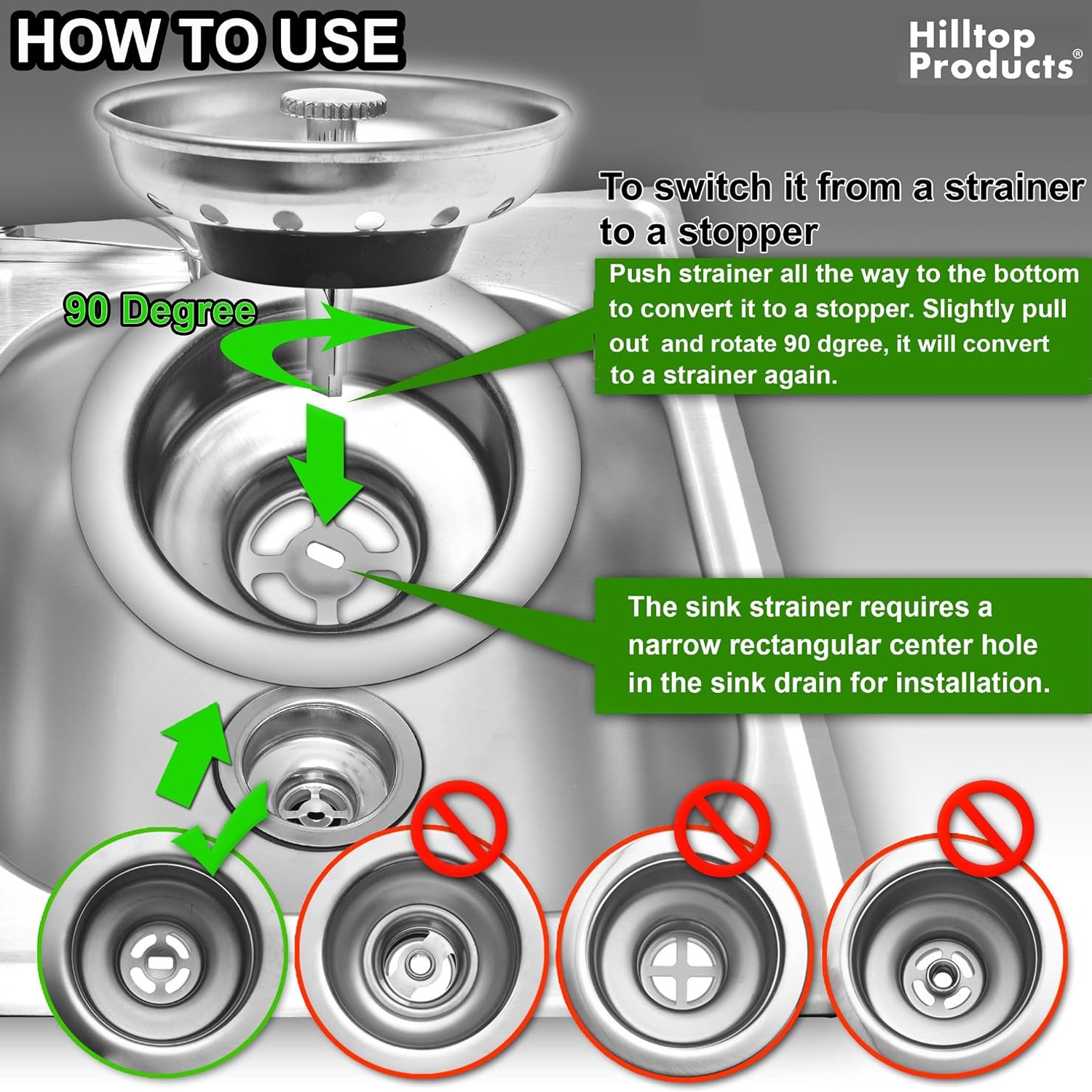
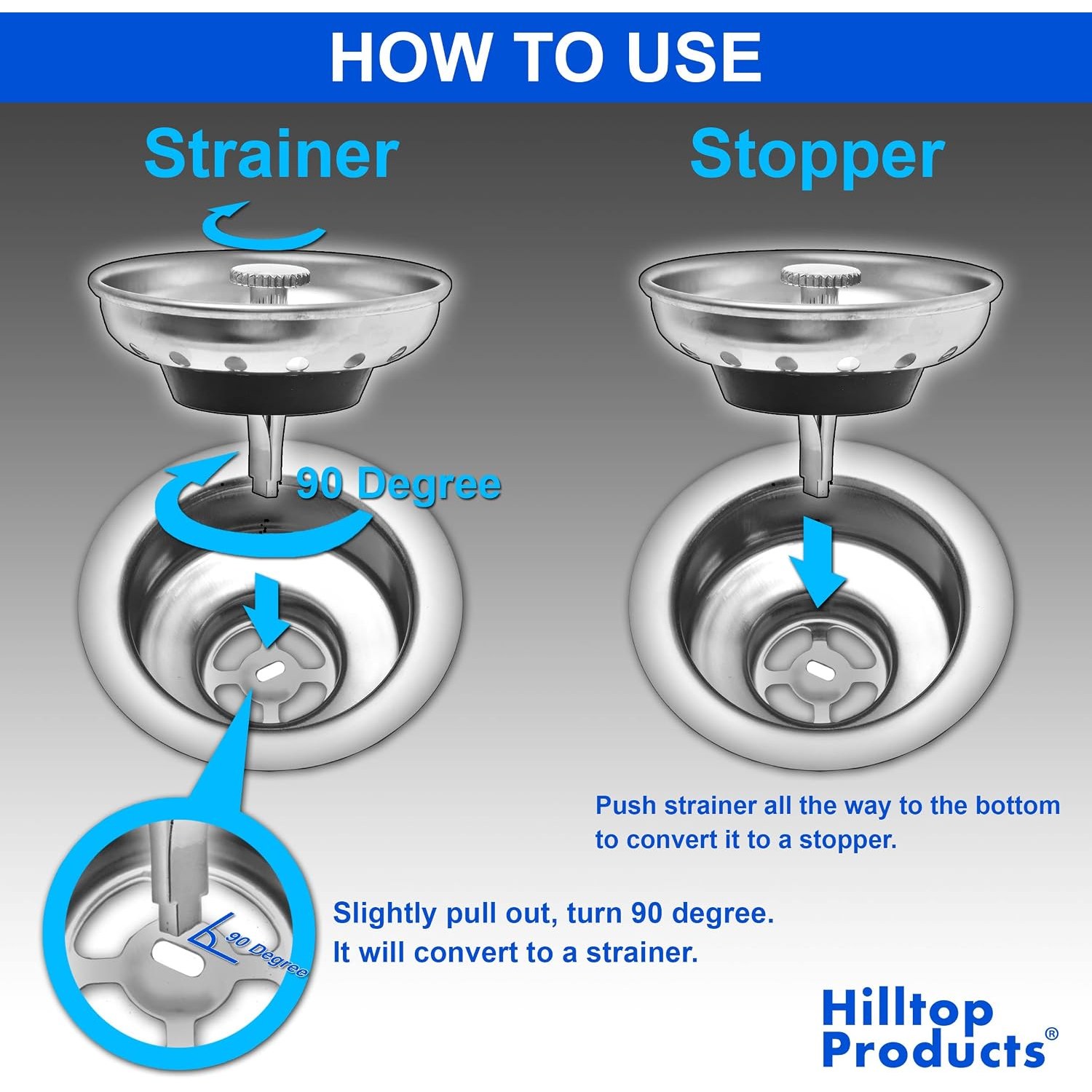
As a stopper, it uses a post-style mechanism. There is a fixed center post running up through the basket with a plastic knob on top. Push the knob down and the stopper seats against the drain, sealing the bowl so you can fill it. Pull it up and the water runs out. No twisting, no lining up a notch, no handle to snap off.
That push-and-pull action is the main reason people go looking for the best push and pull sink stopper rather than a twist-lock design. Twist-lock baskets work fine when they are new. After a couple of years of grit and soap scum in the mechanism, they start needing two hands and a bit of swearing. A post is just a post.
Fit is the only thing you can get wrong
Everything else about choosing a basket is preference. Fit is not.
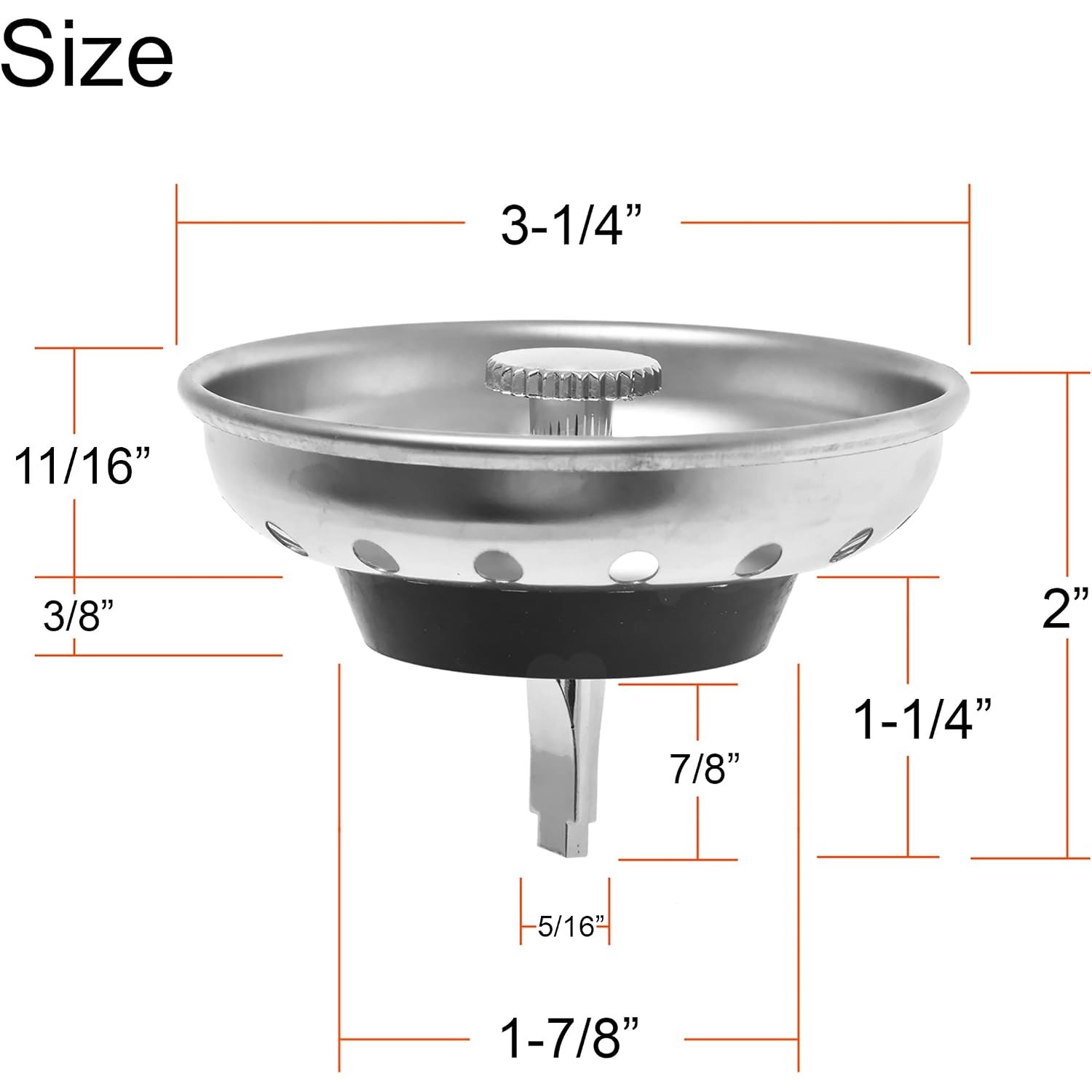
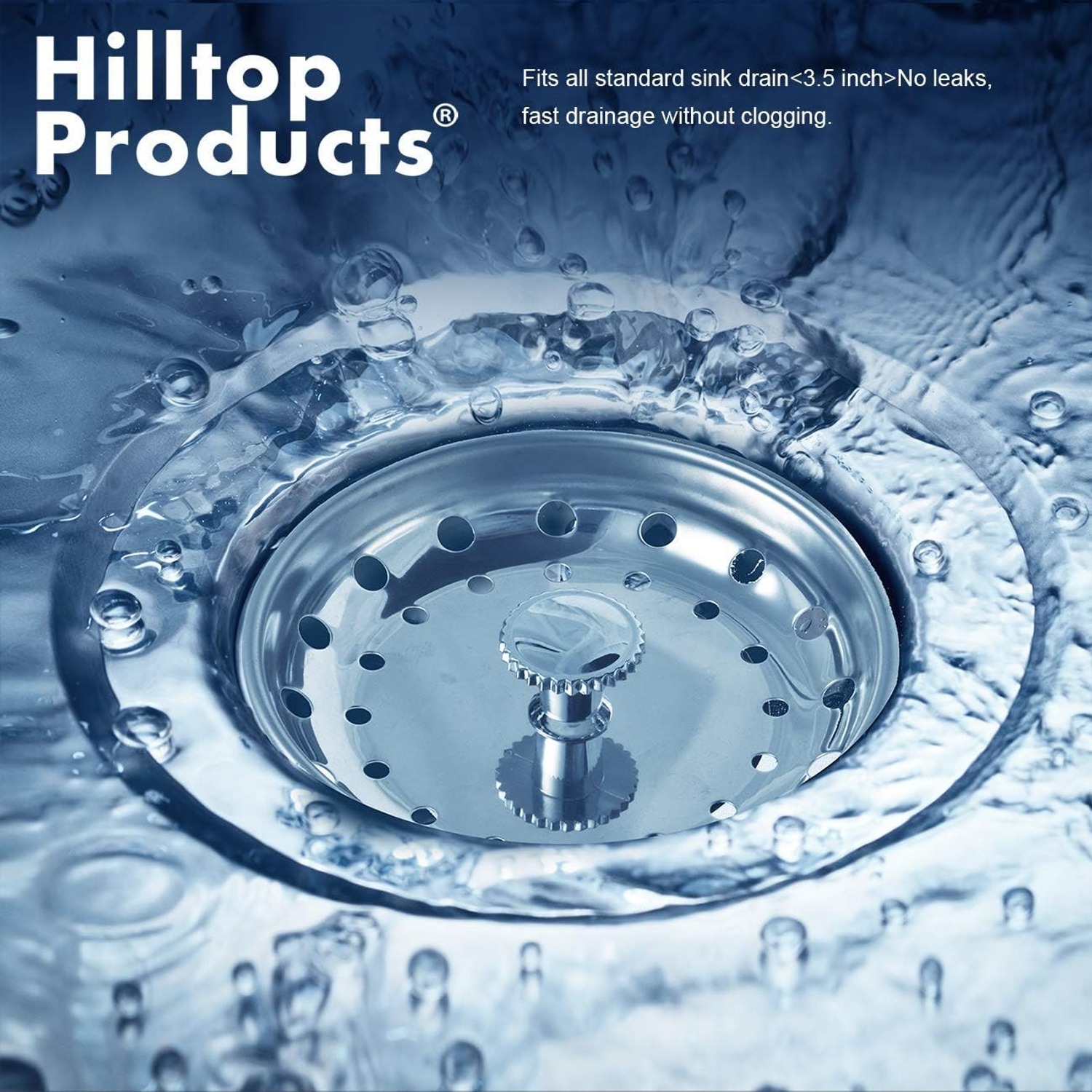
This basket is sized for the standard 3.5 inch kitchen sink drain, sometimes written 3-1/2 inch. That is the common opening size across North American kitchens and it turns up widely in other markets too. The listed item measures 3.25 inches wide and 4 inches high, which is the basket body plus the post.
To check yours, lift out the basket that is in there now and measure straight across the circular hole in the sink, rim to rim. If you cannot get the old one out, measure the opening as best you can with a tape. You are looking for roughly 3.5 inches.
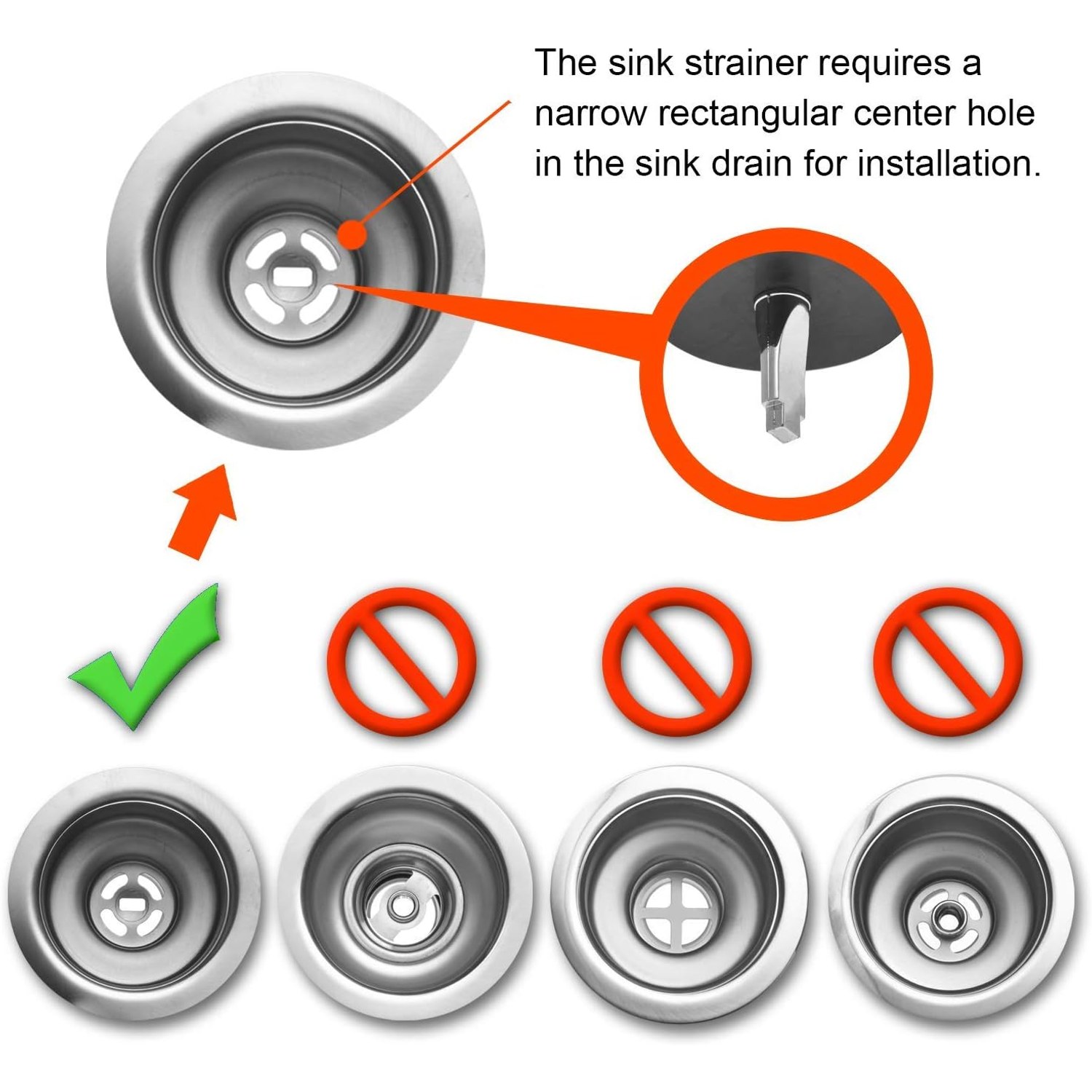
There is a second thing to check. A post-style basket needs a narrow rectangular hole in the center of the drain crosspiece for the post to drop into. Look down the drain. If you see a slot in the middle, you are set. If your drain has a different center arrangement, or a threaded fitting, this basket will not seat properly.
Measure before you order. It takes thirty seconds and saves a return.
What the materials actually mean
A sink drain is wet several times a day, every day, often with hot water, detergent and acidic food. Cheap pressed metal does not last in that environment. It pits, then rusts, then leaves orange marks on your sink.
This one is stainless steel with a plated chrome finish and a high quality plastic knob. The steel handles the constant wet. The chrome plating gives it the bright glossy look and adds another layer against corrosion. The plastic knob is there because wet hands slip on wet metal, and because you need something to grip when you lift the loaded basket out.
If you are comparing options, the best stainless steel sink strainer is the one whose finish you can actually keep. Avoid anything you have to scour, because scouring is what kills a plated surface. A rinse and a wipe is enough for this.
Who this suits
Households that cook properly. If you are rinsing plates with real food on them, prepping vegetables over the sink, or draining pasta, you are putting solids down the drain daily and a basket pays for itself fast.
Rentals and shared houses. Baskets go missing, get bent, or end up in the trash with the scraps. A two-pack means there is a spare.
Double bowl sinks. If both drains are 3.5 inch, the pack sorts both at once, which is the obvious appeal of the best sink stopper and strainer combo coming in pairs.
Anyone replacing something tired. If your current basket is rusty, bent, or no longer holds water, swapping it is a two-second job with no tools.
It is not for bathroom sinks, which use much smaller drains, and it is not for sinks with a garbage disposal unit, which need the manufacturer's own fitting.
Getting the most out of it
Empty it after each wash-up rather than letting it sit. Food left in a basket overnight is where drain smells come from, and a full basket drains slowly.
Tip the scraps into the trash or a compost bin, not back down the sink. That part seems obvious, but plenty of people rinse the basket out over the drain and undo the whole point.
Keep fine material out of the sink entirely. Coffee grounds, tea leaves and flour will go straight through the holes and settle in the trap. Those belong in the trash from the start.
For cleaning, rinse under the faucet and wipe round the rim. If grease has built up, soak the basket in warm soapy water and use a soft brush around the holes. It is dishwasher safe, so you can also just put it in with the next load.
Stay away from steel wool, scouring powder and bleach-based drain products sitting on the metal. Those are what mark a plated finish. A corrosion resistant basket still needs you not to attack it.
When a basket is not the answer
A strainer stops new build-up. It does not clear what is already there.
If your sink drains slowly with a clean, empty basket in place, the restriction is further down, usually in the trap under the sink. Putting a new basket in will not fix that. Clear the trap first, then fit the basket to keep it clear.
Similarly, if water is seeping out around the drain rather than through it, the fixed drain flange seal has failed. That is a plumbing fitting, not the removable basket, and it is a different repair.
The short version
A sink strainer and stopper basket is one of the cheapest bits of kitchen hardware you can buy and one of the few that genuinely prevents a problem rather than treating one.
This one is stainless steel with chrome plating, 32 drainage holes, a plastic knob, and a push-and-pull post mechanism that seals the bowl when you want to fill it. It measures 3.25 by 4 inches and fits standard 3.5 inch kitchen drains with a rectangular center hole. It is dishwasher safe, and you get two.
Measure your drain opening first. If it comes in at 3.5 inches with a slot in the middle, drop this in, start emptying it after every wash-up, and quietly stop thinking about your kitchen plumbing for a long while.