
The complete guide
Choosing a Shower Drain Cover That Fits, Lasts and Stops Hair Blockages
The small part that causes big problems
Most people never look at their shower drain cover until something goes wrong. Then it becomes very hard to ignore. The chrome plating lifts in little flakes. A corner curls up and catches your toe. A screw rusts into place so you cannot remove the grate to clean under it. Or the cover disappears entirely during a bathroom job and you are left with an open hole that swallows earrings and jewelry.
The other common failure is slower. Hair builds up past the grate, binds with soap and shampoo residue, and forms a plug in the drain pipe. Water starts pooling around your feet. You shower standing in an inch of gray water. Eventually someone pours a bottle of caustic drain cleaner down there, or pays a plumber to pull it apart.
A decent cover solves both problems at once. It gives you a clean, flat finish at floor level, and it catches the hair at the surface where you can see and remove it.
How a snap in cover works
Older drain grates were often screwed down into the drain body. That worked, but it meant the screws sat in constant water. Over a few years they seize, and removing the grate for cleaning turns into a job with penetrating oil and a lot of swearing.
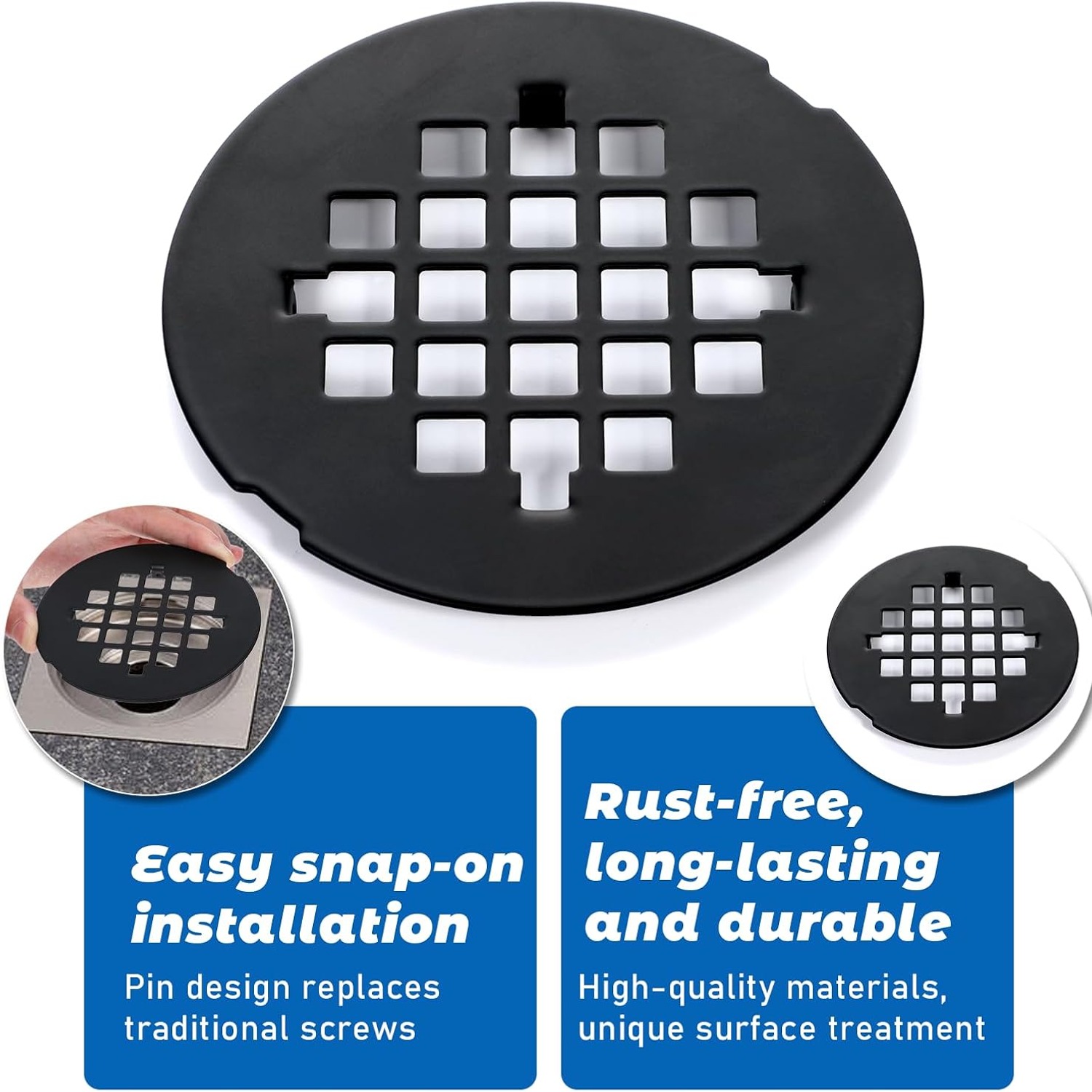
A snap in cover takes a different approach. It is sized to sit inside the drain recess and hold itself in position by fit rather than fixings. You press it in, it seats, and it stays. When you want to clean underneath, you lift it straight back out.
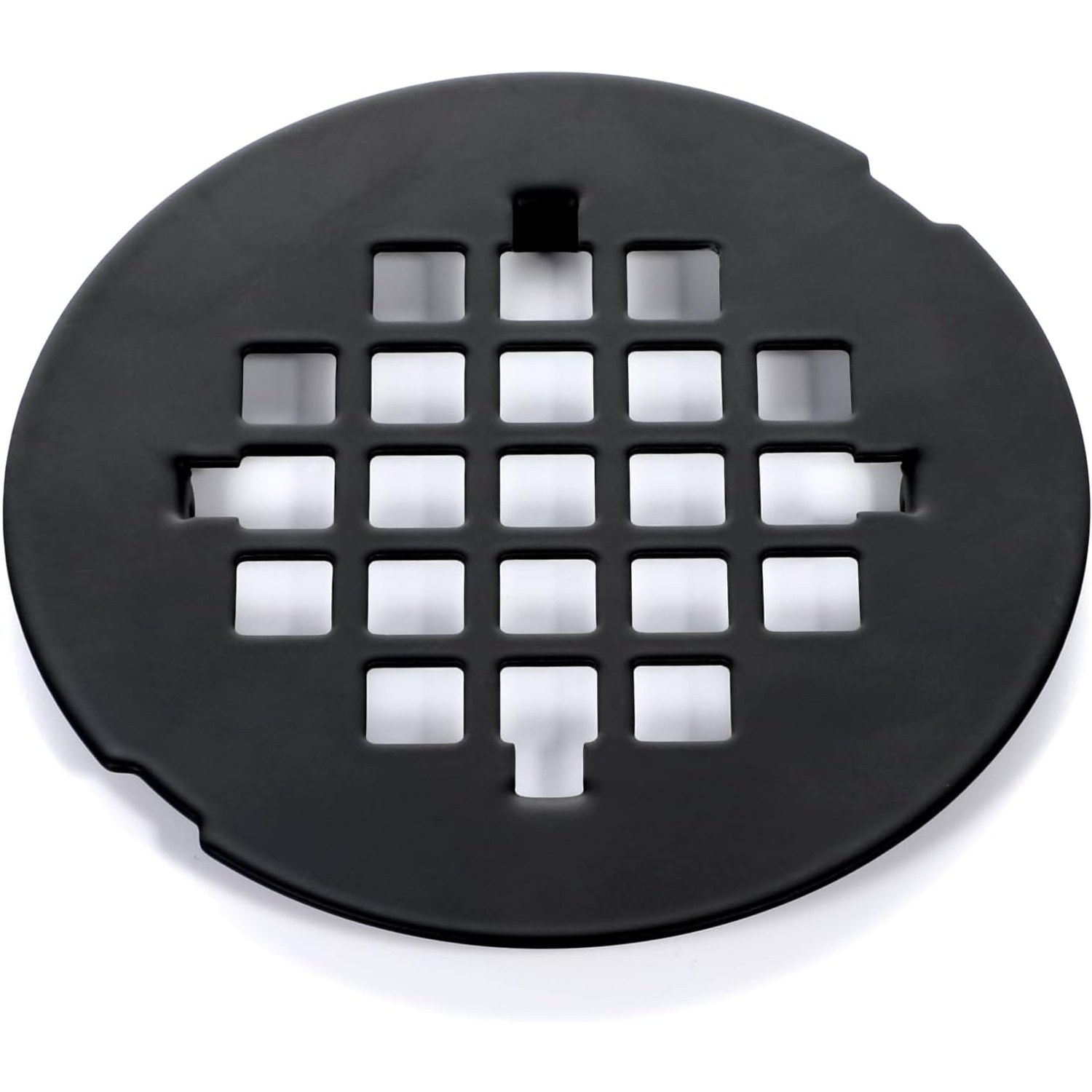
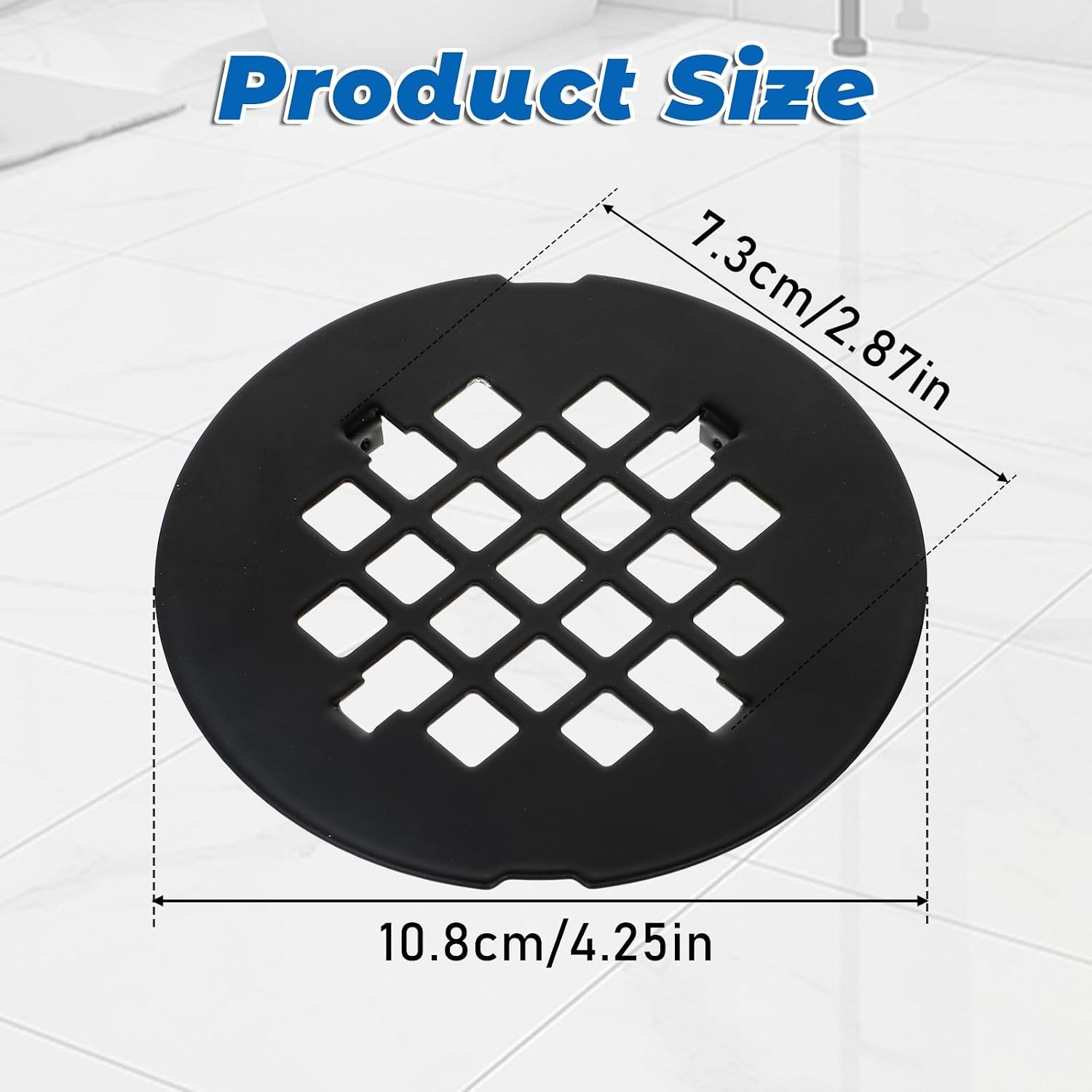
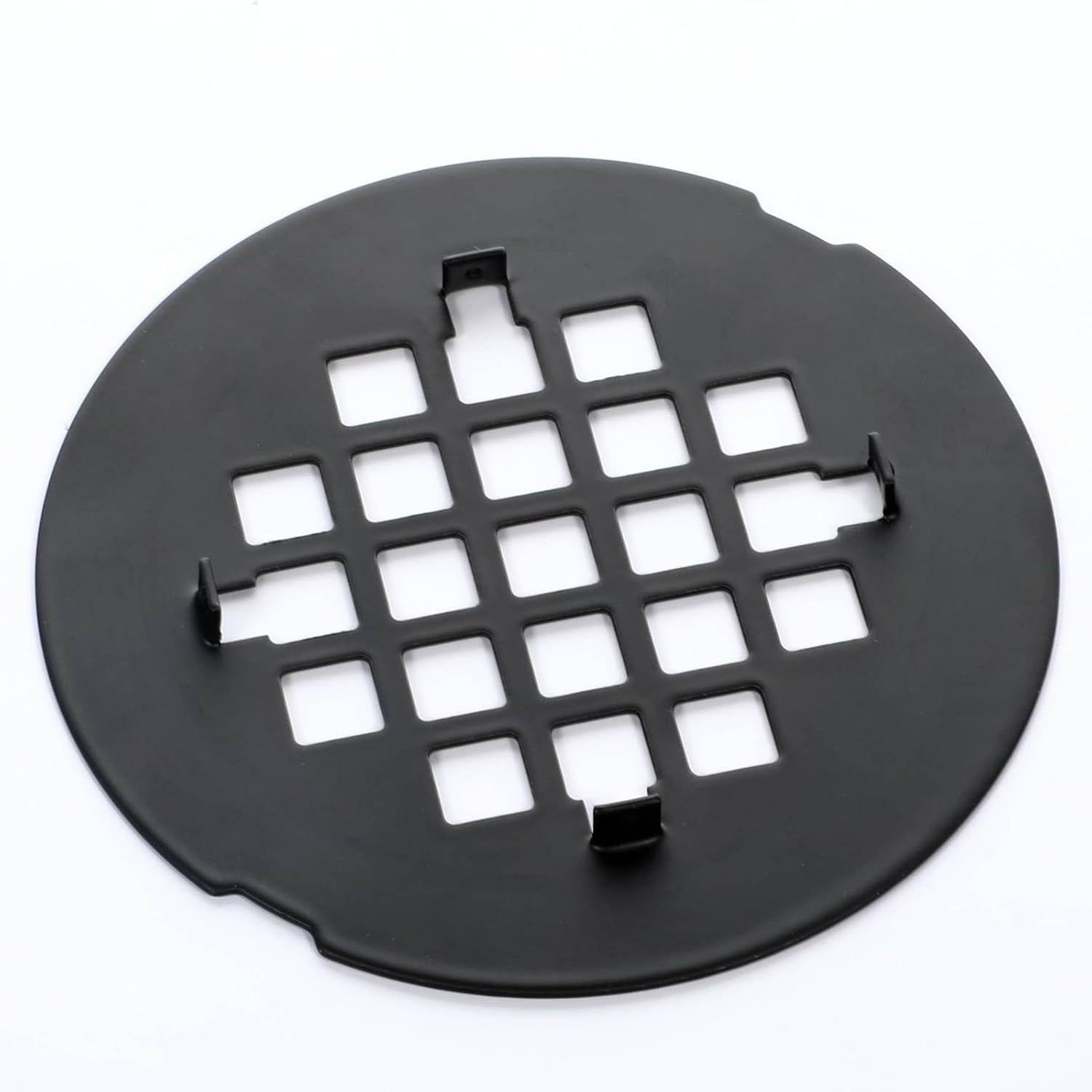
This cover is listed with a compatible groove diameter and fits hole size of 10.8 centimeters, with a face of 4.25 inches across. Those two numbers are the heart of the whole decision. If your drain opening is close to that, the cover should seat correctly. If it is noticeably different, no amount of pushing will make it work properly.
Why stainless steel matters here
A shower floor is one of the harshest spots in a house. Hot water, steam, soap, shampoo, body oils, cleaning products and body weight all land on the same small piece of hardware, day after day.
Plastic covers are cheap and they do work for a while. But they go brittle with heat and age, they discolor, and they tend to crack if someone stands heavily on one edge. Thin plated metal covers look good in the shop and then the plating starts peeling once water gets under it.
Stainless steel is the practical middle ground. It is strong enough not to deform underfoot, it handles hot water without complaint, and it resists corrosion in a way that plain steel never does. This cover lists both the material and the finish type as stainless steel, with a black color.
A quick honesty note. Stainless steel resists rust, it is not completely immune to marking. If you leave strong chemicals sitting on it, or scrub it with steel wool, you can damage the surface. Treat it like good tapware and it will stay looking right.
Measuring before you buy
This is where most returns come from, and it takes less than a minute to avoid.
Pull out your existing grate if you can. Lay a tape measure or ruler across the drain opening at its widest point, from one inside edge to the other. That is the number you compare against 10.8 centimeters. Also check the shape. This is a round cover, so a square or slotted linear drain needs a different product entirely.
If your old grate is still in place and will not budge, measure across the grate itself. It will be a close guide, though the recess it sits in is the number that really counts.
Drains in older homes are the most variable. A house built in the 1970s may have something non-standard that no off-the-shelf cover suits. A photo and a measurement before ordering saves disappointment.
Who this suits
Renters get a lot out of a push-fit cover. Nothing is drilled, glued or cut. You keep the original grate in a drawer, improve the bathroom you actually live in, and swap it back at the end of the lease. Landlords get the same benefit in reverse, since a tidy drain cover is a cheap way to make an older bathroom photograph better.
Renovators often need one simply because the original went missing. During a tile job or a tapware swap, grates get lifted and never reappear. Buying a matching black cover is faster and cheaper than chasing the original supplier.
Households with long hair are the group who notice the daily difference most. Catching hair at the surface, where a two second rinse clears it, beats letting it collect somewhere you cannot reach.
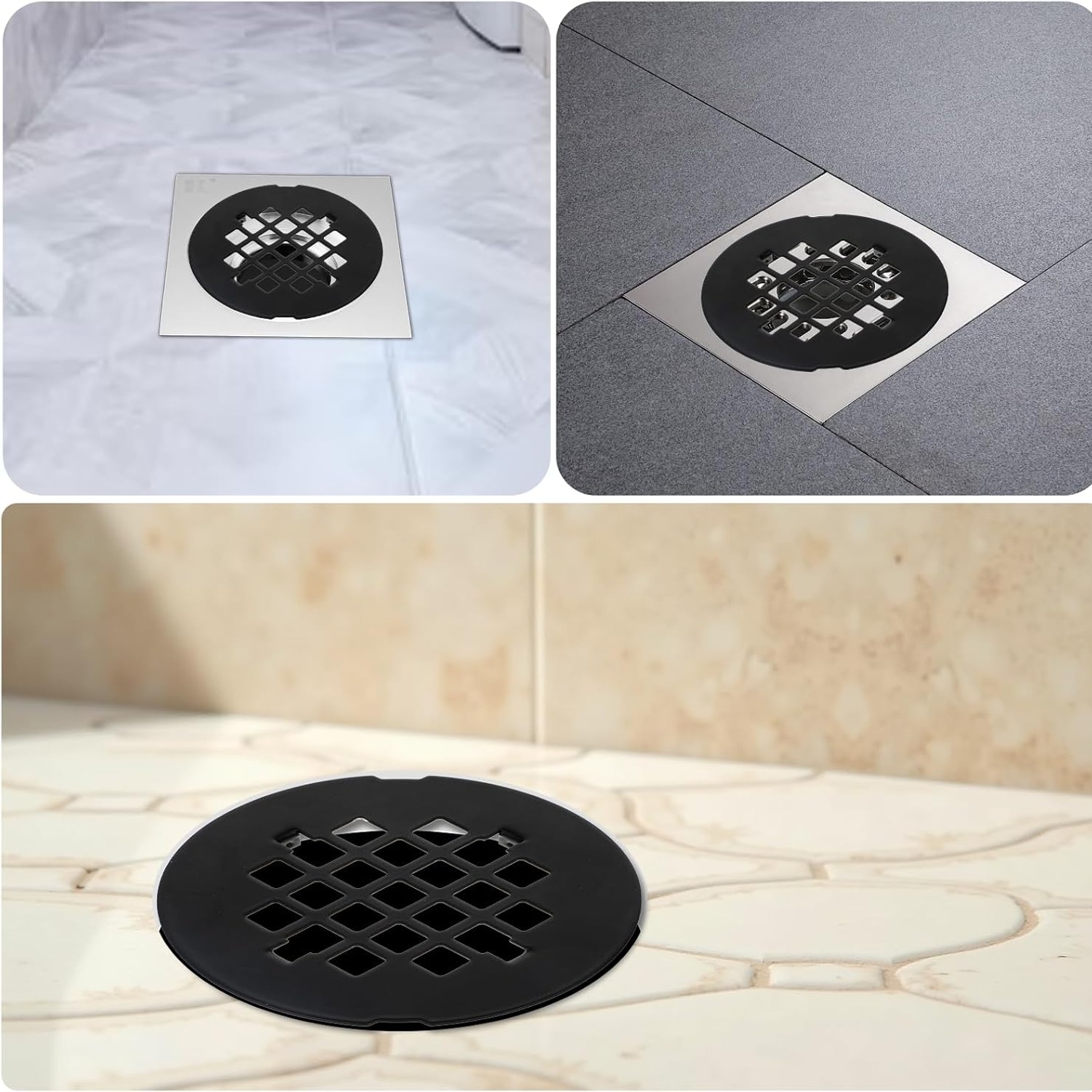
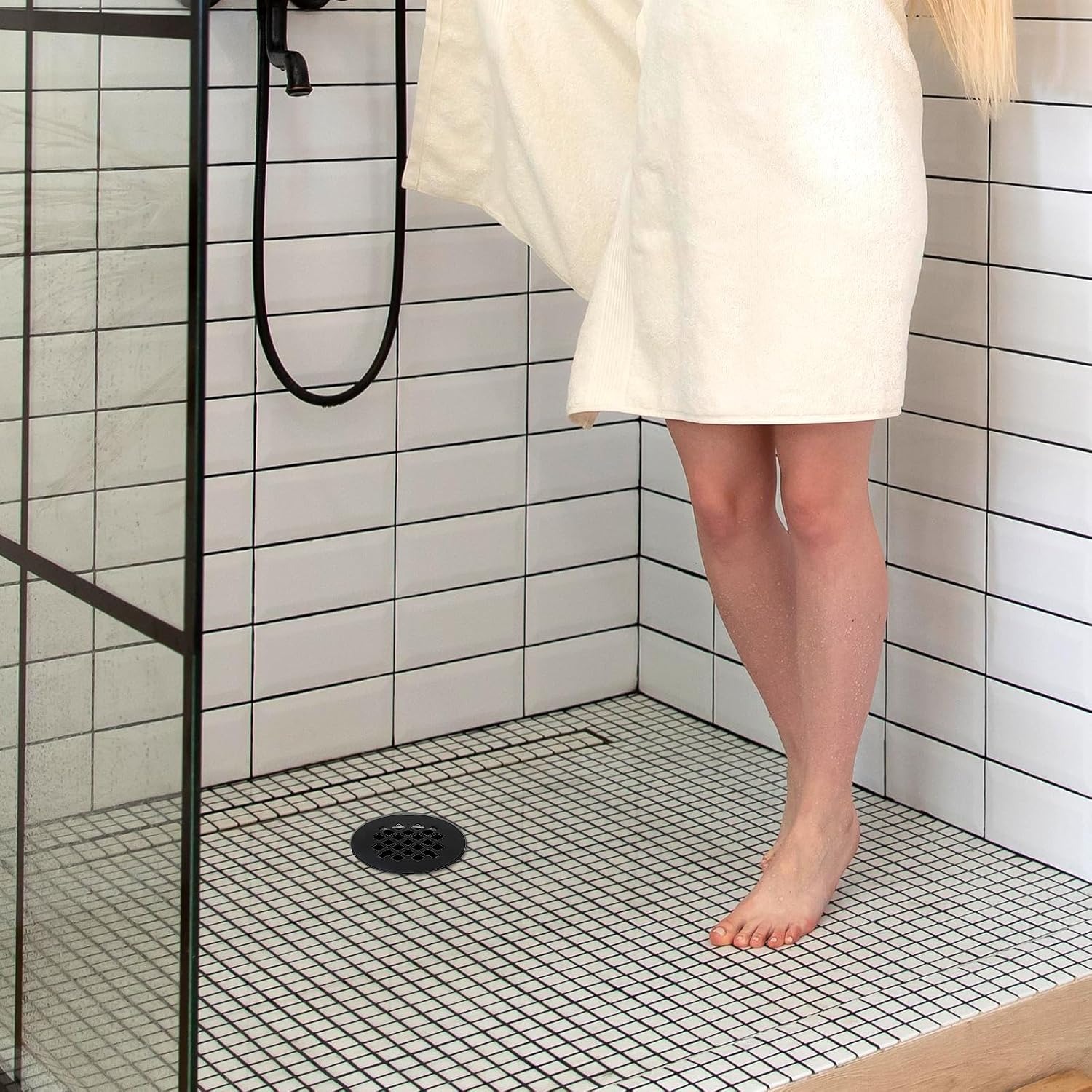
Anyone redoing bathroom hardware in black will care about the look. Black faucets and black shower frames have been popular for years, and a bright chrome drain in the middle of the floor breaks the effect. A black cover finishes the job.
Fitting it
Clear the area first. Lift the old grate out, using a flat screwdriver at the edge if it is stuck. If screws are holding it, undo them and keep them somewhere safe in case you want the original back later.
Next, clean the recess. There is almost always a ring of soap scum and hair sitting in there. Wipe it out with a cloth and a bit of warm soapy water so the new cover can seat flat.
Then line the new cover up over the opening and press it down evenly. You want it sitting flush with the floor, not tilted. If it feels loose or rocks, take it out, check the measurement again and look for anything in the recess holding it up.
Run the shower for a minute afterwards and watch the water go. It should drain away without pooling at the edges.
Keeping it working
Cleaning is the whole maintenance routine, and it is short. Lift the cover out every week or two. Pull away the hair that has collected on the underside and around the slots. Rinse the cover under warm water, wipe it with a soft cloth and a little mild dish soap, then dry it and press it back in.
Drying matters more than people expect. Water left to evaporate leaves mineral spots on any dark finish, and over months that builds into a dull film. Thirty seconds with a towel keeps the finish looking fresh.
Avoid the aggressive stuff. Steel wool, scouring powders and bleach pastes can all scratch or mark the surface. If you use a chemical drain cleaner in the pipe, flush the area well with clean water afterwards rather than letting residue sit on the metal.
Getting the look right
Black bathroom hardware is easy to get slightly wrong. Shades vary between manufacturers, and a matte black tap next to a gloss black drain can look like a mismatch rather than a choice.
The practical approach is to accept small variation. A drain cover sits on the floor, often partly wet, usually in shadow. It reads as dark rather than as an exact color match. What matters more is that it is dark at all, because a bright chrome circle in an otherwise black-and-white bathroom draws the eye straight to the floor.
If you are fitting black hardware across a whole bathroom, do the drain at the same time as the faucets rather than months later. It is cheaper to do in one go, and you avoid living with a half-finished look.
The short version
A shower drain cover is a cheap part that does unglamorous but genuinely useful work. It keeps hair out of your pipes, it stops small items disappearing, and it finishes the floor properly.
This one is stainless steel in black, 4.25 inches across the round face, sized for drain openings around 10.8 centimeters. It pushes into place without tools, screws or plumbing, and it lifts out just as easily when it needs a rinse.
Measure your opening first. If the number lines up, this is a five minute fix that makes a bathroom look better and drain better at the same time.