
The complete guide
How To Choose A Kitchen Sink Stopper That Actually Holds Water
The problem with a sink that will not hold water
If your kitchen sink has a garbage disposal, you have probably noticed something missing. There is no plug. The opening leads straight down into the grinder, and there is nothing to stop water running away. So the baking tray with burnt cheese on it never gets a proper soak. The wine glasses you do not trust to the dishwasher get rinsed under a running faucet instead of washed in a bowl of warm water. And every now and then a teaspoon goes down the hole and makes a noise you never want to hear again.
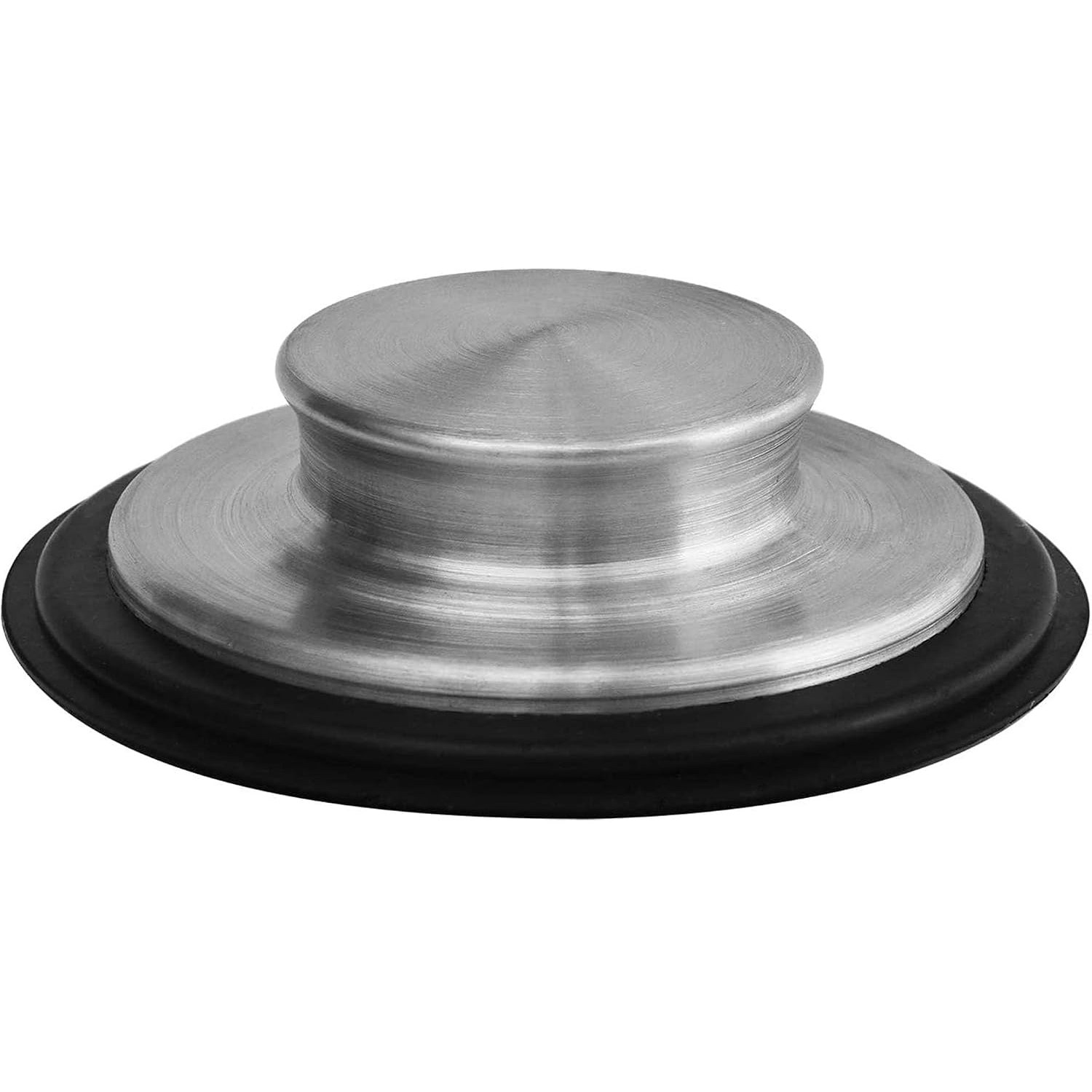
The fix is small and cheap. A stainless steel kitchen sink stopper sits in the drain opening, seals it with a rubber edge, and gives you back a sink that holds water. It is one of those items you do not think about until you do not have one, and then you wonder how you managed.
How a drain stopper works
There is nothing clever going on here, and that is the point. The body of the plug is shaped to sit inside the drain opening. A rubber seal runs around it, and when you press the plug down, that seal squashes slightly against the inside rim of the drain. Water pressure from a filling bowl pushes it a little tighter. The result is a sink that fills and stays filled.
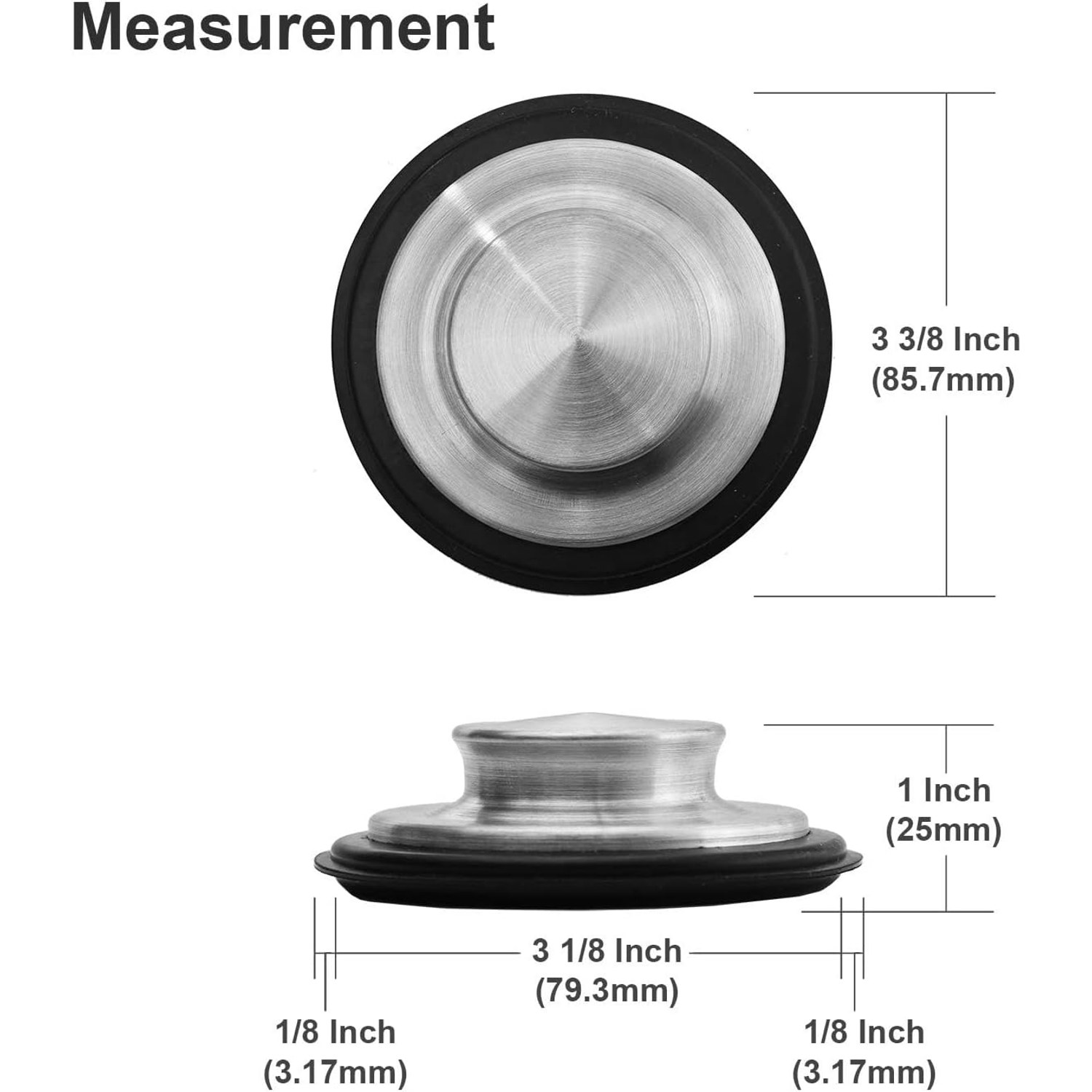
On top there is a raised handle, which adds about a centimeter to the overall height. This version measures roughly 3.12 inches across and 0.98 inches tall with the handle counted. That handle is the difference between a plug you enjoy using and one that annoys you. Nobody wants to dig around in gray water looking for a flat disc. You grab the handle, lift, and the water goes.
Removing the stopper is the only operation involved. There is no screwing, no adjusting, no plumbing. You never have to open the cabinet under the sink.
Why the 3.5 inch measurement matters
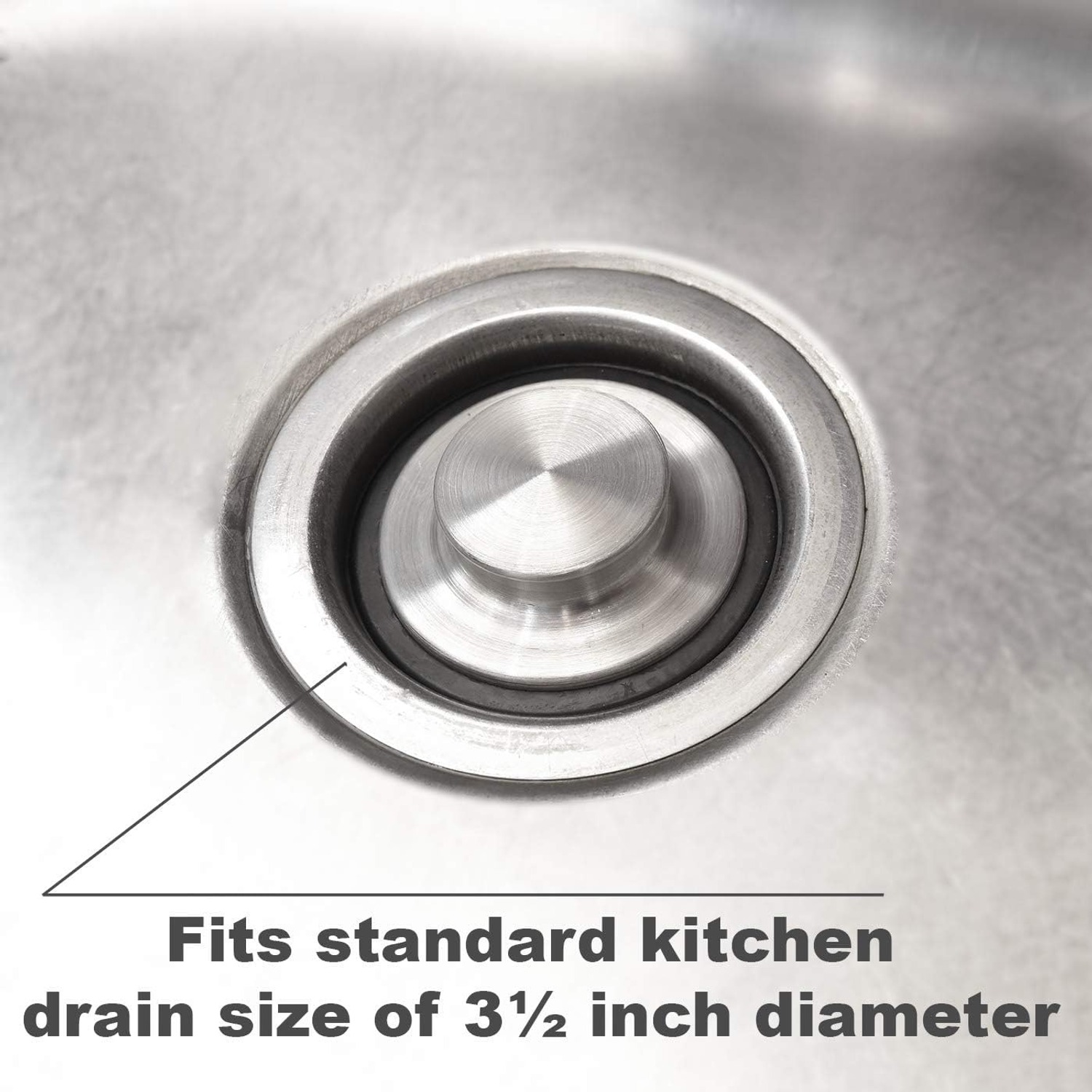
Kitchen drain openings follow a standard. The common size is 3 1/2 inches across, and that is the size used by most sink manufacturers and virtually all garbage disposal units. That standard is the reason a universal sink stopper works at all.
Take two minutes before you order and measure. Put a tape across the widest part of the opening, from one inside edge to the other. If you get something close to 3 1/2 inches (about 8.9 cm), you are in the right territory. If you get something noticeably smaller, you likely have a bathroom style waste or a smaller bar sink, and this is not the plug for you.
One other thing to check. If your sink has a removable basket strainer sitting in the hole, lift it out first. This stopper is designed to sit in the open drain, not on top of another fitting.
Protecting the disposal
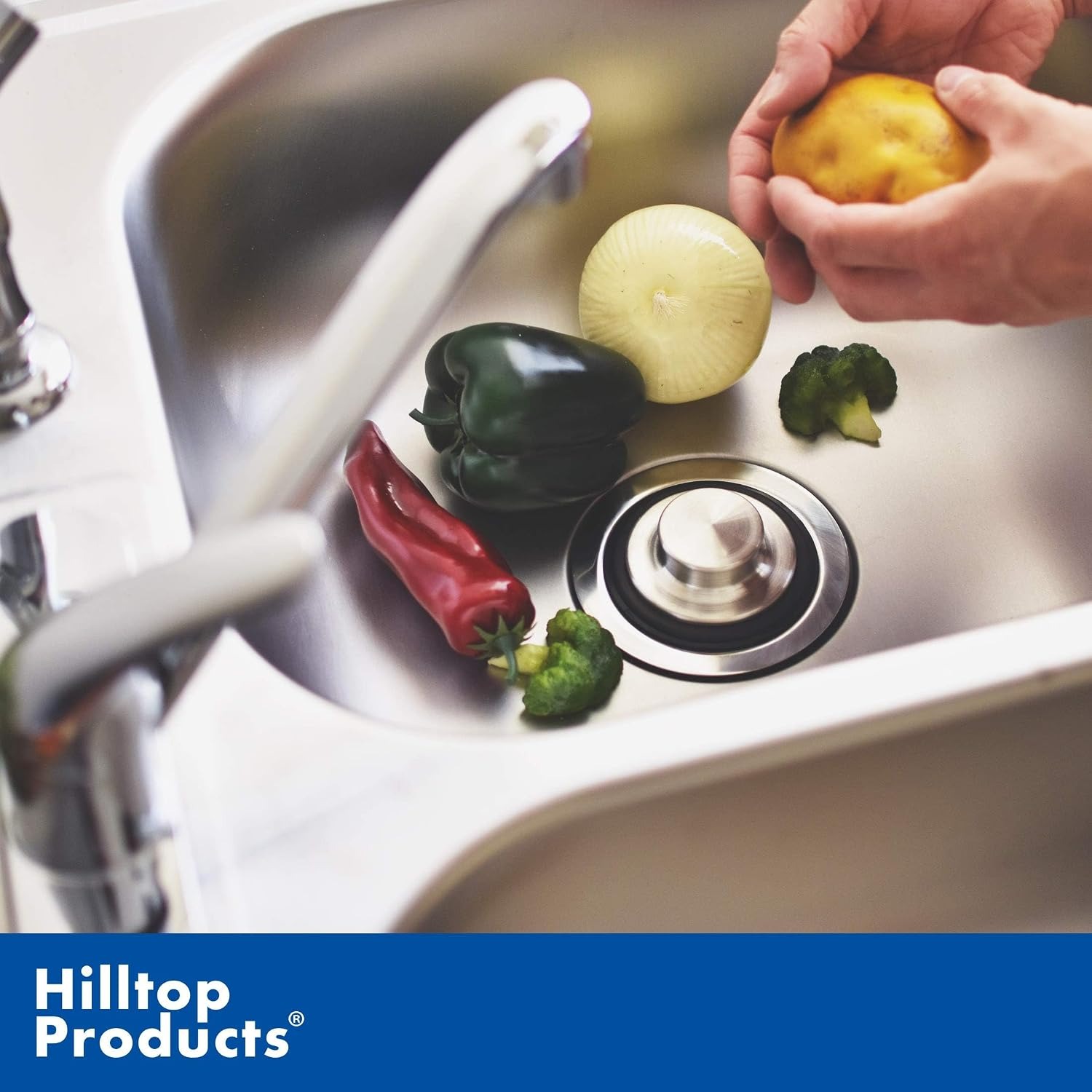
The second reason people buy these is not about water at all. A disposal opening is a hole that swallows things. Over a few years, most kitchens lose at least one teaspoon, a bottle cap, a peeler, a bread tag or a ring down there. Hard metal objects can chip the grinding plate or jam the unit, and a jam usually ends with somebody lying on their back with a flashlight and an Allen key.
Leaving the stopper in when the disposal is off turns that open hole into a covered surface. Scrape plates over the sink, stack dishes beside it, let the kids rinse their cups, and nothing drops through. It is a small habit that saves an expensive call out. Just remember the obvious rule. Take the plug out before you run the unit, every time.
That dual role is what makes the best garbage disposal stopper different from a basic plug. It is not only about soaking, it is about keeping things out.
Steel versus soft plugs
Walk through a hardware store and you will see plenty of soft rubber and silicone plugs. They are cheap and they work, at first. The trouble is what happens over a year or two in hot, greasy, soapy water. Soft plugs curl at the edges, pick up tea and tomato stains, go slightly sticky, and stop sealing where they have deformed.
A steel bodied plug keeps its shape. It does not absorb color from food, it wipes clean with a cloth, and it looks like part of the sink rather than a spare part from a drawer. The rubber only appears where you actually need flexibility, around the sealing edge. That is a sensible split of materials.
There is also the look. A silver finish sits comfortably next to brushed stainless sinks and modern faucets. If you have spent money on a kitchen, a bright orange rubber disc in the middle of the sink is not the finish you were after.
Choosing the right one for your kitchen
A few things are worth thinking about before you buy.
Count your bowls. If you have a double sink, two stoppers is the sensible answer. One bowl soaks while the other stays free for rinsing and draining, which is how most people actually wash the dishes. Buying a second one costs very little compared with the frustration of swapping a single plug back and forth.
Think about who uses the sink. If there are older hands in the house, or anyone with limited grip, the raised handle is a real benefit over a flush fitting plug. It is easier to see and easier to pull.
Consider a spare. A holiday house, a rental, a RV with a full sized sink, or a workshop sink all benefit from having a plug that nobody has to hunt for. These weigh almost nothing, around 1.2 ounces, so keeping one in a travel bag is no burden.
And check the finish. Silver stainless suits most kitchens. If your fittings are black or brass, you may prefer to accept the contrast or look at a matching option, since the plug does sit in plain view.
Looking after it
Care is about as simple as the fitting. Rinse the stopper under warm water after use and run a finger around the rubber seal to clear any food particles. Bits of onion skin and coffee grounds love to hide there, and a trapped crumb is the usual reason a plug starts to seep.
Every week or two, give it a proper wash with warm soapy water and a soft cloth or sponge. Dry it before you put it in a drawer so you do not get water marks on the metal. Skip steel wool, scouring powder and bleach soaks. They dull the finish and shorten the life of the seal.
If the plug ever stops holding water well, check two things before you assume it has failed. First, the seal itself. Second, the drain rim in your sink, which can build up a layer of grease or scale that stops the seal seating flat. A wipe around the inside of the drain usually brings performance straight back.
The short version
A kitchen sink with a disposal has no built in way to hold water, and that makes soaking dishes awkward. This stainless steel plug solves it by dropping into a standard 3 1/2 inch drain and sealing it with a rubber edge, with a raised handle so you can lift it out of a full bowl without fishing.
It measures about 3.12 inches wide and just under an inch tall, weighs almost nothing, and needs no tools or plumbing. Left in place, it also covers the disposal opening so cutlery and small items stay out of the grinder. Measure your drain first, buy two if you have a double sink, rinse the seal after use, and it will keep doing its job quietly for years.