

The complete guide
How to Choose the Right Kitchen Sink Strainer
The slow blockage nobody notices
Drains rarely fail dramatically. What usually happens is that the water takes a second longer to clear, then two seconds, then you notice a small pool sitting in the bowl after you pull the plug. By the time it is obvious, there is already a plug of grease, rice, coffee grounds, and hair sitting somewhere in the trap under your sink.
Everything that causes that blockage has to pass through the drain opening first. Put a mesh basket in the way and most of it never gets there. That is the whole idea behind a kitchen sink drain strainer, and it is why a cheap bit of steel saves far more hassle than its price suggests.
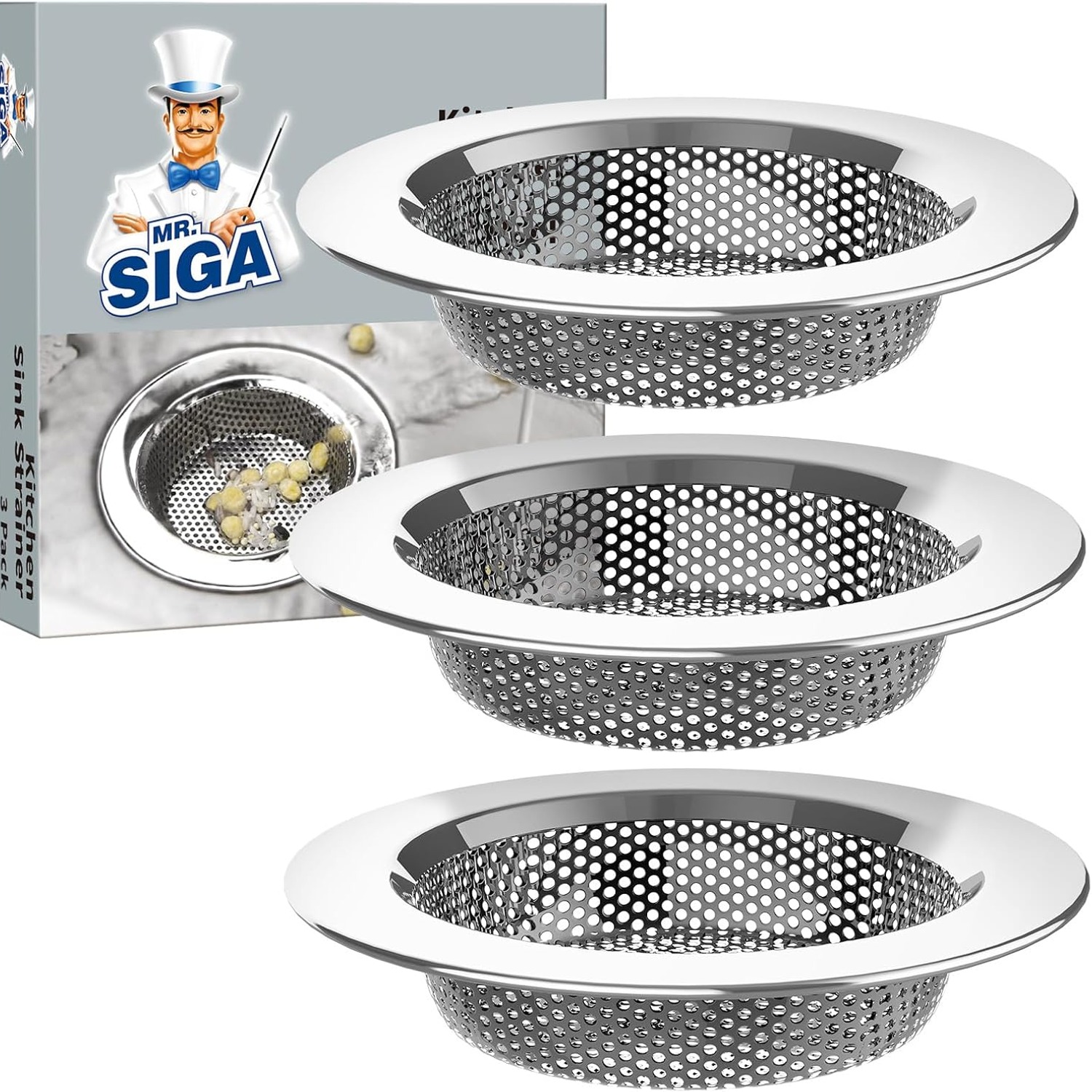
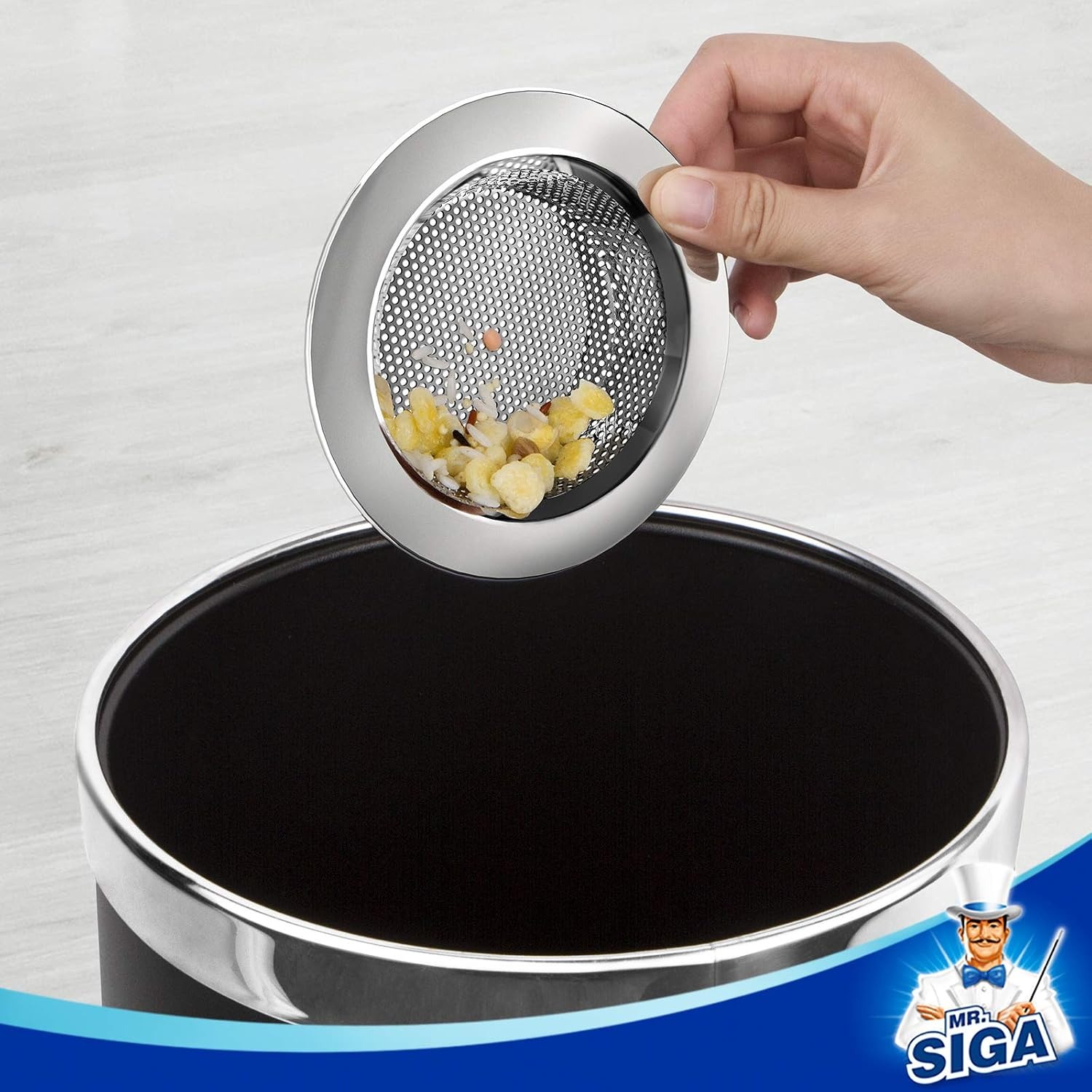
This set gives you three stainless steel strainers built to drop into standard 3 inch drain holes. Nothing to fit, nothing to maintain, nothing to replace every few months.
How a mesh strainer actually works
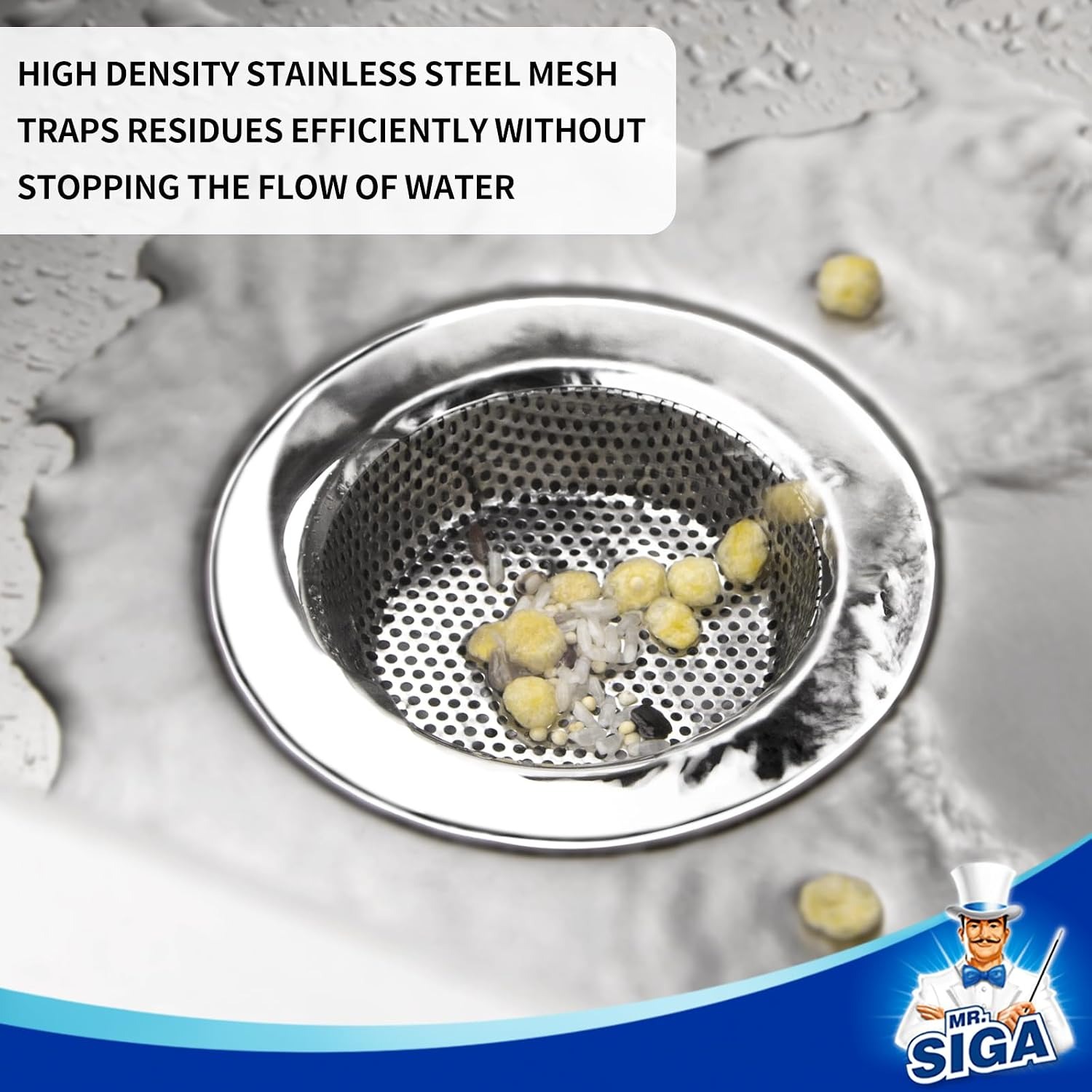
The basket sits in the drain opening with its rim resting on the sink floor. Water passes through the fine mesh and down the pipe. Solids stay in the basket. When you are done dishwashing, you lift the basket out, tip the contents into the trash or compost bin, rinse it, and drop it back in.
The important detail is mesh density. Too coarse and small particles like rice, tea leaves, and coffee grounds go straight through, which defeats the point. Too fine and the water backs up every time you empty a pan. This strainer uses a high density mesh that holds back residue and debris while letting a sink full of water clear at a normal pace.
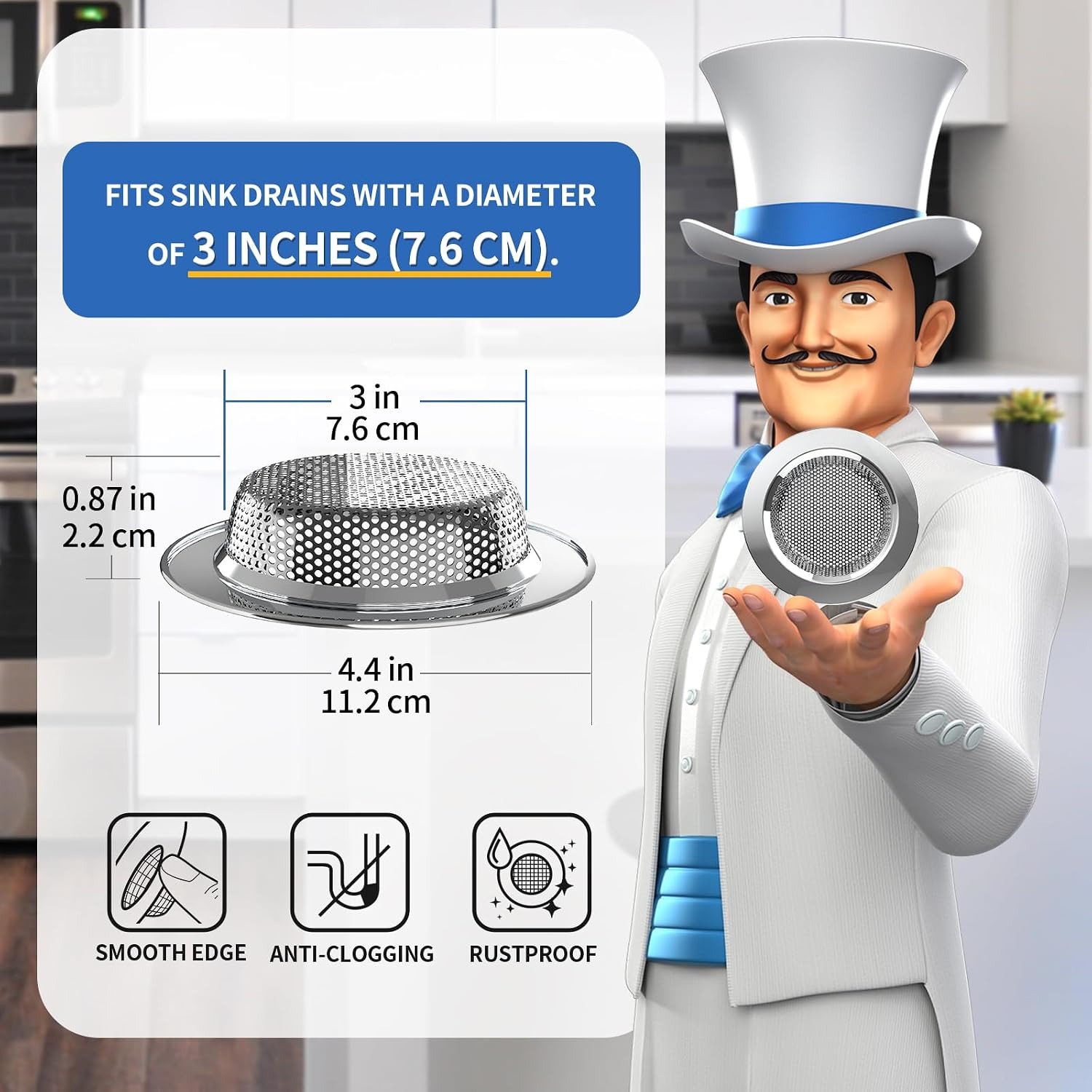
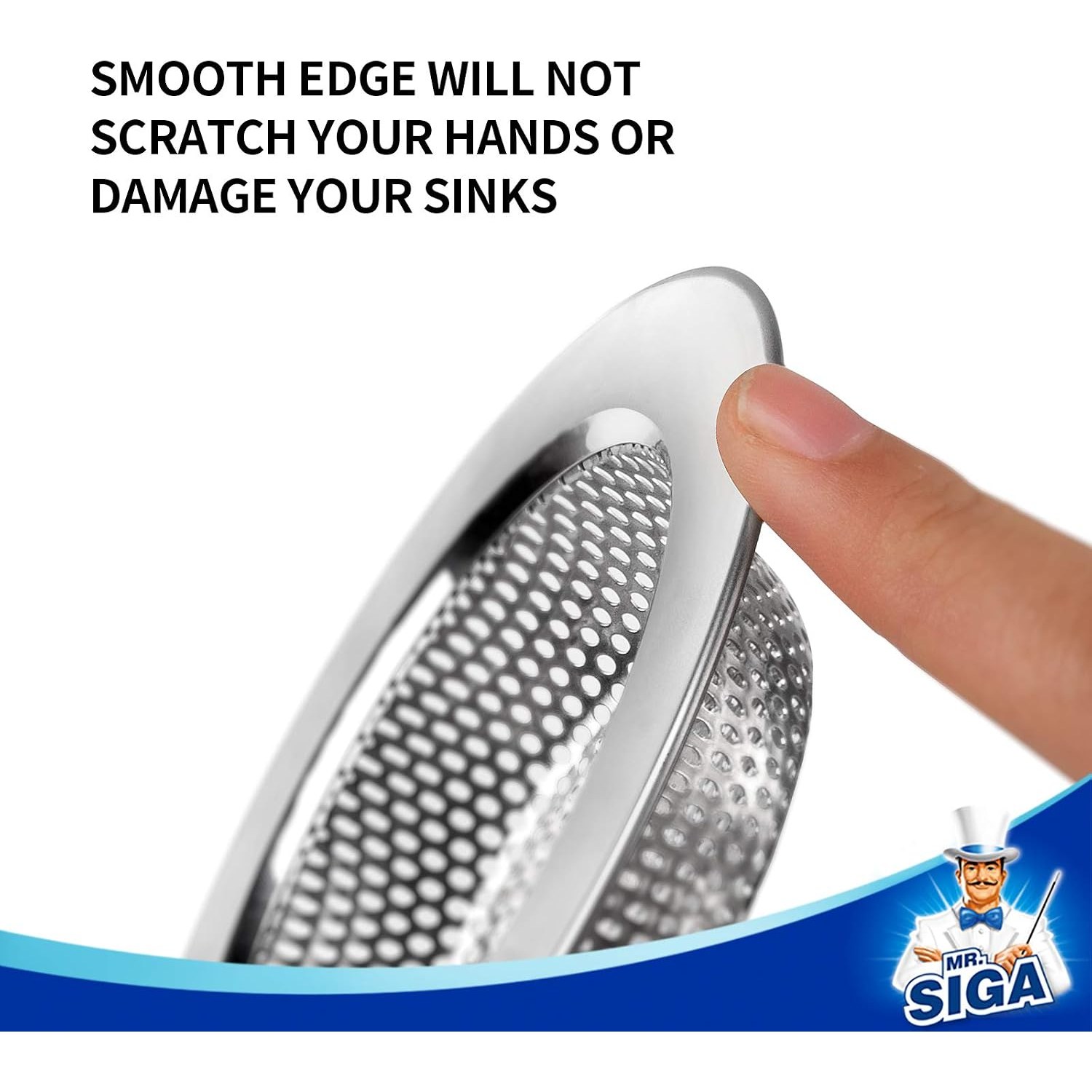
The other detail is the rim. A basket without a proper outer rim can tip, slide, or get pushed down into the drain by a heavy pan. The 4.4 inch rim here seats flat around the opening, which keeps the basket where you put it. The edges are finished smooth, so you are not reaching into soapy water and finding a sharp lip.
Who this suits
Anyone with a standard kitchen sink is the obvious answer, but a few households get more out of it than others.
If you cook from scratch, you generate a lot of small solids. Vegetable trimmings, pasta, rice, herbs, and the bits that come off a roasting tin all head for the drain. A food scrap catcher for sink duty intercepts them and makes composting easier at the same time.
Renters have a particular reason to care. A blocked drain in a rental can turn into an argument about who caused it and who pays for the plumber. Fitting a mesh basket costs almost nothing and removes most of the risk.
Share houses benefit too. When several people use one kitchen, habits vary, and a visible basket in the drain is a gentle reminder that scraps belong in the trash. Emptying it takes seconds, so nobody can claim it was too much trouble.
Households with long hair should think beyond the kitchen. The same strainer works as a hair catcher for sink drain use in a bathroom sink or laundry tub, as long as the opening is the right size.
Getting the fit right
This is the only part worth slowing down for. A strainer that does not fit is useless, and drain openings are not all the same.
Take a tape measure and measure straight across the widest part of the drain hole in your sink. You are looking for roughly 3 inches, or about 7.6 cm. That is the standard on most kitchen sinks sold in the last few decades, which is why it is the size this strainer is built around.
Also look at the surface around the opening. The rim needs a reasonably flat area to sit on. If your sink has a raised collar, a recessed well, or a installed basket assembly that protrudes, a drop-in strainer may not seat properly.
Garbage disposals are the common exception. Disposal flanges often use a different opening diameter and a fitting style that will not take a standard drop-in basket. If you have one, check the opening carefully before ordering.
Bathroom sinks vary more than kitchen sinks. Many have smaller openings in the region of 1.5 inches, which means a 3 inch basket will simply sit on top rather than drop in. Measure first.
Why stainless steel over plastic
Plastic mesh strainers are everywhere and they cost very little. They also stain, warp near hot water, and go brittle after a few months of detergent exposure. Once the mesh cracks, the strainer stops doing its job and you buy another one.
Steel does not have those problems. It copes with boiling pasta water, it does not absorb color from turmeric or tomato sauce, and it keeps its shape. A stainless steel drain strainer also looks better sitting in the bowl, which matters more than you might think when it is on permanent display in your kitchen.
The one thing steel will do is show water marks if you leave it to air dry in a hard water area. A quick wipe with a tea towel sorts that out.
Cleaning without the chore
The mistake people make with any sink strainer is leaving it full. Wet food scraps sitting in mesh for two days will smell, and that is what puts people off using a strainer at all.
Build the habit of emptying it as part of finishing the dishes. Tip, rinse, replace. It adds about five seconds.
For a weekly clean, a soft brush and a little dish soap will shift anything caught in the mesh holes. Work from the underside outward so you push debris out rather than deeper in.
When you want it properly clean, use the dishwasher. This is a dishwasher safe sink strainer, so it goes on the top rack with your mugs and comes out ready to use. That is where having three in the pack earns its place, because one can be in the machine while another is in the sink.
Avoid steel wool and gritty scouring powders. They will scratch the finish and make the surface rougher, which gives residue more to cling to.
A few practical notes
This is a strainer, not a plug. Water runs through it, so you still need your normal sink stopper if you want to fill the bowl.
Do not use it as a makeshift colander for draining food you intend to eat. It sits in a drain, and that is not a hygienic swap.
If drainage slows, check the basket before you reach for anything stronger. Nine times out of ten the mesh is simply full.
Keep the spare somewhere sensible. The back of a cabinet is fine, but a drawer near the sink means you will actually swap it when one goes in the dishwasher.
The short version
A kitchen sink strainer is one of those small purchases that quietly prevents a much bigger problem. This stainless steel sink strainer 3 pack covers standard 3 inch drain openings with a 4.4 inch rim, catches food scraps and hair without choking the water flow, and goes in the dishwasher when it needs a clean.
Measure your drain opening first, drop one into each sink you use, and keep the third as a spare. Empty it as part of your dishwashing routine and you should not have to think about your drains again for a long time.