

The complete guide
How To Choose And Use A Thin Drain Auger
The problem with a slow drain
You notice it before you admit it. The sink takes a second too long to empty. A week later there is a puddle around the drain opening while you brush your teeth. A month after that the water sits there and stares at you.
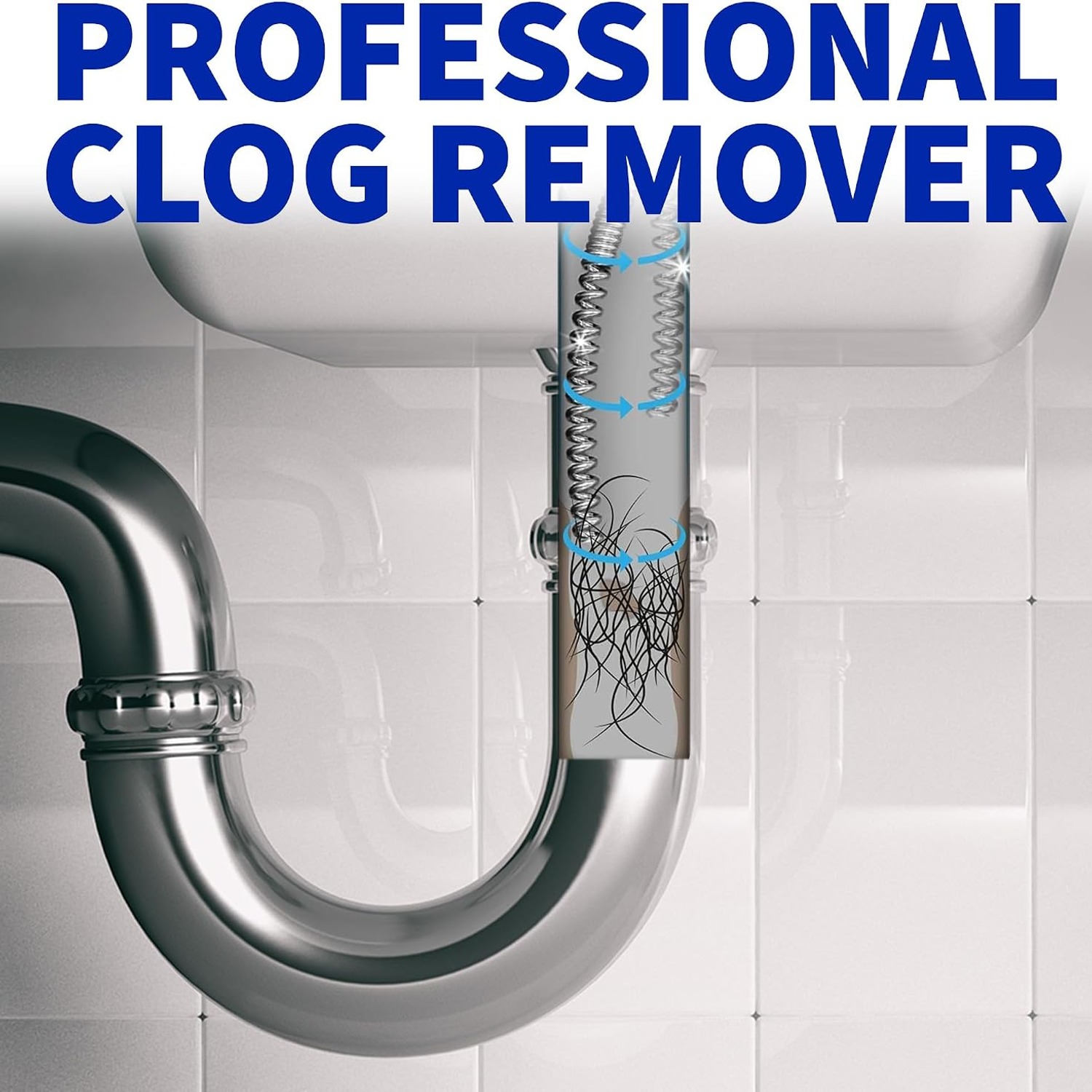
What is happening inside the pipe is simple. Hair, soap, shaving foam, toothpaste and skin oils all wash down together. Soap and grease are sticky. They coat the inside of the pipe, hair catches on that coating, and the whole mess grows inward from the walls of the pipe until the opening is the size of a pencil. Kitchen sinks do the same thing with cooking fat and food scraps. The clog is rarely a single object. It is a layer that built up over months.
That matters because it tells you what will actually fix it. A plunger moves water back and forth and can shift loose material, but it does nothing to a mass that is stuck to the pipe wall. Chemical cleaners eat at the surface of the clog, so the drain improves for a while, then slows again. Boiling water helps with fresh grease and does very little to hair. The only thing that reliably ends the cycle is reaching in, grabbing the clog and pulling it out.
How a flexible cable auger works
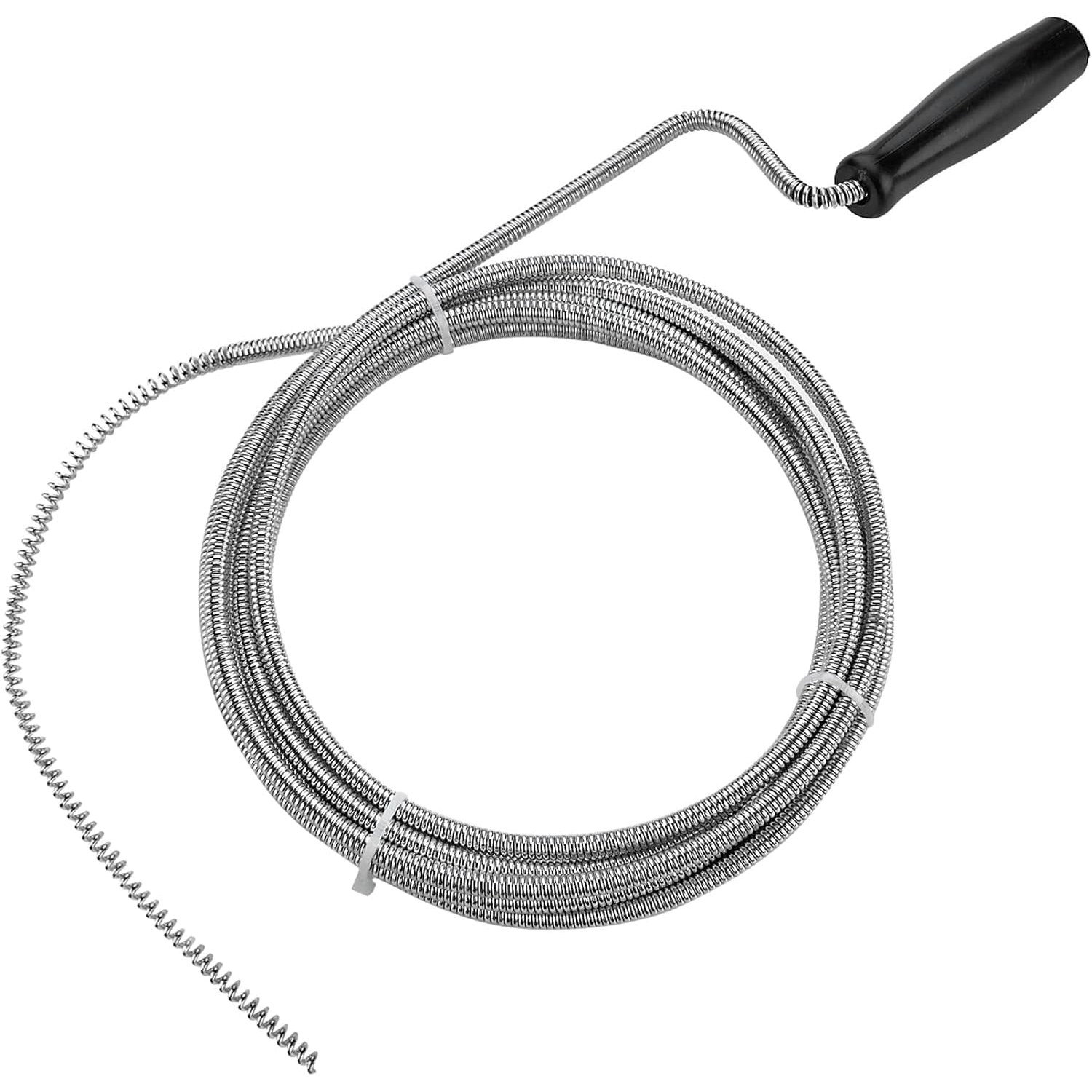
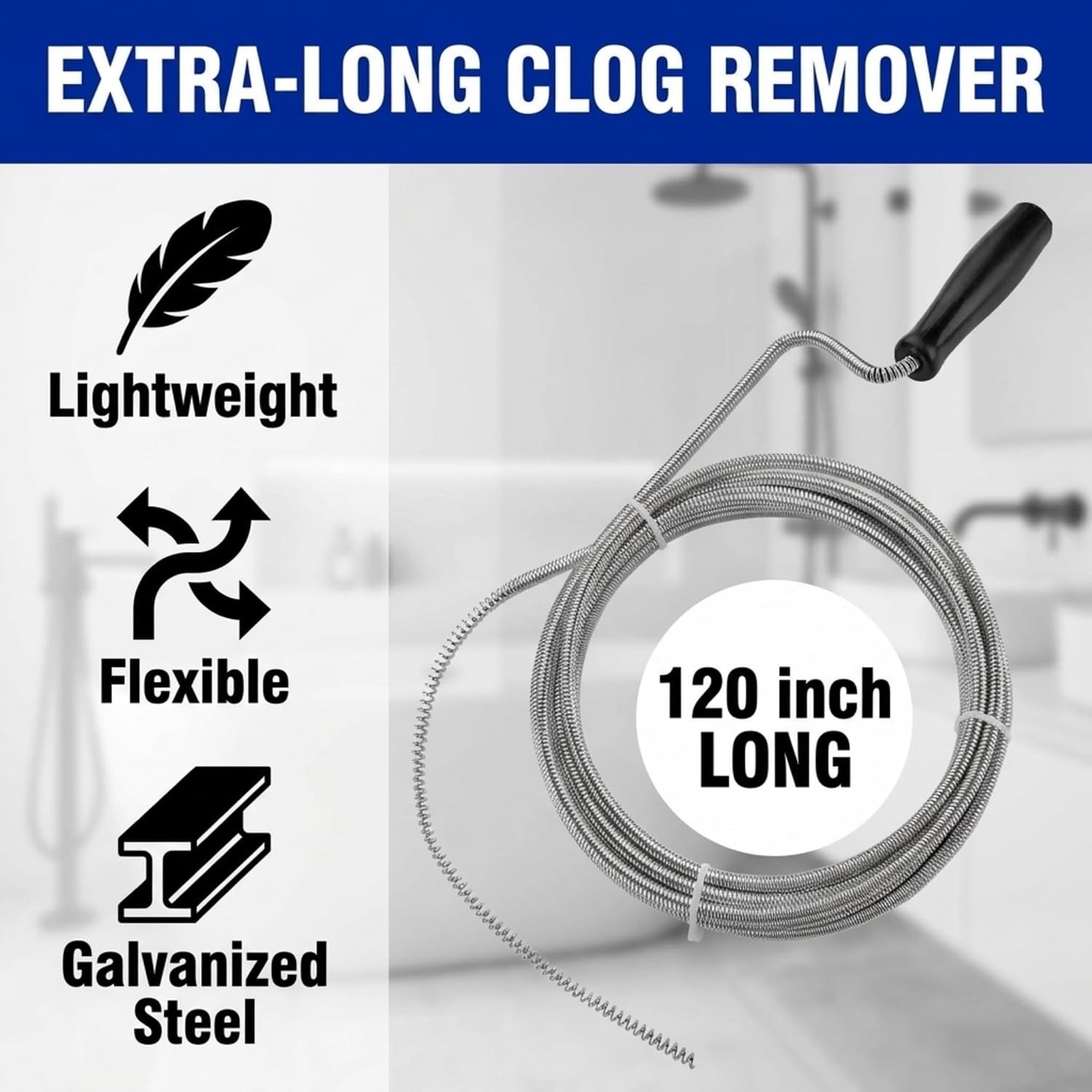
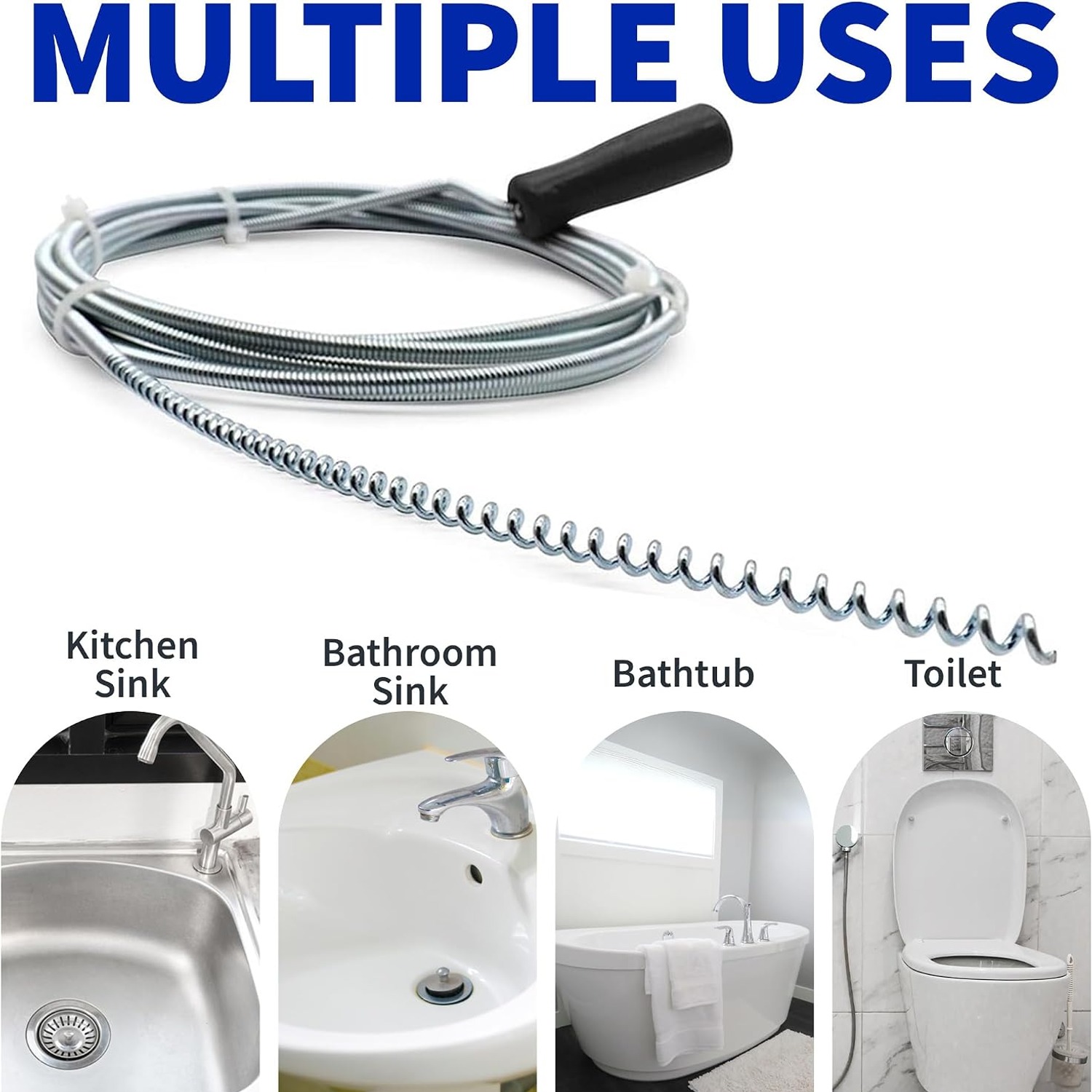
A drain auger is a long cable you feed into the pipe by hand. This one is 10 feet of flexible metal, slim enough to pass through a sink or shower strainer opening.
The flexibility is doing the real work. Your drain is not a straight tube. Under the drain opening it drops a few inches, then turns through the P-trap, that U-shaped bend that holds a little water to keep sewer gas out of the room. Then it turns again and runs off horizontally. A stiff rod stops at the first of those bends. A flexible cable follows them.
Once the cable reaches the blockage, you turn it. That is the step people skip. Turning lets the end of the cable bite into the clog, and hair wraps around it the way thread wraps around a spindle. Then you pull. If it worked, you bring a gray rope of hair and soap back up with you, which is disgusting and extremely satisfying in equal measure.
Ten feet is a deliberate length for household work. The clogs you can fix yourself nearly always sit within a few feet of the fixture, around the trap or the first run of pipe. Anything further out, in the main line under the house, is a different job and usually a different machine. A 10 foot cable covers the home repair zone without being unwieldy to handle or store.
Who this suits
Anyone who owns or rents a home with a bathroom will use this eventually. It is especially worth having if someone in the house has long hair, because bathroom sink and shower clogs are then a matter of when rather than if.
It suits people who would rather not pour chemicals down the drain, whether that is for the fumes, the septic system, or just not wanting a caustic liquid sitting in a pipe. It suits renters who want a cheap tool instead of a plumber callout for a basic blockage. It suits RV and RV owners, since the maker lists RV toilet use among the applications, and plumbing problems on the road are always worse than plumbing problems at home.
It also makes a genuinely useful housewarming gift. Nobody buys a drain snake until they need one, and needing one is always a bad evening.
Who it does not suit: if you have a main sewer line blockage, with multiple fixtures backing up at the same time, this is not the tool. That is a plumber's job with a powered machine. If your pipes are very old, brittle, or you have had repair work done that you do not fully understand, get advice before you start poking at them.
How to choose between drain tools
There are a few categories and they are not interchangeable.
A plastic barbed strip is the cheapest option. It is a flat plastic tongue with hooks along the edge. It works for hair sitting right under the drain opening and nothing deeper, and it is usually single use because it bends and snaps. Fine as a first try, useless for anything past the trap.
A flexible hand cable, which is what this is, covers the middle ground. It reaches past the trap, it grips, and it is reusable. For most household blockages this is the right tool and the best flexible drain auger choice for the money.
A drum auger with a crank handle gives you more cable and more torque, but it is bulkier, messier to use indoors and costs more. It makes sense if you deal with blockages often or have long pipe runs.
A toilet auger is a short, stiff cable inside a protective sleeve, shaped specifically to go round a toilet trap without scratching the bowl. If toilets are your recurring problem, buy one of those as well.
For most people the sensible kit is a hand cable like this one plus a plunger. Between them they handle the large majority of what goes wrong.
Using it without making a mess
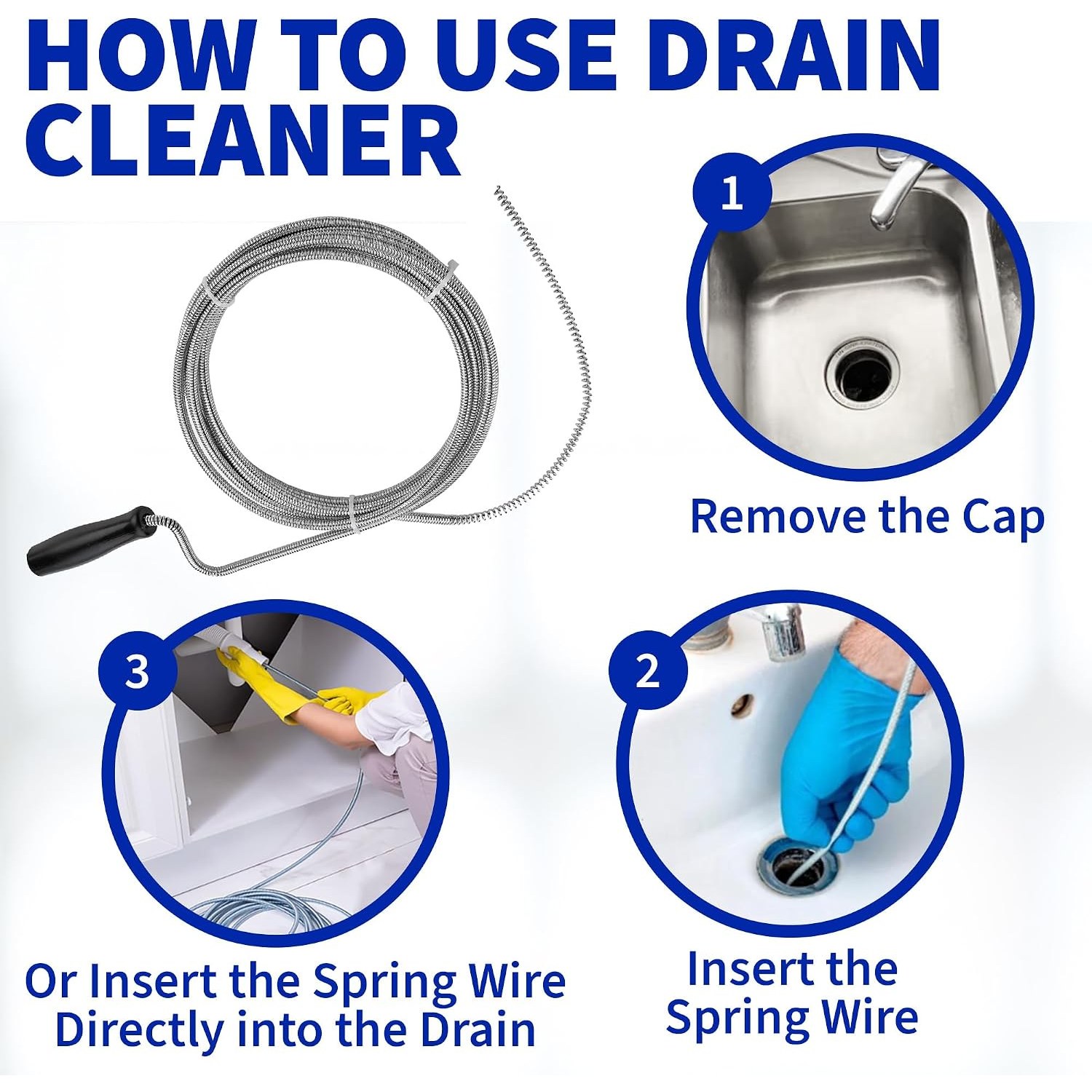
Set yourself up first. Put a bucket or old towel underneath, wear gloves, and have a trash bag within reach for whatever comes out.
Remove the strainer or hair catcher if it lifts out or unscrews. Feed the end of the cable in slowly. When you hit resistance, that may be the clog or it may just be the bend of the trap, so keep feeding gently and turning. The cable will usually work its way round.
When you feel the cable catch on something solid, turn it several times to get a grip, then draw it back slowly and steadily. Yanking tends to leave the clog behind. Wipe the cable off into your bag as it comes out.
Then run hot water for a minute. If the drain is still slow, go again. Second and third passes often bring out more than the first, because once you break the surface of a build-up the rest comes loose.
Two cautions. Do not force the cable if it will not advance, back it off and try a different angle instead. And if you have recently poured chemical cleaner down the drain, flush with plenty of water first and keep gloves and eye protection on, because you do not want that splashing back at you.
Looking after the tool
This part takes two minutes and decides whether the tool lasts two years or ten.
Rinse the cable thoroughly under running water. Hair and grease left on metal will smell, and they make the cable unpleasant to pick up next time. Wipe it dry with a rag or paper towel. Dry is the key word, because a wet metal cable coiled up in a dark cabinet is asking for rust.
Coil it loosely into its natural loop. Do not fold it or force a tight bend, since kinks weaken the cable and make it harder to feed. Store it somewhere dry. Under the sink is the obvious spot and it is light, at 0.39 kg, so it is easy to tuck away.
If you want to stay ahead of the problem, run the cable through your worst drain every few months rather than waiting for a blockage. Clearing a partial build-up is much easier than clearing a full one.
The short version
A slow drain is almost always hair and soap stuck to the inside of the pipe, and the fix is to pull it out rather than dissolve it. A thin drain auger 10 ft long reaches through the strainer, round the P-trap and into the pipe beyond, which covers the area where household clogs form.
This one is a flexible metal cable, weighs 0.39 kg, ships in a small coiled package and works on sinks, showers, bathtubs and RV toilets. It is reusable, so rinse it, dry it, coil it and put it back under the sink.
Color, metal grade and country of origin are not stated in the maker's details, so we have not claimed them. If there is a detail you need before you buy, ask us and we will tell you what we know.