
The complete guide
How to Choose a Kitchen Sink Strainer and Stopper That Actually Works
The small annoyance that costs you a plumber
A kitchen drain rarely blocks all at once. It happens slowly. A few grains of rice today, coffee grounds tomorrow, a bit of pasta at the weekend. Then one evening the sink takes two minutes to empty and you are standing there with a kettle of boiling water and a bottle of drain cleaner, wondering how it got this bad.
The other half of the problem is the plug. Most sinks come with a loose rubber or plastic plug that ends up in a drawer, on the windowsill, or lost completely. So people stop filling the bowl and start washing under a running faucet, which uses far more water than it needs to.
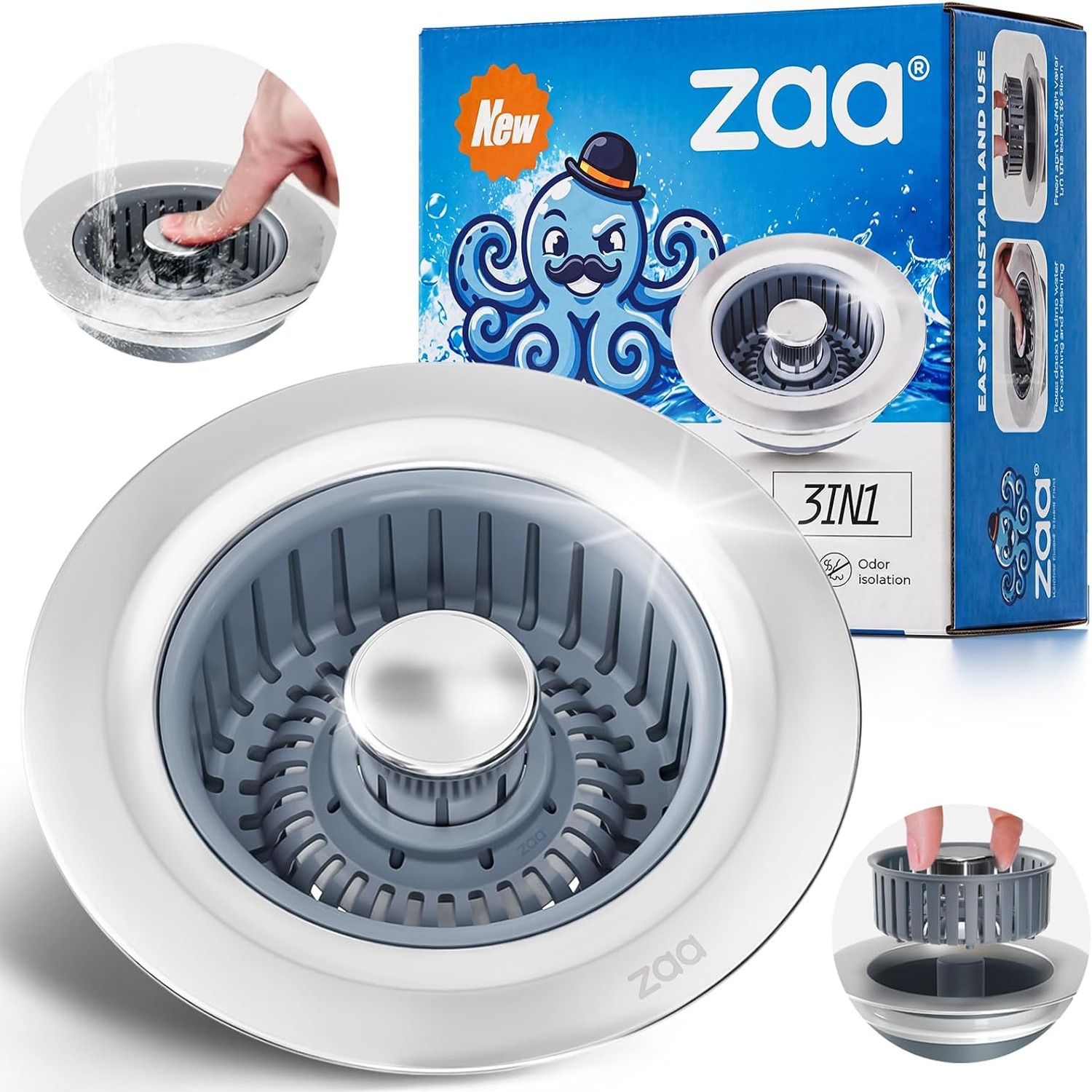
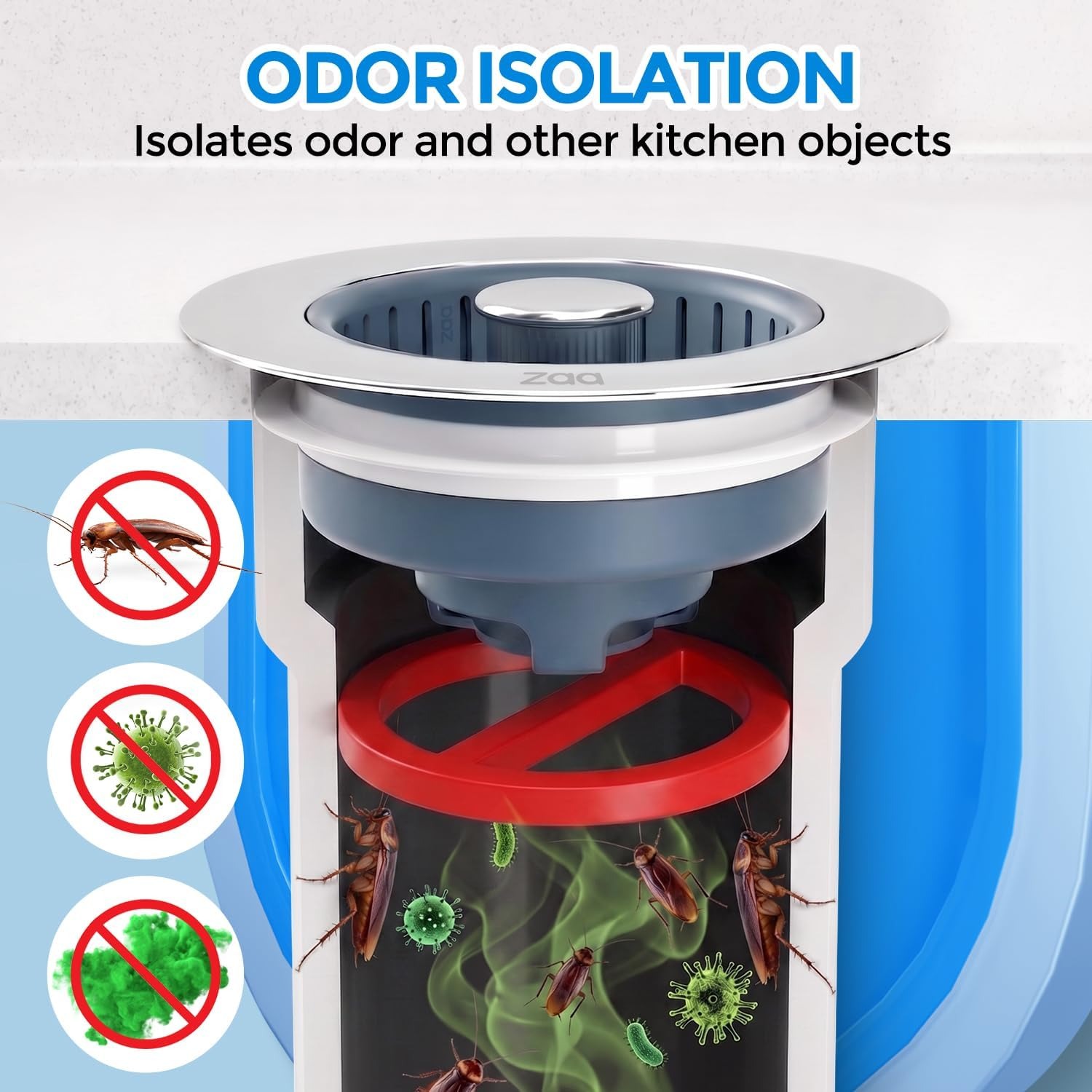
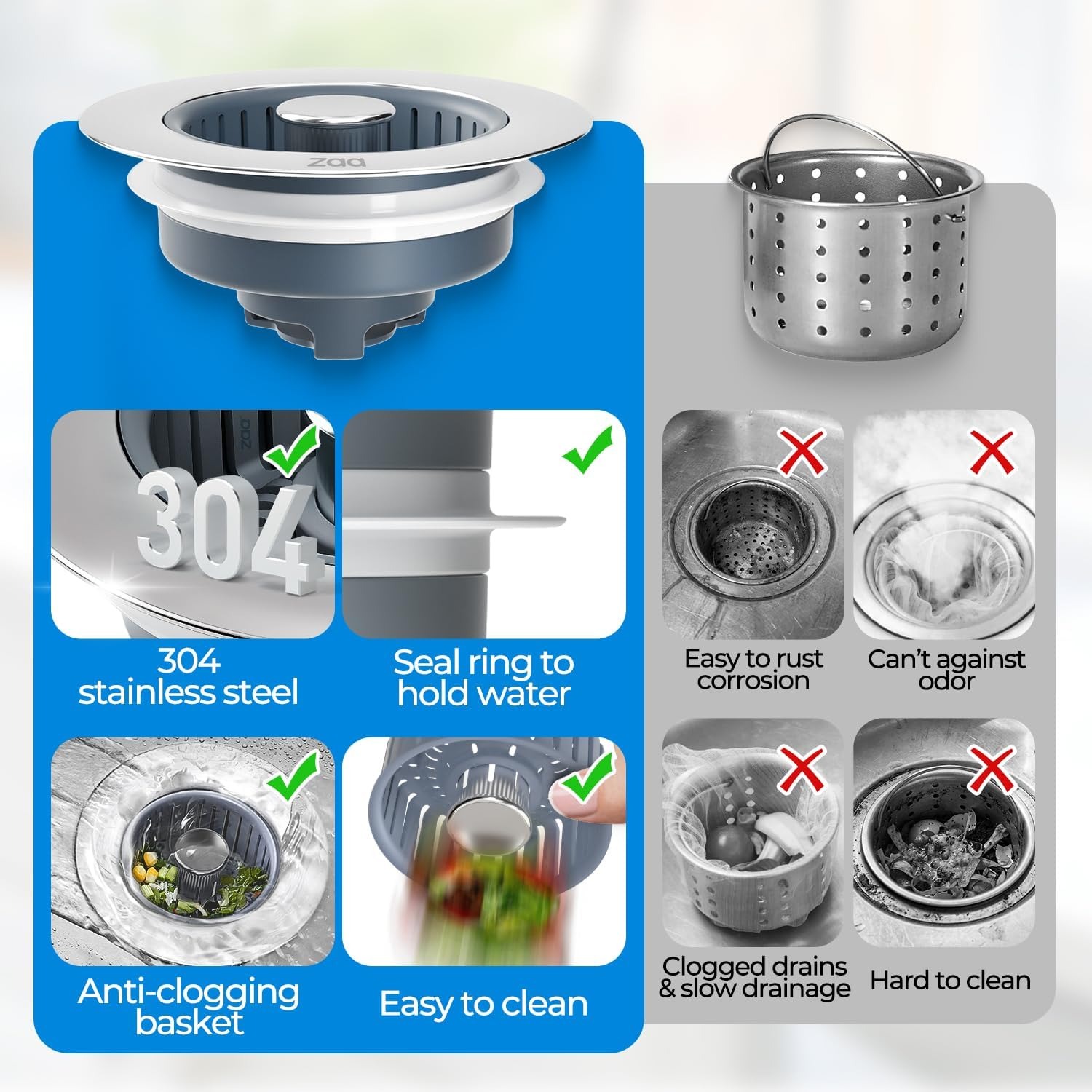
A three in one kitchen sink strainer stopper solves both of those at once. It lives in the drain hole, so there is nothing to find. It presses down to hold water and presses again to let it go. And the basket underneath catches the scraps that would otherwise sit in your trap turning into a smell.
How the pop-up mechanism works
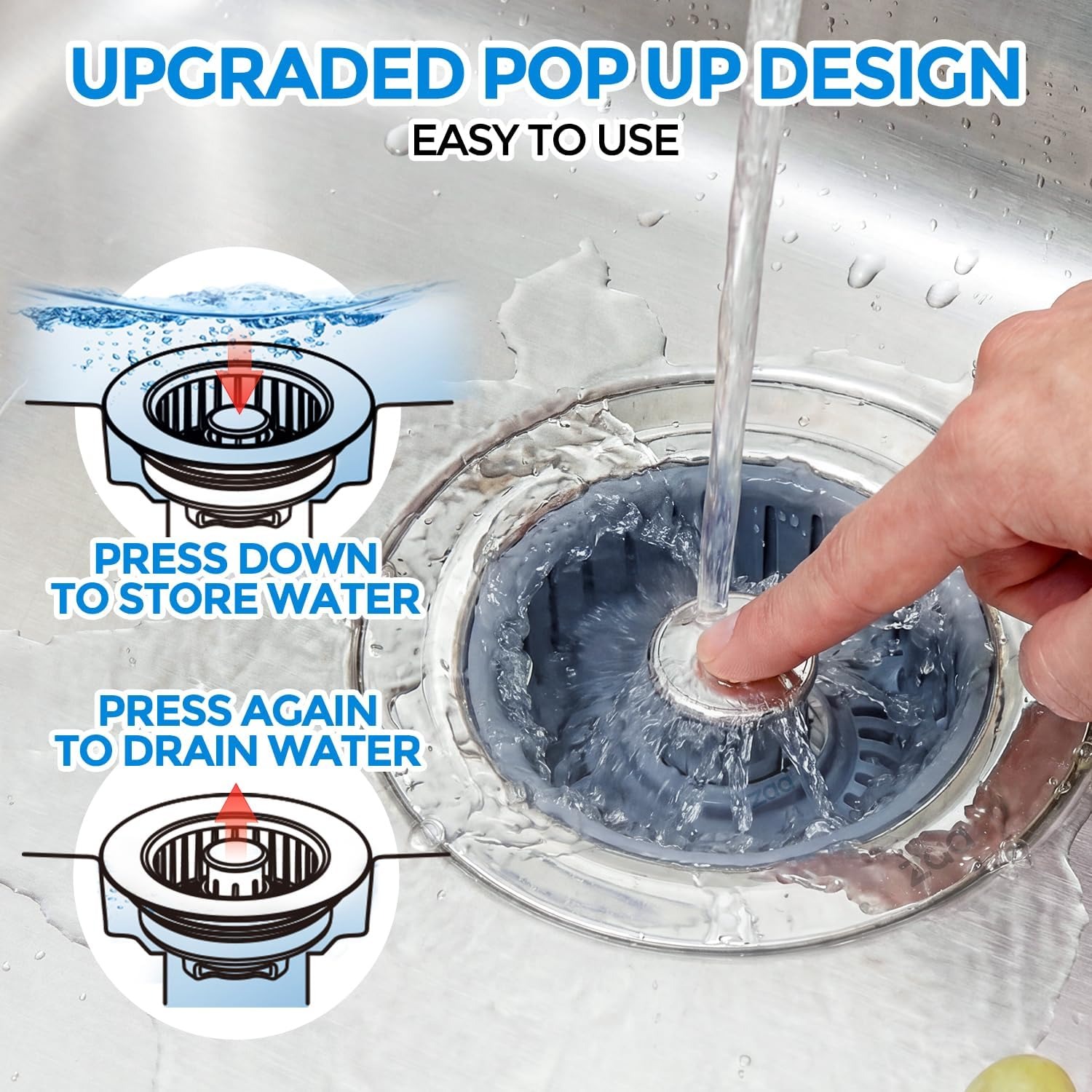
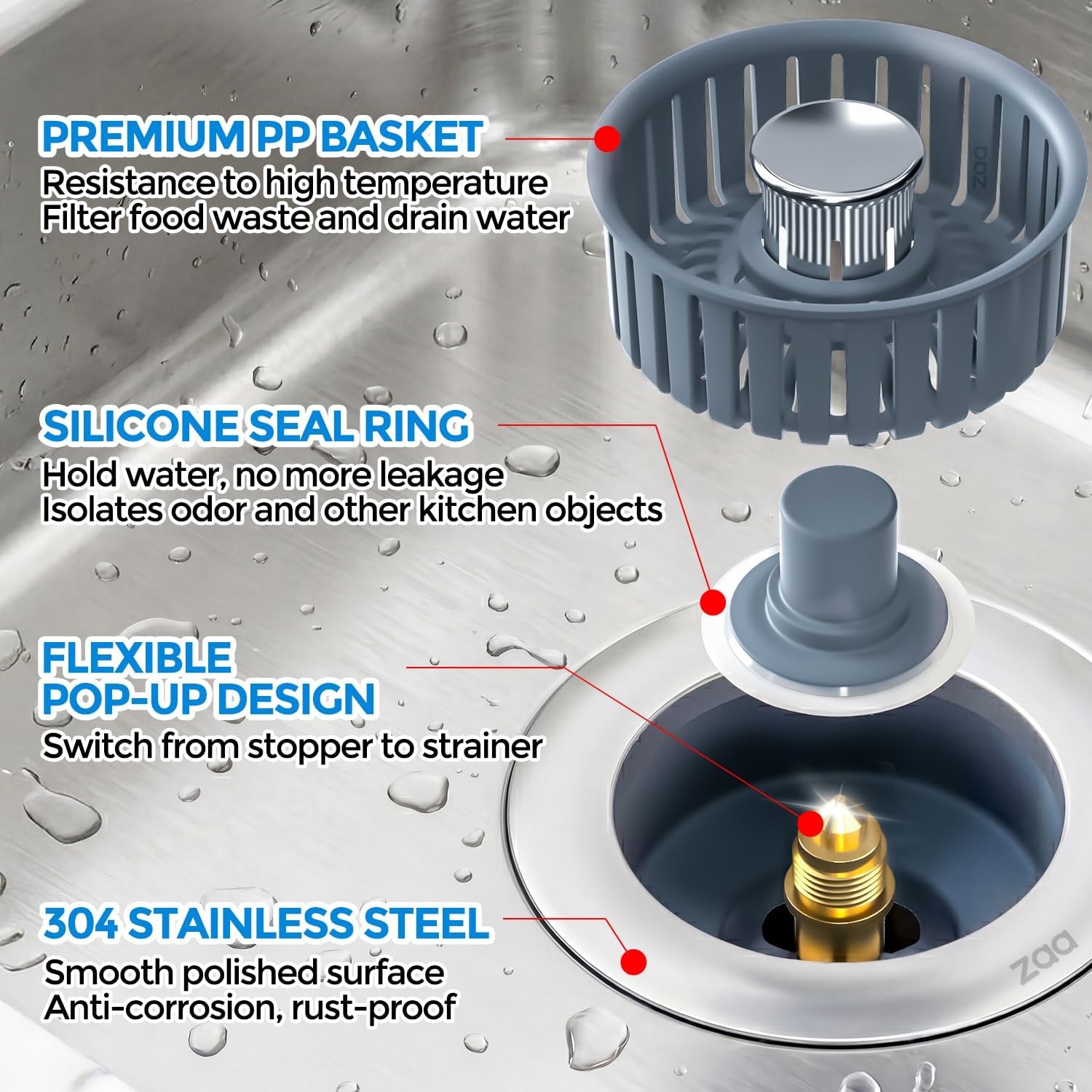
The design is simple once you see it. The visible part is a stainless steel cover that sits flush in the drain opening. Push the middle of it and an internal spring mechanism latches it into the closed position, sealing the drain so water stays in the bowl. Push it again and the latch releases, the cover rises, and water drains away around the edges.
That bounce action is the same principle used in bathroom sink drains, just scaled up for a kitchen drain. The advantage over a rubber plug is obvious when your hands are covered in suds. You tap the cover with a knuckle or the back of a spoon and the sink drains. No fishing around in cold greasy water for a chain.
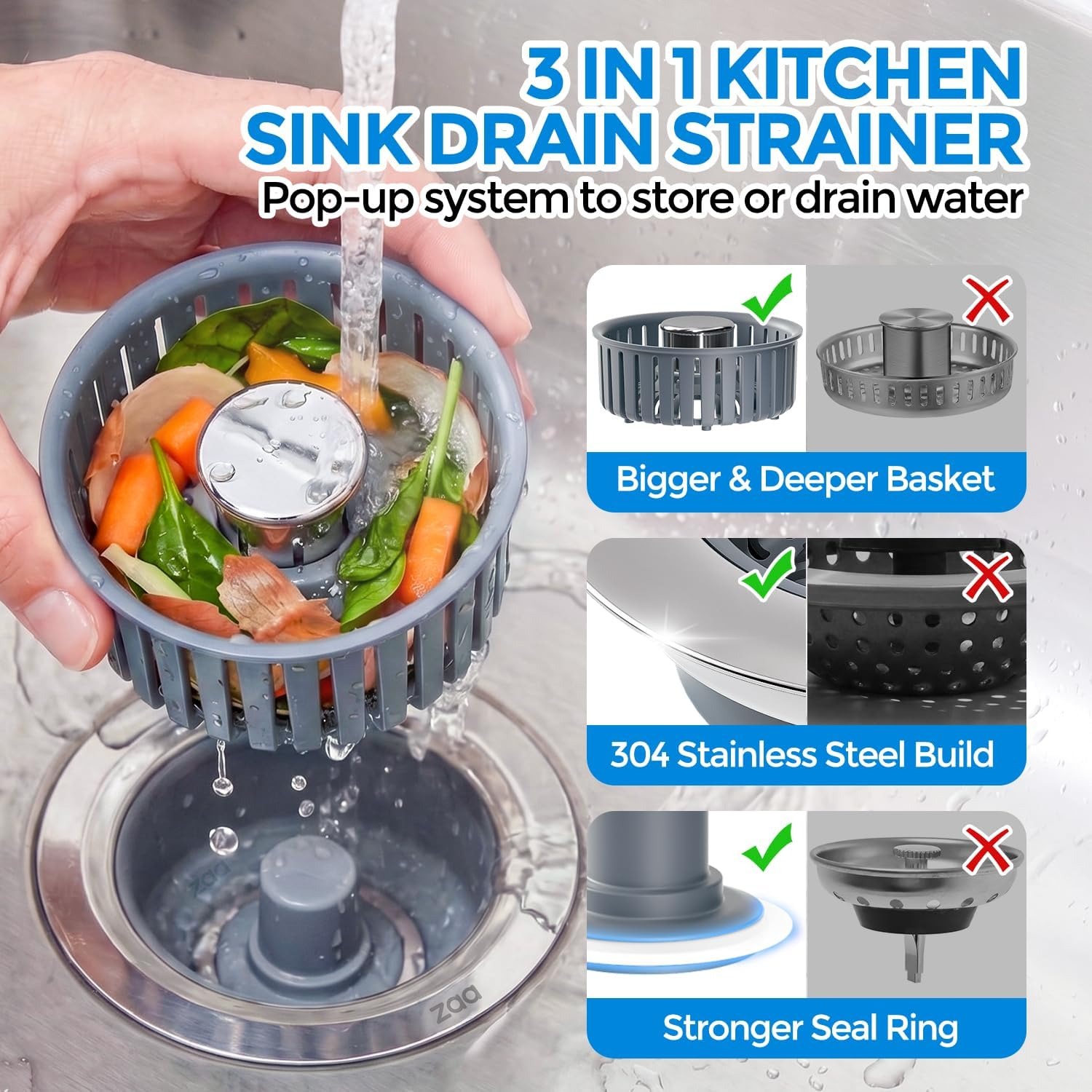
Underneath the cover sits the food catcher basket. Water flows through it while the solids stay behind. When you are done, lift the basket, tip it into the trash and rinse it. Because it comes out in one piece, you are not scraping scraps out of a fixed grate with a fingernail.
Who this suits
If you wash the dishes by hand, this is an easy upgrade. You will use the stopper function several times a day and the basket will catch things you did not even realize were going down the drain.
It also makes sense if you have a dishwasher but still rinse plates at the sink first. That rinse water carries a surprising amount of food, and it all heads for the trap.
Anyone renting a flat with an old sink and a missing plug will get value out of it too. You are not drilling, cutting or replacing any plumbing. It drops into the existing drain hole, and when you move out you can take it with you.
Households with a garbage disposal can use it as a cover and plug between uses, as long as it comes out before the disposal runs. Never leave a metal or plastic fitting in a disposal chamber when you switch it on.
Getting the size right
This is the part that trips people up, so measure before you buy. The fitting is made for a standard 3-1/2 inch drain hole, with a compatible groove diameter of 3.38 inches. That covers a very large share of kitchen sinks, but not all of them.
To measure, pull out whatever strainer is currently in the drain. Lay a tape measure or ruler across the circular opening at its widest point. Check it in two directions, because an older sink opening can be slightly out of round. Write the number down.
If your measurement lands at or close to 3.5 inches, you are in the right territory. If it comes in noticeably smaller or larger, this is not the right strainer and you should look for one sized to your drain. A strainer that is too small will not seat, and one that is too large simply will not go in.
Depth matters a little as well. This unit has an item depth listed at 1 to 2 inches, so it sits low and does not stick up into the bowl where it would catch on plates and pans.
Materials and why they matter in a sink
A kitchen drain is a tough place for hardware. It is wet almost constantly, it sees hot water, soap, acidic food waste and the occasional splash of cleaning product. Cheap materials go dull, pit or stain within months.
The cover on this one is stainless steel with a stainless steel finish in silver. Steel is used here because it handles that constant wet and heat without corroding, and because the silver tone sits quietly alongside brushed steel sinks, chrome faucets and the dark granite composite sinks that are common now.
the maker's details lists anti-clogging as its special feature, which refers to the basket design keeping flow going while it traps solids. A basket that clogs itself is worse than no basket, because the sink backs up and you take the whole thing out in frustration.
One note on honesty. Beyond stainless steel for the cover and finish, the maker does not specify the material of every component, the total weight or the country of origin. Where we do not have a confirmed figure, we leave it blank rather than guess.
Living with it day to day
The routine is short. After dishwashing, lift the basket, tip the scraps into the trash or the compost bin, rinse the basket under the faucet, drop it back in. That is it.
Once a week, give the steel cover a proper wipe with warm soapy water and a soft cloth. Limescale and dried soap film are the two things that make steel look tired, and both come off easily if you do not let them build. Dry it afterwards and you will avoid water spots.
Keep three things away from it. Steel wool, which scratches the finish. Bleach, which can mark stainless steel if it sits. And abrasive scouring powders, which leave fine scratches that trap grime.
If the press action ever feels sticky, it is nearly always grease or soap residue in the mechanism. Take the unit out, run it under hot water, work the press a few times, and let it dry before refitting.
A quick habit that saves you more hassle than the strainer ever will. Do not pour fat or cooking oil down the drain. It goes in liquid and sets solid in the pipe, and no strainer in the world catches it. Let it cool in the pan and scrape it into the trash.
What it does not do
Worth being clear. This is a strainer and a stopper, not a plumbing repair. If your sink is already draining slowly, fitting a new strainer will not clear the existing blockage. Deal with the clog first, then fit this to stop the next one forming.
It also will not filter grease, dissolved fats or very fine particles. Its job is the visible solid waste, and it does that well.
And it is one unit per pack. If you have a double-bowl sink and want both sides covered, order two.
The short version
If you hand wash dishes, you want three things from a drain fitting. It should hold water when you want it to, let it go when you do not, and keep food out of the pipe. This does all three with one press and one lift-out basket.
Check that your drain opening is around 3.5 inches, fit it in under a minute, and empty the basket when you finish dishwashing. That is the whole commitment. For the price of a takeaway, you stop losing plugs, stop fishing scraps out of a grate, and give your drain a much easier life.