
The complete guide
How to Choose and Fit a Tip Toe Tub Drain Stopper
The tub that will not hold water
You fill the tub, get in, and ten minutes later the water is halfway down your back instead of your shoulders. Or you pour in a tub for a child and come back to find it draining away while the faucet is still running. It is one of the most common complaints in older bathrooms, and almost nobody calls a plumber about it. They just top the tub up and live with it.
The cause is usually simple. Tub stoppers have a rubber or silicone seal that has to press flat against the drain to hold a few hundred liters of water. That seal spends its life wet, warm and coated in soap residue. After a few years it hardens, cracks or distorts. The mechanism behind it also wears. Lift and turn stoppers loosen on their threads. Trip lever plungers stick. Tip toe units lose their spring tension and stop locking down.
Replacing the whole drain body is a real job involving pipe work from underneath. Replacing just the stopper is not. That is the gap this product fills.
What a tip toe stopper actually is
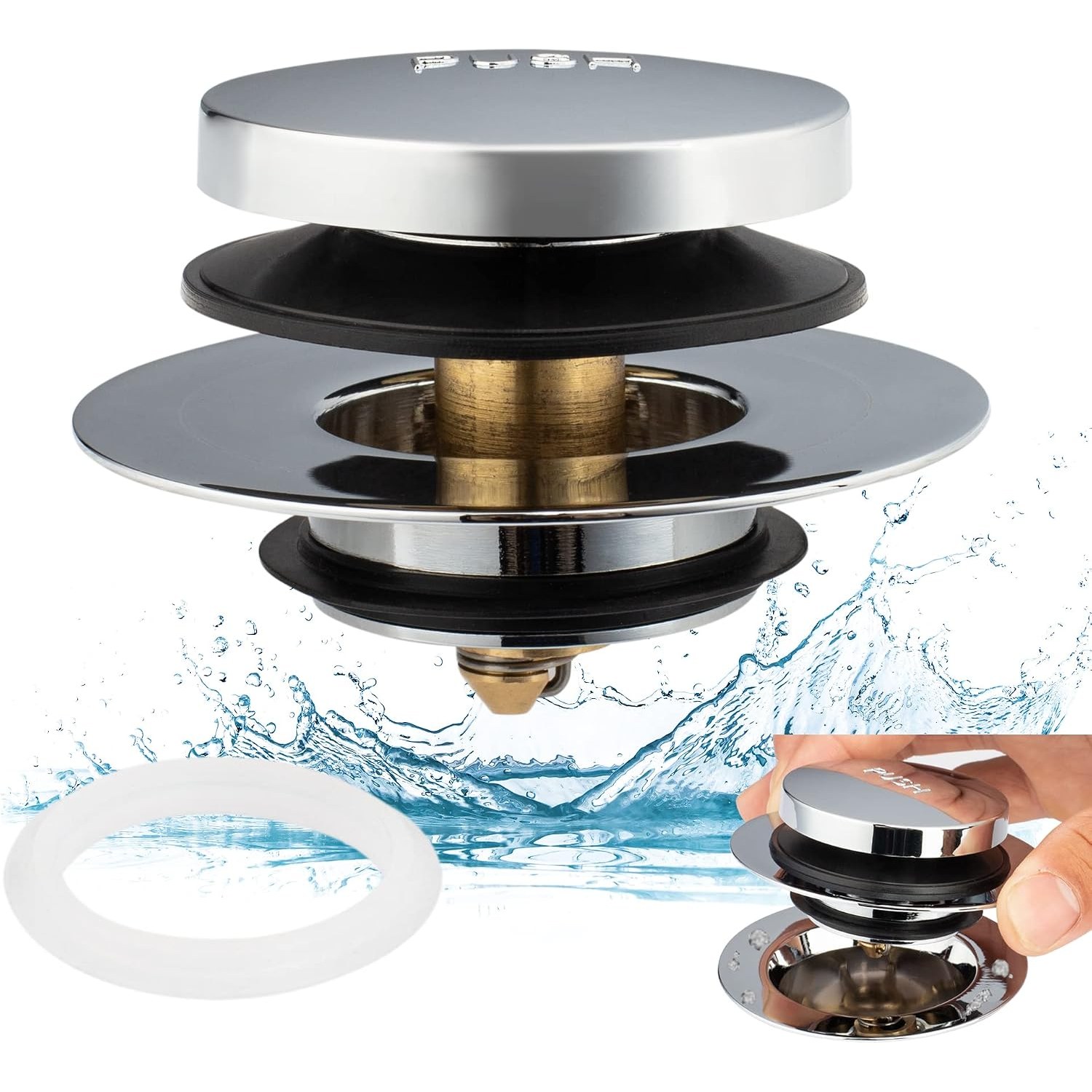
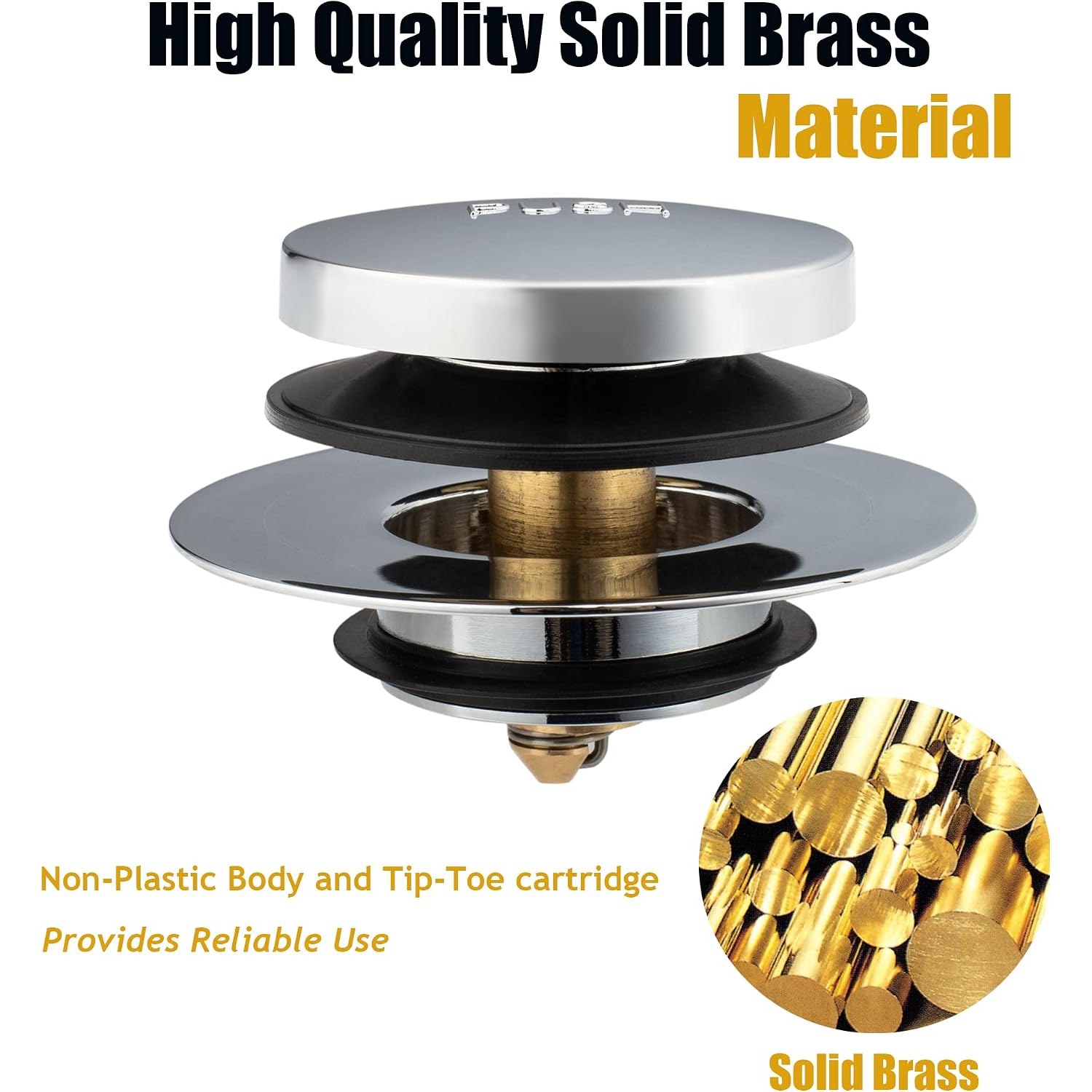
A tip toe tub drain stopper and cover is a two-part unit. There is a post that goes down into the drain opening with an o-ring around it, and a cap that screws onto the post and sits visible in the base of the tub.
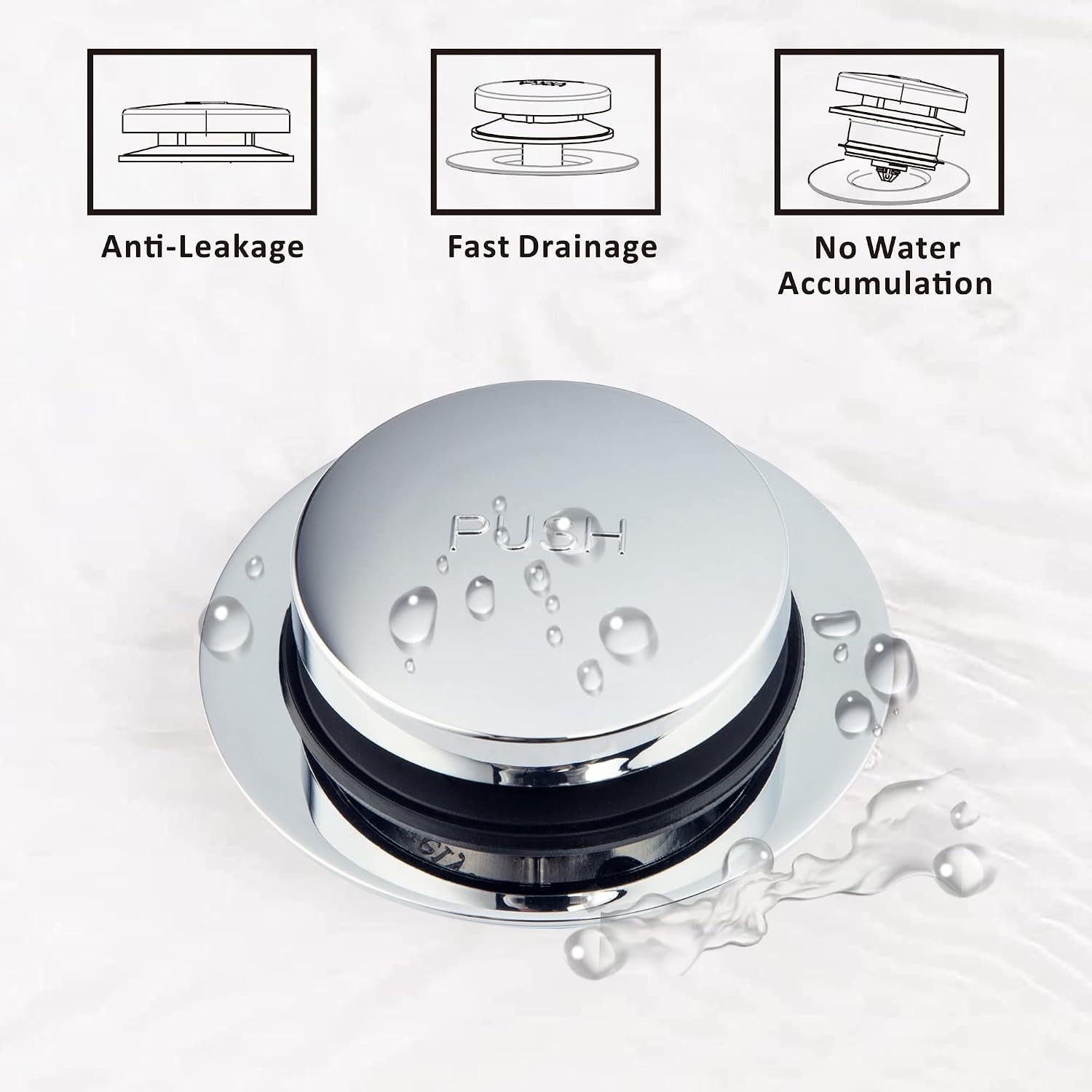
Push the cap with your toe and it drops, locks and seals. Push again and a spring releases it so it pops up and water drains. There is no knob to grip, no lever to flick, and nothing to reach into the water for. Anyone with stiff hands, sore knees or a bad back will notice the difference immediately.
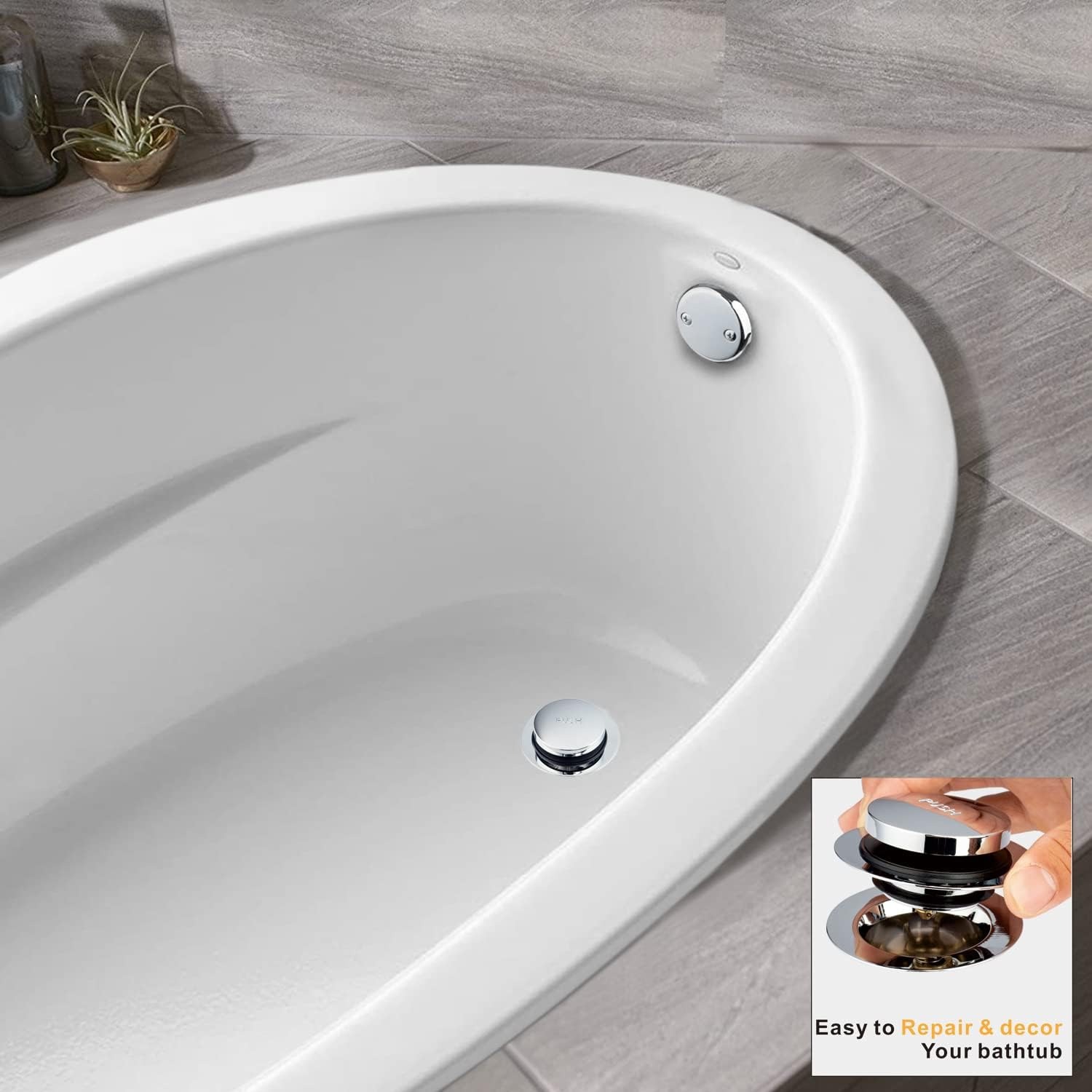
The second half of the name matters too. It is a cover as well as a stopper. The cap is wider than the drain opening, so it hides the old waste plate. If yours is pitted, water-stained or scratched from years of cleaning, it simply disappears under the new cap.
How this one is built
This unit is made of brass with a chrome plated finish. That matters more than it sounds. The part sits submerged for hours at a time and is cleaned with whatever is under your sink. Light plastic flexes and stops sealing. Thin plated steel pits once the coating wears. Brass handles damp well and gives the cap a bit of weight, which is why a solid brass tub drain stopper tends to outlast the cheap ones.
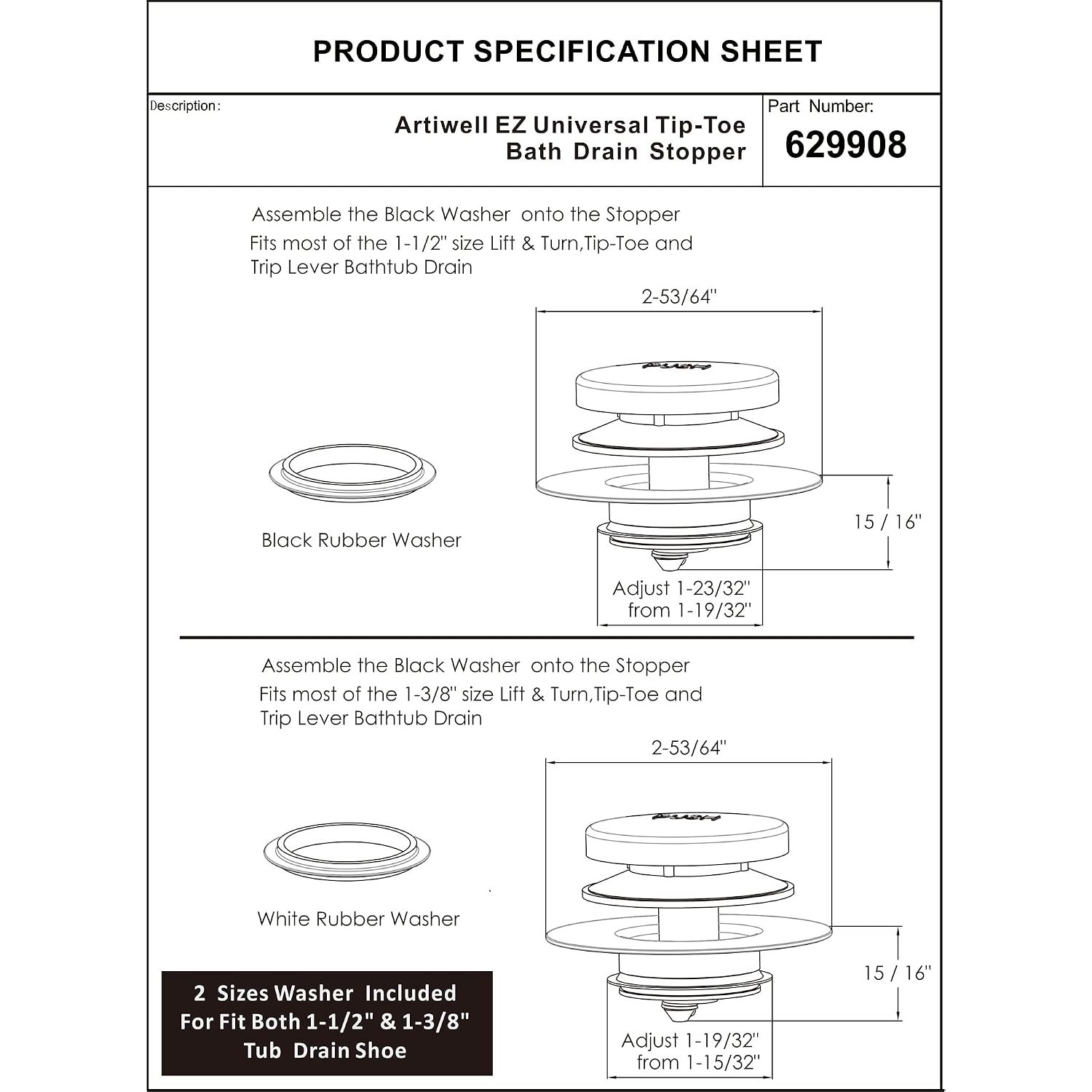
The cover is 2.84 inches wide and 1.99 inches tall. The packed item weighs 0.15 kg. It ships as a single unit, one per pack, so order one per bathroom.
A few details are not listed by the maker. Country of origin, a specific color code and overall packed carton dimensions are not given. If any of those matter for your order, ask us and we will check with the maker before you buy.
Will it fit your drain
This is the only question that really matters, so measure before you order.
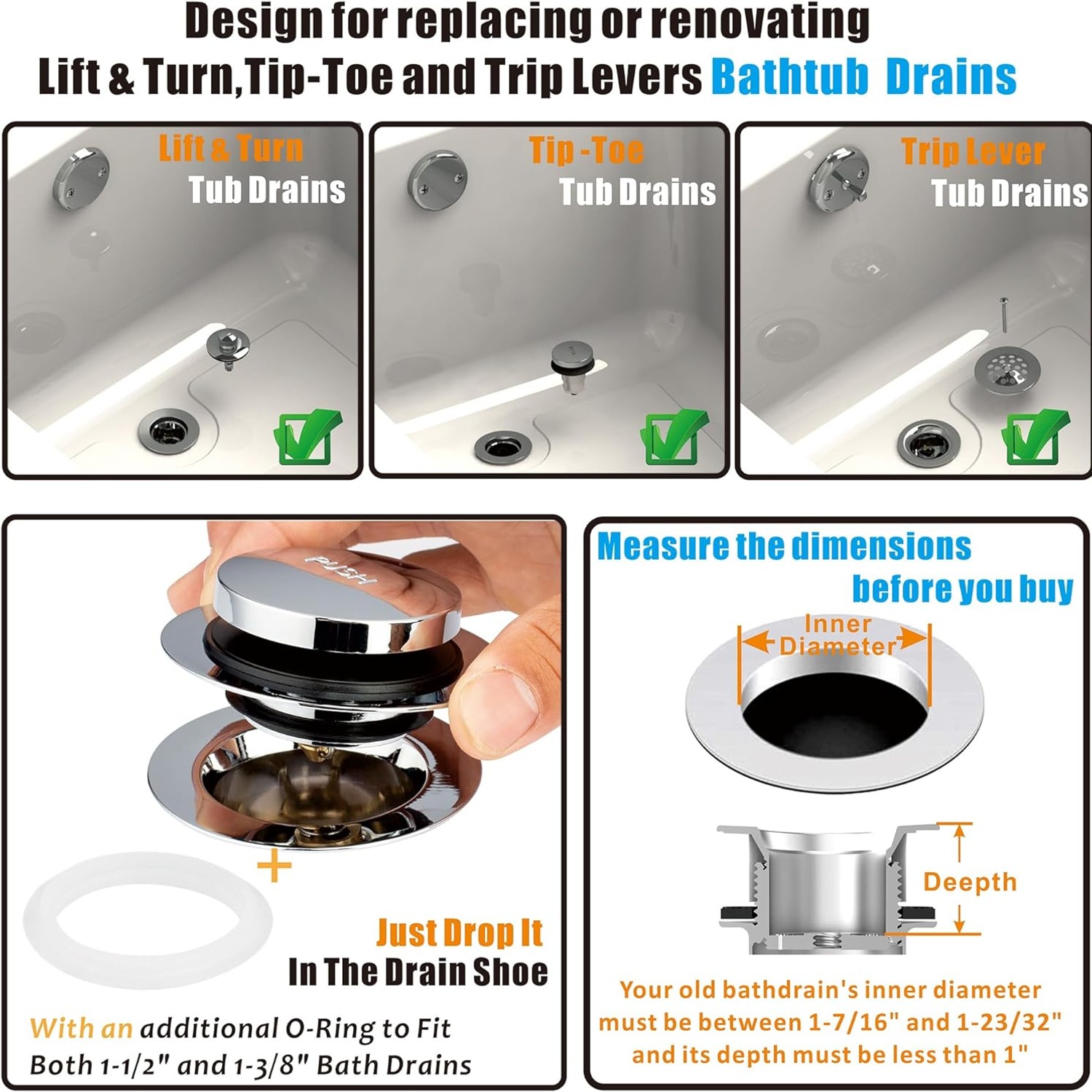
Pull your old stopper out and look down into the drain. You need two numbers. First, the inner diameter of the smooth section of the drain opening. Second, how deep that smooth section runs before it narrows or steps in.
The manufacturer states this unit suits drains with an inner diameter between 1-7/16 inch and 1-23/32 inch, with depth under 1 inch. Two o-ring types are supplied, one for 1-3/8 inch drains and one for 1-1/2 inch drains. You pick whichever gives a firm grip.
It is described as compatible with most lift and turn, tip toe and trip lever bathtub drains. If you have a trip lever setup, the internal plunger in the overflow can usually stay where it is, since this unit seals at the drain opening instead. That makes it a straightforward lift and turn drain replacement or a trip lever drain stopper replacement without opening up the overflow plate.
What will not work is a shower base with a wide, shallow waste, or a bathroom sink, which uses a different standard entirely. Measure rather than assume.
Fitting it yourself
This is a hand job, not a plumbing job. You are not removing the old drain body, so there is no pipe work, no putty, and no reason to book a tradesperson.
Start by taking the old stopper out. Lift and turn types normally unscrew anticlockwise once you lift the knob. Tip toe types usually unscrew from the top as well. If the old one is seized, a rag for grip or gentle pliers will shift it. Be patient rather than forceful, since the drain body underneath is the part you want to keep intact.
Next, clean the inside of the drain opening. Years of soap film and hair sit just below the rim, and a clean surface is what lets the o-ring grip. A cloth wrapped around a finger does most of it.
Then choose your o-ring. Slip one on, try the fit, and swap to the other if it slides in too easily or will not seat at all. It should need a firm push.
Finally, screw the cap down onto the post. As you tighten, the o-ring compresses outwards and grips the drain wall. Tighten by hand until it feels solid, then test it. Fill the tub a few inches, leave it twenty minutes, and check the level has not moved. That no tools tub drain stopper approach means if something is not right, you simply back it off and try again.
Living with it
Care is mostly about restraint. Wipe the cap with a soft damp cloth and mild soap, then dry it so water marks do not set. Avoid scouring pads, powders and aggressive limescale removers, because those are what wear through plated finishes.
Every few weeks, unscrew the cap and lift the unit out. Clear the hair and soap build-up sitting underneath, rinse the o-ring, and put it back. That five-minute habit keeps the tub draining fast and stops the seal from being held open by trapped debris.
If the seal weakens over time, check the o-ring first. Grit under it, or a flattened section, causes most slow leaks. Clean it, reseat it, and tighten down again. O-rings are a wear part on any bathtub plug replacement and can be swapped when they eventually go.
Who it suits
Renters and landlords like it because nothing permanent changes. The original drain stays put, so the stopper can be removed and the bathroom handed back exactly as it was.
Older homeowners like the toe action. Not having to bend over a full tub or fish a plug out of cooling water is a genuine daily improvement.
People mid-renovation use it as a cheap tidy-up. New faucets against a scratched old drain look odd. A fresh chrome cover closes that gap for a fraction of the cost of replacing the waste.
Parents like it because a tub that holds its level means less topping up with hot water and less standing around.
The short version
If your tub drains while you are in it, the stopper is almost always the culprit, not the plumbing. This brass unit sits over your existing drain, seals with one of two supplied o-rings, and opens and closes with a press of your toe. It covers the old drain opening at the same time, so the repair looks deliberate rather than patched.
Measure your drain's inner diameter and depth first. If they land between 1-7/16 inch and 1-23/32 inch wide and under 1 inch deep, you are in range. Ten minutes with your hands and you have a tub that holds water again.