

The complete guide
How to Choose a Toilet Plunger with Holder (and Actually Clear the Blockage)
The real problem with a blocked toilet
Nobody plans for it. The bowl fills, the water sits there, and you have about ten seconds to decide what to do before it either drains or does not. That moment is when you find out whether you own a decent plunger or a rubber cup on a stick.
There are two failures that happen again and again. The first is the seal. If the rubber does not grip the drain opening, every push you make just pushes water sideways and out over the rim. You end up sweaty, splashed, and no further forward. The second failure happens afterwards. You clear the blockage, and now you are holding a dripping plunger with nowhere to put it. It goes behind the cistern, drips on the floor, and stays damp for a week.
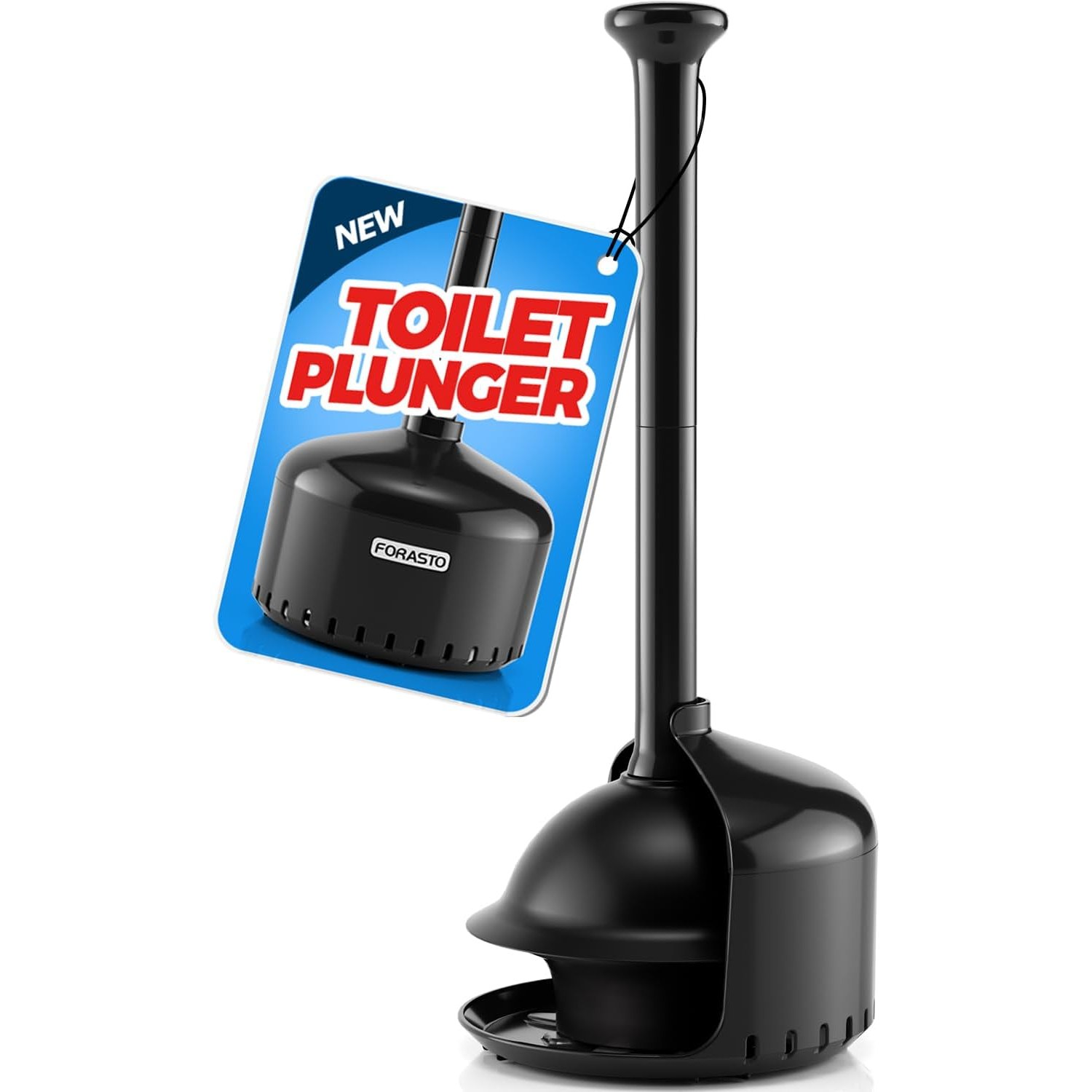
A toilet plunger with holder is designed to solve both problems at once. The head is shaped to seal, and the caddy gives the wet thing somewhere sensible to live.
How a plunger actually works
A plunger is not a scraper. It does not reach down and break anything apart. What it does is move water.
When the head seals against the drain and you push, the water in the trap gets shoved forward against the blockage. When you pull back, it gets dragged in the other direction. That back-and-forth motion is what breaks a clog loose, and it only works if the water has nowhere else to go. Any leak in the seal and the pressure vents instead of pushing.
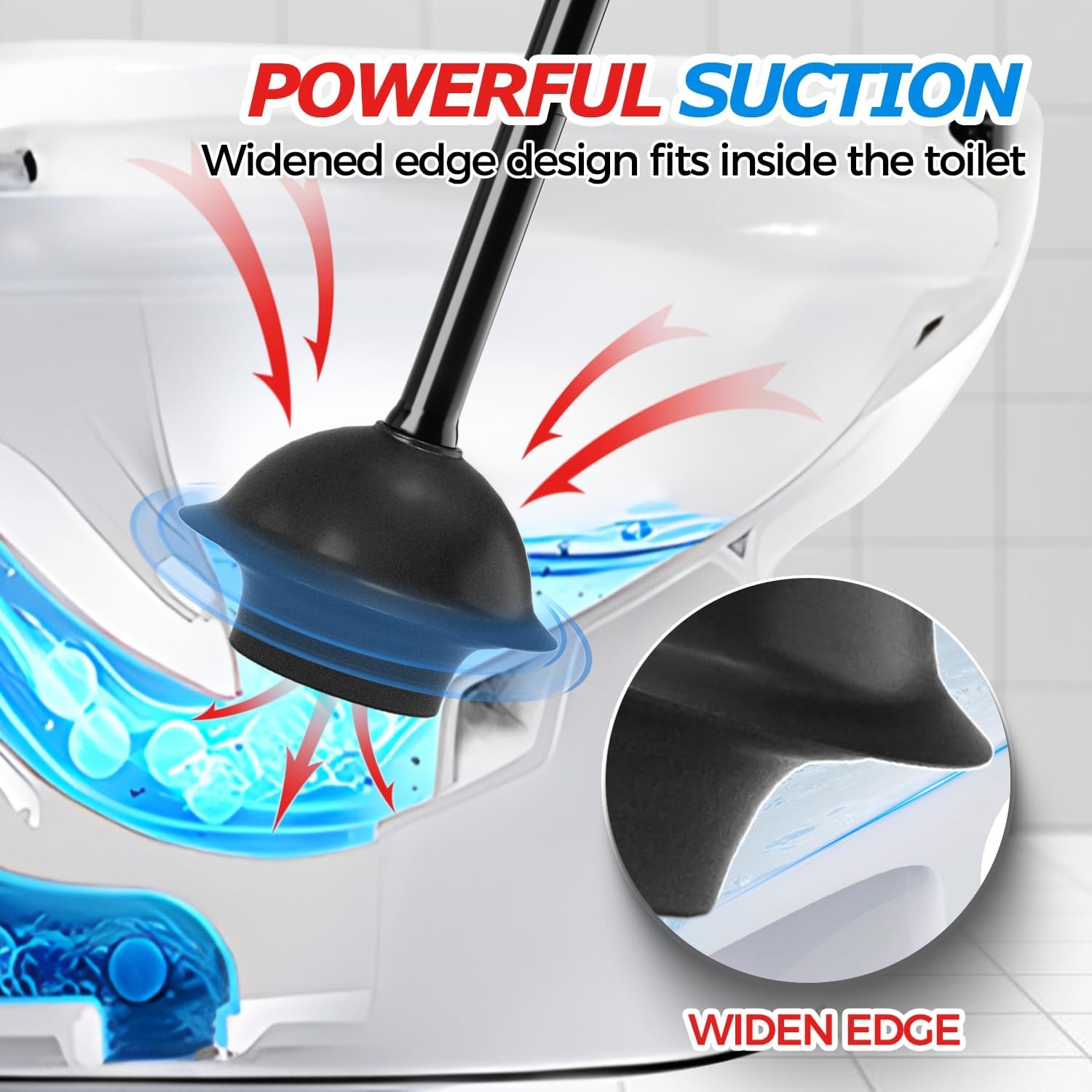
This is why the head design matters more than how hard you can push. A double-layer head folds into the curved outlet of a porcelain bowl and holds its shape under pressure. The extra layer of rubber resists collapsing sideways when you lean on it. In practice that means a steadier seal and more usable force per stroke.
It is also why water level matters. Water does not compress. Air does. If the bowl is low and your head is half out of the water, most of your effort goes into squeezing air. Add a jug of water first and you will feel the difference immediately.
Flange or cup, and why this one is both
Walk down the hardware aisle and you will see two shapes.
The cup plunger is the classic red half-sphere. It is made to sit flat on a flat surface, which is what a sink, a shower drain or a floor grate gives you. It is useless on a toilet, because a toilet outlet is a hole in a curve, and the cup cannot grip it.
The flange plunger has a soft extension poking out of the cup. That extension pushes into the toilet outlet and forms the seal the cup alone cannot manage. It is the right tool for a bowl and the wrong tool for a flat drain, because the flange props the cup up off the surface.
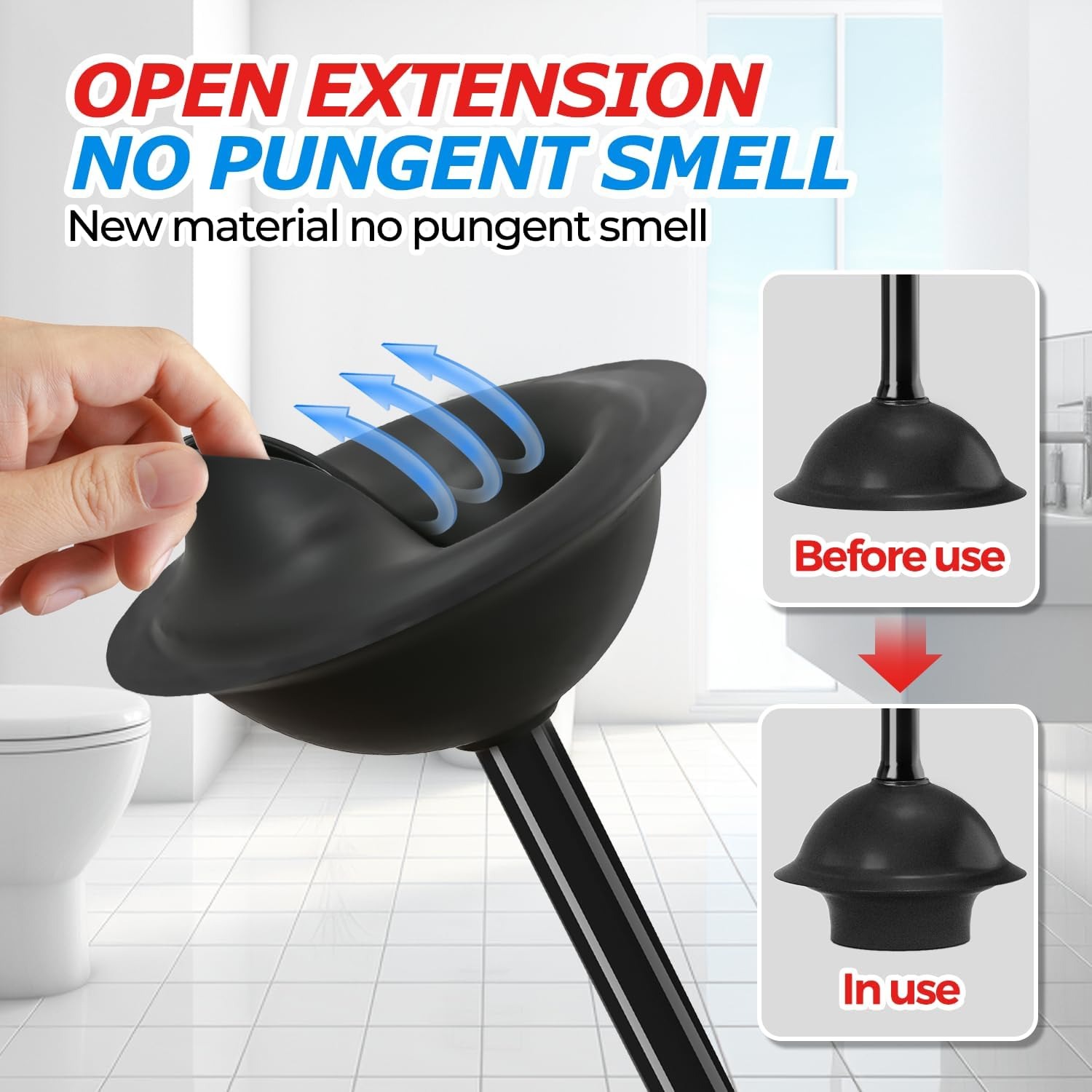
Most households need both and own one. The design here handles it with a fold. Open the extension section and you have the flange shape for the toilet. Fold it flat and you have a plain cup for the shower or laundry grate. It is a small bit of engineering that saves you buying and storing a second plunger, and it is the main reason people shortlist this as a best heavy duty bathroom plunger rather than a toilet-only tool.
Why the handle length matters more than you think
Handle length gets overlooked because it sounds like a minor detail. It is not.
A short handle makes you crouch. Crouching over a full toilet bowl means your face and forearms are close to water you would rather not be close to, and it limits how much force you can put through your arms. You end up using your wrists instead of your body weight.
An extended handle lets you stand straighter and push down through your shoulders. More force, less effort, and a comfortable distance from any splashback. The handle on this one is plastic rather than wood, which matters in a wet room. Wood absorbs water, swells, and eventually splits or splinters. Plastic wipes clean and does not care about humidity.
The storage problem that nobody mentions in the shop
Here is the honest truth about plungers. The twenty seconds you spend using one are easy. The rest of the time it has to live somewhere.
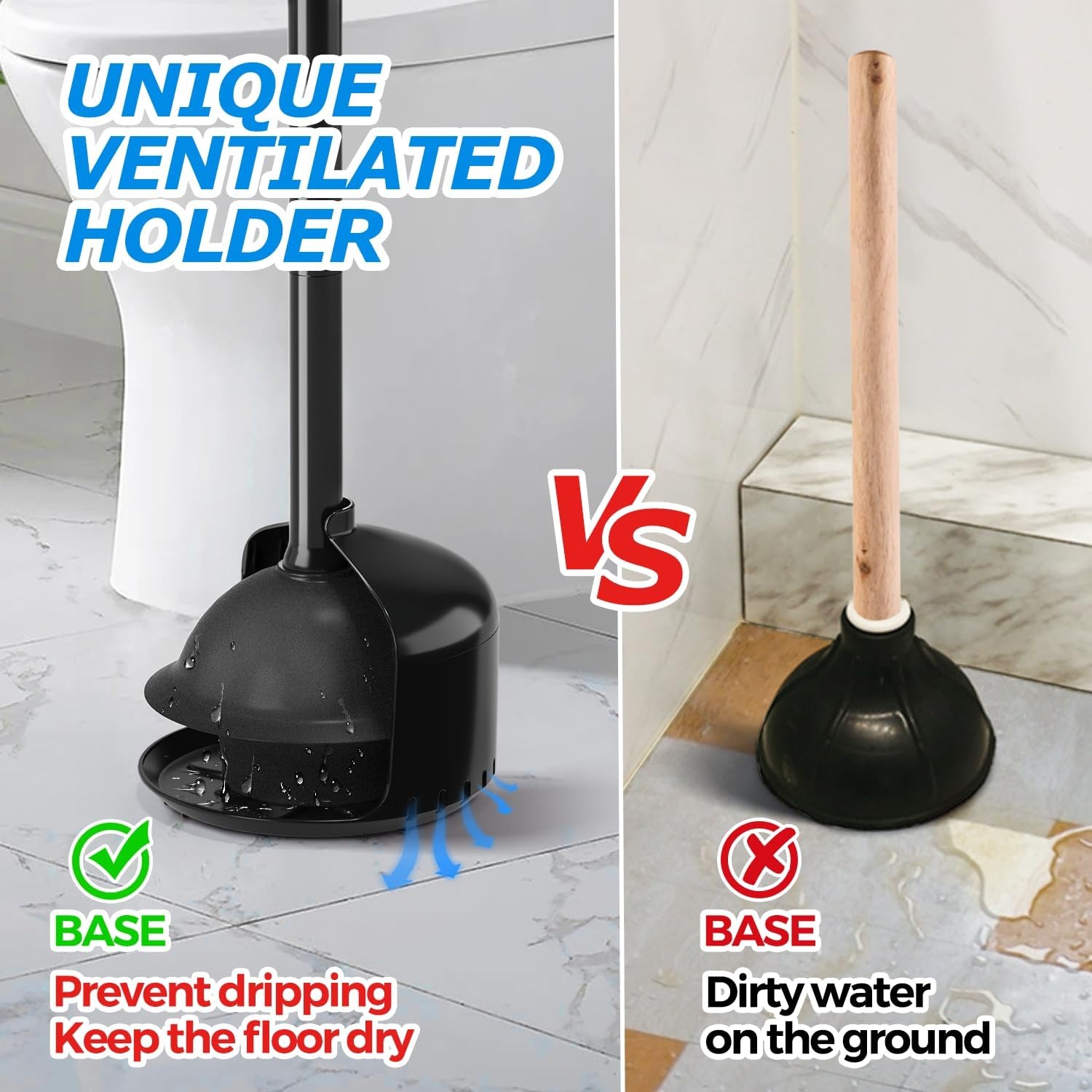
A bare plunger standing in the corner drips. The drips leave a ring. The rubber stays damp, and damp rubber in a warm bathroom develops a smell. Then there is the look of it, which is fine in a garage and less fine in a guest bathroom.
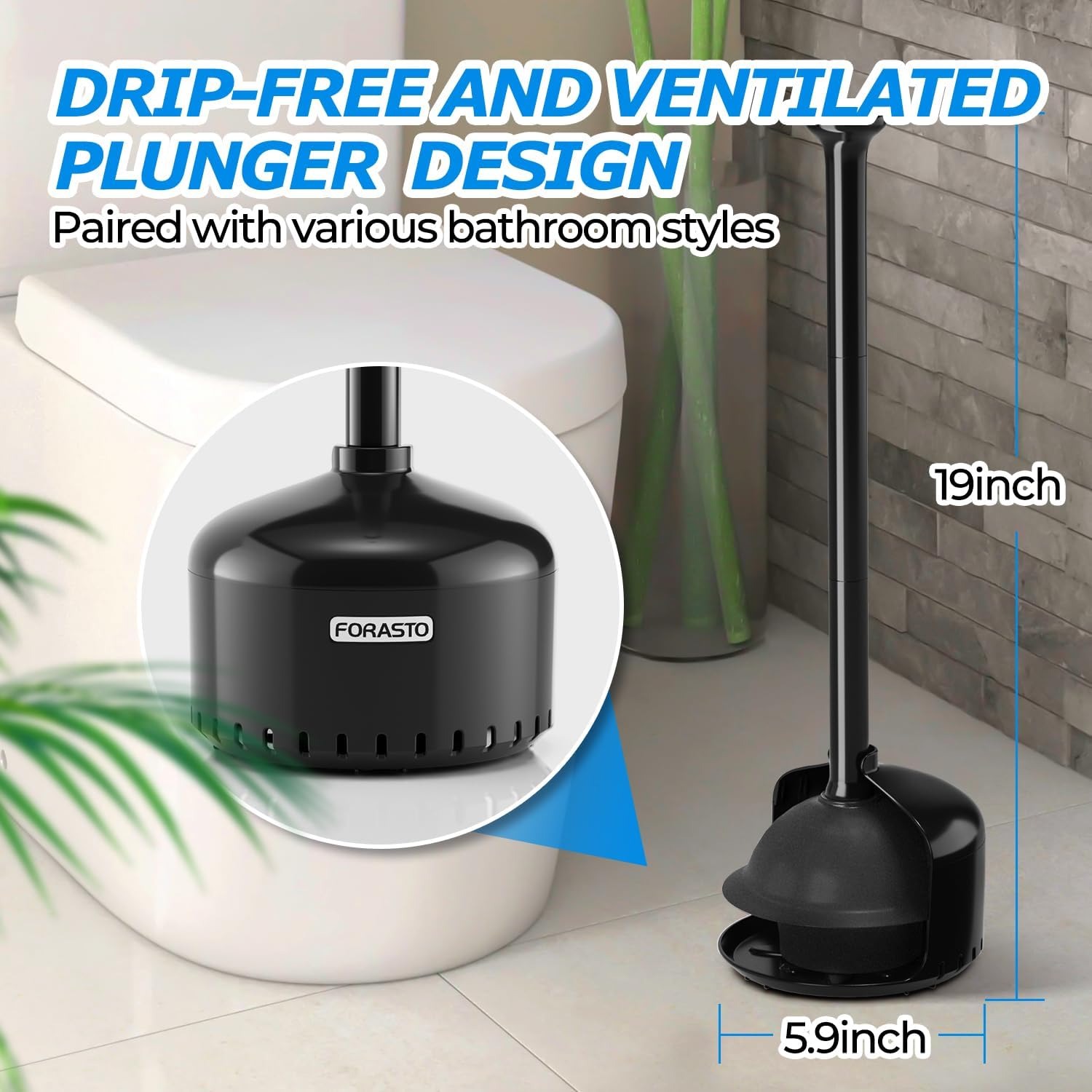
The ventilated holder solves this in a plain way. The head sits inside the caddy so drips land in the base instead of the tiles. The sides are open, so air moves around the rubber and it dries properly between uses. Drying is the single biggest factor in how long a plunger lasts and how little it smells.
The flippable base is a nice extra. Turn it over and the head sits partly out of sight, which takes the edge off having a plunger on display. In a small apartment bathroom where there is no under-sink cabinet to hide things in, that is worth something.
Who this suits
Renters and apartment dwellers get the most out of it. Nothing needs mounting, nothing needs drilling, and the caddy protects floors you do not own.
Families with kids find it useful because the extended handle makes the job less of a contortion, and because toilets in a busy house block more often. Anyone with older plumbing, low-flow toilets, or a household that goes through a lot of paper will get use out of it too.
It is also a reasonable thing to keep in a second bathroom or a guest powder room, where you want a solution on hand but you do not want it to be the first thing a visitor notices.
Using it properly
Lower the head into the water slowly rather than dropping it in. Dropping it traps air under the cup, and trapped air is a leak waiting to happen.
Seat the extension into the drain opening and press down once, gently, to let the rubber settle. Then plunge with firm, straight strokes. Straight up and down, not angled. Fifteen to twenty strokes is usually enough to tell you whether it is going to move.
Keep the final pull controlled. Yanking the plunger out at the end is how water ends up on the walls.
If several rounds of proper plunging do nothing, stop. At that point the blockage is probably deeper than the trap, and more pushing will not fix it. That is a job for a drain auger or a plumber.
Looking after it
Rinse the head under running water or in clean flush water straight after use. Shake it off. Wipe the handle with warm soapy water or a disinfectant spray.
Then put it back in the holder and let it dry. That last step is the one people skip, and it is the one that matters most. Rinse the base of the caddy every so often so nothing sits in it.
Keep it out of direct sun. UV light hardens rubber over time and a hardened head will not seal. Keep sharp objects away from it for the same reason, since a small nick in the rim ruins the seal permanently.
The short version
A plunger lives or dies on its seal, and a double-layer head gives you a better one. The folding extension means one tool covers the toilet, the shower and the floor drain. The longer handle keeps you upright and your hands clear of the water. And the ventilated caddy means the thing dries out and stays off your floor instead of lurking damp behind the cistern.
It is a simple black set, light at 0.41 kg, with nothing to assemble and nothing to break. Keep it next to the toilet, not in a cabinet down the hall. The whole value of owning one is being able to reach it in five seconds.