
The complete guide
How to Choose and Fit a Washing Machine Drain Hose Extension
The gap nobody plans for
You get the new washing machine home, slide it into the alcove, reach behind it with the drain hose, and come up short. Not by much. Half a meter, maybe less. But short is short, and now you are either leaving the machine jutting out into the room or you are improvising something with a bucket, which nobody should be doing in a laundry.
This is the single most common reason people go looking for a washer drain hose extension kit. The hose that ships with an appliance is sized for the most convenient possible installation, where the standpipe sits right behind the machine. Real rooms are rarely that tidy. The drain is under the sink, or around the corner, or on the far wall because that is where the plumbing ran when the house was built.
A 10 ft extension solves the distance problem for a fraction of what it costs to move a drain.
How a drain hose extension works
A washing machine pumps its waste water out under modest pressure. The hose carries that water to a standpipe, a laundry tub, or a drain connection. An extension simply adds length to that run.
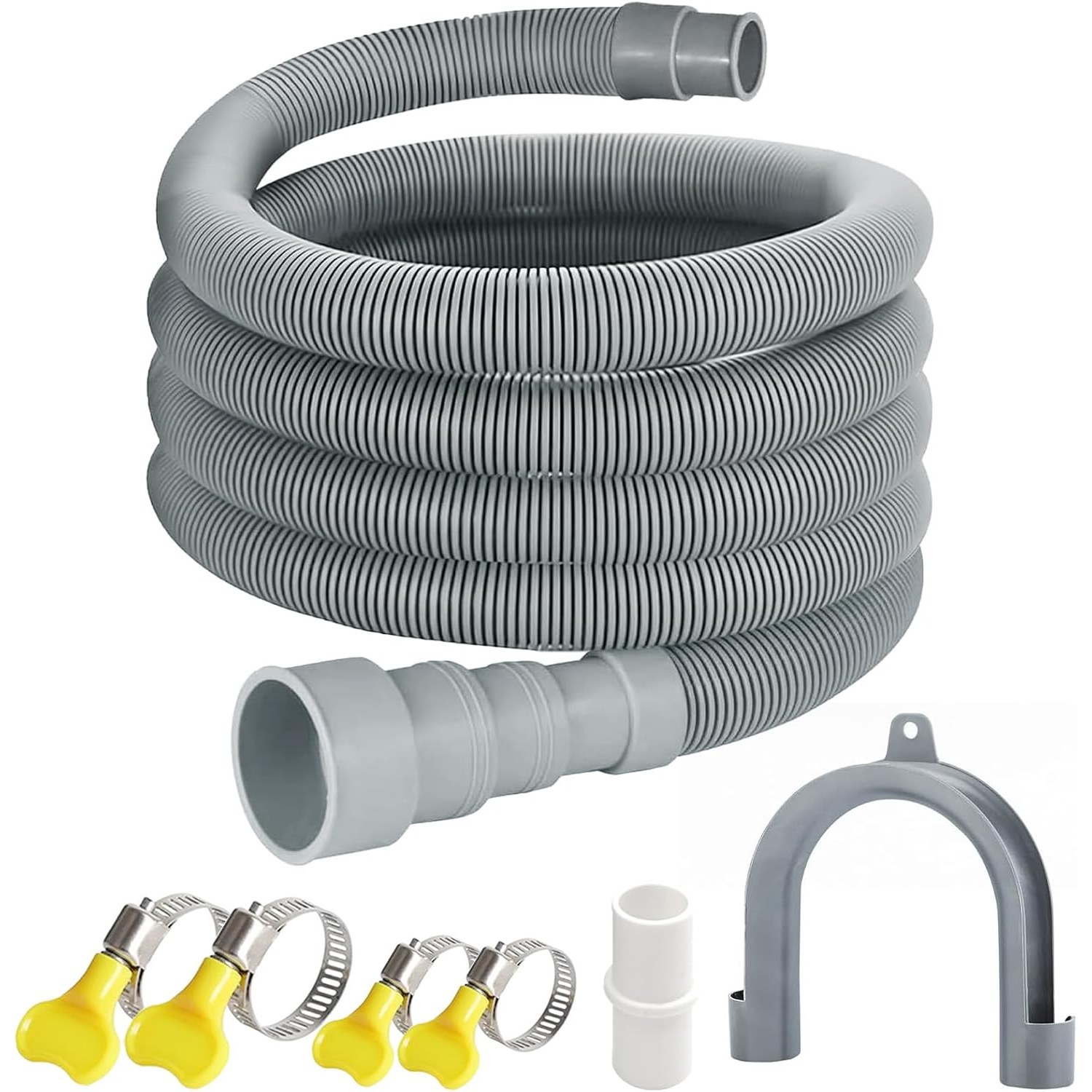
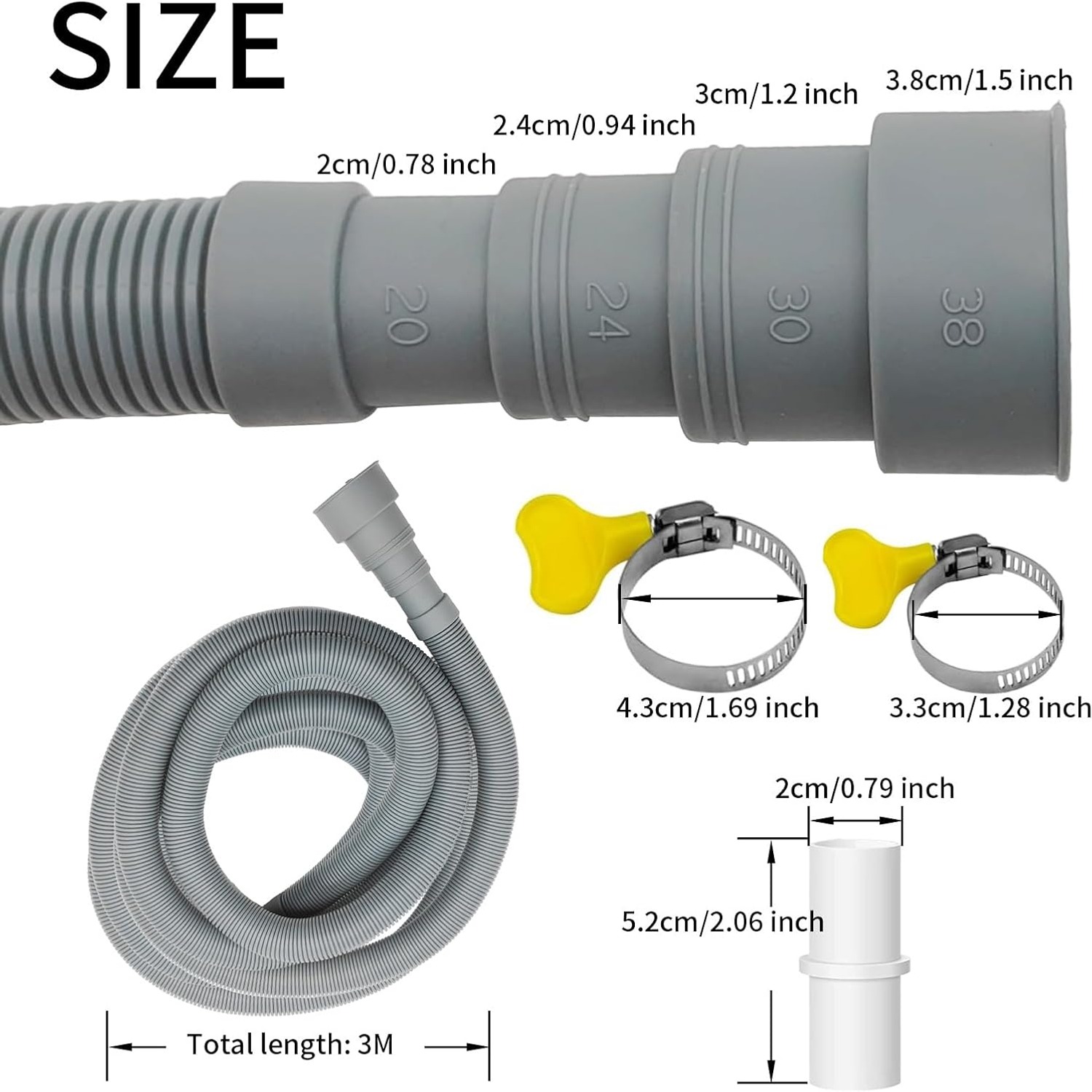
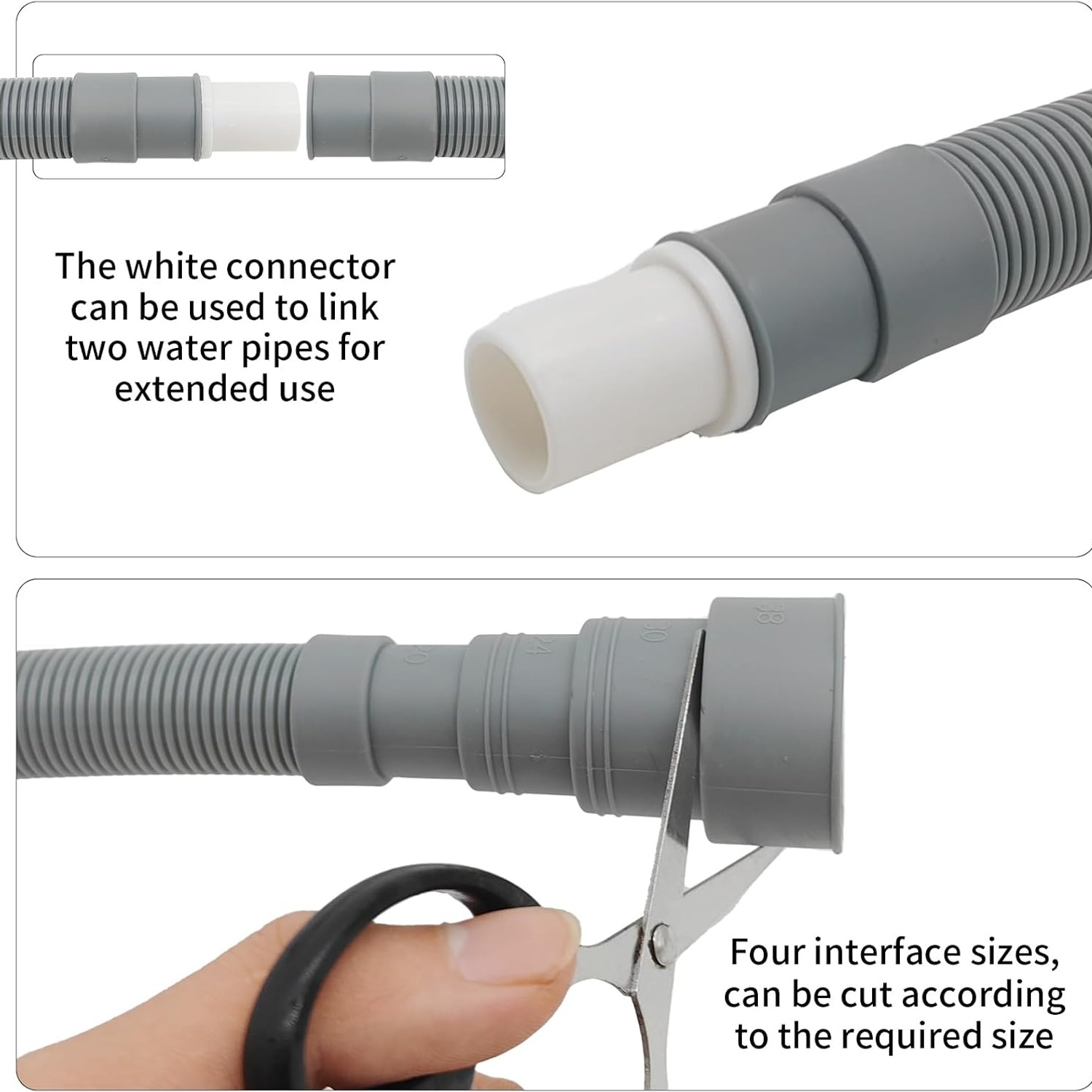
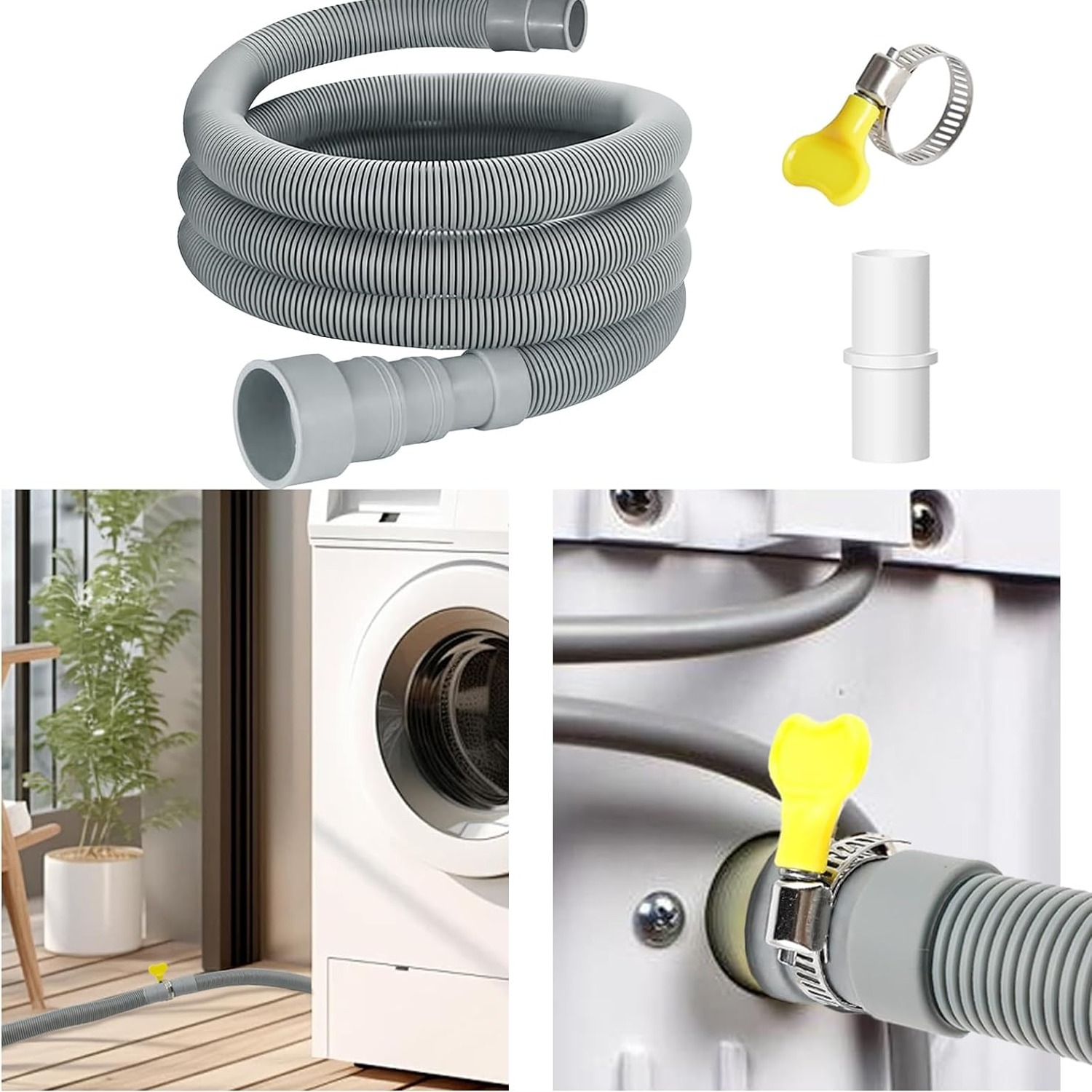
The join is where the thinking happens. You need an adapter that fits the outside diameter of your appliance's existing hose on one side and the extension on the other, plus clamps to hold both overlaps tight. This kit includes one adapter and four heavy-duty clamps, which covers both ends of the join with a couple spare.
The third piece is the U-bend holder. It is a curved bracket that grips the discharge end of the hose and keeps it hooked over a standpipe lip or tub rim. Without one, the hose can jump during a fast drain cycle and slip out, and a washing machine emptying onto a floor is a bad few minutes. For the price of a small plastic part, that risk mostly goes away.
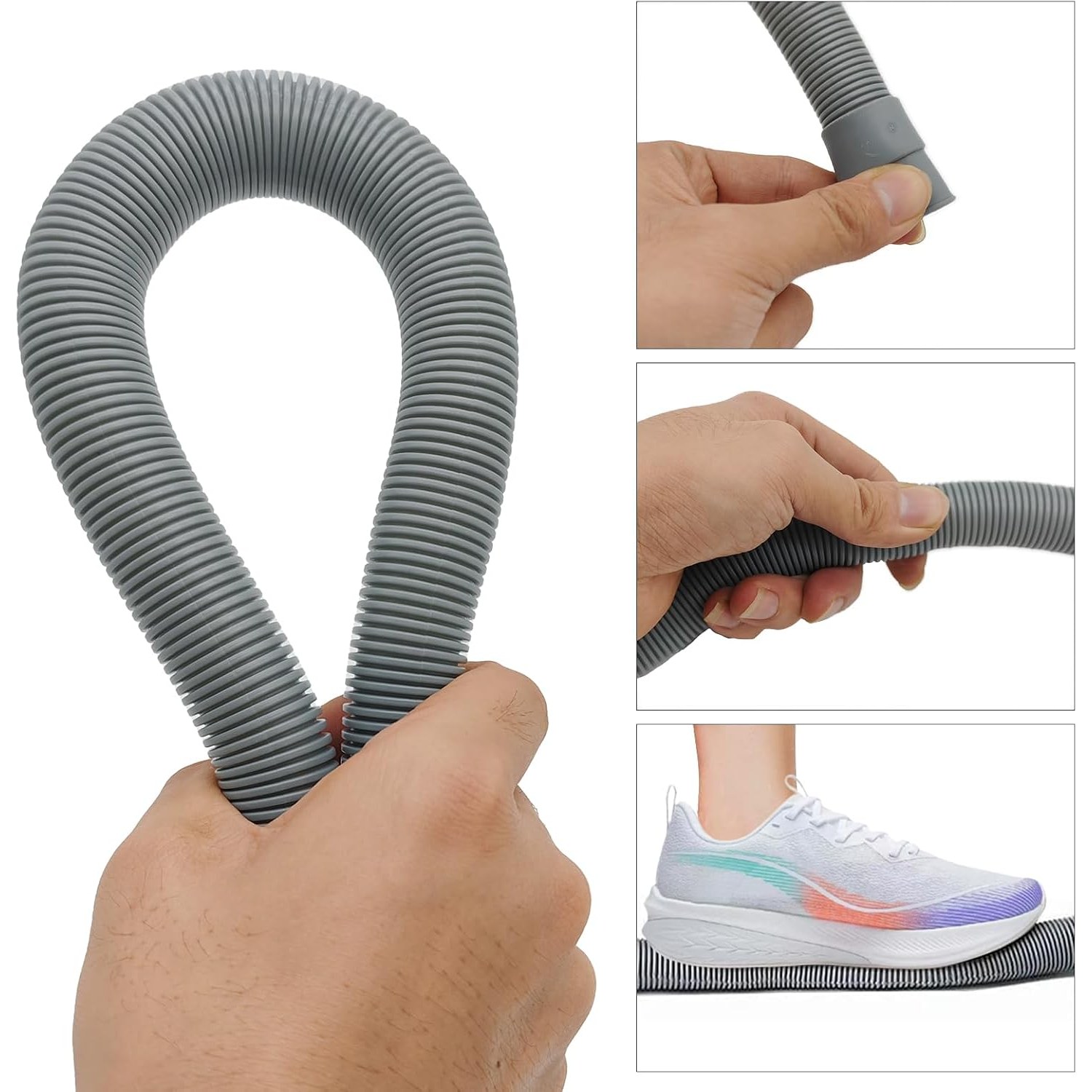
The hose itself is listed as polypropylene with a 0.95 inch outside diameter and a nominal wall thickness of 0.125 inches. Those numbers matter when you are checking fit. Measure your existing hose before you order.
Who this suits
If your machine sits more than an arm's length from the drain, you need an extension. That covers a lot of situations. Garage laundries where the machine is against one wall and the drain is at the tub. Kitchens where a dishwasher or washer tucks into a run of cabinets. Rented apartments where you cannot touch the plumbing and have to work with what is there. Renovations where the machine has moved but the pipework has not.
It also suits anyone who has just bought a slightly larger machine and discovered it no longer sits as close to the wall as the old one did. A few centimeters of extra depth can be all it takes to run out of hose.
It is not the right answer if the distance is genuinely long. Chaining extensions together to cover five or six meters puts more load on the pump and adds leak points. At that stage, get a plumber to look at relocating the drain connection.
Choosing the right one
Three things decide whether an extension works for you.
Diameter. This is the one people get wrong. Measure the outside diameter of the hose coming off your appliance and compare it with the kit. The best universal washer drain hose extensions come with an adapter and multiple link sizes precisely because appliance hoses vary a little between brands, but it is still worth measuring.
Length. Pick enough to reach with a gentle curve at each end, not so much that you have three meters of spare hose coiled behind the machine. Excess hose sitting in loops can trap water and smell over time. If you have a lot left over, secure the slack high and tidy rather than letting it puddle on the floor.
What comes with it. A bare hose is cheap but useless on its own. Check that clamps and an adapter are included, because buying them separately costs more and means a second trip. A kit with a U-bend holder saves you another small purchase.
Fitting it without drama
Turn the machine off at the wall first. Pull it forward far enough that you can get both hands behind it comfortably. If the floor is a hard surface, slide a towel or a piece of cardboard underneath so the feet do not scratch it.
Have a shallow tray and a towel ready. The existing hose will hold a cup or so of water and it will come out when you disconnect.
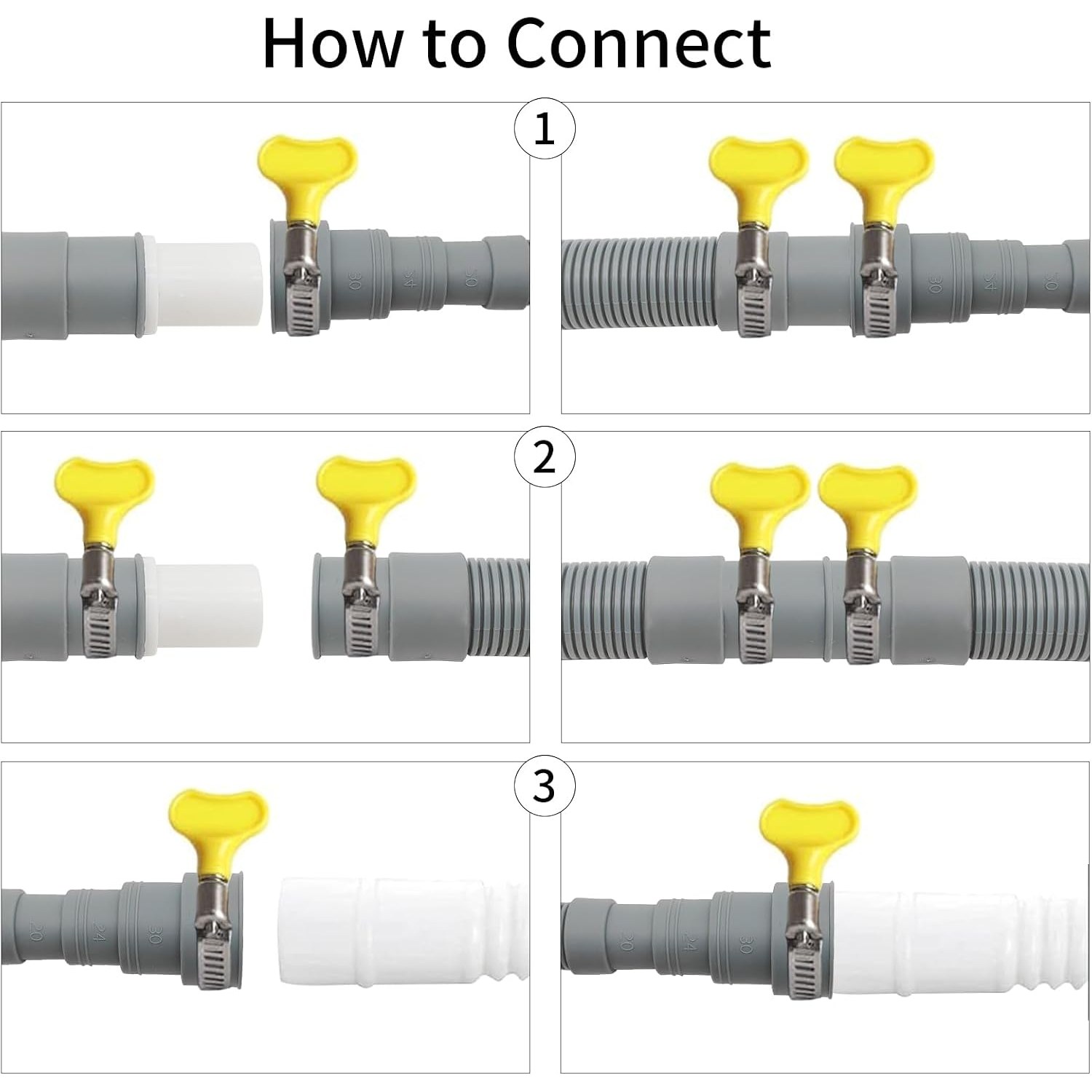
Push the extension onto the adapter until it seats properly, then do the same on the appliance side. Position each clamp over the overlap, not right at the cut edge, and tighten evenly. Over-tightening can crack a plastic fitting, so firm is enough.
Route the hose so it curves rather than bends sharply. A kink in the line is the most common cause of slow or failed draining, and it is almost always caused by the machine being shoved back too hard against the hose. Leave a hand's width of space behind the appliance.
Hook the discharge end into the U-bend holder and set it over the standpipe or tub edge at the height your appliance manual specifies. That height matters, because if the end sits too low the water can siphon back into the drum.
Then run a short cycle and watch. Check the join with a dry paper towel when the pump kicks in. Dry paper means you are done.
Keeping it working
Drain hoses are wear parts. They are not glamorous and nobody thinks about them until there is water on the floor, but five minutes of attention a couple times a year is worth it.
Check the clamps after the first few cycles, since a new hose can settle slightly on the fitting. After that, look it over every few months. You are checking for three things. Is the hose kinked anywhere? Are the clamps still tight? Is there any damp around the join or any crack or hardening in the plastic?
Keep the run free of sags where water can pool, since standing water in a dip is what causes laundry smells. If you ever pull the machine out for cleaning or a repair, check the hose routing again before pushing it back.
If you need to clean the hose, disconnect it, flush warm water through, and let it dry fully before refitting. No solvents, no harsh chemicals.
Replace the hose if you see cracking, a persistent weep at a join that will not tighten out, or a section that has gone hard and brittle. Hoses are inexpensive. Floors are not.
A note on what we know and do not know
Dimensions are listed as 6.5 inches by 0.95 inches with a 10 inch item length and a 0.95 inch outside diameter. The kit includes one adapter, four heavy-duty clamps and one U-bend holder.
Country of origin, packed carton size and any formal warranty are not specified by the maker, so we have left those fields blank rather than fill them with guesses. If a particular detail matters for your installation, ask us before you order and we will check.
The short version
A drain hose extension is a small part that solves a specific and very common problem: your appliance will not sit where you want it because the hose will not reach. Ten feet is enough for most domestic runs. Measure your existing hose diameter, pick a kit that includes the adapter and clamps so you are not shopping twice, and route the line with gentle curves rather than tight bends.
Fit it carefully, check the join on the first cycle, and look it over a couple of times a year. Do that and it quietly does its job in the background, which is exactly what you want from a drain hose.